How AI could be the best defence in the global fight against heart disease
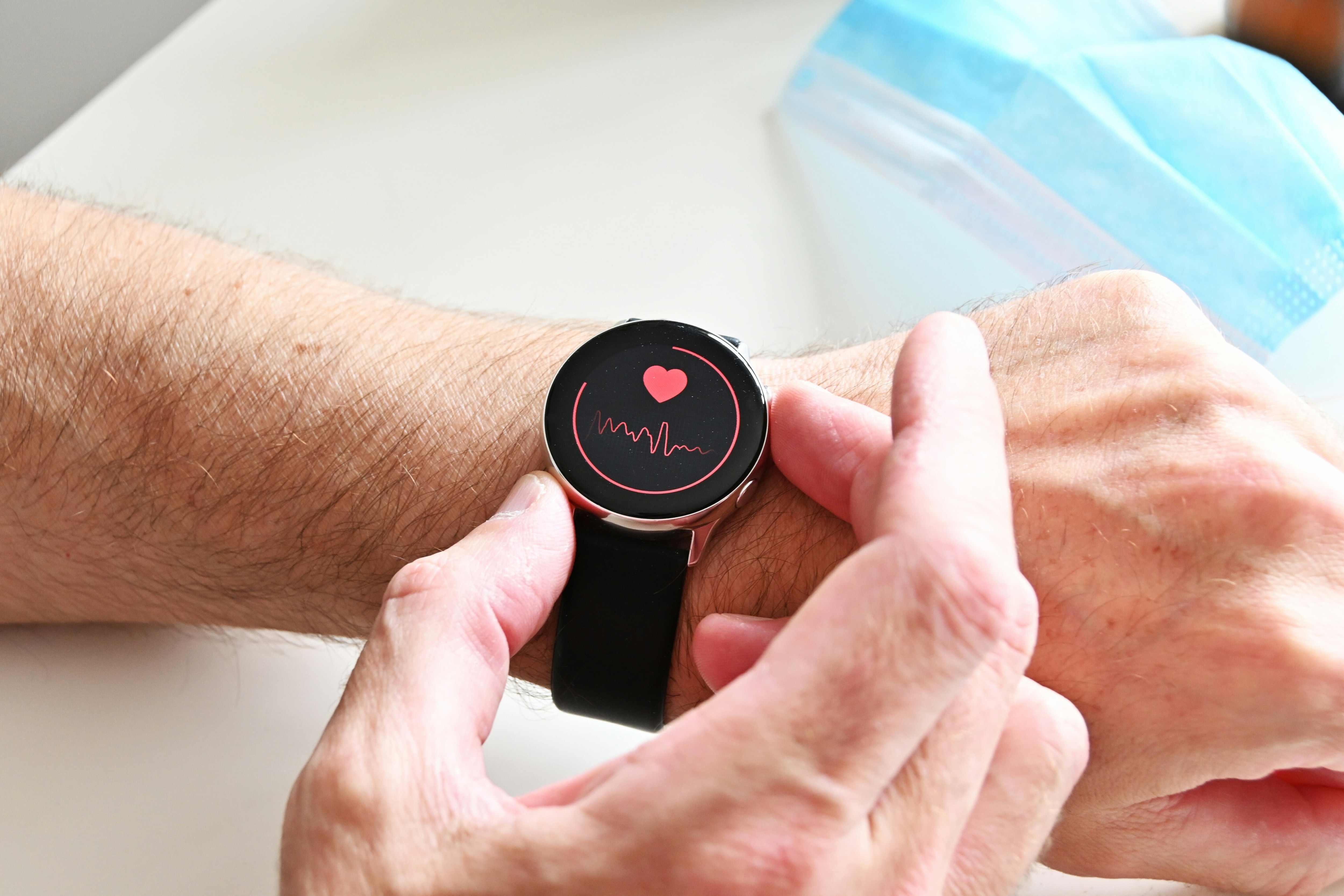
Remote patient monitoring (RPM) technologies can help boost heart health by collecting heart rate and rhythm information quickly and easily. Image: Unsplash/Nik
- Cardiovascular disease (CVD) is the leading cause of death worldwide, but the vast majority of CVD cases are preventable.
- The health tech sector, which is expected to be worth more than $3 trillion in less than a decade, could help address inequities in healthcare.
- New technology powered by artificial intelligence (AI), for example, could provide a faster, easier and more affordable way to track heart health.
Humanity has a chance to revolutionize the battle against heart disease. New technologies, only now becoming available, can help achieve a shift toward widespread, early detection of cardiovascular issues. The key will be to get these new tools into the hands of as many people as possible, as quickly as possible - before a heart health episode occurs.
Every year, cardiovascular disease (CVD) is the leading cause of death around the world. The World Health Organization reports that 19.8 million people died from CVDs in 2022 (the latest full year with data available). That represents nearly a third of all global deaths.
As an engineer, I look at systems to find the "single point of failure". In the human body, that point is often the heart. Part of what’s so tragic about these losses is that the vast majority can be avoided. An estimated 80% of CVD is preventable.
All too often, people don’t discover heart health issues until it’s too late. AI can change that.
From episodic to continual care
Often, a patient’s biggest wake-up call to address their heart health comes during a doctor’s appointment. Their healthcare provider may conduct an electrocardiogram (referred to around the world as an ECG or EKG), spot reasons for concern and recommend a course of action.
But people don’t go to doctors often. When some try, they have to wait months after experiencing a symptom. That's why, just as it’s normal to step on a scale to track weight, we should normalize checking our heart rhythm anytime, anywhere. This is where remote patient monitoring (RPM) technologies can make a difference to heart health by allowing patients and their healthcare providers to collect heart rate and rhythm information quickly and easily.
Data collected from home can easily be shared with healthcare providers. Patients can then have virtual appointments to discuss their results and develop a plan of action. They can also follow up with further tests, such as additional ECGs over time to help determine whether their condition is improving.
The goal is to empower physicians and patients with a stream of medical-grade data and insights. These kinds of tools transform people’s relationship with their own health. It’s no longer about episodic care, but rather continuous care. It means they can stay ahead in their heart health journey.
Using AI responsibly to boost heart health
The power of AI is especially acute in spotting what the human eye simply cannot see. Thanks to emerging technologies, new tools can provide more precise and impactful ECGs than ever before. They can pick up on slight, barely perceptible changes that may signal a health issue or something to watch out for.
AI tools can also harness the power of data to assess what even slight changes may mean for a patient. They can collect a massive amount of longitudinal data that is incredibly valuable to both patients and clinicians. This information helps to tell the whole story of a patient's heart health, rather than just a single chapter. With this kind of context, healthcare providers can see what a patient’s own ECG means, but also use anonymized data about other patients to gain insight into whether a change is likely to spiral into a larger problem.
All of this can and should take place through secure, private data collection. As more companies create health-focused tools, ensuring each patient’s privacy is paramount.
Making heart health monitoring more affordable
RPM technologies could help to bring a wide array of diagnostic testing to the world. Currently, “arrhythmia care is greatly limited by access to ECGs,” among other issues, a team of researchers wrote in a 2024 study, Global Health Inequities in Electrophysiology Care.
The Lancet Commission on Diagnostics, meanwhile, looked at other types of tools and conditions and found that only 19% of people in low-income and lower-middle-income countries have access to "the simplest" of diagnostic tests at a primary care level.
For most of humanity to benefit from clinical AI, these tools must be affordable. The companies creating them – whether tech giants, small businesses or start-ups – must make this a priority.
Reaching markets in developing countries therefore means actively exploring creative partnerships and localized delivery models to ensure this technology is both easily available and sustainably affordable. This will ensure these tools are placed in the hands of those who need them the most.
And because these tools generally require – or, at least, work optimally with – internet access, addressing broadband gaps is essential. The UN agency for digital technologies, the International Telecommunication Union, estimates that about 6 billion people, or 74% of the world’s population, used the internet last year. But, it adds: “this leaves 2.2 billion people still offline”.
I have lived in cities across the globe and have seen the stark differences in healthcare access firsthand. The rapidly growing health tech sector, expected to pass the $3 trillion mark in less than a decade, can go a long way in addressing these inequities. As this new era of healthcare technology spurs so much hope, it’s up to all of us to deliver on that promise.
Don't miss any update on this topic
Create a free account and access your personalized content collection with our latest publications and analyses.
License and Republishing
World Economic Forum articles may be republished in accordance with the Creative Commons Attribution-NonCommercial-NoDerivatives 4.0 International Public License, and in accordance with our Terms of Use.
The views expressed in this article are those of the author alone and not the World Economic Forum.
Stay up to date:
Artificial Intelligence
Related topics:


Forum Stories newsletter
Bringing you weekly curated insights and analysis on the global issues that matter.
More on Artificial IntelligenceSee all

Cathy Li and Florian Mueller
February 16, 2026


