How AI-powered supply chains and regional ecosystems are shaping the next phase of globalization
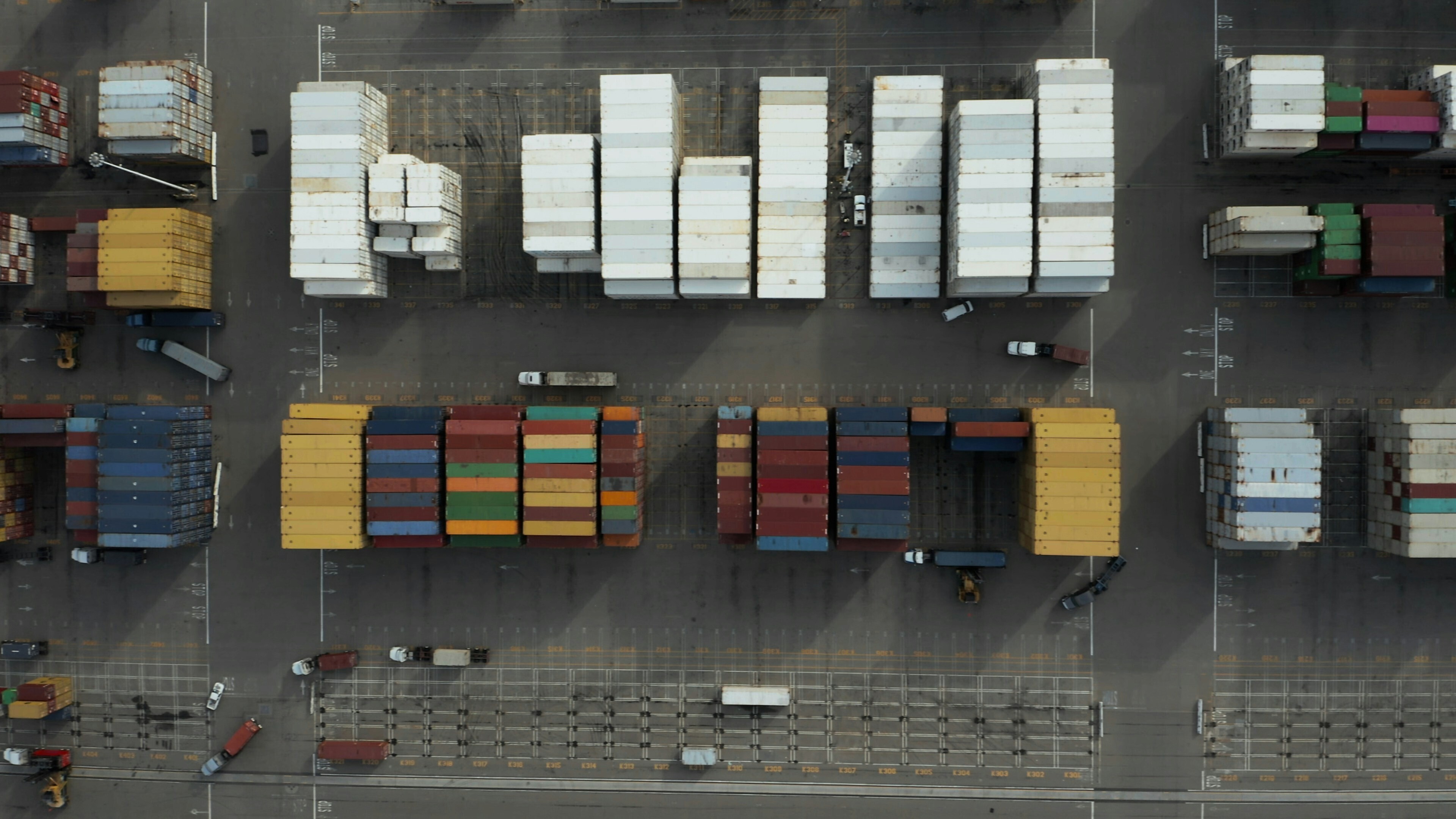
The next phase of globalization will be shaped by how intelligently global supply chains are designed, coordinated and governed. Image: Tyler Casey/Unsplash
- In an era of fragmentation, the question is not how to maximize efficiency, it is how to design supply chains that can sense risk and rebalance in real time.
- The next phase of globalization is unlikely to be less connected, but it is likely to be more regional in structure as supply chains become more intelligence-driven.
- Autonomy and intelligence will be key to competitiveness in supply chains, but their long-term value will derive from whether they are embedded in systems that remain inclusive, interoperable and trusted across regions.
As global leaders debate trade fragmentation, AI governance, and economic security, a quieter-but-decisive transformation is unfolding inside global supply chains.
For decades, supply networks were optimized for efficiency, scale and cost reduction. That operating logic is now proving insufficient. Geopolitical tensions, regulatory divergence, climate disruption, cyber risks and rapid advances in artificial intelligence increasingly overlap. What once appeared as periodic disruption is becoming structural.
In this context, competitiveness is shifting. The question is no longer how to maximize efficiency, but how to design networks that can sense risk and rebalance in real time. The next phase of globalization is unlikely to be less connected, though it is likely to be more regional in structure and more intelligence-driven, particularly when it comes to how supply chains operate.
From visibility to decision autonomy
AI sits at the heart of this shift. Over the past decade, many organizations invested in digital tools that improved visibility across procurement, manufacturing and logistics. Visibility, however, is only the starting point.
The more significant transition is from visibility to decision autonomy. In BearingPoint’s recent report Autonomous Intelligent Supply Chains, which surveyed 620 senior executives across Europe, the United States and China, more than 90% expect AI to significantly reshape supply chains by 2030. Yet only 8% report full integration of AI-driven planning and orchestration across their global networks.
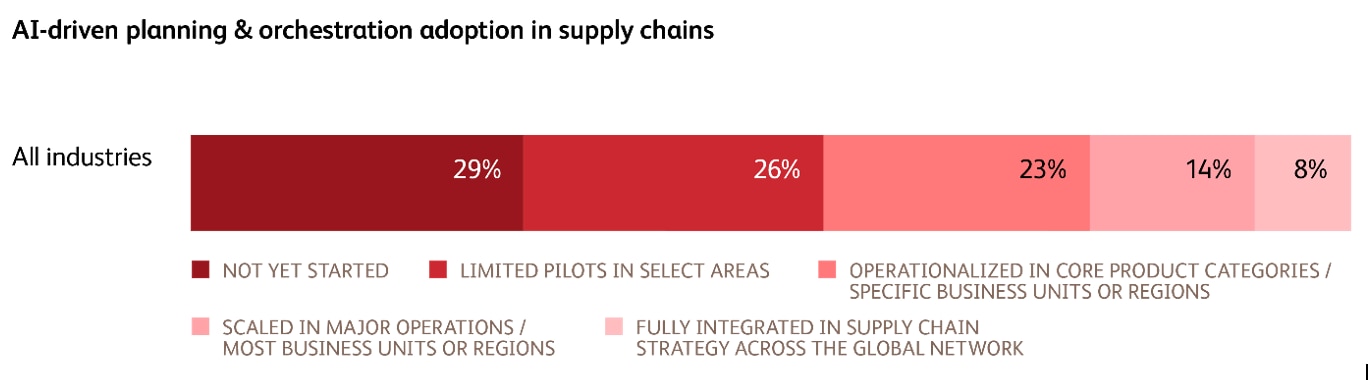
The gap reflects a challenge of readiness rather than ambition. Data quality, interoperability and system integration remain major barriers. Without reliable and harmonized data across suppliers and regions, even advanced algorithms cannot deliver consistent results.
Where autonomy is taking shape, the impact becomes measurable. Unilever, for example, has integrated AI and data-driven systems into its Customer Operations function to enhance planning and collaboration with key retail partners.
According to the company, since establishing this AI-enabled operating model roughly two and a half years ago, it has delivered over €1.7 billion ($2 billion) in value through improved service, lower inventory and greater efficiency. This illustrates how AI can move beyond analytics and become embedded in operational decision-making.
As AI systems mature, they enable supply chains to simulate alternative sourcing strategies, anticipate logistics bottlenecks and orchestrate responses to demand volatility in real time.
Rise of regional supply ecosystems
At the same time, the geography of supply chains is evolving. Regionalization is accelerating across industries as companies seek to reduce exposure to concentrated sourcing and vulnerable trade corridors. Production hubs are emerging closer to end markets, and multi-sourcing strategies are becoming more common.
This trend should not be interpreted as a retreat from globalization. Cross-border trade remains substantial. What is changing is the architecture. Instead of highly centralized networks optimized solely for cost, organizations are building more distributed ecosystems that can rebalance production and logistics flows when shocks occur.
Around one in five organizations report having fully transitioned to regionalized operations, while many others remain in piloting or scaling phases. The direction is clear, but maturity remains uneven.
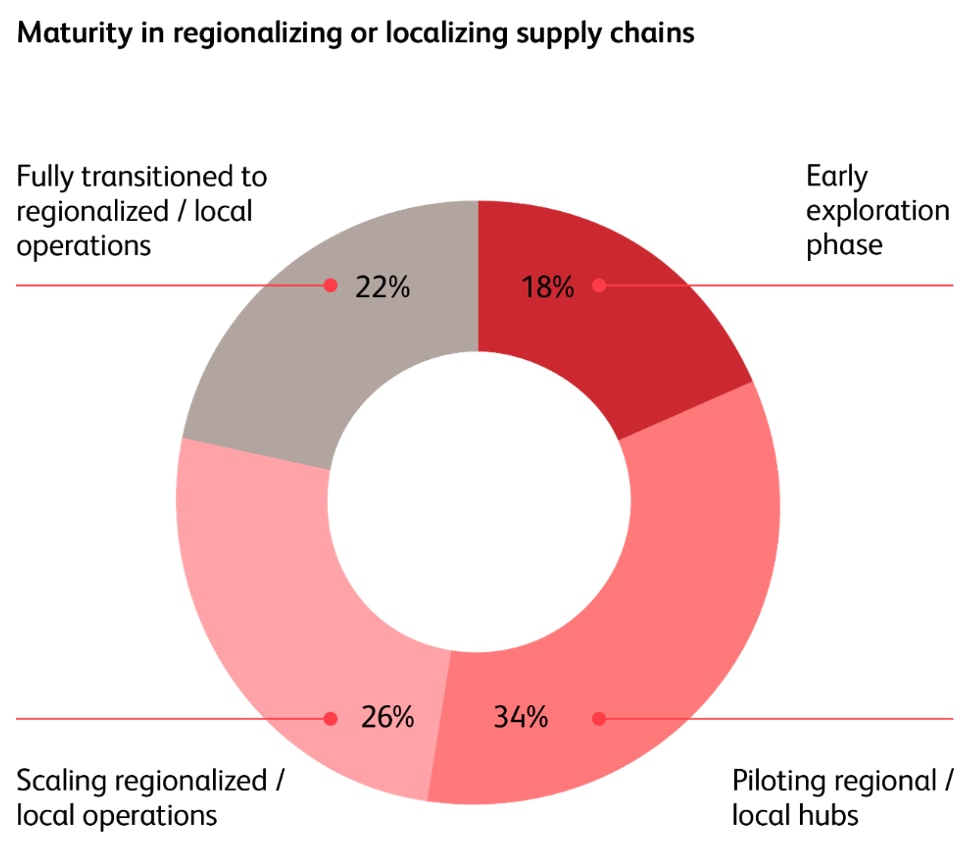
Regionalization also presents trade-offs. Higher production costs, limited supplier ecosystems and regulatory complexity can slow progress. For emerging markets, this transformation may create new opportunities to anchor regional manufacturing and logistics capacity. At the same time, uneven digital infrastructure and fragmented standards risk widening gaps if coordination is limited.
The challenge is therefore not simply to shorten supply chains, but to design regional ecosystems that remain interoperable and globally connected.
Sustainability embedded in supply chain operations
A third structural shift is the integration of sustainability into core operational decisions. In our research, 44% of executives report treating circularity as a strategic investment priority, underscoring that sustainability is increasingly viewed as a driver of competitiveness rather than a compliance obligation.
Circular design, reuse and reverse logistics are moving from compliance initiatives to strategic priorities. Organizations are redesigning products for modularity, improving traceability of materials and embedding environmental metrics into procurement and logistics planning.
The next frontier is the integration of sustainability data directly into planning systems. As operational and environmental data become linked, companies can simulate trade-offs between cost, service levels and emissions in real time. Sustainability becomes part of daily decision-making rather than a separate reporting exercise.
Resilience and sustainability increasingly reinforce one another. Diversified sourcing, shorter supply loops and improved transparency can reduce environmental impact while strengthening operational stability.
The governance dimension to supply chains
These shifts toward AI-enabled autonomy, regional ecosystems and embedded sustainability are reshaping how global supply chains function in practice. They also raise important governance questions.
If supply chains become more data-driven and regionally organized, interoperability becomes critical. Diverging data standards, conflicting AI regulations and fragmented digital trade rules could introduce new friction into global trade flows. Coordinated progress on data governance, cybersecurity and digital trade frameworks could instead enable resilient supply networks to remain globally connected.
The risk is not that globalization disappears. It is that supply chains fragment into incompatible regional systems. Addressing that risk will require collaboration between governments, industry alliances and businesses to align standards, share data responsibly and build trust across borders.
Organizing global supply chains intelligently
In this emerging model of globalization, supply chains are becoming more regionally distributed, adaptive and intelligence-driven.
Autonomy and intelligence may become the new currency of competitiveness in supply chain management. Their long-term value, however, will depend on whether they are embedded in systems that remain inclusive, interoperable and trusted across regions.
The next phase of globalization will be shaped not only by how much trade flows across borders, but by how intelligently global supply chains are designed, coordinated and governed.
Don't miss any update on this topic
Create a free account and access your personalized content collection with our latest publications and analyses.
License and Republishing
World Economic Forum articles may be republished in accordance with the Creative Commons Attribution-NonCommercial-NoDerivatives 4.0 International Public License, and in accordance with our Terms of Use.
The views expressed in this article are those of the author alone and not the World Economic Forum.
Stay up to date:
AI and Energy Use


Forum Stories newsletter
Bringing you weekly curated insights and analysis on the global issues that matter.
More on Supply Chains and TransportationSee all

Jack Barrie and Janez Potocnik
April 2, 2026