How AI can help bridge healthcare gaps worldwide
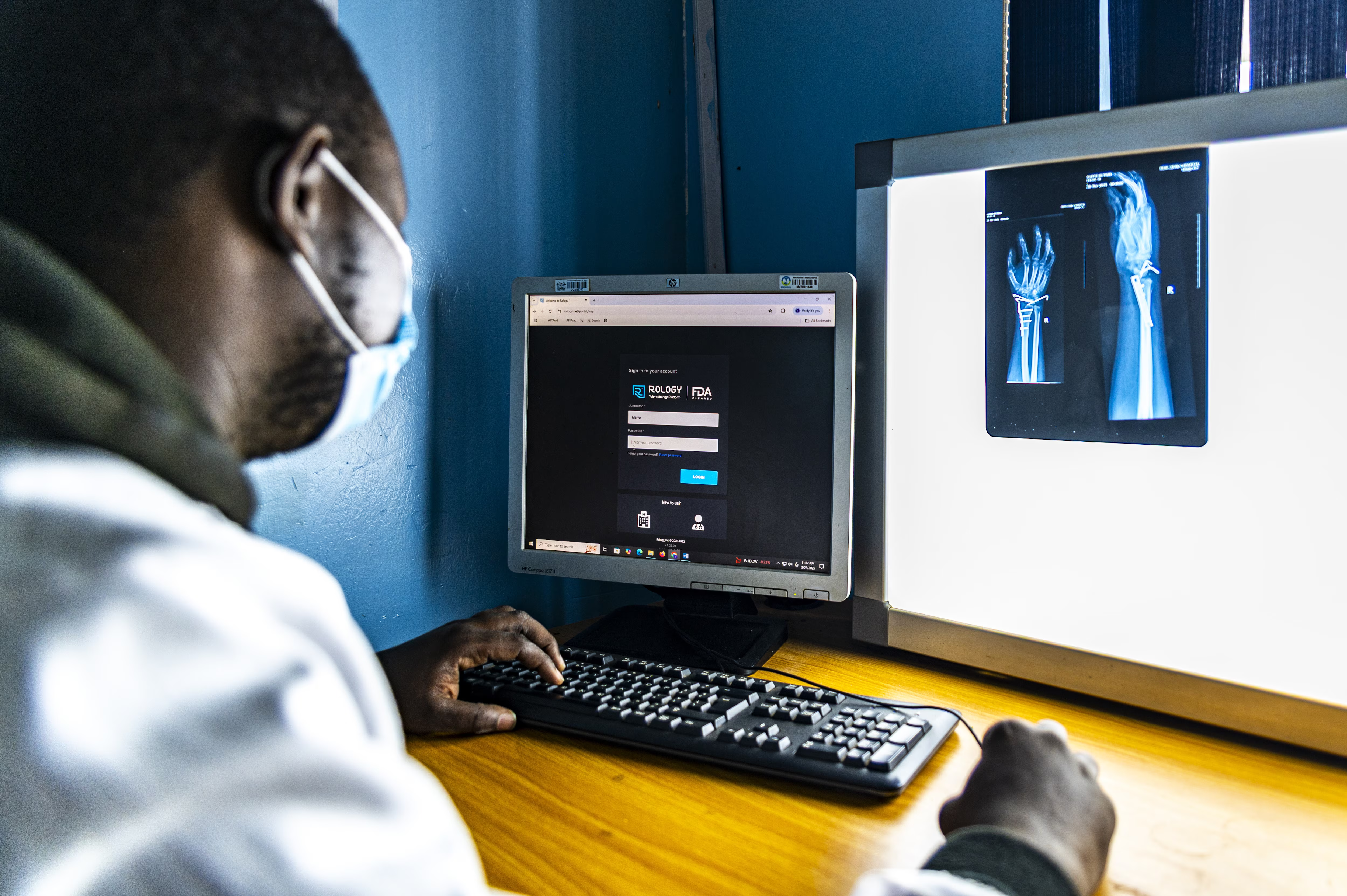
Artificial intelligence is today reshaping the delivery of healthcare. Image: Rology
- AI offers a transformative opportunity to streamline healthcare delivery and strengthen disease surveillance in resource-constrained regions.
- But infrastructure gaps in data storage and localized computing capacity threaten to exclude entire populations from the benefits of digital innovation.
- Bridging the representation gap through diverse datasets and harmonized governance is essential to ensure AI solutions serve the world’s most vulnerable communities.
Artificial intelligence (AI) is today reshaping the delivery of healthcare. From clinical decision support to predictive management of medical supply chains, the pace of innovation is accelerating, promising better services for doctors and their patients.
Major technology firms like Google, Amazon, Microsoft and Apple are pouring resources into health-focused technologies that have the power not only to upgrade care in rich countries but also to advance global health equity – saving both lives and money in the process.
After more than 20 years working on access to medicine across low- and middle-income countries (LMICs), I have seen how catalytic the right tools can be in improving health outcome for millions of people. AI, if applied appropriately, could take things to the next level by streamlining healthcare delivery, easing pressure on crowded clinics and hospitals in villages and cities across Africa and beyond.
But as the AI juggernaut gathers pace, decisive action is needed to ensure access to this technology is distributed fairly. Otherwise, there is a risk that these advances could reinforce existing global health inequities rather than reduce them.
Inclusive AI design
AI systems will only work for people in LMICs if vulnerable populations are included in their design and communities are guaranteed access to the resulting solutions.
With the right architecture in place, AI tools can then be put to work in parts of the world where they are needed most – helping doctors make faster and more accurate diagnoses, strengthening disease surveillance, improving medical supply chains, and bringing life-saving information and treatments to patients.
There is no time to lose. The foundations of the AI health revolution are being laid right now. Technology is moving fast, and it would be a missed opportunity for Big Tech to build systems that fail to address the world’s greatest health needs.
Clinical AI solutions for all
Around the world, clinicians are already embracing clinical AI tools such as OpenEvidence to wade through medical research and help make decisions at the bedside. The pharmaceuticals industry, too, is busy using AI to speed up the hunt for new medicines and cut laboratory costs, while diagnostics companies are transforming the efficiency of imaging and lab tests – from AI-enabled ultrasound scanners to digital stethoscopes.
Ensuring everyone – not just the well-off – benefits from this AI transformation is essential. That is why initiatives such as the Gates Foundation’s “Catalyzing Equitable AI Use” and HealthAI’s governance work are so important. In this spirit, Gates Foundation and OpenAI’s new initiative, Horizon1000, is aiming to bring tailored AI tools into 1,000 primary health clinics across Africa, starting in Rwanda, to support frontline care and ease workforce shortages.
The growing range of AI tools, and their improving performance, is encouraging. But to unlock AI’s full potential, we must incentivize large companies to address the roadblocks to access – much as the Access to Medicine Foundation has done in pharmaceuticals.
Challenges to unlocking the full potential of AI in healthcare
One of the most urgent challenges is compute capacity, especially in Africa, given AI’s voracious appetite for data. Africa is home to more than 18% of the global population, yet it holds just 1.3% of global data-storage capacity. Of the world’s 8,000-plus data centres, only 152 are in Africa. Limited access to reliable mobile internet further excludes many Africans from using modern digital tools and AI systems.
There are some signs of progress. Nvidia, for example, has partnered with Cassava Technologies to build Africa’s first AI factory, offering researchers and governments access to advanced computing capacity, while Microsoft and G42 have developed a geothermal-powered data centre in Kenya. These efforts are promising, but they remain exceptions. Without significant investment, countries bearing some of the world’s highest disease burdens risk being the last to benefit from AI-driven health advances.
Another hurdle is data governance. Countries understandably want control over how personal health data is stored, used and transferred. Rwanda’s 2021 data-protection law, for example, requires domestic storage of personal data by default and restricts cross-border transfers without explicit authorization. These rules protect privacy and sovereignty, but they also complicate the development and deployment of AI systems that rely on aggregated data. What is needed is a harmonized governance framework that protects people while enabling collaboration.
Regulation also poses challenges. AI is not a drug, nor a device, nor a service in the traditional sense. As a result, companies operating internationally must navigate a complex patchwork of rules. The European Union’s new EU AI Act, now coming into force, may set de facto global standards due to Europe’s market size, but it could also increase compliance burdens in ways that may disadvantage innovators in LMICs. Some regions are experimenting with more agile approaches. Kenya’s regulatory sandboxes, for instance, allow companies to test AI-based health solutions under light-touch regulation, in exchange for transparent reporting.
A final issue is the data-representation gap. Many health datasets do not adequately represent diverse populations, leading to algorithmic bias, as well as a lack of culturally and linguistically representative data. Only 0.02% of all online content is in African languages, so most AI models today are trained primarily in English. Billions of people simply do not exist in these models.
Countries like India are starting to create more fit-for-use datasets through initiatives such as Bhashini, a government translation service, and technology firms like Karya are building local datasets for multinational companies. Nigeria has also launched a multilingual model to support low-resource languages. These initiatives show what is possible.
A critical juncture
We are at a critical moment. AI has the potential to help solve some of the most persistent challenges in global health – from diagnostic gaps and supply-chain failures to slow research timelines. The benefits could reach millions of patients in primary care and generations of women giving birth in poor rural settings, offering safer and more reliable care.
Making this vision a reality will require genuine commitment from Big Tech. Health equity is not a given; it is the result of deliberate choices. Technology companies have shown what they can build. Now they must show what they are willing to share.
Don't miss any update on this topic
Create a free account and access your personalized content collection with our latest publications and analyses.
License and Republishing
World Economic Forum articles may be republished in accordance with the Creative Commons Attribution-NonCommercial-NoDerivatives 4.0 International Public License, and in accordance with our Terms of Use.
The views expressed in this article are those of the author alone and not the World Economic Forum.
Stay up to date:
Artificial Intelligence


Forum Stories newsletter
Bringing you weekly curated insights and analysis on the global issues that matter.