Winter Olympics boost – and other urban transformation stories to read

Speed skating in Milan during the 2026 Winter Olympics. Image: REUTERS/Yves Herman/File Photo
Jeff Merritt
Head of Centre for Urban Transformation; Member of the Executive Committee, World Economic Forum- This monthly round-up brings you some of the latest news on local economies and experiences.
- Top stories: Winter Olympics boosts Italian cities; South Korean companies plan to revitalize urban areas; Yes/Boston launches.
- For more on the World Economic Forum’s city-focused work, visit the Centre for Urban Transformation.
1. Winter Olympics brings economic boost to Italian cities
The 2026 Winter Olympics could have an economic impact of more than $6 billion on its host cities.
A study by Italian bank Banca Ifis estimates the Milano-Cortina Games, which concluded with a ceremony on 22 February, will generate around $6.25 billion in economic value.

This includes $2.71 billion in tourism spending focused on Milan, Cortina d’Ampezzo, Verona, Valtellina and the wider Alpine region.
Chloe Parkins, lead economist at Oxford Economics, told Euro News that tourism spending in Italy could rise by $3.42 billion this year alone, with cities in Northern Italy seeing the biggest boost.
But S&P Global Ratings analysts warn the long-term gain may be modest for a country that is already a top global tourism destination.
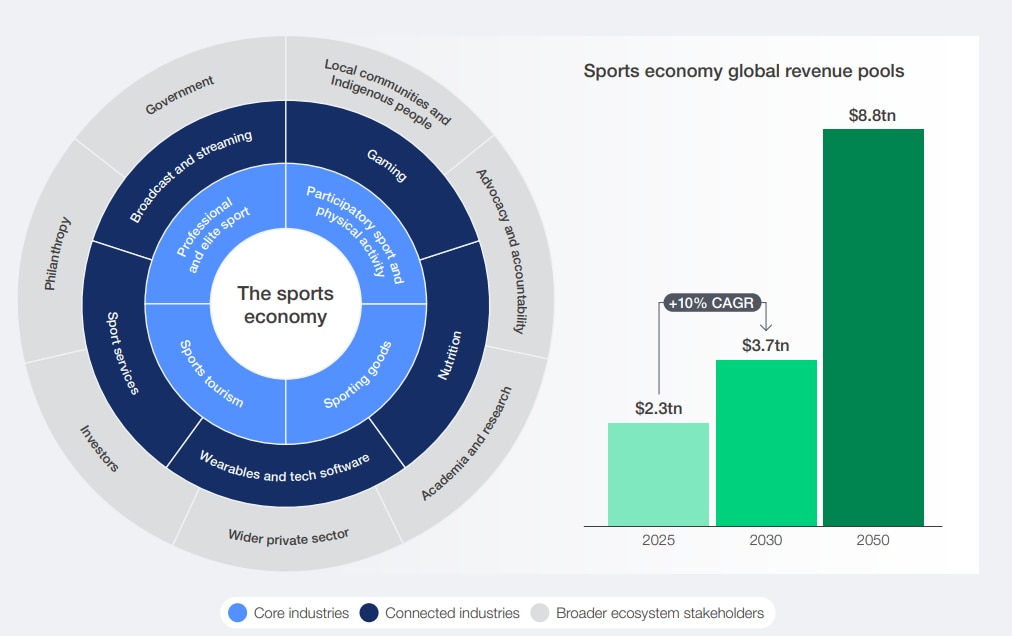
The World Economic Forum’s Sports for People and Planet report highlights the economic potential of the global sports economy, which is already worth some $2.3 trillion and is forecast to reach $8.8 trillion by mid-century.
Sports tourism is a key driver cited by the Forum as contributing to this growth.
2. Davos 2026: How local economies can respond to turbulence
Global turbulence is reshaping how cities and regions think about growth. At the Forum's Annual Meeting in Davos, leaders warned that debt, climate shocks and geopolitical rifts are converging, exposing fragile local economies even as global GDP proves surprisingly resilient.
Resilience now depends less on headline national growth and more on place‑based strategies that strengthen communities from the ground up.
That means investing in local infrastructure, skills and innovation ecosystems, while using technology and partnerships to crowd in private capital.
New initiatives launched in Davos aim to connect city leaders, companies and development banks so they can share data, scale proven solutions and close financing gaps. They include:
- The Yes/Cities Global Network, bringing together 18 leading city-based innovation ecosystems across North America, Latin America, Europe and Asia to boost investment.
- The Davos Baukultur Alliance's Investing in Quality initiative, focused on embedding quality, sustainability and human-centred design into planning, development and investment decisions.
- A new cross-sector Leadership Group on Workforce Transformation and Tourism Tech, recognizing travel and tourism as a critical driver of growth, accounting for roughly 10% of global GDP.
In a world of “persistent disruption”, local economies are becoming the frontline for managing risk, protecting livelihoods and restoring trust.
3. News in brief: More top city stories
South Korea’s 10 biggest companies plan to invest 270 trillion won (about $186 billion) in regional cities over five years, potentially rising to 300 trillion won with smaller firms. The aim is to revitalize local economies, create youth jobs and spread growth beyond Seoul.
Mumbai held its inaugural Climate Week in February, bringing a spotlight to the Global South, one of the world's most vulnerable regions to the impact of climate change. During the week, it was announced that the city will also host Prince William’s Earthshot Prize in November 2026.
China’s new home prices fell 0.4% month‑on‑month in January, matching December’s decline and marking a 3.1% annual drop, the steepest in seven months, according to Reuters. Weak demand is piling pressure on cash‑strapped developers and complicating Beijing’s efforts to stabilize the housing market.
An India-Pakistan T20 World Cup clash in Colombo in February sent hotel and flight prices soaring, with many rooms reportedly quadrupling in price. Tourism officials say about 20% of Sri Lanka’s 100,000 early‑February visitors came for the match, delivering a welcome boost to its crisis‑hit economy.
Uber will invest more than $100 million in charging hubs for autonomous vehicles in key US cities, starting with the Bay Area, Los Angeles and Dallas, as it ramps up its robotaxi business. It has partnerships with more than 20 self‑driving firms, including Waymo and China’s WeRide.
What is the World Economic Forum doing to promote sustainable urban development?
4. More on urban transformation on Forum Stories
The Forum, together with a coalition of public and private-sector leaders — including Amazon Web Services, Citi, Deloitte, MassChallenge, the City of Boston and the Commonwealth of Massachusetts — launched the Yes/Boston Innovation Challenge. Entrepreneurs are invited to submit solutions at the intersection of health access, resilience and sustainable food systems. Selected early-stage ventures will receive support to accelerate and scale high-impact innovations in Boston. Find out more in the video below.
Innovation in urban food systems is emerging as a powerful health and climate tool. Cities like Boston are testing shorter, fairer supply chains, from local sourcing and food hubs to data-driven logistics that cut waste and emissions. These approaches can improve nutrition, support small producers and make neighbourhoods more resilient to shocks like pandemics and extreme weather.
More than two-thirds of the world's population is expected to live in urban areas by 2050, but many regions lack mobility strategies and sustainable design. If cities are to flourish, they must adopt an approach that blends physical AI, collaborative ecosystems, digital connectivity and human-centric design. By combining creative financing with integrated innovation ecosystems, cities can build a more connected, inclusive and sustainable urban future, writes Shahid Ahmed, Group Executive Vice-President, New Ventures and Innovation, NTT DATA Group.
License and Republishing
World Economic Forum articles may be republished in accordance with the Creative Commons Attribution-NonCommercial-NoDerivatives 4.0 International Public License, and in accordance with our Terms of Use.
The views expressed in this article are those of the author alone and not the World Economic Forum.

Forum Stories newsletter
Bringing you weekly curated insights and analysis on the global issues that matter.
More on Built Environment and InfrastructureSee all

Lin O’Grady and Alice Charles
April 7, 2026


