Why now is the time to close Africa’s health, safety and economic gender gaps
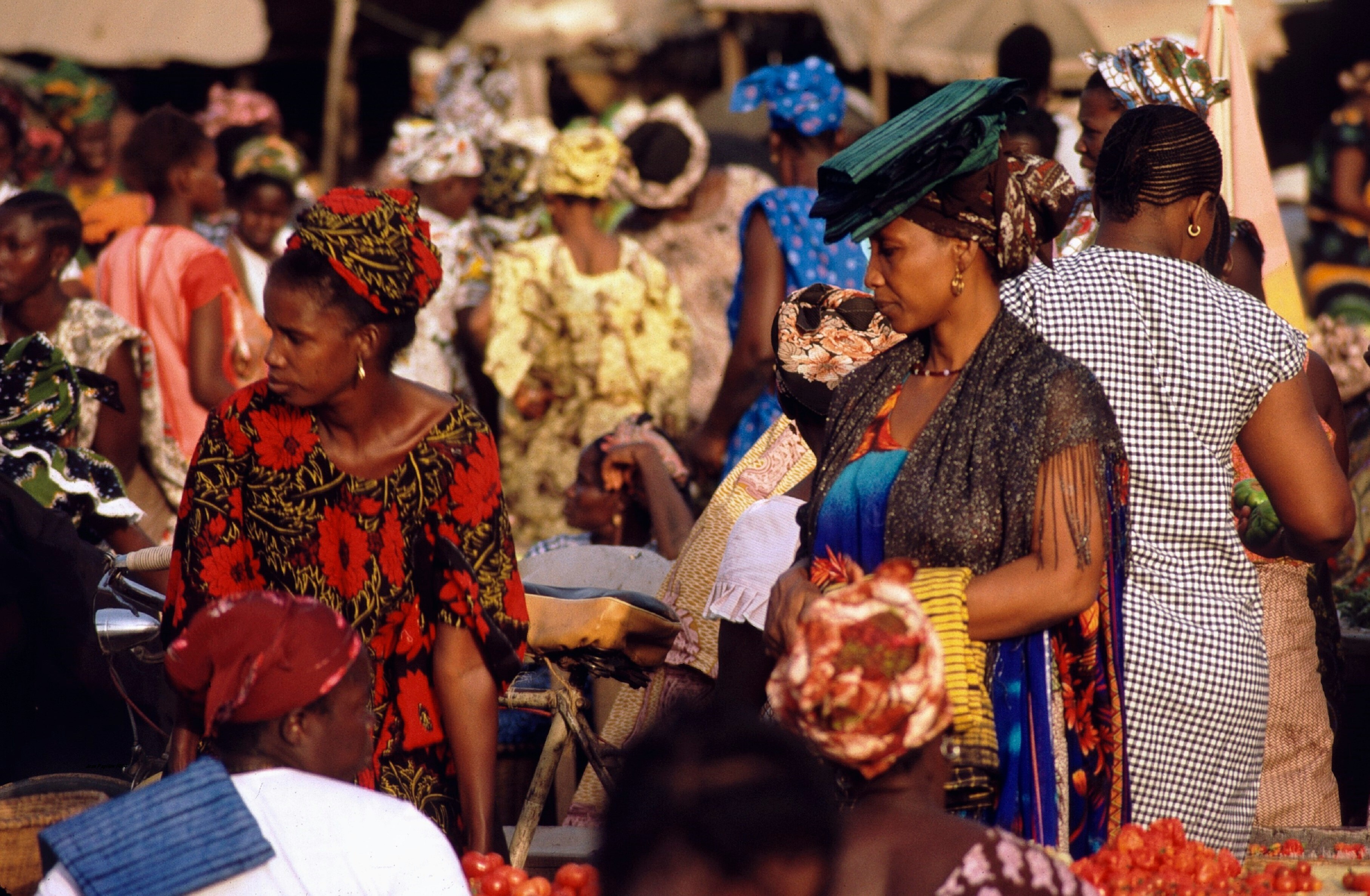
Image: Jean Papillon/Unsplash
Ginelle Greene-Dewasmes
Initiatives Lead, Artificial Intelligence and Energy, Centre for AI Excellence, World Economic Forum- Sub-Saharan Africa reduced maternal mortality by 40% since 2000, showing that targeted investment drives progress.
- But systemic inequality remains embedded through widespread gender violence and the prevalence of unprotected informal labour.
- Accelerating parity requires shifting from individual resilience towards institutional redesign and sustained structural reform.
In 2023, sub-Saharan Africa carried nearly 70% of global maternal deaths, an estimated 182,000 mothers lost. Yet despite these stark figures, the region’s trajectory tells a story not only of loss but of progress. Maternal mortality in sub-Saharan Africa has fallen by about 40% since 2000.
African women so often live inside two realities at once: the weight is heavy, where the numbers can move when the world decides we are worth the investment. While skewed across contexts, this dual reality is not unique to one geography and reflects a broader global pattern in women’s wellbeing.
Violence against women is neither cultural nor inevitable, it is structural. Yet structural barriers can be challenged.
”The World Health Organization (WHO) estimates that around 1 in 3 women globally experience physical and or sexual violence in their lifetime, and the WHO African Region sits at a similarly devastating level for lifetime intimate partner violence.
UN Women and UNODC estimate that Africa had the highest number and rate of women and girls killed by intimate partners or family members in 2023: around 21,700 women and girls, or 2.9 per 100,000.
Reports released in November 2025 (covering 2024 data) continued to indicate that Africa has the highest rate of intimate partner/family-related femicide at 3 per 100,000.
While these statistics are regional, the pattern is global. Violence against women is neither cultural nor inevitable, it is structural. Yet structural barriers can be challenged.
Hope in work and politics
Across the African continent, women have pushed rights into law and policy frameworks with force and persistence, even when enforcement lags and justice moves too slowly. The argument for women’s safety and autonomy is no longer begging for a hearing, rather, it’s demanding compliance.
In sub-Saharan Africa, 74% of women’s non-agricultural employment is informal. When including agricultural sectors, some estimates suggest that over 90% of employed women in the region work in the informal sector. But informal does not mean insignificant. It means the economy is leaning on women without offering the basics: protection, stability, benefits, recourse. The brighter line here is political and civic power. Across sub-Saharan Africa, women now hold 27.1% of parliamentary seats as of 1 January 2026. That number does not guarantee outcomes, but it does change what becomes negotiable.
Women’s health: Longevity without wellbeing
When speaking about women’s health, it is now an established data point that despite living longer than men, women spend 25% more of their lives in poor health. Health burdens have a heavy impact on women’s lives, with ripple effects for broader society. While there is a plethora of woman-specific conditions, some stories are only beginning to make headlines. Take fibroids, for instance.
The procedure to remove fibroids, and often uteruses, has a clinical neatness that real life does not. In sub-Saharan Africa, the evidence base is still patchy, and researchers have pointed to a lack of robust population data in many settings.
But what we do know is consistent and important: women of African ancestry experience fibroids earlier, more frequently and often more severely than other groups.
And within Africa itself, hospital-based studies repeatedly show a substantial burden. One study at a regional referral hospital in Uganda found a fibroid prevalence of 28.2% among women assessed, and it notes comparable findings elsewhere in sub-Saharan Africa, including figures reported from Nigeria and Kenya in the literature it cites.
Here is where the personal and the political stop being separate. Fibroids are tied to heavy menstrual bleeding, pain, anaemia, fatigue and lost time. In Africa, heavy menstrual bleeding remains underreported, though regional estimates suggest a prevalence of 10% to 30%.
When your periods are not just “heavy” but life-interrupting, work becomes harder, school becomes harder, intimacy becomes complicated, travel becomes a calculation, and your body starts to feel like a job you can never clock out of.
The hopeful counter-story is not that fibroids are suddenly easy. It is that women are refusing silence. The conversation is getting louder, more public, more specific. The science is also getting sharper, driven partly by relentless advocacy around the disproportionate burden on Black women and women of African ancestry.
This matters, because conditions that live in the dark do not get funding, and pain that gets normalized does not get treated.
The golden thread: Collective strength
Maya Angelou wrote: “I come as one, but I stand as 10,000.” Sometimes the 10,000 are your grandmothers. Sometimes they are the women whose symptoms were dismissed. Sometimes they are the women who bled through meetings and kept smiling because they had no other option. Sometimes they are the women who had surgery in silence and went back to life as if nothing happened.
Young African women have been naming the broader pattern for years: who gets centred, who gets erased, who is expected to carry the consequences.
Climate activist Vanessa Nakate put it plainly when talking about whose voices get included and when: “There are times when I feel we are really moving forward… and then there are times when I feel we are actually moving two steps backwards.” That sentence travels well beyond climate. It belongs in women’s health, in safety, in pay, in politics, in whose suffering is treated as urgent.
Progress is rarely linear – but it is measurable
Words by Kenyan distance runner Faith Kipyegon highlight the critical need for ambition in driving progress: “Everything we do, we have to dream big and just believe in ourselves.”
African women vividly echo their counterparts around the world, surviving realities that should not exist while still producing outcomes the world depends on. They keep families together. They keep informal economies alive. They carry disproportionate health burdens. They navigate violence that is too often treated as inevitable.
Thankfully, the numbers show movement. Maternal mortality has declined since 2000. Representation in decision-making spaces is rising. Public conversations about previously stigmatized health issues are growing louder. Research is beginning to reflect women’s lived realities more accurately. Resilience has long been celebrated in women and girls. But resilience alone cannot be the benchmark. The goal is not endurance of inequity; it is the redesign of systems.
In this International Women’s month, we are holding our lived experience and pride in the same hand. Our own personal losses alongside the bigger story, because that is what womanhood often requires: to feel your own life fully, while still making room for the lives of others. This story is not just about statistics of loss. It is about measurable gains, structural gaps and the unfinished work required to ensure that progress accelerates rather than stalls.
We come as one.
But we stand as 10,000.
While one voice can carry far, collective action changes systems.
Don't miss any update on this topic
Create a free account and access your personalized content collection with our latest publications and analyses.
License and Republishing
World Economic Forum articles may be republished in accordance with the Creative Commons Attribution-NonCommercial-NoDerivatives 4.0 International Public License, and in accordance with our Terms of Use.
The views expressed in this article are those of the author alone and not the World Economic Forum.
Stay up to date:
Gender Equality


Forum Stories newsletter
Bringing you weekly curated insights and analysis on the global issues that matter.