Can we turn data centre energy demand into a strategic asset?
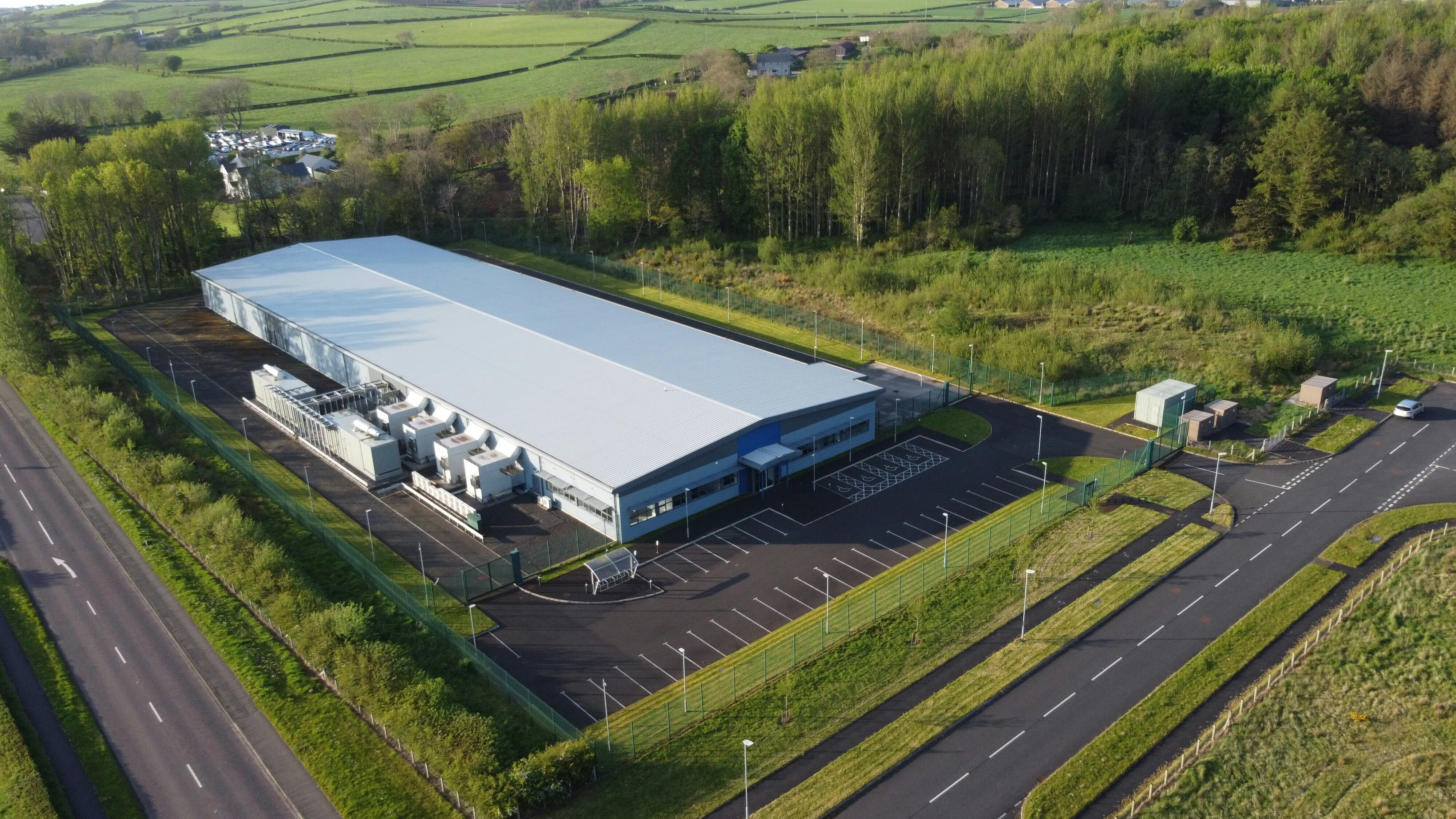
Data centres, once an invisible backend of the digital economy, have become one of the most powerful drivers of global electricity demand. Image: Unsplash/Geoffrey Moffett
- Global data centre electricity demand is surging toward 950 TWh by 2030 driven by the rapid expansion of artificial intelligence.
- Transforming waste heat into urban district heating could satisfy twelve percent of European residential energy requirements and stabilize grids.
- Policy-makers must transition from treating data centres as real-estate assets to governing them as essential national energy infrastructure.
Every industrial age delivers its own plot twist. The 19th century had steam, the 20th had oil, and the early 21st was supposed to be defined by a harmonious rise of clean energy and digital transformation. Instead, a new character has entered the story with disruptive force: the artificial intelligence-era data centre. What was once an invisible backend of the digital economy has become one of the most powerful drivers of global electricity demand, and an unmissable risk for leaders setting intention at the beginning of the year.
Data centres as strategic assets
The numbers alone should give policy-makers pause. In 2024, global data-centre electricity consumption reached roughly 415 terawatt-hours, according to the International Energy Agency, about the annual use of Italy. By 2030, that figure could surge to nearly 950 TWh, with AI workloads responsible for most of the growth. Europe expects data-centre electricity demand to almost double to 36 gigawatts by the end of the decade. In Dublin, these facilities already consume nearly 80% of the city’s electricity. A decade ago, such figures would have been unimaginable. Today, they form the new baseline where the world’s digital ambitions are outpacing its energy realism.
This is not a niche infrastructure story. It is a geopolitical and economic one. Data-centre demand profiles resemble early-stage rocket trajectories, not infrastructure curves. Over the past 18 months, the pace of AI deployment has turned data centres into actors with influence rivaling heavy industry. In Belgium, regulators have openly discussed limiting grid connections for new digital campuses. In Ireland, hyperscale development, once an under-the-radar sector, has become the subject of parliamentary debate. Even in the Nordic countries, long considered an oasis of abundant clean energy, grid operators warn that demand from data centres will tighten capacity faster than expected.
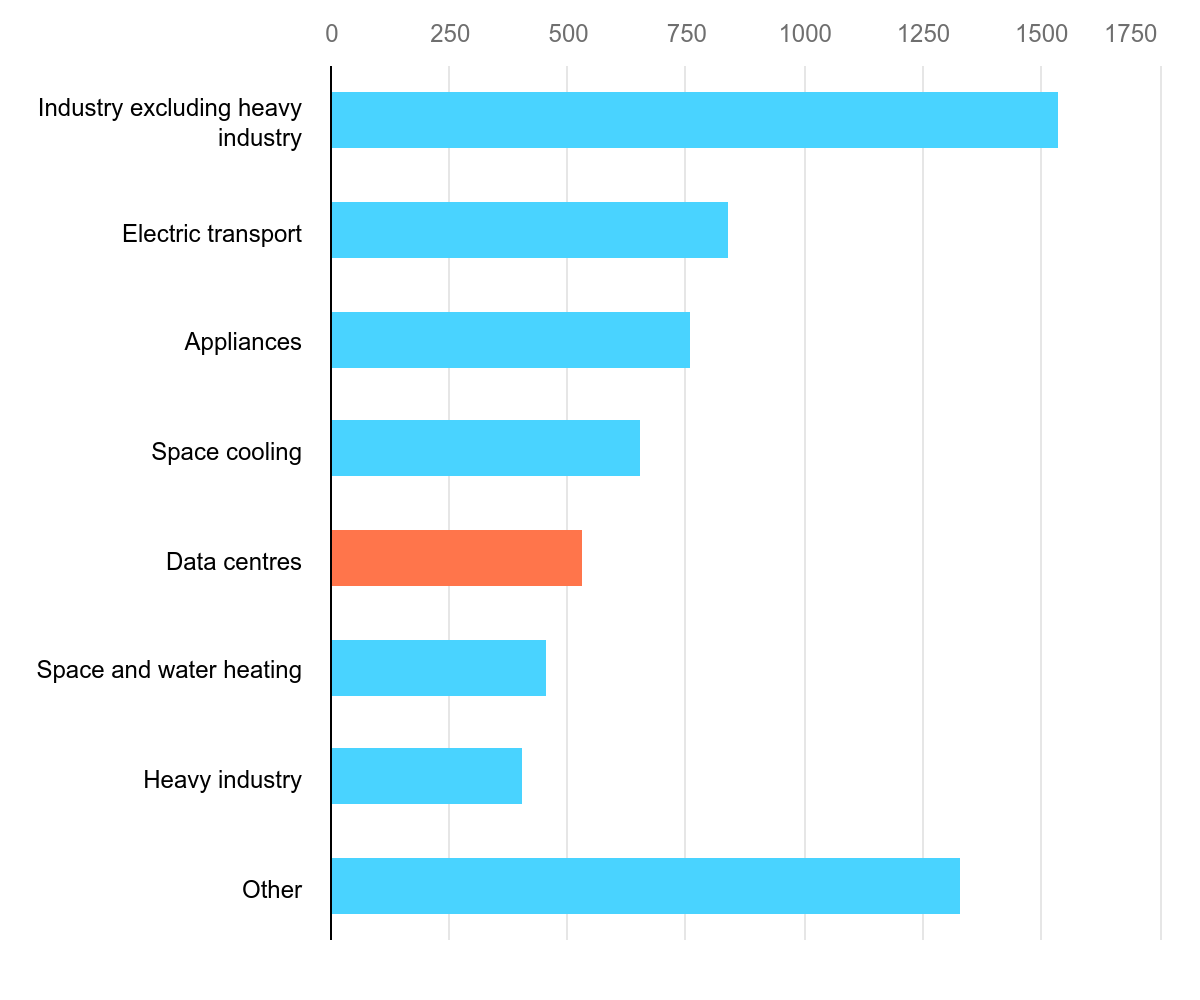
The shift is not ideological; it is physical. Data centres produce large amounts of low-temperature waste heat that could be redirected to district heating or industrial use, reducing fossil-fuel dependence and stabilizing grids. At the same time, their physical footprint – land, water for cooling and other resources – highlights the complex trade-offs in AI’s energy nexus, underscoring both risks and opportunities in the transition from digital to physical energy systems.
Waste heat is gold
Within this nexus lies one of the most overlooked climate opportunities of our time: data-centre waste heat. This misalignment is now a strategic risk. If the world continues deploying AI at breakneck pace without rethinking how digital and energy systems interact, economic growth, climate targets and electricity reliability could all come under pressure.
Across Europe, billions are spent annually to heat homes with gas and other fuels. At the same time, data centres, which operate continuously, vent enormous quantities of low-temperature heat into the sky. In London, research suggests that as much as 1.6 TWh of heat from data centres could be recovered each year, enough to warm half a million homes. Across Europe, the theoretical potential is 221 TWh per year, or 12% of EU district-heating demand. The infrastructure exists. The heat exists. The urban demand exists. What doesn’t exist is the policy coordination to connect the dots.
Seen through the old energy lens, data centres are a burden. Seen through a systems lens, they are urban heat plants already built, already paid for, and almost entirely untapped. The ability to flip the narrative, from shortage and crisis to breakthrough, sits squarely within reach, if leaders are willing to reframe how digital infrastructure fits into the energy transition.
Despite this transformation, policy frameworks remain stuck in the past. For years, data centres were treated as real-estate assets: large boxes with servers, cooling systems and little political relevance. Today, many behave more like energy utilities. They sign long-term power-purchase agreements, generate thermal output equivalent to mid-sized power stations, and shape local load forecasts more dramatically than manufacturing sectors ever did. Still, permitting rules, environmental assessments and grid-planning processes largely treat them as passive, static infrastructure.
This is why the current AI energy ecosystem needs what might be called a Compact for AI-Ready Energy Systems, a coordinated commitment by governments, utilities, cities and technology companies to modernize how digital and energy infrastructures grow together.
Managing challenges and unlocking opportunities
Governments can turn data-centre growth into a strategic advantage rather than a source of friction by pursuing five coordinated actions:
1. Strategic infrastructure
Data-centre electricity demand should be treated as national infrastructure. Facilities must be integrated into grid expansion, decarbonization and industrial strategies to prevent future conflicts.
2. Heat-reuse readiness
Large facilities should be built “heat-ready.” Even where district-heating networks don’t yet exist, designing for future integration adds little cost but delivers long-term emissions and energy savings.
3. Performance-based permitting
Permitting should reward flexibility, resilience and clean power. Data centres offering peak-shaving, on-site storage or firm renewable supply should get faster approvals.
4. AI energy zones
Governments and utilities can plan integrated zones for heat networks, grids, digital campuses and industrial users. This reduces local resistance, creates economies of scale and turns disputes into regional opportunities.
5. Blended finance for infrastructure
Blended public and private finance can upgrade grids and expand district heating. Public capital de-risks early projects, while private capital scales them, the same model that built Europe’s wind farms, railways and fibre networks.If leaders can embrace such a strategy, the storyline changes. Data centres, instead of threatening to overwhelm electricity systems, could play a role in strengthening them. AI’s rise, rather than undermining the energy transition, could help accelerate it. Digital infrastructure, long seen as an invisible, energy-hungry afterthought, now could become a backbone of urban decarbonization and national resilience.
The real risk is not that data centres consume too much energy. The real risk is that the world fails to update its rules, its planning models and its imagination fast enough to match the speed of technological change.
It is the best time of the year to set our intentions of turning emerging risks into shared global agendas. This year, the message must be clear: the intelligence economy will not run on electrons alone. It will run on energy systems designed for the age of AI. And whether this era becomes a crisis or a breakthrough depends on what leaders choose to do, right now.
Don't miss any update on this topic
Create a free account and access your personalized content collection with our latest publications and analyses.
License and Republishing
World Economic Forum articles may be republished in accordance with the Creative Commons Attribution-NonCommercial-NoDerivatives 4.0 International Public License, and in accordance with our Terms of Use.
The views expressed in this article are those of the author alone and not the World Economic Forum.
Stay up to date:
Energy Demand

Forum Stories newsletter
Bringing you weekly curated insights and analysis on the global issues that matter.