Health literacy: 5 lessons for better everyday health
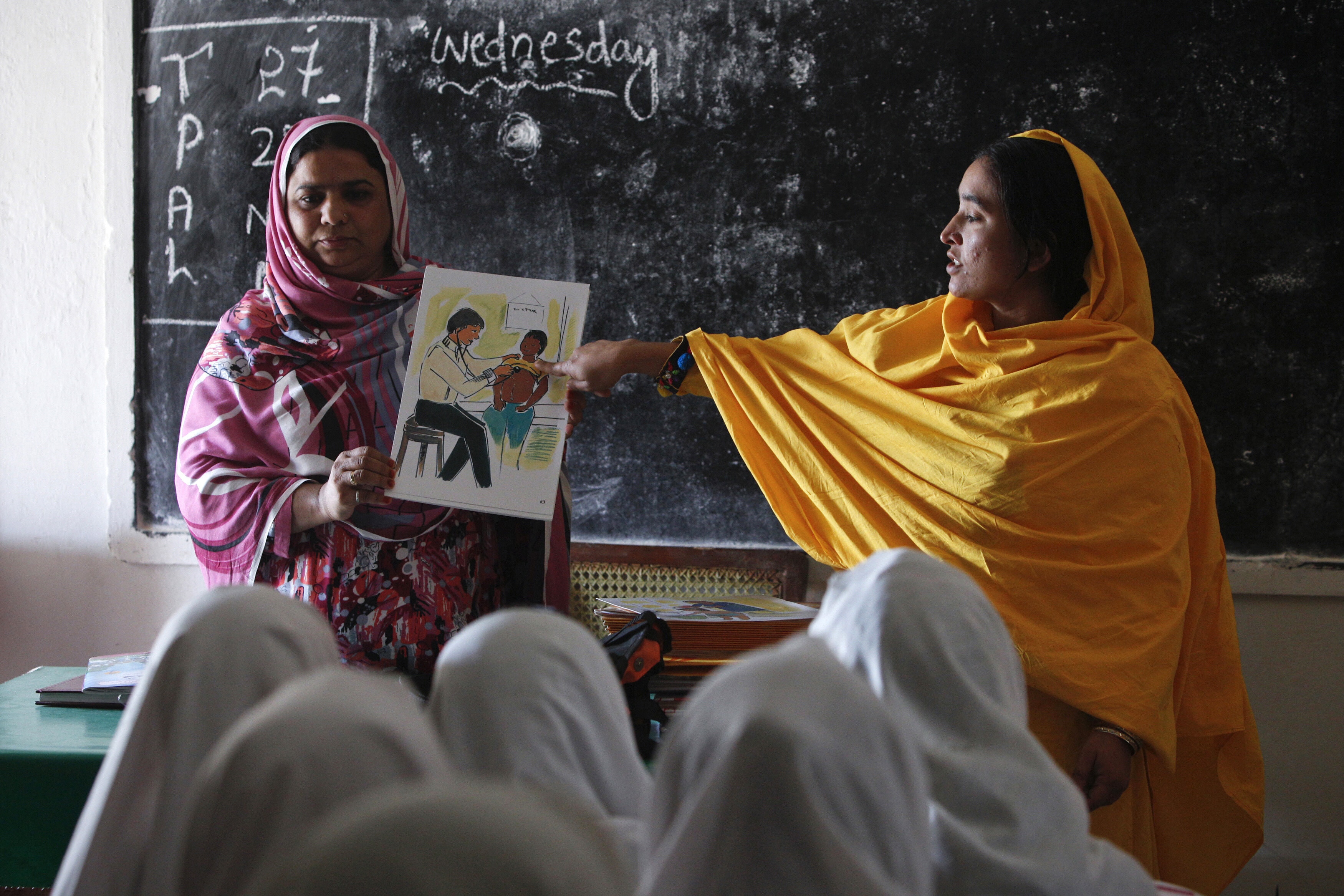
Health literacy is a major challenge that, if addressed, could unlock billions in healthcare funding globally. Image: REUTERS/Akhtar Soomro (PAKISTAN - Tags: EDUCATION)
- Nearly one in four adults have low health literacy, meaning they struggle to access, interpret and act on the health information available.
- Reducing low health literacy by 25% across 40 countries could save health systems an estimated $303 billion every year.
- Reducing health literacy requires a whole of society approach, with the public and private sectors working in concert.
Health literacy is a healthcare challenge that doesn’t get enough attention. For nearly one in four adults, low health literacy makes it difficult to find, understand, evaluate and act on health information.
That has real consequences: lower healthy life expectancy, avoidable illness, delayed diagnosis and ultimately higher health costs. The latest Economist Impact research, supported by Haleon, health literacy can no longer be seen as a nebulous or “nice to have” concept discussed on the margins of public health policy. Rather, it needs to be leveraged as a positive driver of health inclusivity, improved productivity and lowering avoidable health costs.
Improving health literacy can transform how health systems function today. Reducing low health literacy by just 25% across 40 countries could save health systems an estimated $303 billion every year. These findings underline an urgent truth: empowering people with the right knowledge, delivered in the right way and at the right moment, is one of the most powerful public health levers available to policymakers.
Health literacy as a driver of inclusion
Low health literacy does not fall evenly across populations. People facing socioeconomic disadvantage, chronic illness, disability, linguistic barriers or digital exclusion are disproportionately impacted. With health systems increasingly reliant on digital tools and complex care pathways, those with lower health literacy struggle most with navigating the health system. This undermines trusts, hinders preventive health behaviours and fundamentally widens existing health inequities.
It is also important we reframe the conversation on how to improve health literacy. It must be a shared responsibility across institutions and the health systems, not a burden left for individuals to figure out. Research shows that while 80% of individuals want to take more active self care of their health, feeling it is their responsibility to do so, only 20% feel confident they know how. Therefore, despite people having strong personal motivation to look after their own and their family’s health, structural barriers continue to get in the way. Simple, accessible information and inclusive services are essential to enable people to make confident decisions about their health.
Five ways to improve health literacy
Our research identifies five steps for action: a whole of government and society effort, organizational accountability, quality health information, countering misinformation and strengthening measurement. Together, these actions can help put better everyday health in more hands.
1. A whole of government and society effort
Health literacy must be embedded across health, education, digital and social policies. Scotland, Australia and China have introduced national strategies, yet implementation gaps persist. It requires a focus from across government departments and wider actors, including healthcare businesses and frontline providers from pharmacies to supermarkets.
2. Health literate organizations
Healthcare systems need to reduce the health literacy burden on individuals. Approaches such as plain language communication, multilingual resources, co-designed patient materials and evidence-based strategies like the NHS teach-back method - where patients play back the advice to check it has been understood - have demonstrated strong results. Building staff capability, embedding health literacy into clinical training and designing services that are easy to use help people to find, understand, evaluate and act on health information.
3. High quality, inclusive information
Information must be accessible in multiple formats to meet the diverse needs of people where and how they learn best, be that digital, print, audio or community based. With AI increasingly used to simplify language and scale translation, keeping humans in the loop remains key to leverage AI’s benefits while checking scientific accuracy and cultural relevance remains.
4. Tackling misinformation
Misinformation spreads fastest among populations with lower health literacy. Health professionals, media platforms, educators, healthcare companies and community organizations share the responsibility to strengthen critical appraisal skills and signpost people to trusted, evidence-based sources. Community pharmacists, for example, are an accessible, trusted gatekeeper and human interface, well placed to deliver reliable advice, tailored to their local community needs.
5. Improving measurement
A multitude of different tools exist for measuring health literacy, yet no unified, global standard has emerged. Policymakers need robust, adaptable frameworks that can track progress over time, while being sufficiently flexible to cultural and structural differences. Networks like WHO’s MPOHL, currently across 29 countries, illustrate how international collaboration can happen.
The role of business in making everyday health more accessible
Improving health literacy won’t happen if it remains the responsibility of the government alone. Consumer health companies, retailers, technology platforms and the media all shape how people understand their health today.
And information is only one part of the solution. Access matters, too. Through the Haleon Better Everyday Health Project, we are working with partners, including CARE International, to train Community Health Entrepreneurs to provide tailored health literacy interventions in their local communities. In Kisumu County, Kenya, this includes improving self-care knowledge and increasing access to affordable everyday health products. When people receive advice from those they know and trust, in ways that make sense, proactive health behaviour changes happen.
As health systems confront rising pressures, improving health literacy is an effective way to reduce health inequities, saving cost and boosting productivity. But progress requires coordinated and sustained action.
For policymakers, health literacy can be delivered in a cost-effective way by embedding it into national strategies, with information that is accessible for all. Businesses can ensure health information, products and services are designed to be inclusive – co-creating materials with those they are designed to serve, building trust and confidence through each consumer interaction. Health systems can implement tools that make services more intuitive for everyone to navigate.
By acting together to make a concerted effort to improve health literacy, we can empower people to take more control of everyday health today, for better health outcomes tomorrow. We call for governments, businesses, health systems and communities to follow the five steps outlined here to improve health literacy and help millions of people take more control of their everyday health.
Don't miss any update on this topic
Create a free account and access your personalized content collection with our latest publications and analyses.
License and Republishing
World Economic Forum articles may be republished in accordance with the Creative Commons Attribution-NonCommercial-NoDerivatives 4.0 International Public License, and in accordance with our Terms of Use.
The views expressed in this article are those of the author alone and not the World Economic Forum.
Stay up to date:
Education and Skills


Forum Stories newsletter
Bringing you weekly curated insights and analysis on the global issues that matter.
More on Health and Healthcare SystemsSee all

Andrea Willige
March 12, 2026


