4 lessons on trading impact from India’s Social Stock Exchange
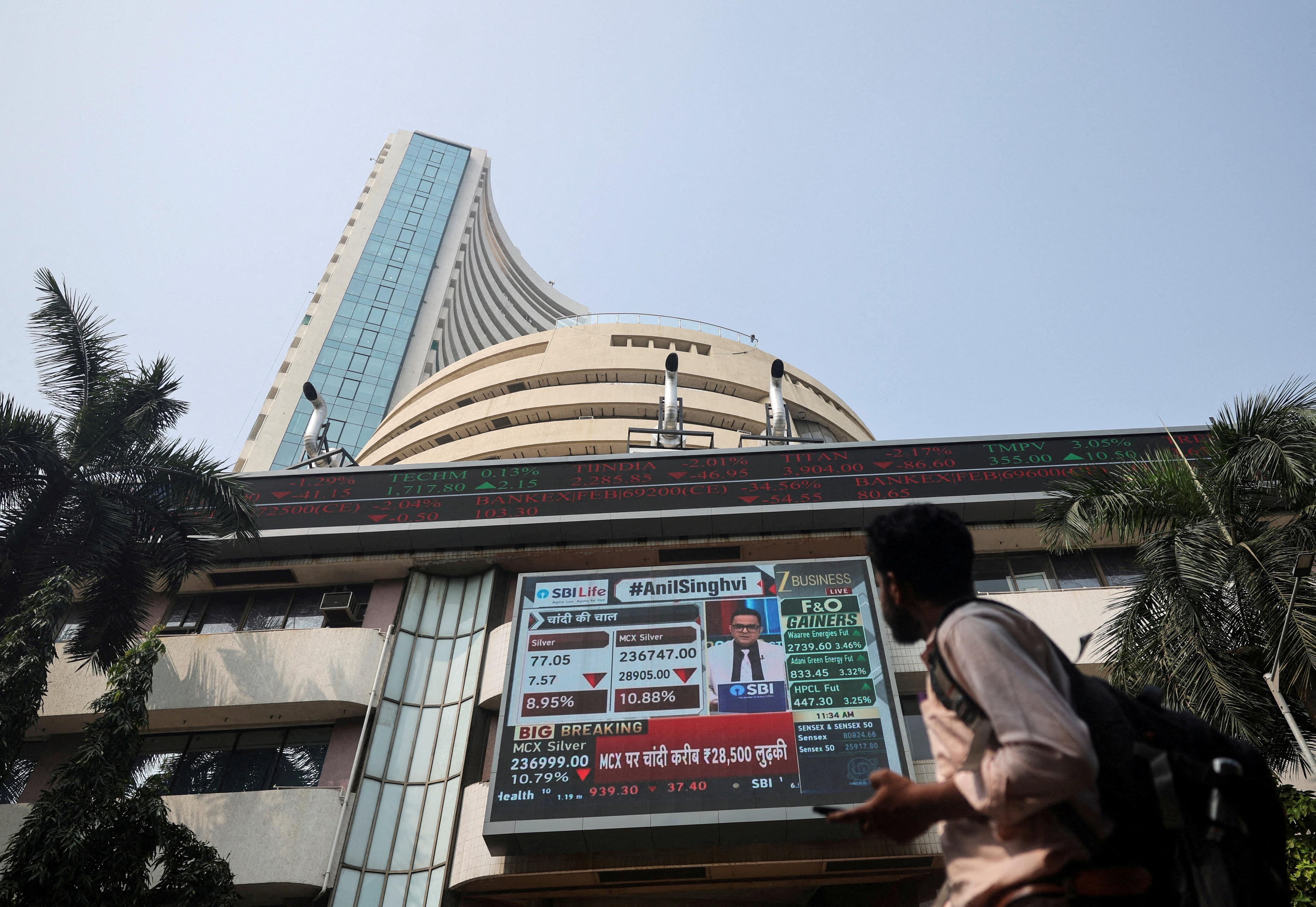
India’s Social Stock Exchange model shows an alternate finance pathway embedded in public design, market infrastructure and social mission. Image: REUTERS/Francis Mascarenhas
- India's Social Stock Exchange (SSE) enables non-profits and social enterprises to list and raise funds on a regulated exchange.
- With oversight from the Securities and Exchange Board of India, it enables purpose-driven bodies to raise capital in a regulated market.
- The Social Stock Exchange offers a template for other countries on integrating impact into their capital market structures.
Imagine a rural development charity financing clean water, health and livelihoods by listing on a regulated exchange, just like a tech startup listing shares. India’s Social Stock Exchange (SSE) is making that vision a reality for purpose-driven non-profit organizations and social enterprises.
Over the past five years, this experiment has evolved from a bold idea to a structured platform under the oversight of the Securities and Exchange Board of India (SEBI).
What can the world learn from this journey? This blog outlines four key lessons.
1. Build legitimacy through established actors
India's approach to the Social Stock Exchange was unusual in that it emerged as a state-initiated effort, unlike social exchanges in other countries that typically began as non-governmental organization (NGO) or market-led experiments.
This government-led genesis lent the initiative early legitimacy. The first explicit mandate came from Finance Minister Nirmala Sitharaman’s announcement in the 2019 Union Budget, proposing a social stock exchange under the Securities and Exchange Board of India regulatory ambit.
Building on this mandate, SEBI created a broad framework for the SSE within India’s existing stock market architecture, drawing on its experience governing mainstream financial markets to shape this new alternate finance channel.
By 2023, with the scaffolding framework in place, both the Bombay Stock Exchange and the National Stock Exchange created a dedicated SSE segment within their exchanges, embedding it within India’s most trusted market institutions and lending it further legitimacy.
This paved the way in December 2023 for SGBS Unnati Foundation to become the first entity to list on the SSE and raise funds for skill training of underprivileged youth.
2. New financial instruments for non-profits
India complemented the legitimacy of SSE with the creation of financial instruments, particularly for non-profits. The most significant innovation was the introduction of the Zero Coupon Zero Principal (ZCZP) instrument – a new legal instrument that enables non-profits to raise capital in a regulated market.
In 2024, Swades Foundation used this instrument to raise INR 100 million ($1.1 million) to finance its sustainable livelihoods projects in goat rearing, health, and education. Over time, SEBI has progressively lowered retail thresholds for participation in ZCZP, currently set at a minimum of INR 1,000 ($11), to broaden participation in SSE.
Alongside ZCZP, SEBI’s framework introduced a mutual‑fund‑like pooled-investment structure, enabling donors and investors to contribute through fund units that allocate proceeds to registered non-profits. The SSE also enables social impact funds, which could also be used by for-profit social enterprises, to pool capital from investors, unlike ZCZPs, which can only be issued for specific, project‑linked raises.
3. Create new categories of complementary actors
India’s Social Stock Exchange ecosystem did not solely rely on new financial instruments; it also created new categories of professionals and intermediaries to ensure credibility, verification, and compliance.
These complementary actors were central to getting SSE to work at scale. This included the creation of a new professional category of Social Auditors who were certified by the National Institute of Securities Markets (NISM). This certification included training on impact measurement, disclosure norms and SSE regulations.
This was complemented by SEBI-endorsed self-regulatory organizations creating allied capacities. For instance, the Institute of Cost Accountants of India (ICMAI) established the Social Auditors Organisation (SAO) to register social auditors and ensure quality assurance. These institutions, with existing credibility and experience, brought the discipline and audit culture from the traditional financial reporting ecosystem to the social sector.
4. Bring standards to a diverse social sector
India’s SSE also brought standards and key performance indicators (KPIs) to a diverse social sector at every step. At the formulation stage, the exchange requires a logic model framework so that every listed non-profit or for-profit social enterprise articulates outcomes that cascade into outputs, activities, and inputs, offering a common structure for assessors to review and compare.
The self-regulatory organizations endorsed by SEBI have developed uniform norms for impact assessment, coinciding with specified themes on the United Nations Sustainable Development Goals to guide what to measure and how during social audits/assessments, bringing uniformity to measurement across social sector domains.
During impact assessment, the National Institute of Securities Markets (NISM)-certified social auditors apply these standards to review the annual Social Impact Report. This report requested baseline/situation analyses, solution implementation plans, outcome and output KPIs, trend tables, and deviations from SSE-funded projects.
Finally, end‑to‑end traceability is enforced with specific use‑of‑proceeds in fundraising documents and beneficiary metrics, including the yearly fund‑utilization plus the impact report, which helps to close the loop against the KPIs committed at issuance.
India’s Social Stock Exchange model highlights alternate finance pathway
India’s state-initiated SSE model shows an alternate finance pathway embedded in public design, market infrastructure and social mission. The next step is to scale this up, particularly by broadening retail donor participation and deepening data capture and verification as volumes grow.
By ensuring legitimacy with established actors, creating new financial instruments for non-profits, building a cadre of complementary professionals, and standardizing KPIs and monitoring, India has set the building blocks in place for converting philanthropy into a regulated, outcome-based marketplace.
This is not only beginning to mobilize more capital for underserved communities at home, but also offers a template for other countries to integrate impact into their capital market structure.
Don't miss any update on this topic
Create a free account and access your personalized content collection with our latest publications and analyses.
License and Republishing
World Economic Forum articles may be republished in accordance with the Creative Commons Attribution-NonCommercial-NoDerivatives 4.0 International Public License, and in accordance with our Terms of Use.
The views expressed in this article are those of the author alone and not the World Economic Forum.
Stay up to date:
Social Innovation
Related topics:


Forum Stories newsletter
Bringing you weekly curated insights and analysis on the global issues that matter.
More on Social InnovationSee all

Marcela Guerrero Casas, Mikhail Manuel and Shabari Shaily-Gerber
March 3, 2026


