Opinion
The global price tag of war in the Middle East
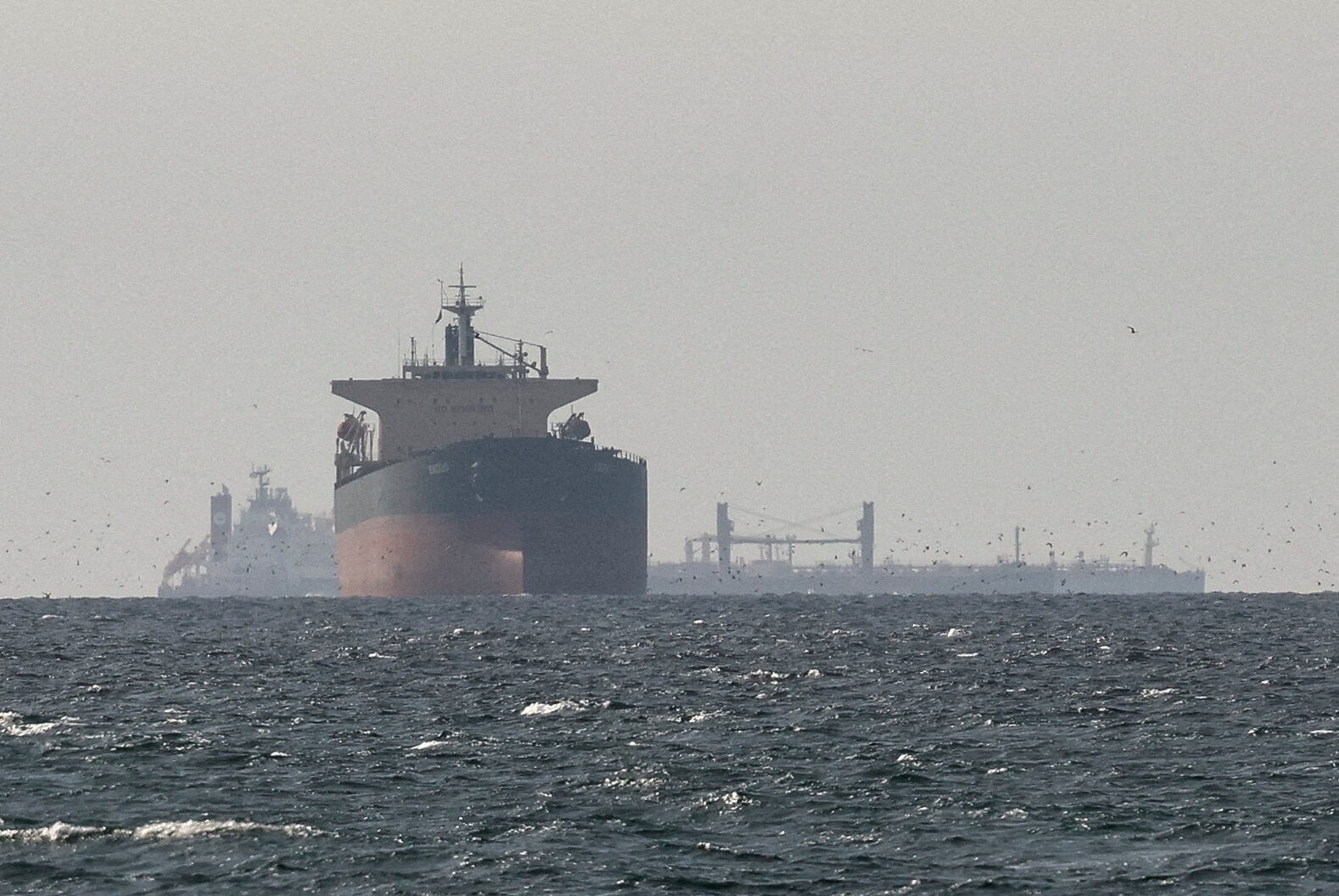
The Strait of Hormuz remains a critical global chokepoint where disruption threatens energy and high-tech supply chains. Image: REUTERS/Stringer/File Photo
- The cascading economic fallout from the conflict in the Middle East is radiating well beyond the Persian Gulf, reshaping markets and supply chains – potentially for years to come.
- The Strait of Hormuz in particular remains a critical global chokepoint where disruption threatens not just oil shipments but also fertilizer access and high-tech supply chains.
- Asymmetric economic shocks disproportionately burden import-dependent Asian economies and vulnerable nations facing high inflation and debt.
The US-Israeli war with Iran has generated a media economy of its own, dominated by body counts, bomb damage assessments and breathless updates from the Strait of Hormuz. That attention is warranted. The costs in human life and degraded infrastructure are high, with Iran retaliating across the region.
But the media’s focus on the kinetics is obscuring something equally significant. The war’s cascading economic fallout is now radiating well beyond the Persian Gulf, reshaping global commodity markets, food systems, industrial supply chains, financial conditions and geopolitical alignments – potentially for years to come.
This is not only a regional crisis. It is a structural shock to the world economy, delivered at a moment of geoeconomic fragility. The longer it runs, the more lasting the damage becomes. First it hits oil, gas, shipping and aviation; then inflation, industrial costs and food security; and eventually trade routes, investment decisions and political stability.
The strait of Hormuz is the world's jugular
The Strait of Hormuz – a narrow sea passage between Iran and Oman – has long been described in terms of its significance for oil. That framing is incomplete.
It’s true that roughly 20 million barrels per day of crude oil and oil products moved through the strait in 2025, as did roughly one-fifth of global liquefied natural gas trade in 2024. Since the opening strikes on Iran last month, commercial traffic through it has been severely disrupted; insurers, shipowners and energy traders see it as functionally impaired.
Brent crude oil prices jumped about 15% in the opening days of the conflict, then surged to $120 a barrel as it deepened and the market began pricing in the risk of sustained disruption. In a worst-case scenario, some analysts have predicted that prices could reach $150 or more.
Yet the energy disruption is only the most visible layer. The strait is a chokepoint for an interlocking web of commodity flows. Even where cargo still moves, the war is imposing a global surcharge through shipping costs and insurance. War-risk cover has been canceled or repriced, marine premiums have surged, and freight costs are rising across energy and non-energy trade alike. The ripple effects have stretched from semiconductor fabs in Taiwan, China, to farms in Brazil and steel mills in South Korea.
Dependencies extend from chips to crops
Consider Qatar’s role in the global helium supply. The war has already taken roughly one-third of the world’s helium supply off the market, following a disruption at the massive Ras Laffan energy hub. Helium is essential for semiconductor manufacturing, medical imaging, and other high-tech uses. A prolonged disruption would tighten an already concentrated market and could become a serious constraint for industrial supply chains.
The fertilizer shock is potentially more devastating, though it has been largely overlooked in mainstream news coverage. The Gulf is a major artery for urea, ammonia, sulfur and other fertilizer inputs, and conflict-related disruption has already tightened supply. Prices for urea, the most popular synthetic nitrogen fertilizer, have increased by about 30% over the past month, while soybean oil prices hit their highest level in more than two years.
The timing is brutal. Northern Hemisphere spring planting is beginning, so farmers from Canada and Brazil to India and sub-Saharan Africa are making purchasing decisions against a backdrop of price spikes and uncertainty. Because synthetic nitrogen fertilizer is mostly made using natural gas, the disruption to Middle East gas shipments has also impacted production elsewhere. The result is tighter global nitrogen availability now, and likely weaker crop yields months from now.
The clean-energy transition adds another layer of exposure. Higher fuel, feedstock, insurance and freight costs are raising production and transport costs across the wider industrial system, including for solar panels, batteries and wind components. Airspace closures and rerouted flights are also pushing up travel, logistics and air-freight costs between Europe, the Gulf and Asia. Water, too, is becoming an economic variable; as missiles and drones threaten desalination plants, the war exposes the energy-water nexus that underpins urban life and industry across the Gulf.
Asia pays the bill
The asymmetry at the heart of this war’s economic geography is stark. The US imports relatively little oil through Hormuz, so its Asian peers bear an overwhelming share of the burden that’s been created. More than 80% of oil and LNG shipped through the strait in 2024 went to Asian markets, with China, India, Japan and South Korea the primary destinations.
Japan relies on the Middle East for about 90% of its crude oil imports, most of which passes through Hormuz. South Korea gets about 70% of its crude from the Middle East and routes more than 95% of that through Hormuz. LNG prices in Asia have surged, and South Korea has already moved to activate a 100 trillion won (roughly $68 billion) market-stabilization programme in response to war-related volatility.
China has large strategic and commercial oil reserves, which should help cushion short-term disruption. But China’s already modest 2026 growth outlook could come under heavier pressure. Higher energy costs would feed directly into production costs for steel, chemicals and electronics, squeezing margins and weakening export competitiveness at a moment of intense trade friction.
India, with thinner reserves and a heavy reliance on Middle Eastern crude, is more vulnerable to a prolonged disruption. Higher energy prices are feeding inflation, weakening the rupee and threatening growth. Wheat prices have moved higher, and analysts have warned that less-wealthy, food- and fuel-importing countries could face acute stress if the conflict continues.
The war is already complicating monetary policy decision-making, as economists in countries as far from the battlefield as Chile and Poland scale back expectations for rate cuts – as oil prices rise and uncertainty deepens.
The shock is global, because the price channels are global.
The pain of that shock, however, is unevenly distributed. Wealthier Asian importers can draw on reserves and stabilization funds. Poorer fuel- and food-importing states in Africa and Asia cannot. For them, the same shock arrives more swiftly in the form of higher household prices, fiscal strain, logistical disruption, and a greater risk of rationing or unrest. For economies already struggling with debt, the war is becoming a balance-of-payments problem as much as an energy one.
Geopolitical competition compounds fragility
This war has landed in a global economy already navigating tariffs, post-pandemic debt overhangs and inflationary pressures that central banks in Europe and Asia have only recently begun to contain. As the World Economic Forum’s 2026 Global Risks Report made clear, such a confluence can be toxic. Every additional week of disruption makes recovery harder and more expensive.
The economic architecture of the conflict exposes a fundamental contradiction. The US has imposed enormous costs on many of the same economies it relies on as trading and strategic partners. The damage to allied economies will complicate the coalition politics that will likely be needed for post-conflict stabilization, not to mention addressing future crises elsewhere.
Iran, unable to match the US and Israel militarily, is internationalizing the costs of war by targeting energy, shipping, commercial and civilian infrastructure across the Gulf. The logic is simple: raise the price of escalation until pressure for de-escalation builds.
What begins as a battlefield shock hardens into a geoeconomic one.
”Historically, every major oil shock has generated a policy response proportional to the pain it inflicts. The 1973 oil embargo accelerated France’s now formidable nuclear programme. The 1979 Iranian Revolution drove Japan’s aggressive energy-efficiency push. The current crisis, which simultaneously exposes Asia’s dependence on oil and LNG imports and the fragility of fertilizer supply chains (and of food security generally), may prove to be a powerful accelerant for diversification, redundancy and stockpiling. But structural adjustment takes years. In the interim, the damage is accruing.
When war strikes one of the world’s most critical trade nodes, secondary and tertiary effects compound in ways no model fully captures in real time. Insurance premiums rise, investment decisions are deferred, supply chains are rerouted, and trust in Gulf stability erodes. What begins as a battlefield shock hardens into a geoeconomic one.
If oil prices remain elevated, global inflation will rise above pre-conflict forecasts while growth falls short. That may not sound dramatic, but it is for dozens of import-dependent economies already under strain. Fertilizer shocks do not register as quickly as the petrol prices liable to change overnight; crop losses won’t appear until months from now. If the war drags on, governments face a cumulative squeeze of higher import bills, tighter monetary conditions, shrinking fiscal space and rising political pressure at home.
The cost of war often registers in the quieter arithmetic of farms that will be under-fertilized, flights that will be rerouted, industrial inputs that will be harder to source, families that will pay more for food and fuel that’s already expensive, and economies that will lose even more of their margin for error.
Don't miss any update on this topic
Create a free account and access your personalized content collection with our latest publications and analyses.
License and Republishing
World Economic Forum articles may be republished in accordance with the Creative Commons Attribution-NonCommercial-NoDerivatives 4.0 International Public License, and in accordance with our Terms of Use.
The views expressed in this article are those of the author alone and not the World Economic Forum.

Forum Stories newsletter
Bringing you weekly curated insights and analysis on the global issues that matter.