Middle East conflict hits shipping, oil prices and other international trade stories to know this month
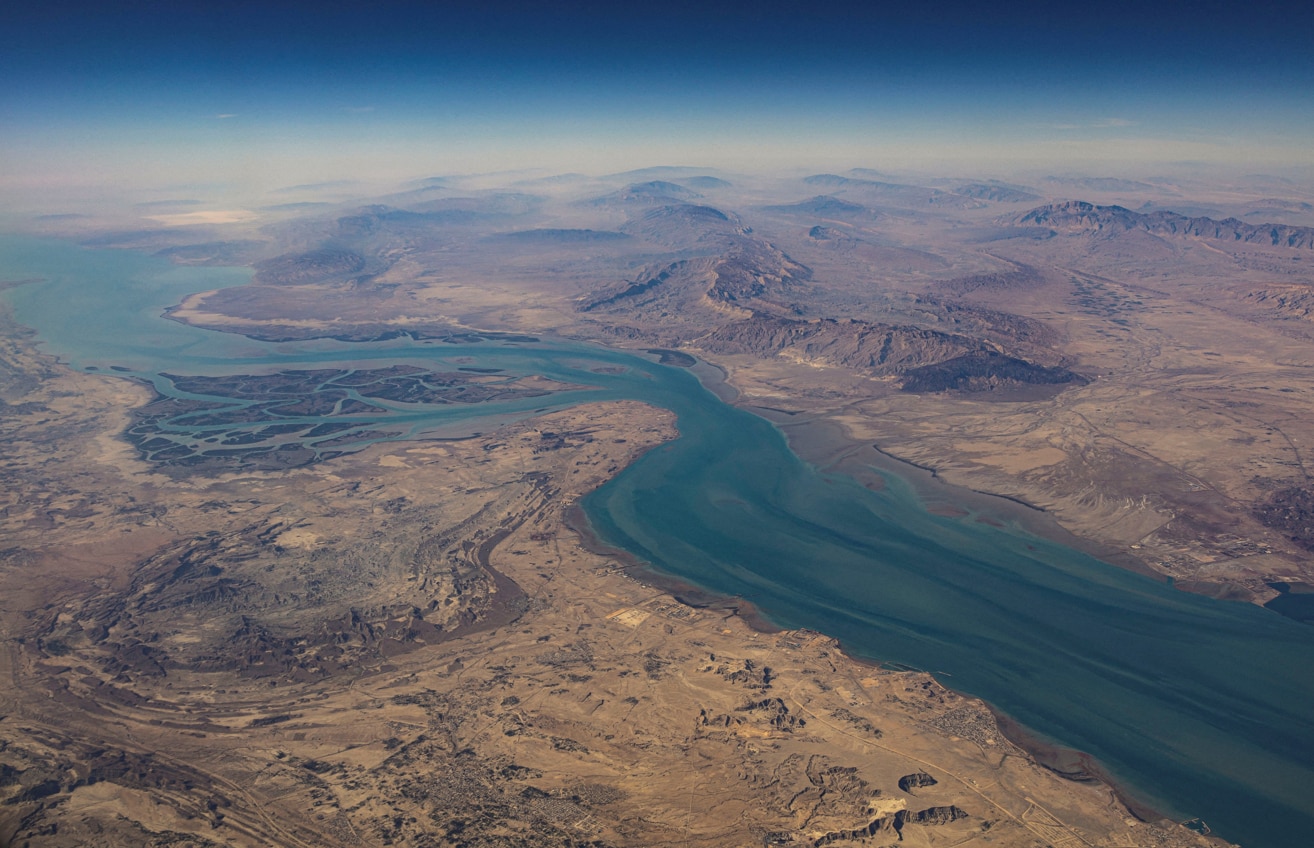
The Strait of Hormuz, on Iran's southern border, is a critical shipping lane in the Gulf for transporting oil. Image: REUTERS
Kimberley Botwright
Deputy Head of CRTG, Head of Responsible Trade & Governance, World Economic Forum- This monthly round-up brings you a selection of the latest news and updates on global trade.
- Top international trade stories: Oil prices soar as Middle East conflict escalates; US goods trade deficit and Supreme Court tariffs ruling; EU-India trade deal.
1. Middle East escalation affects global shipping, oil prices
The latest escalation in the Middle East is rippling quickly through trade. Oil and natural gas prices have jumped since US and Israeli strikes on Iran on 28 February.
Brent crude - the international benchmark - rose as much as 13% in early trading on 2 March, briefly above $82 a barrel, as traders reacted to disrupted flows from the Gulf.
Around 20% of global oil and a similar share of LNG normally transit the Strait of Hormuz, a key shipping lane on Iran's southern border. At the time of writing, around 150 ships had dropped anchor in the waterway, including those carrying oil and natural gas.
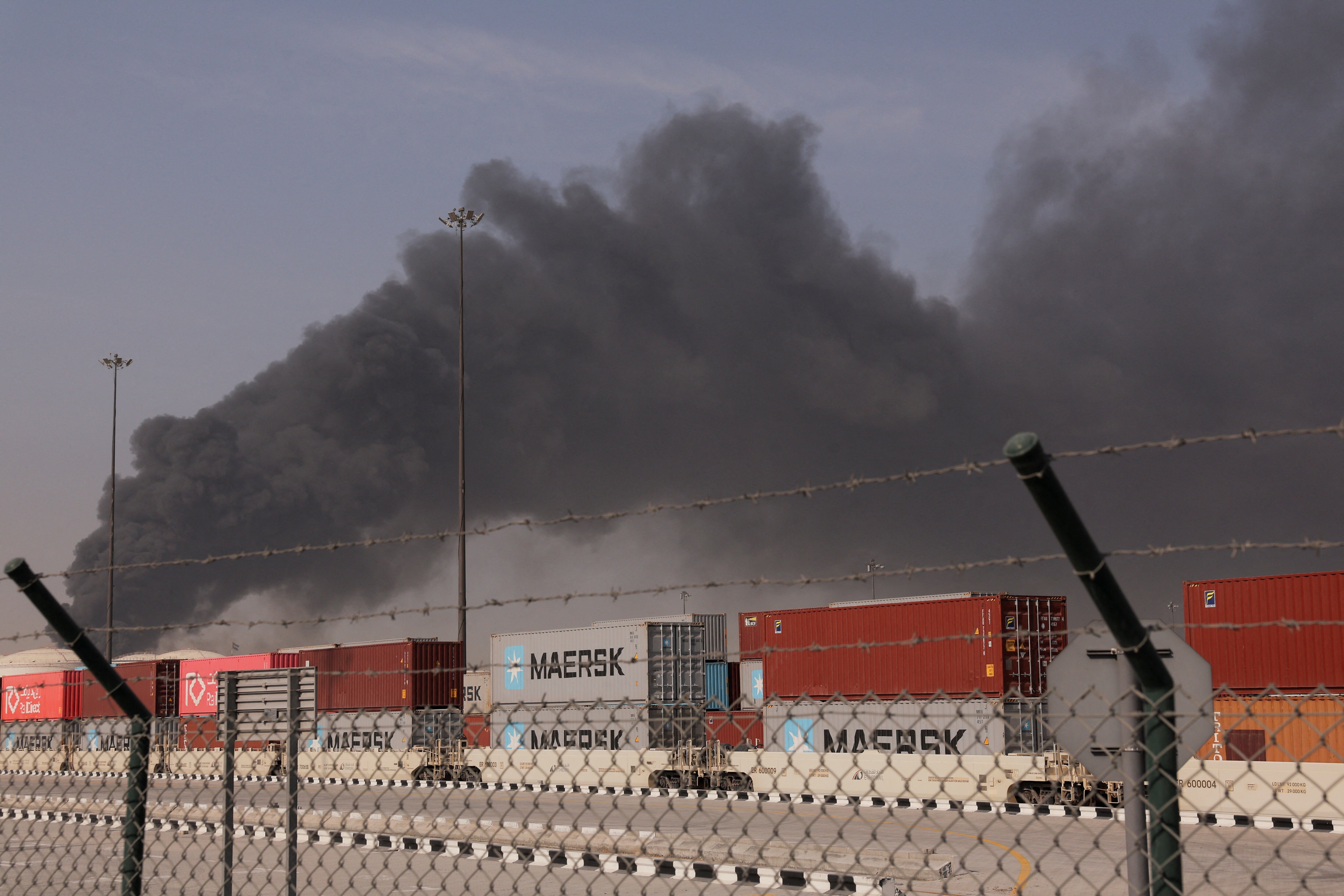
Meanwhile, several ports suspended operations in the Middle East after drone strikes. DP World said operations at Jebel Ali port in Dubai, one of the world's busiest container ports, had been suspended due to a fire after "aerial interception", the Financial Times reported.
Analysts note that the direct impact is most acute for energy‑importing economies in Europe and Asia, and warn that a prolonged closure could feed through into higher inflation and renewed supply‑chain volatility worldwide.
2. Trump's tariffs ruled illegal
Last month, the US Supreme Court issued a landmark 6-3 ruling finding the Trump administration’s use of the International Emergency Economic Powers Act (IEEPA) to impose wide‑ranging tariffs exceeded the president’s statutory authority.
The decision triggered a series of policy and market responses, including:
- The administration swiftly announced a 10% global tariff on all imports under Section 122 of the Trade Act of 1974, effective 24 February, potentially to be increased to 15%, the statutory maximum. These tariffs are limited to 150 days unless extended by Congress.
- European Parliament lawmakers put work on the EU-US trade deal on hold, requesting clarification from Washington before the process resumes.
- The US and India deferred trade deal talks that were due to take place in Washington, to "study the implications" of the Supreme Court ruling.
- More than 900 companies have sued the White House over the tariff regime, the Financial Times reported on 26 February. Refunds could cost the government more than $160 billion.
3. US goods trade deficit grows
The US recorded a $1.24 trillion goods trade deficit in 2025, the highest level on record, and up 2.1% on 2024, according to official data released on 19 February. The total trade deficit shrank slightly, supported by an expanding trade surplus in services.
The monthly goods and services deficit in December widened by 32.6% to $70.3 billion, the Census Bureau and the Bureau of Economic Analysis announced, with exports falling and imports growing despite wide-sweeping tariffs.
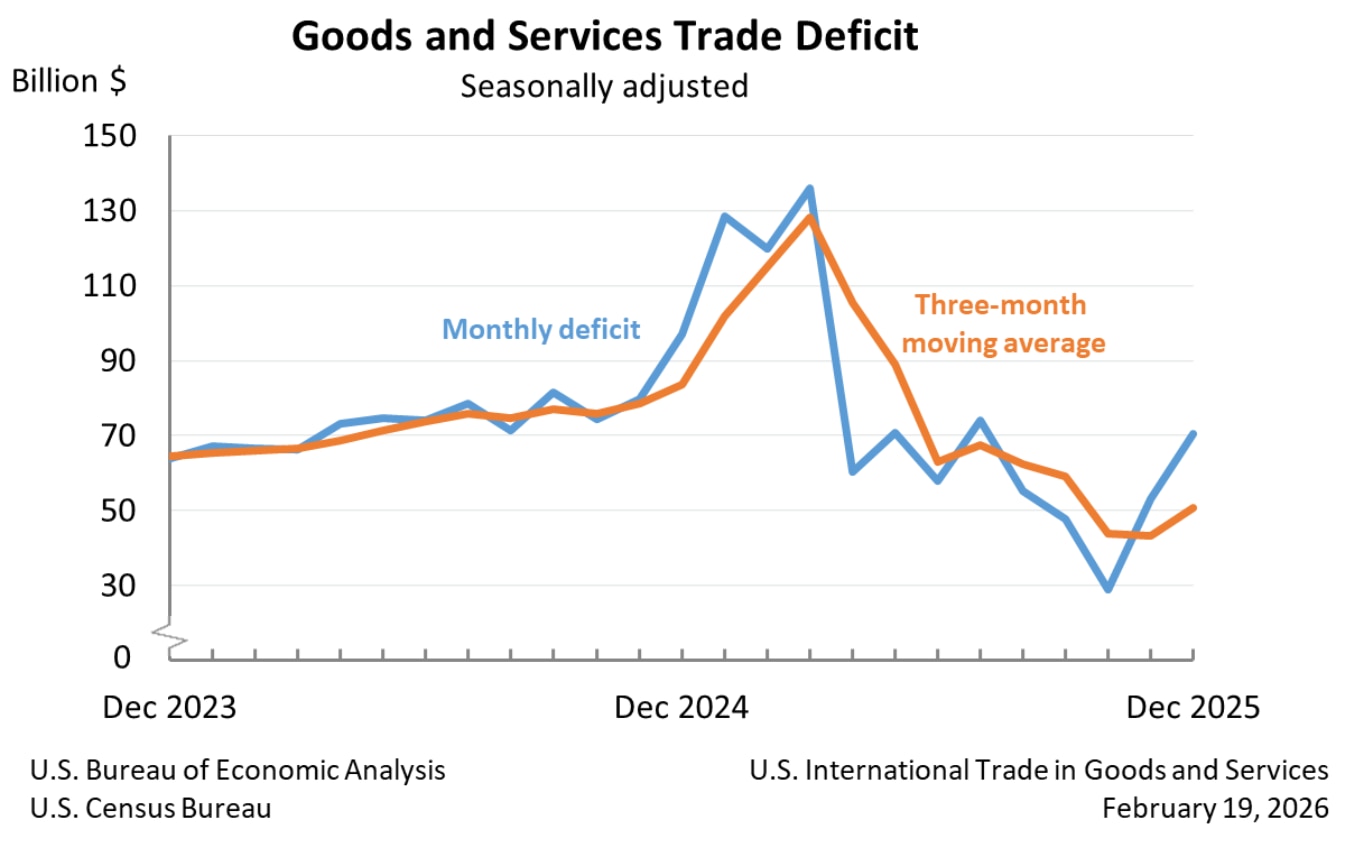
Overall goods imports reached $3.44 trillion in 2025, led by capital goods such as computers and telecoms equipment.
While the US trade deficit with China fell, it was offset by increases in trade deficits with other nations. US imports from China fell by $130.4 billion to $308.4 billion, while imports from Taiwan and Viet Nam increased, by $85.2 billion and $57.3 billion respectively.
4. News in brief: Trade stories from around the world
More than 3,000 new trade and industrial policy measures were introduced globally in 2025 - more than three times the annual level recorded a decade ago. The World Economic Forum's Global Value Chains Outlook 2026 found that nearly three in four business leaders now prioritize resilience investments, with 74% viewing resilience as a driver of growth rather than a cost. The report calls for a shift away from efficiency-driven supply chains towards "adaptive networks" that can be reconfigured as conditions change.
At the end of January, India and the EU reached a landmark free trade deal, 20 years in the making, which creates the world’s largest free trade zone, encompassing two billion people and nearly 25% of global gross domestic product.

German Chancellor Friedrich Merz visited Beijing in February seeking to reset relations with China, which overtook the US as Germany's largest trading partner in 2025 with around $296 billion in bilateral trade.
The US and Indonesia finalized a trade deal on 19 February, just a day before the Supreme Court ruling, centred on a 19% reciprocal tariff on Indonesian goods -down from a threatened 32%.
On 2 February, US President Trump launched 'Project Vault', a $12 billion strategic critical minerals reserve backed by a $10 billion export-import bank loan and nearly $2 billion in private capital. The stockpile aims to counter China's dominance of roughly 70% of global rare earth mining and 90% of processing. The US Trade Representative announced plans to negotiate a critical minerals club, and invited public comment on the design of such an arrangement.

The UK's goods trade deficit widened to a record $338 billion in 2025 - a $41 billion increase on the previous year - according to ONS data released on 11 February. Services provided a partial offset, with the surplus reaching a record $261.3 billion.
UNCTAD's February 2026 Global Trade Update provided a detailed analysis of how uneven US tariff increases are redrawing global competitiveness. Developed economies improved their relative tariff position in the US market by 3.5 percentage points, while developing economies and least-developed countries saw their relative positions decline by 2.7 and 2.1 percentage points, respectively.
5. More on trade on Forum Stories
As much as $5.5 trillion annually may be laundered worldwide, writes Hassan Zebdeh, Financial Crime Advisor and Senior Product Development Manager, Eastnets. Significant portions of that happen via the global trade system – a trend that risks exacerbating as the status quo shifts. Banks are on the front line of this issue, and must harness technology to keep up with criminals.
China will formalize its 15th Five-Year Plan (2026-2030) in March 2026at the National People’s Congress. Continuity with existing policy goals, alongside adaptation to new economic and geopolitical pressures, are key themes. Two experts explore how the country will continue to integrate economic security objectives into industrial policy and broader economic planning. Discover the four trends that are shaping China's industrial policy here.
License and Republishing
World Economic Forum articles may be republished in accordance with the Creative Commons Attribution-NonCommercial-NoDerivatives 4.0 International Public License, and in accordance with our Terms of Use.
The views expressed in this article are those of the author alone and not the World Economic Forum.
Related topics:

Forum Stories newsletter
Bringing you weekly curated insights and analysis on the global issues that matter.
More on Trade and InvestmentSee all

Maira Martini and Katja Bechtel
February 24, 2026


