Opinion
How war in the Middle East has exposed the vulnerability of global choke points
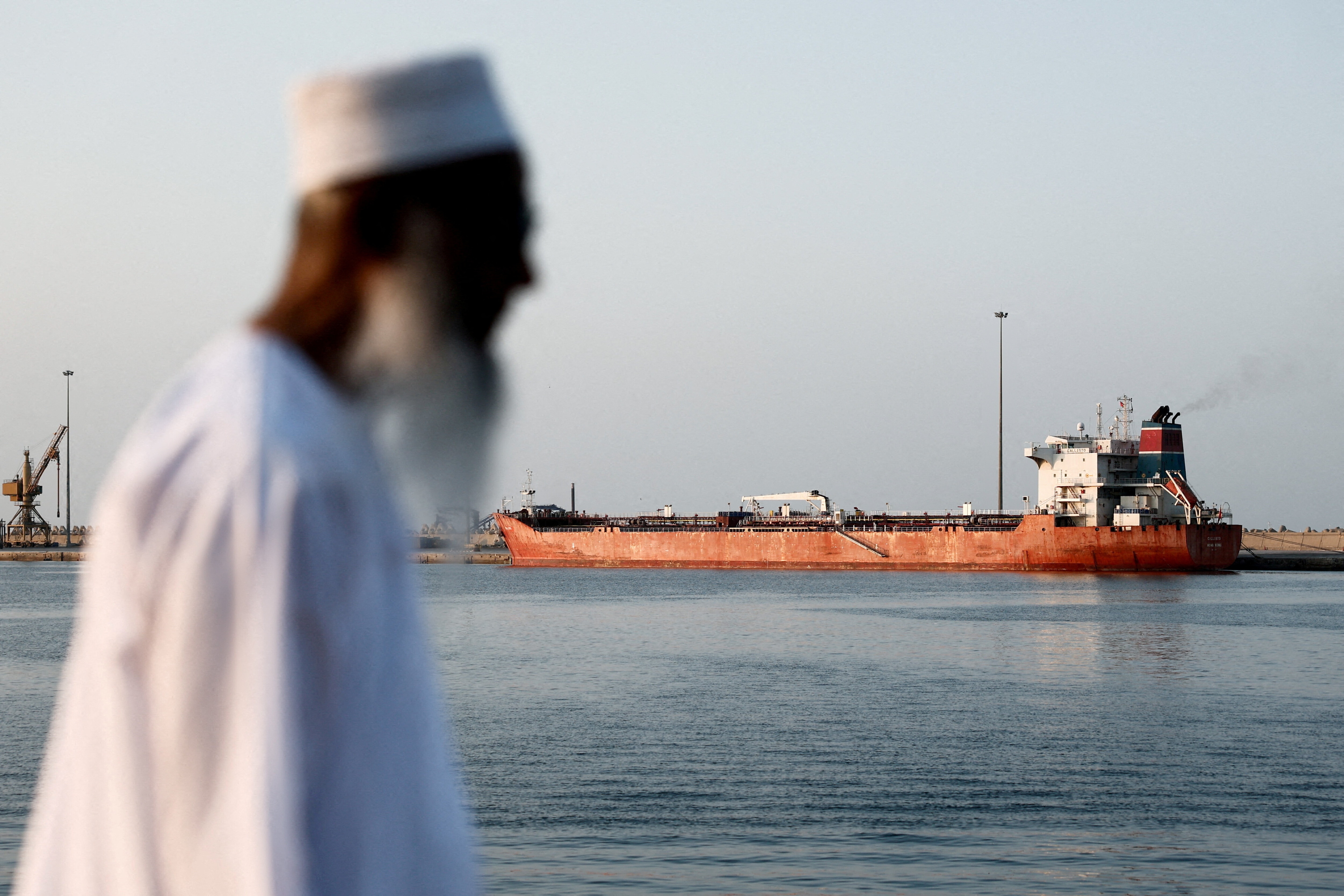
The Strait of Hormuz is one of the world’s most critical maritime choke points. Image: Reuters/Benoit Tessier
- The conflict around the Strait of Hormuz has highlighted how modern power still runs through a surprisingly small number of vulnerable trade routes.
- Narrow passages and concentrated systems are once again shaping conflict escalation, energy prices and financial stability far from any battlefield.
- Choke points are no longer just passages, they also sit inside rare mineral processing chains, server farms and lithography systems for semiconductors.
For centuries, choke points were the specialist concern of admirals, traders and a small priesthood of supply chain analysts. The Iran war has changed that, as the economic impact of soaring energy prices starts to be felt far beyond the Middle East.
The conflict around the Strait of Hormuz has highlighted how modern power still runs through a surprisingly small number of vulnerable trade routes. Narrow passages and concentrated systems are once again shaping conflict escalation, energy prices and financial stability far from any battlefield.
This lesson is not new. During the First World War, the struggle over the Dardanelles was driven by the strategic importance of a narrow waterway linking the Mediterranean to the Black Sea, while in the Second World War, the Battle of the Atlantic was essentially a contest over whether Britain and its allies could keep open the sea routes on which the war depended. Choke points did not merely influence those conflicts; they helped determine their outcome.
What has changed in modern times is not the logic but the object. Choke points are no longer just straits, canals and mountain passes. They also sit inside the processing chains for the rare minerals feeding the green and digital economy, lithography systems for semiconductors, cable landing stations and server farms. Geography still matters, but so does industrial concentration.
The old trade map still rules
The Strait of Hormuz is one of the world’s most critical maritime choke points, carrying roughly one-fifth of global oil and petroleum consumption and a similar share of liquefied natural gas (LNG) trade in 2024 and early 2025.
That alone would make it critical, but the real vulnerability lies in the dependencies stacked on top of it, such as petrochemicals, fertilizer feedstocks, shipping insurers and financial expectations all move when the strait is threatened. The Iran war has made that abstract interdependence suddenly concrete.
A similar vulnerability runs through the Malacca Strait into the South China Sea. Malacca is the world's busiest oil transit corridor, linking Gulf producers to east Asia's industrial economies, while the South China Sea carries roughly one-third of global shipping making it one of the world's most consequential maritime corridors.
Any conflict or disruption in the wider region would threaten not just the maritime routes surrounding it, but also global supply chains – particularly those of the semiconductor industry on which much of modern technology relies.
The Red Sea is also a case in point. Disruption around the Strait of Bab el-Mandeb through which ships transiting between Europe and Asia via the Suez Canal must past, has already showed how quickly attacks on shipping cascade into freight rates, delivery schedules and food markets.
Meanwhile, pressure on the Suez and Panama canals, combined with conflict in the Red Sea, has extended routes, pushed up ton-mile demand and raised costs across global supply chains.
Choke points do not need to close to matter; it is often enough that they become unreliable.
Silicon has its own straits
Beyond maritime geography, global choke points now also include concentrated industrial and digital systems.
Taiwan, China, for example, dominates global foundry capacity and produces most of the world’s most advanced logic chips. That has turned the Taiwan Strait into a double choke point: a shipping corridor on one side, a fabrication bottleneck on the other.
Any conflict or disruption there would not just imperil trade routes, it would cut the supply of components underpinning everything from smartphones to cloud computing and modern vehicles.
South Korea is a critical node in memory – particularly high-bandwidth memory, the technology enabling advanced artificial intelligence systems. Meanwhile, in the Netherlands, ASML occupies an even more refined bottleneck as the sole commercial supplier of extreme ultraviolet lithography machines, without which the most advanced semiconductors cannot be mass-produced.
The geography is different, but the logic is identical. A narrow strait is not the only place where small interruptions produce very large consequences.
What once would have been described as an industrial policy issue is now strategic. The map of vulnerability no longer ends at the shoreline; it extends into clean rooms, equipment supply chains, and a handful of firms that are not easily substituted.
The global battle for resources
Rare earths and minerals that form the components on which high-tech devices rely are also now a critical global choke point.
China is the leading refiner for 19 of 20 important strategic minerals, according to the International Energy Agency (IEA). This means that the industries meant to define the coming era – batteries, electric vehicles, wind turbines and defence electronics – are exposed to a small set of processing hubs and policy decisions made in Beijing.
While rare-earth magnets, cobalt processing, lithium chemicals and graphite anodes may not have the drama of the Suez Canal or Hormuz, they do have the capacity to halt global industrial systems upstream – highlighting why the global discussion of choke points can no longer stop at oil.
A tanker blocked in a strait is visible, but a refined mineral that fails to arrive at a cathode plant is not – yet the damage can be just as severe.
Data now travels through narrow gates too
Global choke points extend beyond commodities to the realm of the internet too. Many imagine the world wide web as diffuse and decentralized, but its physical infrastructure is anything but. Subsea cables carry the overwhelming majority of intercontinental traffic, and Egypt has become one of the critical passage points for cables linking Europe and Asia.
More than 90% of Europe-Asia subsea cable capacity runs through the Red Sea cable corridor, making it a choke point of a different kind – one whose disruption would ripple through finance, cloud infrastructure and government operations.
That should change how governments think about resilience. Ports, canals and pipelines still matter and so do cable landing stations, data centres and logistics hubs like Singapore, Rotterdam and Dubai, where physical and digital systems are increasingly fused.
A modern economy does not distinguish neatly between commodity flows and information flows, it depends on both arriving reliably.
Climate now also a threat to choke points
For most of the modern era, strategic vulnerability at choke points has been associated with war, piracy or blockades. However, the Panama Canal has faced another increasingly-frequent disruption to trade flows – that of climate change.
Reduced water levels in the region constrained canal traffic and forced shippers to reroute or wait – precisely the kind of friction that tightly optimized supply chains handle badly, highlighting how climate stress is now a first-order geopolitical variable.
As the drought in Panama shows, a canal does not need to be bombed to become a strategic liability – it can simply run out of water.
That matters because it broadens the risk map. Investors and policy-makers are accustomed in treating geopolitical shocks as exceptional events. They are far less comfortable with a world in which the same choke point can be stressed by missiles one year and rainfall patterns the next. Yet that is now the operating reality.
Iran war exposes the vulnerability of choke points
The strategic significance of choke points lies not just in their throughput but in the absence of substitutes. A route becomes dangerous when detours are costly, spare capacity limited and downstream systems tightly coupled.
That is why a missile strike in the Gulf can feed into food prices in Africa, factory schedules in Europe and monetary anxiety in Washington.
The Iran war has exposed, again, the fragility of a global order built on narrow corridors and concentrated capabilities. In quieter times, these choke points are easy to overlook – efficiency disguises dependence. In wartime, or even prolonged crisis, they reappear as what they always were: hidden levers of escalation.
That was true at Gallipoli and in the Atlantic and it is true now in Hormuz. The difference is that today's choke points also include chip fabs, lithography tools and fibre-optic cables on the ocean floor. The map of vulnerability has widened, but the underlying logic has not.
Don't miss any update on this topic
Create a free account and access your personalized content collection with our latest publications and analyses.
License and Republishing
World Economic Forum articles may be republished in accordance with the Creative Commons Attribution-NonCommercial-NoDerivatives 4.0 International Public License, and in accordance with our Terms of Use.
The views expressed in this article are those of the author alone and not the World Economic Forum.
Stay up to date:
Geopolitics
Related topics:


Forum Stories newsletter
Bringing you weekly curated insights and analysis on the global issues that matter.
More on Geo-Economics and PoliticsSee all

Ralitza Naydenova and Jack Barrie
March 31, 2026