The Strait of Hormuz crisis affects more than just oil. Here are 9 other commodities
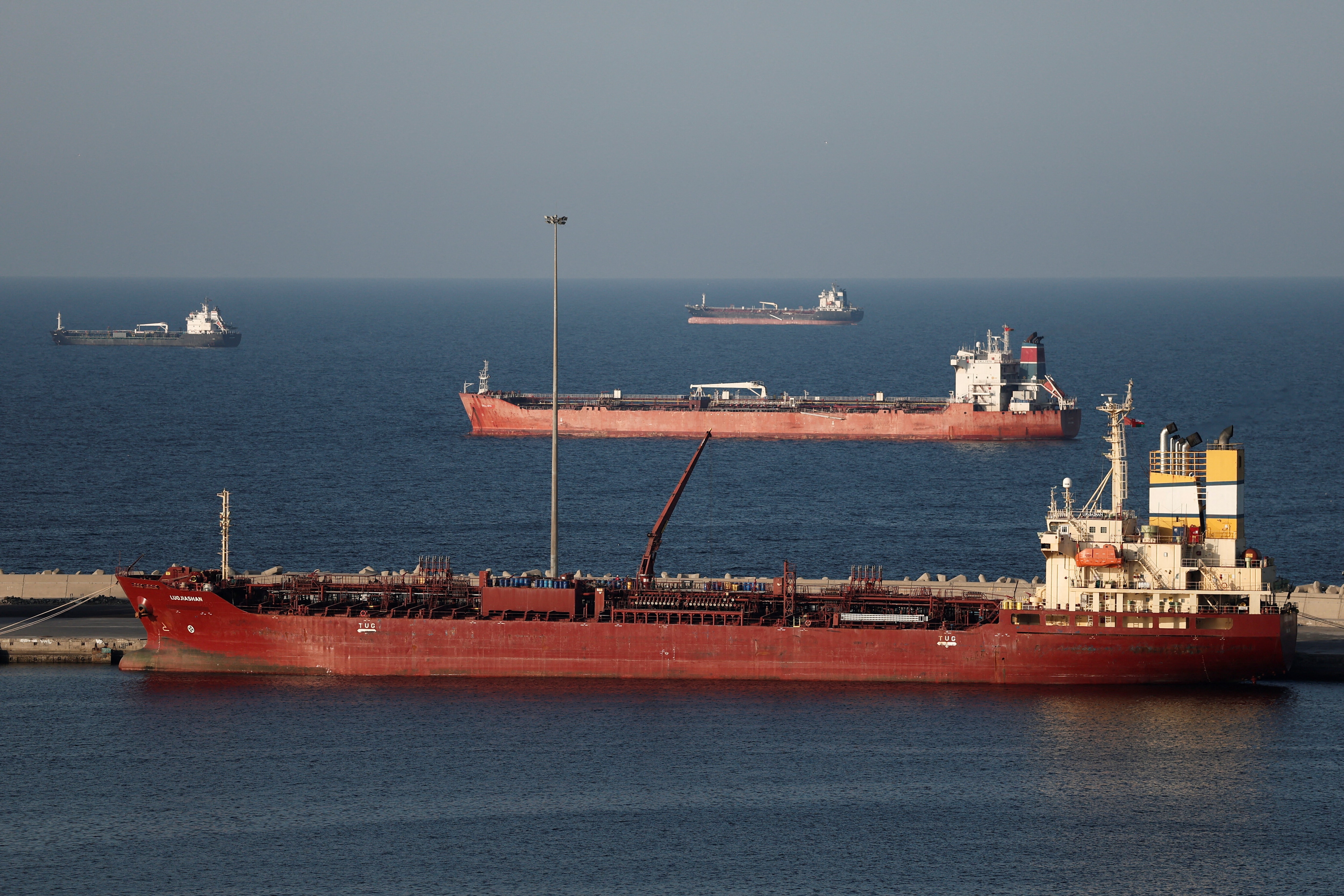
The Strait of Hormuz is a key waterway for global trade. Image: REUTERS/Benoit Tessier
- War in the Middle East has caused significant damage to energy infrastructure and the near closure of the Hormuz Strait, driving oil prices up, but what about the region's other exports?
- Beyond energy, the conflict is disrupting key non-oil commodities – like methanol, aluminium, sulfur and graphite – impacting global manufacturing and the green energy transition.
- Disruptions to these industrial essentials are rapidly reshaping global supply chains – from fertilizers for future harvests to minerals driving high-tech industries. Here are nine at the centre of the shift.
The shipping crisis in the Strait of Hormuz is now "the largest supply disruption in the history of the global oil market", according to the head of the International Energy Agency, Fatih Birol. While focus remains on the 11 million barrels of oil and 140 billion cubic metres of gas usually in daily global circulation, the impact extends far beyond energy.
As the conflict in Iran continues, the blockage also exposes a deeper vulnerability: the Middle East’s role as a primary supplier of non-oil commodities. From the fertilizers essential for global food security to the minerals powering the energy transition, the current shortages are reshaping supply chains in real time.
1. Fertilizers (urea and ammonia)
The Arabian Gulf is the central hub for global agriculture, accounting for at least 20% of all seaborne fertilizer exports. The dependency is even more acute for urea, the world’s most widely used nitrogen fertilizer, with 46% of global trade originating from the region. This supply is critical for major agricultural economies, including India (18%), Brazil (10%), and China (8%). Analysts warn that a prolonged disruption will significantly tighten availability in these import-dependent regions, potentially driving up global food production costs - as well as inflationary pressures.
2. Sulfur
Sulfur, a critical energy material, is a primary byproduct of the region's oil and gas refining process, which is currently at a standstill. Nearly half of all global seaborne sulfur trade passes through the Strait, making the region the global 'price setter' for the commodity. It's the feedstock for sulfuric acid, a chemical required for two global workflows:
- Battery chemistry, which is utilised in the high-pressure acid leaching (HPAL) process required to refine nickel, cobalt and copper for electric-vehicle batteries and renewable-energy storage.
- Industrial phosphorus, which acts as a primary reagent in producing high-analysis phosphate fertilizers, vital for maintaining soil fertility.
Lack of availability is forcing industrial slowdowns in hubs like Indonesia and the copper belt of Africa. As prices surge, disruption threatens both sustainable transport and large-scale commercial farming.
3. Methanol
Around a third of global seaborne methanol trade passes through the Strait of Hormuz, so disruption could tighten the supply of a key chemical feedstock for resins, coatings and plastics, with knock-on effects across chemical value chains. The situation is particularly significant for China, the world's largest methanol buyer, where port inventories could fall from comfortable levels towards "below warning thresholds" if exports from the Middle East remain curtailed, raising costs for producers of plastics, paints and synthetic fibres.
4. Graphite feedstocks
The synthetic graphite used in electric vehicle (EV) battery anodes relies on petroleum coke – a byproduct of oil refining – as its primary feedstock. The impact on synthetic graphite prices could be more severe than other battery materials, as oil refineries may opt to focus on higher-value outputs while prices rally – tightening availability of the petroleum coke byproduct on which synthetic graphite production depends. With shipping costs also rising, natural graphite prices face additional upward pressure – adding further strain to EV battery costs already squeezed by disruptions to nickel, cobalt and sulfur.
5. Aluminium
The Middle East is a major global supplier of primary aluminium outside China, producing around 9% of global primary aluminium. Supply from Gulf smelters has been constrained, and over 150,000 tonnes of metal that had been registered on the London Metal Exchange have been pulled from warehouses, reflecting the wider disruption to regional exports. Aluminium is widely used in construction, transport and renewable energy, and only a few smelters are fully integrated with their own raw materials, making the market sensitive to Gulf supply pressures.
6. Helium
Qatar accounts for nearly one-third of the world’s helium supply, produced as a byproduct of its natural gas processing. As supply tightens, the effects are already rippling through global technology supply chains. Helium plays a critical role in semiconductor manufacturing, supporting processes from ultra-low-temperature cooling to highly precise fabrication. The greater concern, however, lies in healthcare. MRI scanners rely on liquid helium to keep their superconducting magnets at extremely low temperatures; without a stable supply of helium, MRI machines can't operate.
7. Glycol (MEG)
Monoethylene glycol (MEG) – a key input for polyester fibres, packaging and textiles – is one of the Gulf’s most significant chemical exports, with around 6.5 million tonnes shipped in 2025 alone. China, the largest consumer, could face acute shortages while other major importers including India, Indonesia, Pakistan, Vietnam and Thailand are also likely to feel the strain. In response, Asian buyers are turning to alternative suppliers in the United States, a shift that could push prices higher in a market that had recently been weighed down by oversupply and steep discounts.
8. Iron ore/steel pellets
The Gulf is a significant supplier of high-grade iron ore pellets and direct-reduced iron – premium feedstocks for global steelmaking. Shipowners began avoiding the strait almost immediately after the conflict escalated, making it more difficult to secure vessels and prompting buyers across Asia, India and the Middle East to pause new procurement. With freight uncertainty still unresolved, longer transit times and rising shipping costs are beginning to feed through to an industry already operating on tight margins.
9. Green hydrogen infrastructure
While the crisis may ultimately accelerate the shift towards clean energy, it has underscored risks to hydrogen project timelines and export infrastructure. The Middle East has been positioned to become a major green hydrogen hub, with significant electrolyser capacity and export plans in the pipeline. However, ongoing instability and uncertainty around shipping routes and investment could slow the pace of development and the scale-up of production capacity.
As the World Economic Forum’s Global Risks Report 2026 notes, geoeconomic confrontation is now a key driver of economic and industrial policy. While the immediate impact on commodities is severe, the broader signal is a shift towards resilience and diversification across global supply chains.
For governments and industries alike, securing access to critical inputs - from energy to metals and chemicals - is increasingly being treated as a matter of economic and national security.
How the Forum helps leaders make sense of regional, trade and geopolitical shifts
Don't miss any update on this topic
Create a free account and access your personalized content collection with our latest publications and analyses.
License and Republishing
World Economic Forum articles may be republished in accordance with the Creative Commons Attribution-NonCommercial-NoDerivatives 4.0 International Public License, and in accordance with our Terms of Use.
The views expressed in this article are those of the author alone and not the World Economic Forum.
Stay up to date:
Energy Markets


Forum Stories newsletter
Bringing you weekly curated insights and analysis on the global issues that matter.
More on Supply Chains and TransportationSee all

Ralitza Naydenova and Jack Barrie
March 31, 2026


