How war in the Middle East is turning governments into insurers of last resort
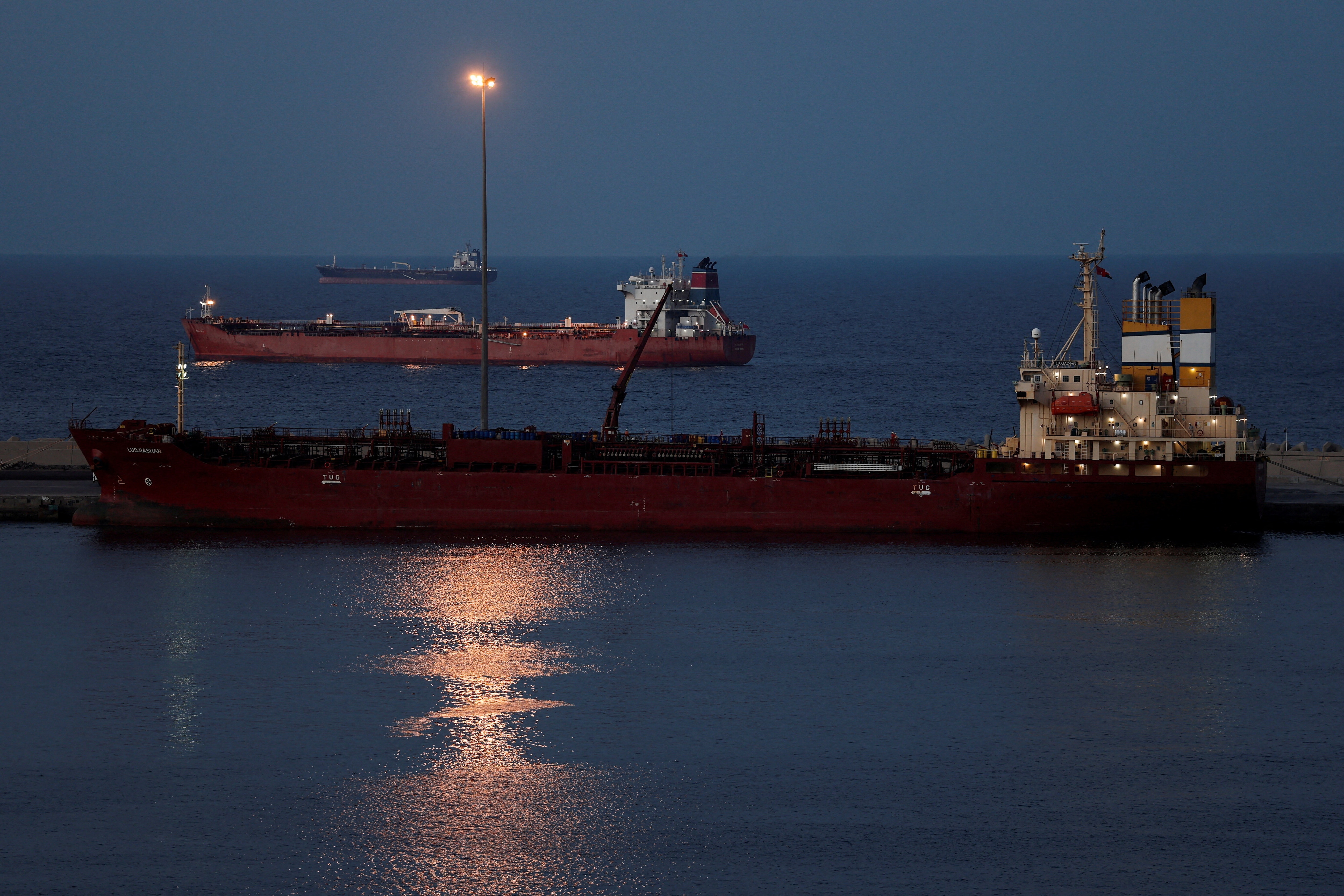
The repricing and withdrawal of war-risk insurance in the Persian Gulf demonstrates the limits of private insurance. Image: REUTERS/Benoit Tessier
- Insurance is a critical pillar of the global economy, but insurers withdraw or limit coverage when risks become too severe.
- Disruption in the Strait of Hormuz due to war in Iran has resulted in the repricing and withdrawal of war-risk insurance policies, exposing the limits of private insurance.
- Governments are increasingly willing to directly intervene to preserve economic continuity aligned with geoeconomic priorities.
The military, humanitarian and energy consequences of the war in the Middle East are dominating headlines and commanding global attention for obvious and important reasons.
Less visible, however, is a quieter yet significant disruption unfolding in parallel: the US government stepping in to backstop war-risk insurance for ships transiting the Strait of Hormuz in response to the repricing – and in some cases withdrawal – of private insurance.
The Strait of Hormuz is a narrow waterway connecting the Persian Gulf to the Indian Ocean. It is a chokepoint in global energy supply chains, with roughly 20% of global oil supply transiting the passageway, including more than 40% of China’s crude oil imports.
Shortly after the United States and Israel launched airstrikes in Iran, the Iranian Islamic Revolutionary Guard Corps said it would close the strait and attack any vessel attempting to pass through. Within hours of its declaration, it targeted five commercial ships. While a two-week ceasefire between the United States and Iran was announced on 7 April, reports indicate that Iran continues to limit access to the Strait.
Accordingly, major maritime insurers have suspended or repriced war-risk coverage for ships travelling through the Strait of Hormuz and the Persian Gulf, at-large. The Joint War Committee of the Lloyd’s Market Association has expanded its “high-risk” designation to cover the entire Persian Gulf.
In the weeks prior to the war, an average of 178 ships transited the Strait of Hormuz each day. However, traffic has reportedly reduced by about 95% since the onset of the war. The resulting shock to global energy flows has driven prices sharply higher, intensified geopolitical tensions and is already costing the global economy.
When shipping insurance premiums surge unpredictably, costs ripple through energy markets and supply chains. But when tankers cannot secure insurance at all, traffic comes to a standstill; ships cannot sail.
At first glance, this episode may appear to be a contained shipping or energy issue but it offers a window into a broader transformation of the global financial system.
Risks that were once widely diversified and managed by private financial institutions are becoming harder to insure, more geopolitically charged and increasingly absorbed by governments seeking to advance their own geopolitical ambitions.
Return of the sovereign balance sheet
In response to skyrocketing premiums and cancelled policies, the Trump administration directed the US International Development Finance Corporation (DFC) to provide political risk insurance to support continued shipping activity through the Strait of Hormuz.
The DFC announced it would partner with leading US insurers to establish a reinsurance facility providing up to $40 billion in coverage on a revolving basis, spanning hull, cargo, and liability risks, including physical damage to vessels and goods as well as third-party liabilities.”
The move expands the DFC’s role. Established in 2019 to catalyze private capital in emerging markets, the DFC has a mandate that include providing political risk insurance, although this has historically focused on nature conservation and economic growth projects in developing economies.
In this case, political risk insurance is being used to stabilize a critical artery of the global energy system in an active geopolitical flashpoint.
Governments are not just stabilizing markets. They are increasingly underwriting them.
”There are significant outstanding operational questions about the DFC policy. Would coverage extend beyond US-linked vessels? Could public capital ultimately support shipments involving geopolitical competitors? For example, would a European-flagged tankers transmitting crude oil to China to covered?
These questions are not purely technical; they speak to how governments are increasingly using financial tools to advance their own geopolitical objectives – a trend that, left unchecked, could cost the global economy between $0.6 trillion and $5.7 trillion in lost growth.
In 2025, analysis by the World Economic Forum’s Navigating Global Financial System Fragmentation initiative found that states are increasingly using the global financial system to advance their geopolitical ambitions, threatening its integrity and risking its fragmentation along geopolitical lines.
That shift has clear and immediate implications for the insurance sector, blurring the line between commercial risk transfer and government policy. JPMorgan energy analysts estimate that roughly 329 vessels are now operating in the Persian Gulf, each requiring hull, liability and pollution coverage, implying roughly $352 billion in insurance coverage that private markets are no longer providing.
When markets reach their limits
Insurance is often described as the invisible infrastructure of global trade. Marine and war-risk coverage allow the shipping industry’s capital-intensive assets to operate in volatile environments by converting uncertainty into quantifiable, transferable risk.
That system works when losses are dispersed and predictable. It struggles when risks become concentrated, correlated and unpredictable, making them difficult to model.
Recent developments in the Middle East reflect this dynamic. This is not a failure of the system; it is the system reaching its limits.
Across a range of risks, including climate and cyber, the pattern is increasingly familiar: when losses become difficult to model or contain, private insurance capacity tightens. What is changing is the growing willingness of governments to step in directly.
A stress test, not yet a structural break
The Strait of Hormuz disruption serves as a useful stress test for insurability in an age of growing risk and volatility. It also illustrates the growing willingness of governments to directly intervene to preserve economic continuity aligned with geoeconomic priorities.
Insurance and the global financial system rest on the idea that risk can be pooled and diversified across geographic, sectoral and institutional bounds. Government intervention not only provides backstops but distorts risk-pricing and clusters risk along geopolitical lines, shaping the contours of what is for insurable, and for whom.
Fragmentation is often discussed in terms of supply chains, technological standards and payment systems. Less attention is paid to the architecture of risk transfer itself.
As geopolitical pressures intensify, the boundaries of private insurability will continue to be tested. The central question is not whether governments should act in moments of acute disruption but whether reliance on sovereign balance sheets will become routine.
In doing so, governments are not just stabilizing markets. They are increasingly underwriting them.
Don't miss any update on this topic
Create a free account and access your personalized content collection with our latest publications and analyses.
License and Republishing
World Economic Forum articles may be republished in accordance with the Creative Commons Attribution-NonCommercial-NoDerivatives 4.0 International Public License, and in accordance with our Terms of Use.
The views expressed in this article are those of the author alone and not the World Economic Forum.
Stay up to date:
Geopolitics
Related topics:


Forum Stories newsletter
Bringing you weekly curated insights and analysis on the global issues that matter.
More on Global RisksSee all

Cecilia Cannon and Marie McAuliffe
April 8, 2026


