Why we need a circular economy for EV batteries and critical minerals
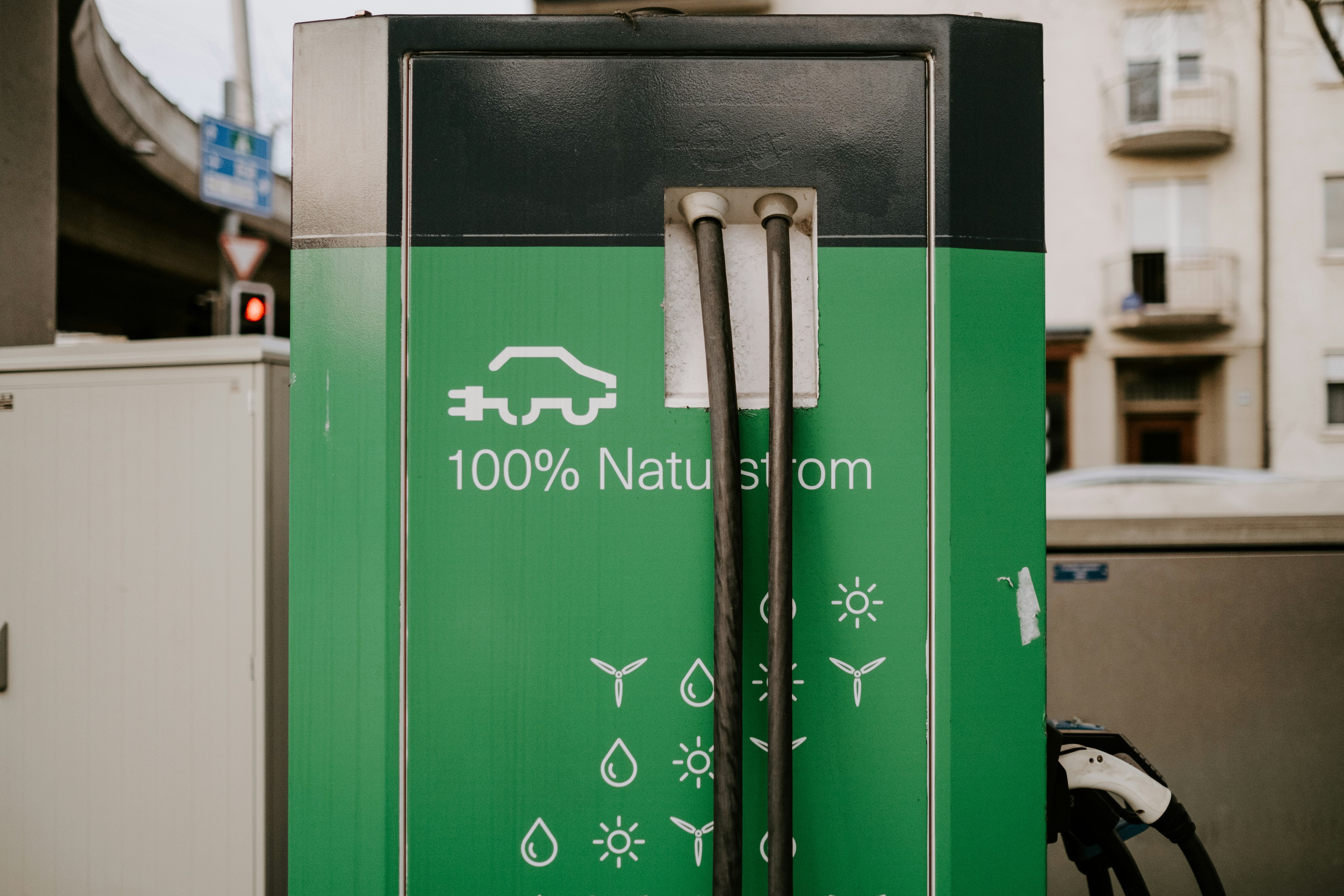
The technologies we depend on to decarbonize our energy system all require significant and growing quantities of critical minerals. Image: Claudio Schwarz/Unsplash
- The global shift to electrification creates a fundamental materials transition requiring vast amounts of minerals.
- Circular strategies offer an economic opportunity to secure supply through better product design and recovery.
- Acting now prevents long term structural lock-ins while providing a competitive edge for early movers.
The technologies we depend on to decarbonize our energy system — renewable infrastructure, EV batteries and the grid that connects them — all require significant and growing quantities of critical minerals. How we source, use and recover those minerals will determine whether the energy transition is affordable, resilient and fast enough to matter.
Right now, the answer is not encouraging. The global conversation about critical minerals is dominated by insecurity and reactiveness.
Policy-makers talk about supply chain vulnerability. Businesses worry about price volatility. Headlines focus on geopolitical dependence. These debates are rooted in real trade-offs, but they frame a structural design problem as a crisis caused by shortage and concentration — and therefore miss a crucial dimension. Redesigning how critical minerals flow through and are circulated in the global economy is not just a defensive response to scarcity and fragility. It is one of the greatest industrial and economic opportunities of the coming decades.
The decisions being made right now — including how we design products, how we structure business models, what policy frameworks we build — will define material flows for decades. There is a narrow window of opportunity to get this right. Critical mineral systems are path-dependent, and once infrastructure, standards and business models are set, they become increasingly difficult to reverse.
From fossil fuels to materials
To understand what is at stake, we need to look at the energy transition through two lenses. The global transition to renewable energy and electrification is clearly a move away from fossil fuels. But at the industrial level, it is also a fundamental materials transition. The technologies we depend on for the energy transition — renewable energy infrastructure, EV batteries, electronics and AI — all require significant quantities of lithium, cobalt, nickel, copper, rare earth elements and other critical minerals.
Demand for these minerals is projected to increase fivefold by 2040 in some scenarios. For many of them, demand is expected to exceed supply by the mid-2030s. A typical EV contains over 200kg of critical minerals — around six times more than a conventional vehicle. As EV market share is projected to reach 65–75% of global car sales by 2050, a circular economy can help secure the critical minerals we need.
The current system is not equipped to meet this demand. It is linear, geographically concentrated, and deeply exposed to volatility and disruption. The response many governments and businesses reach for — building new mines and adopting unilateral policy frameworks — addresses only half of the equation at best. The almost exclusive focus on primary supply, with lip service paid to recycling, means these measures alone do not improve how materials are efficiently used, retained or recirculated.
The opportunity hiding in plain sight
We have a global opportunity to build a resilient system for all and unlock a wealth of climate and economic benefits, while enabling businesses to reduce costs, create long-term growth and gain a competitive edge.
Here is what tends to get overlooked: we are already sitting on significant reserves of critical minerals. They are in the EV batteries already on the road, the consumer electronics in our pockets, the renewable energy infrastructure already installed. In a circular economy for critical minerals, EV batteries do not become waste. They provide the maximum possible mobility and energy storage over their lifetime, then the materials within them are recovered at high quality and circulated back into the economy. But this only works if we truly design for circularity at every stage of a product’s lifetime.
Recycling is necessary, but it sits at the end of the value chain. A circular economy for critical minerals starts with product and system design choices that determine how long batteries last, how the system incentivizes repair, refurbishment and remanufacturing, and how business models, policy and finance frameworks can enable second life applications. The principle that a circular economy is about more than just end of life materials recovery is not new. But there is also now an urgent economic case for applying it at scale — there is a cost to not acting before the next generation of products and infrastructure is locked in, and an opportunity for circular economy approaches to lead strategic asset and materials ownership in a world with ever increasing competition for those critical minerals.
The window is open — but not indefinitely
The conditions for action have rarely been better aligned. The first generation of EV batteries is approaching end of life at scale, offering a live proving ground for circular business models and material recovery systems. Regulation is finally picking up pace in some major markets, from battery passports to recycled content requirements and extended producer responsibility frameworks. Meanwhile, leading businesses are starting to treat circularity not as compliance but as a competitive strategy. Supply security depends on product design and material recovery, a connection that is increasingly understood at board level. And some are building circular business models now — for example, treating critical minerals or batteries themselves as long-term assets managed across multiple lives rather than products to be sold once. Building these positions will help create strategic advantages that will define the new phase of growth and value creation across their sector.
Strategic and physical lock-ins are crucial determinants of winners and losers in infrastructure-intensive industries. And critical minerals exist in long technology and sector value chains with complex interfaces. Decisions made at the design stage — about chemistry, modularity, data standards — constrain what is possible downstream and what happens at end of life. The same is true at the systems level: the collection infrastructure, business models and policy frameworks we build now will shape how critical minerals flow through the economy long after the current political cycle has passed. Early movers in business and policy stand to gain the greatest competitive advantage. Not just in terms of supply security, but in their position in the markets and value chains that will define the next economic era.
The time is now to seize the circular economy opportunity
The energy and digital sectors will only continue to grow. On a societal and policy level, getting it right now is significantly more effective and cost-efficient than retrofitting a linear system later.
The question businesses and governments should be asking is not whether we can afford a circular economy for critical minerals. It is whether we can afford not to build one — and how much competitive ground we are willing to cede while we deliberate.
The Ellen MacArthur Foundation's report, Leading the charge: Turning risk into reward with a circular economy for EV batteries and critical minerals, is available now.
Don't miss any update on this topic
Create a free account and access your personalized content collection with our latest publications and analyses.
License and Republishing
World Economic Forum articles may be republished in accordance with the Creative Commons Attribution-NonCommercial-NoDerivatives 4.0 International Public License, and in accordance with our Terms of Use.
The views expressed in this article are those of the author alone and not the World Economic Forum.
Stay up to date:
Circular Economy


Forum Stories newsletter
Bringing you weekly curated insights and analysis on the global issues that matter.