Why GCC-China ties matter beyond the Gulf
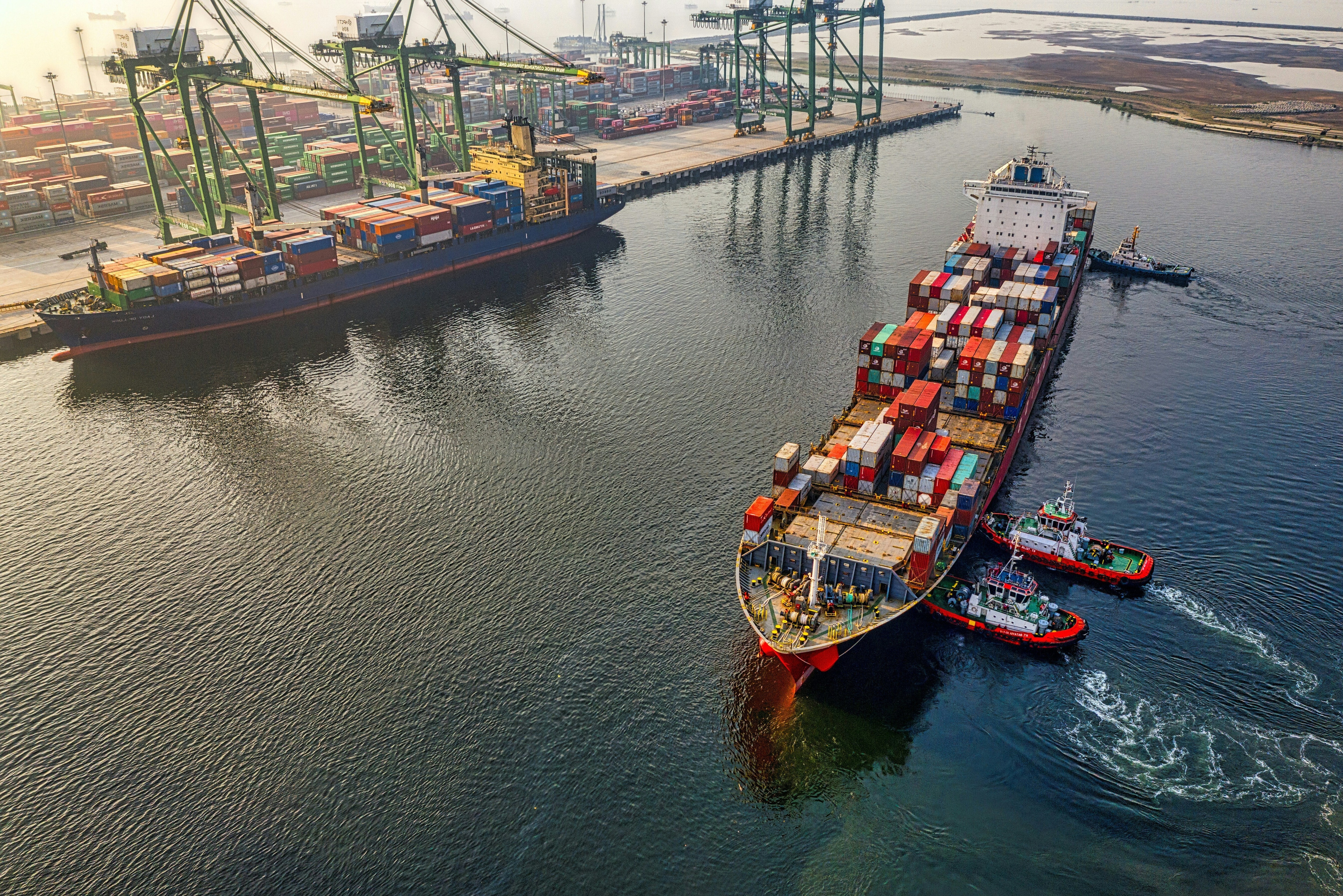
Gulf economies are increasingly positioning themselves as platforms that facilitate the movement of capital, goods, talent, data and technology across multiple regions. Image: William William/Unsplash
Alexandre Raffoul
Head, Global Partner Dev. & Regional Business; Member of the Executive Committee, World Economic Forum- Gulf-China relations are expanding from traditional oil trade into a broader full-stack economic relationship.
- The Gulf is leveraging its wealth and location to connect global trade across fragmented markets.
- How promising ideas become scalable impact is a key focus at the World Economic Forum’s Annual Meeting of the New Champions 2026, taking place in the People's Republic of China on 23-25 June.
When Abu Dhabi Crown Prince Sheikh Khaled bin Mohamed bin Zayed travelled to Beijing earlier this year, the discussions extended well beyond energy. Meetings with President Xi Jinping and Premier Li Qiang focused on artificial intelligence, advanced technology, logistics, investment and clean energy. During the visit, China called for deeper cooperation in areas including energy storage, hydrogen and new energy vehicles.
For decades, relations between China and the Gulf were defined primarily by hydrocarbons. China became the world’s largest importer of Gulf energy, while Gulf producers became critical suppliers powering China’s economic rise.
That relationship remains important. But it is no longer the most interesting part of the story.
Today, that evolution is entering a new phase. What is emerging is not simply an energy partnership or even an oil-to-tech story, but a broader full-stack economic relationship spanning capital, technology, manufacturing, logistics, clean energy and industrial development.
Why GCC-China ties are deepening now
For businesses and investors, the key question is not simply why GCC-China ties are deepening. It is why they are deepening now.
The answer lies in the convergence of several structural shifts.
As geoeconomic fragmentation, trade tensions and industrial competition reshape the global economy, governments and companies are increasingly seeking more resilient and diversified partnerships. The IMF has warned that fragmentation could carry significant economic costs, while policy-makers worldwide are reassessing supply chains and strategic dependencies. At the same time, China’s economy is entering a more mature phase of growth, encouraging both policy-makers and businesses to deepen international economic relationships and expand industrial cooperation abroad.
Meanwhile, Gulf economies are entering a new stage of their own transformation. Across the GCC, governments are investing heavily in advanced manufacturing, artificial intelligence, logistics, clean energy and digital infrastructure as part of ambitious economic diversification agendas. Increasingly, they are positioning themselves not merely as energy exporters, but as globally connected economic platforms.
These developments are creating powerful areas of alignment.
The relationship is evolving from a traditional buyer-seller dynamic into a broader economic partnership built around four pillars: Gulf sovereign capital aligning with Chinese industrial capacity; Chinese manufacturing ecosystems aligning with Gulf logistics and geography; Gulf energy resources supporting China’s growing demand for AI and clean technology; and shared ambitions around diversification, industrial development and new trade corridors.
Four reasons businesses and investors should care
For businesses and investors, this matters for four reasons.
First, GCC sovereign capital is increasingly aligning with Chinese industrial and technology ecosystems, creating new channels for long-term investment and innovation.
Second, Chinese manufacturing capabilities are increasingly aligning with the Gulf’s strategic geography, logistics infrastructure and industrial ambitions, particularly across sectors such as electric vehicles, clean energy and advanced manufacturing.
Third, the Gulf’s energy capacity is increasingly complementing China’s scale in artificial intelligence, data infrastructure and clean technologies, creating opportunities that extend well beyond traditional hydrocarbon trade.
Fourth, both sides share a growing interest in economic diversification, resilience and the development of new trade and investment corridors linking Asia, Africa, Europe and the wider Global South.
Taken together, these shifts are reshaping one of the world’s most important economic relationships.
Choosing a different approach
The clearest evidence can be seen in the breadth of recent activity. Chinese electric vehicle manufacturers are rapidly expanding across Gulf markets. Chinese firms are investing across industrial zones, renewable energy projects and logistics infrastructure throughout the region. In Saudi Arabia, recent agreements have focused on hydrogen production, green ammonia and the localization of industrial manufacturing capabilities.
Yet perhaps the most important shift is not the expansion of China’s presence in the Gulf. It is the growing role of the Gulf itself.
In a world increasingly defined by geopolitical competition, trade tensions and competing spheres of influence, GCC countries are pursuing a different approach. Rather than choosing between economic blocs, they are positioning themselves as connectors between them.
The expansion of GCC-China relations does not represent a pivot away from the West. Instead, it reflects the increasingly sophisticated multi-alignment strategies being pursued across the Gulf. Countries across the region continue to deepen partnerships with the United States and Europe while simultaneously expanding engagement with China, India and other emerging markets.
This is why the relationship matters beyond Beijing and the Gulf capitals.
Globalization in a fragmented world
The GCC-China partnership is becoming a test case for what globalization looks like in a fragmented world: one where countries seek resilience over dependence, diversification over concentration and connectivity across multiple economic systems rather than exclusive alignment with any single one.
Rather than being organized around a single dominant economic centre, this emerging model is increasingly shaped by networks of capital, technology, energy and infrastructure that span multiple regions. The Gulf's growing role as a connector between Asia, Europe and Africa illustrates how middle powers can help sustain economic integration even as geopolitical competition intensifies.
How this relationship evolves may ultimately say as much about the future of globalization as it does about China or the Gulf themselves.
Don't miss any update on this topic
Create a free account and access your personalized content collection with our latest publications and analyses.
License and Republishing
World Economic Forum articles may be republished in accordance with the Creative Commons Attribution-NonCommercial-NoDerivatives 4.0 International Public License, and in accordance with our Terms of Use.
The views expressed in this article are those of the author alone and not the World Economic Forum.
Stay up to date:
Geo-economics


Forum Stories newsletter
Bringing you weekly curated insights and analysis on the global issues that matter.