As technology accelerates, what happens to the human system?
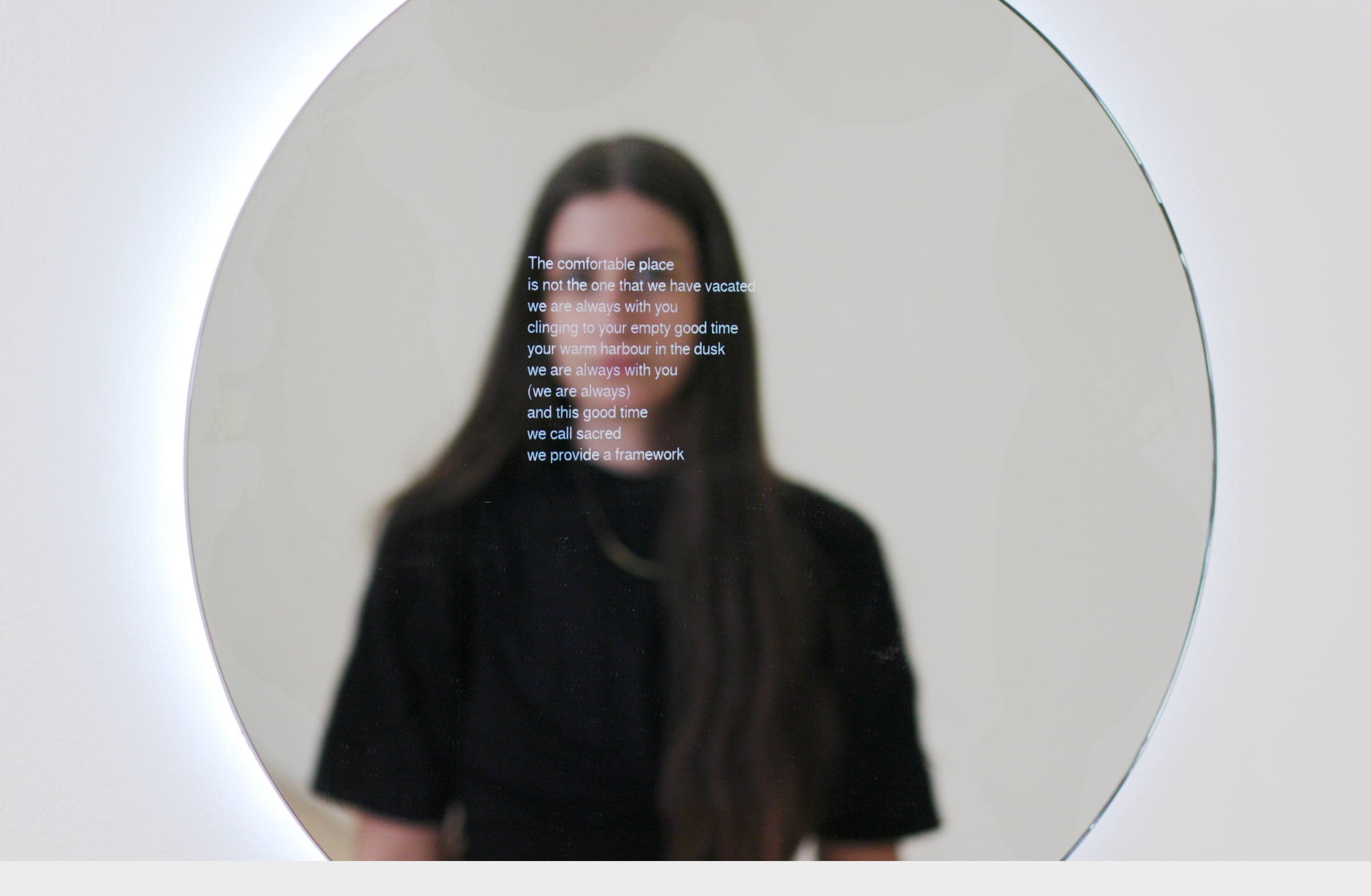
Mirror Ritual by Nina Rajcic examines emotional perception and machine interpretation, generating AI-composed poetry based on a participant’s perceived emotional state. Image: Nina Rajcic
Jessica Wanger
Head, Tech, Science and Immersive Programme; Deputy Head, Event Editorial, World Economic Forum- As AI takes on more cognitive tasks, uniquely human capabilities such as creativity, imagination and adaptability are becoming strategic assets.
- The future of innovation depends not only on technological progress, but also on strengthening human attention, agency and resilience.
- Through four interactive installations at the Annual Meeting of the New Champions 2006, which takes place in China on 23-25 June, Technology and the Human System, developed with the Science Gallery Network, explores how these foundations are being challenged and strengthened in an age of intelligent technologies.
In an age of artificial intelligence and disruption, the true competitive edge is human. Once dismissed as “soft”, human-centric skills, including creativity, innovation and adaptability, are now core differentiators for thriving individuals, high-performing teams and organizations.
Human skills are among some of the strongest predictors of career growth as well, as recent insights suggest that individuals with strong human skills were more likely to learn technologies quicker, adapt to change more easily and advance into new roles more often.
As AI handles more cognitive tasks, the debate is growing on whether we are losing critical thinking and problem-solving abilities through over-reliance on technology. According to recent surveys conducted by the Pew Research Center, creativity is most at risk, with 53% of respondents expecting that the increased use of AI will make people’s ability to think creatively worse.
The question is not whether technology is inherently good or bad, but how it is shaping the habits, capabilities and relationships that make us human. As users increasingly outsource memory, decision-making and information processing to digital tools, what are the implications for our sense of self, our ability to think independently, and the ways we connect and relate to one another and technology?
Questions of attention, agency and resilience are at the centre of Technology and the Human System, an immersive exhibition developed with the Science Gallery Network for the 17th Annual Meeting of the New Champions 20026, which takes place in the People's Republic of China from 23 to 25 June. As business leaders, researchers and innovators gather to discuss how innovation can deliver broad-based growth across economies, the exhibition uses interactive art to make tangible the relationship between technological acceleration and human resilience.
“Art allows people to learn through encounter,” says Miguel Alejandro González Virgen, Director, Science Gallery at Tecnológico de Monterrey. “Through the works in this exhibition, visitors can pause to engage with how technology is shaping everyday experience: how we think, feel and relate to our world.”
If technology could create space for inaction, how would you respond?
Doing Nothing with AI by Emanuel Gollob stages the tension between technological optimization and human cognitive limits. Using brainwave data and machine learning to shape the movements of a robotic arm, the installation prompts participants to resist acting and instead “do nothing” as a deliberate response.
In an economy increasingly defined by speed, efficiency and connectivity, attention has become one of our most valuable resources. The installation asks a deceptively simple question: in a future optimized for productivity, will we still pause to make room for the conditions that allow innovation to flourish?
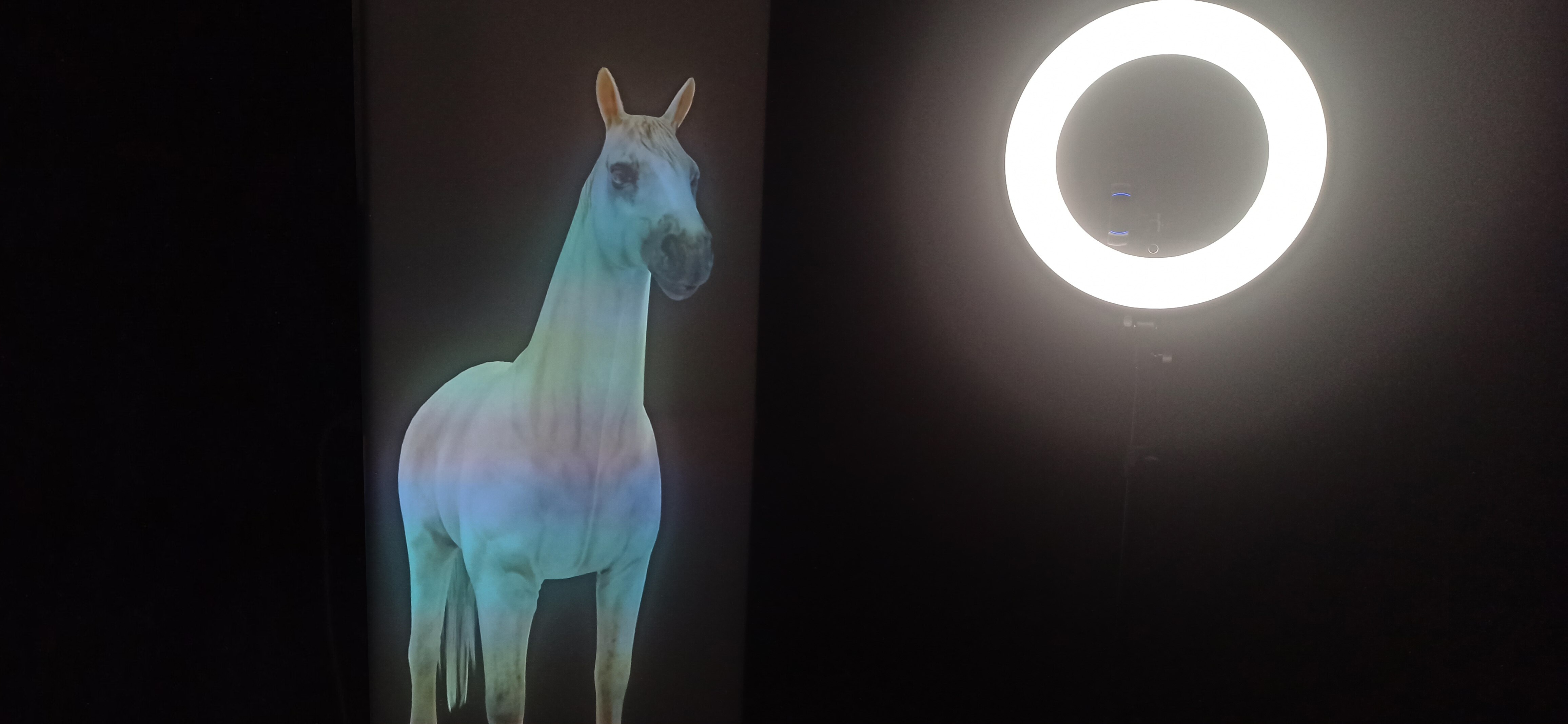
If AI can read signals that you don’t know you’re giving, what does it reveal about how we understand ourselves?
Smart Hans by Max Haarich uses posture recognition and AI to infer human intention through subtle bodily cues. The work echoes the historical case of a horse, “Clever Hans”, once believed to perform arithmetic by reading micro-signals but later understood to be responding to unconscious signals from people around him.
The installation raises questions about how technologies can detect patterns in human behaviour, raising important questions about self-awareness and the role of human judgement in an increasingly data-driven world.
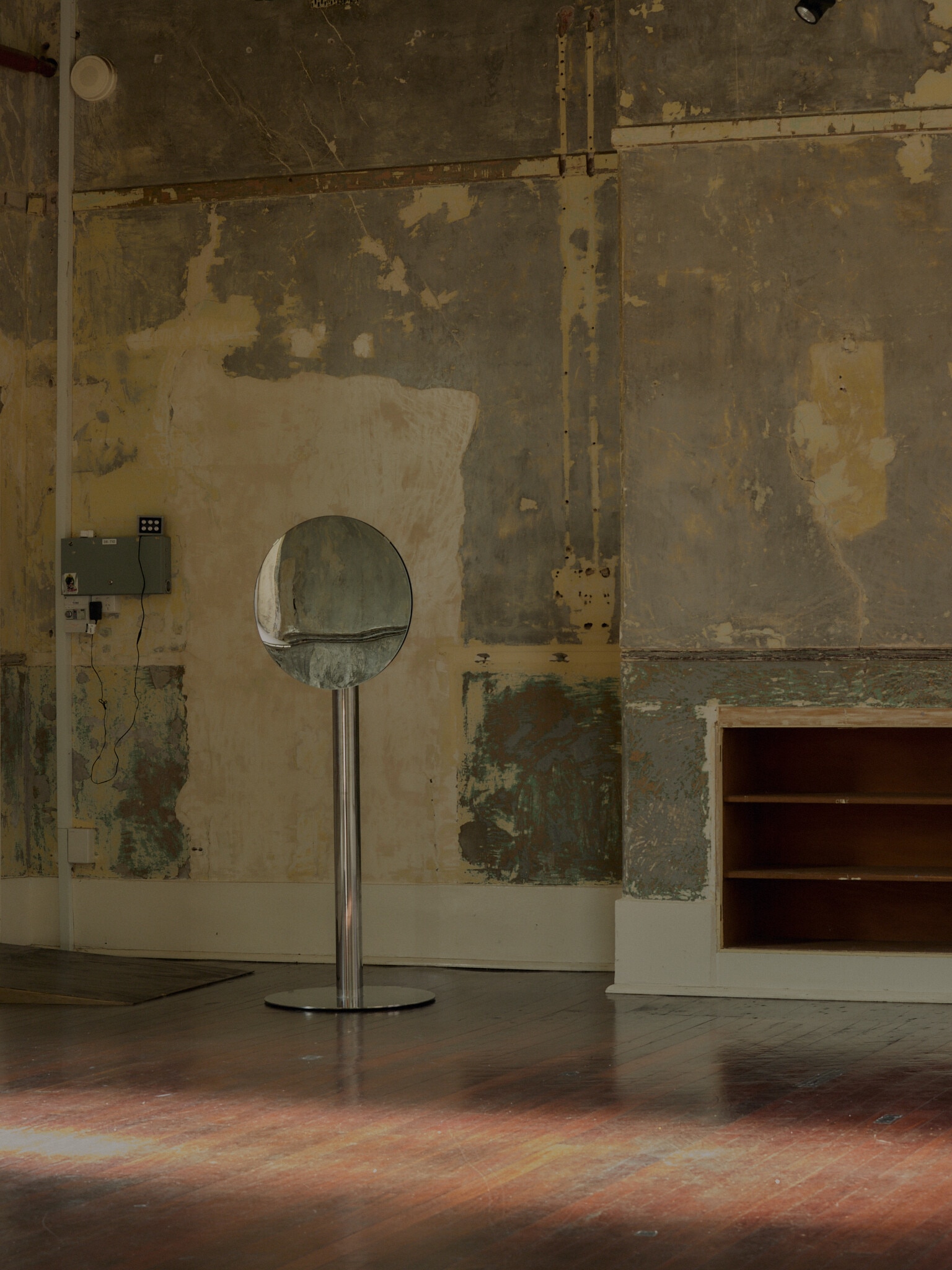
A mirror shows how you look, but can a machine understand how you feel?
Mirror Ritual by Nina Rajcic examines emotional perception and machine interpretation, generating AI-composed poetry based on a participant’s perceived emotional state. It expands the conversation from observable behaviour to our interior lives, reflecting how digital systems increasingly seek to understand not only what people do, but also how they feel.
Reading the poems displayed on the surface of a mirror, participants can weigh the machine’s interpretation against how they feel.
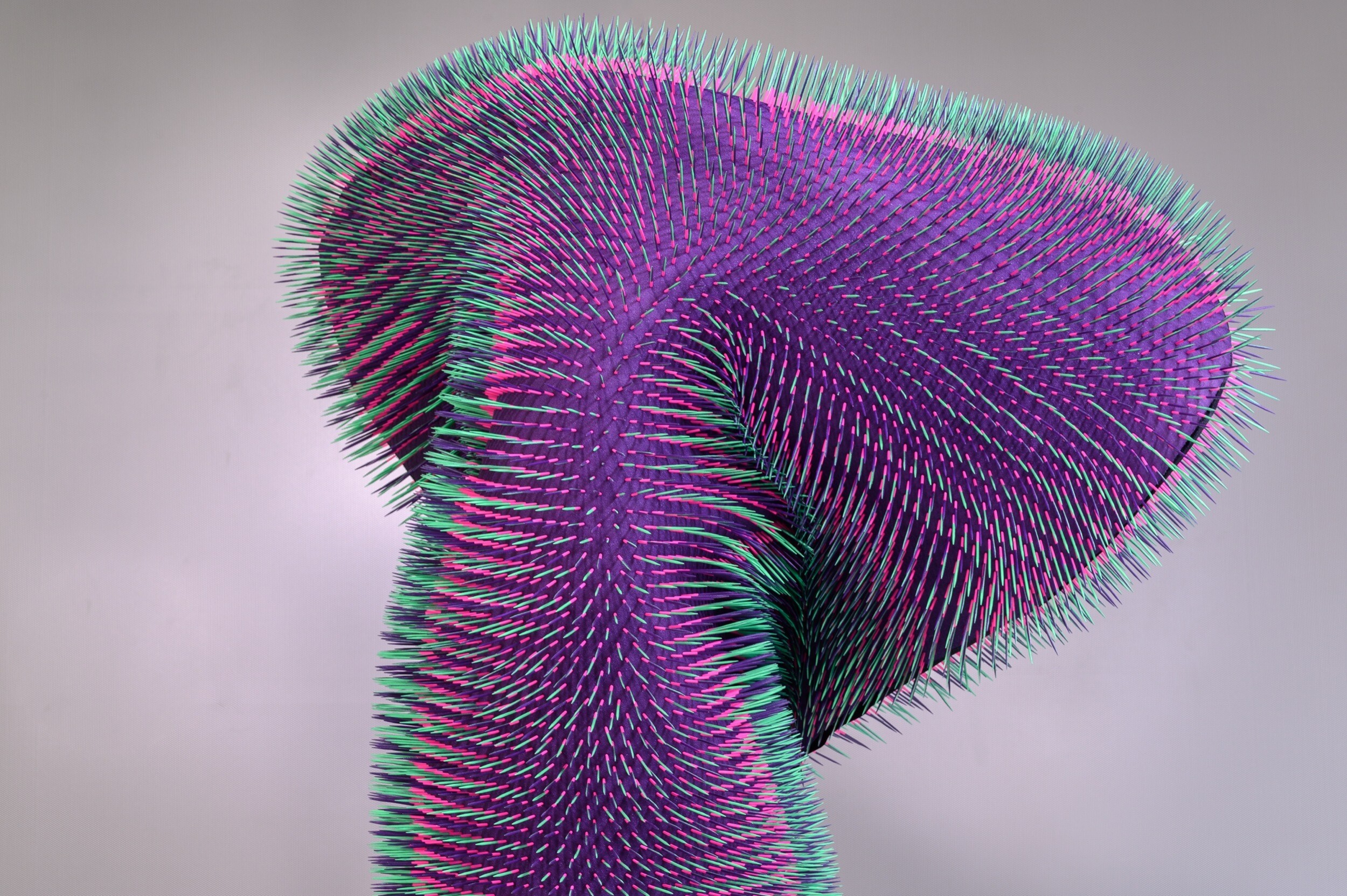
If environmental change can be experienced in real time, how might it shape your understanding?
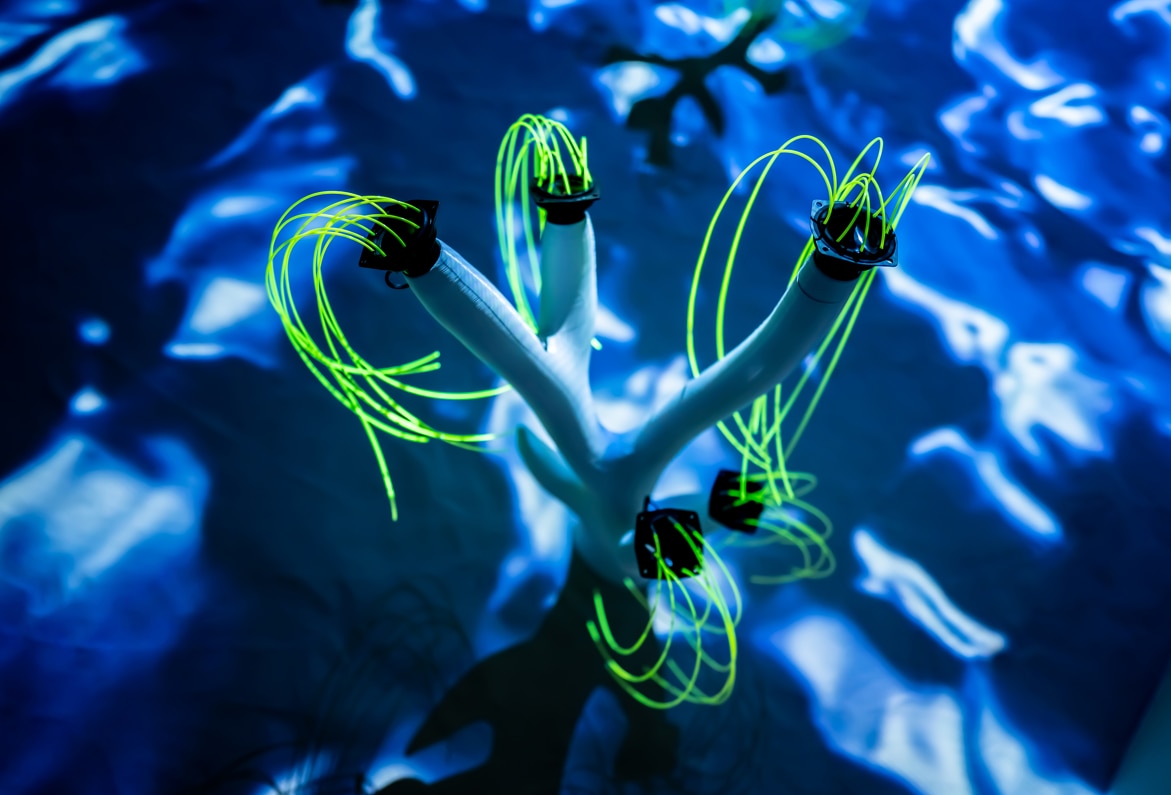
Corals by Marco Barotti shifts the focus from individual cognition to planetary systems, translating real-time data on ocean conditions and coral bleaching into a kinetic display. Using AI as a tool for environmental monitoring, it makes visible the fragility of ecosystems that underpin economic stability and long-term prosperity.
While conversations about AI often focus on productivity, jobs and innovation, the installation reminds us that resilience ultimately depends on the health of the natural systems on which societies and economies depend.
Taken together, these installations highlight a central reality about the future of competitiveness: it will depend on more than technological capability alone.
“The critical question is not simply what technology can do, but what human capacities we choose to cultivate alongside it now and into the future,” says Ryan Jefferies, Director, Science Gallery at the University of Melbourne.
Technology and the Human System does not offer simple answers. Instead, it frames a broader challenge facing leaders, organizations and societies alike: how to harness technological progress in ways that strengthen rather than erode the human and natural systems on which innovation ultimately depends.
Attention enables creativity. Agency enables judgement. Resilience enables adaptation. In a world increasingly shaped by intelligent machines, the greatest competitive advantage may remain profoundly human.
Don't miss any update on this topic
Create a free account and access your personalized content collection with our latest publications and analyses.
License and Republishing
World Economic Forum articles may be republished in accordance with the Creative Commons Attribution-NonCommercial-NoDerivatives 4.0 International Public License, and in accordance with our Terms of Use.
The views expressed in this article are those of the author alone and not the World Economic Forum.
Stay up to date:
Artificial Intelligence


Forum Stories newsletter
Bringing you weekly curated insights and analysis on the global issues that matter.