3 shifts shaping how we engage with intelligent systems: A pioneering technologist explains
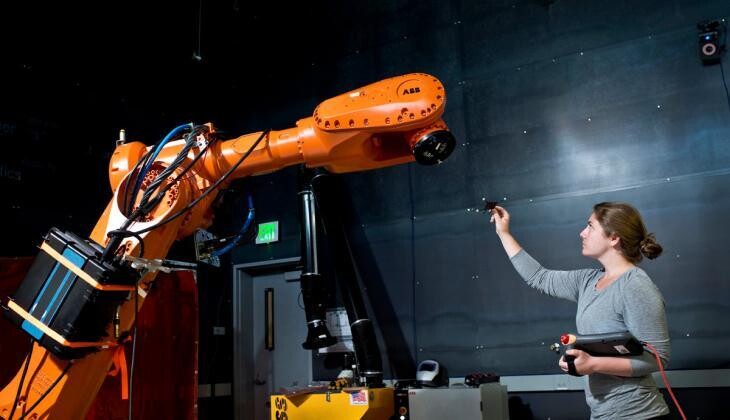
Robotics is entering an era of magical realism: we are animating the inanimate world. Image: Madeline Gannon
- Intelligent robots bridge digital and physical worlds by responding to human proximity, posture and movement.
- Developing readable machine behaviours and systemic guardrails ensures safe, intuitive cohabitation between humans and AI.
- How promising ideas become scalable impact is a key focus at the World Economic Forum’s Annual Meeting of the New Champions, also known as Summer Davos, in China from 23–25 June.
I spend my days bringing robots to life. In my studio, industrial robots built to weld chassis and stack pallets learn to notice people, follow a gesture, even chase their own curiosity. Underneath are layers of sensing, motion planning and control, but none of it matters until a person steps into the room. A robot only comes to life when someone is there to meet it. The illusion of sentience needs a human in the loop.
For the 17th Annual Meeting of the New Champions, I created Robots as Mirrors, an installation in which an industrial robot responds to human presence through depth sensing and body language. There are no barriers between visitor and robot. Approach, and it engages; reach out to touch it and it retreats. The encounter feels less like operating a robot and more like meeting an unfamiliar animal.
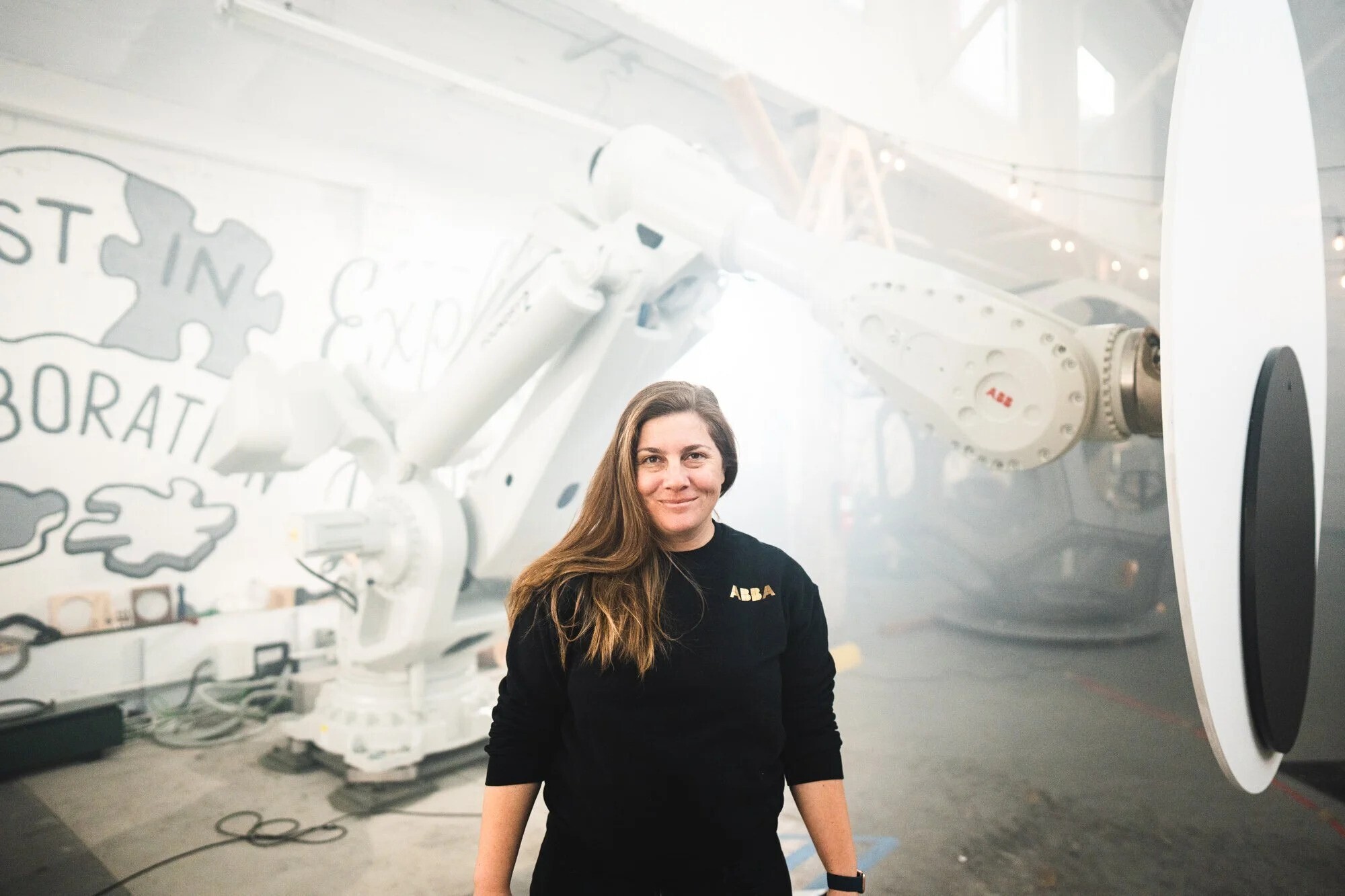
A decade of building these encounters has convinced me we are asking the wrong question about robots. Something stranger is underway. Robotics is entering an era of magical realism: we are animating the inanimate world. Robots that once lived behind safety cages are stepping into our streets, hospitals and homes.
Three defining shifts
Three shifts characterize this new era, reshaping not just how machines operate, but how we cohabit with them.
1. The interface is now reality
For 50 years, we have reached into the digital world through a pane of glass. Screens, keyboards and mice let us poke and prod at a domain that exists somewhere else. Robots collapse that boundary. They are a bridge between the magic of the digital world and the majesty of our physical one. When an intelligent system shares your space, the interface is no longer a device: it is proximity, posture and movement. It is the same non-verbal language we share with the rest of the living world.
This has practical consequences. If robots are to move safely among people, their behaviour must be legible. A person should be able to read what a robot is doing, why it is doing it, and what it will do next – in the same way we read a driver’s intentions at a crosswalk without exchanging a word. Capability without legibility produces confusion and fear, no matter how impressive the specs. Making a robot’s behaviour readable to human bodies is not a soft problem layered on top of the hard engineering. It is the interface design challenge of the next decade.
2. Robots are mirrors
I have spent years working with simulated consciousness. The simulation itself is not new. What is new is that it now occupies physical space with us. When a robot pauses, follows or withdraws, people instinctively search for intention behind the movement.
And in that search, they reveal themselves. Some visitors approach with tenderness, some with suspicion, some with the immediate urge to dominate. This is not an engineering phenomenon; it is a cultural one. A robot mirrors your movements. But the instinct it taps is far older: when something moves in response to us, we feel an immediate connection.
3. From commands to conditions
For the entire history of automation, humans specified tasks and machines executed them. Autonomy breaks that contract. To unlock its full potential, we have to become comfortable ceding control, handing real agency to non-human entities. Our role shifts from scripting every action to designing the conditions of action: the guardrails, the incentives, the edges of the domain a robot is free to operate within.
This way of thinking is second nature to policy-makers. Nobody commands an economy or scripts a city. You shape conditions, set incentives, define boundaries and let autonomous agents act within them, whether those agents are people, firms or markets. That systemic instinct is deeply developed in governance and still nascent in engineering. On this frontier, the expertise gap runs in the opposite direction from the one we usually assume.
The new rules of cohabitation
These three shifts do not erase the societal disruptions brought on by automation. Robots, the leading edge of physical AI, will displace labour, and that challenge demands coordinated global policy.
But we are writing the rules of cohabitation right now, in code and in policy at the same time. Written well, those rules point robots not at replacing human work but at expanding human experience: new presences to think with, build with and live alongside. The inanimate world is waking up, and what it becomes is still entirely up to us.
The Forum is spotlighting how innovation moves from breakthrough to scale to impact ahead of Summer Davos in China, 23–25 June 2026. Follow the latest.
Don't miss any update on this topic
Create a free account and access your personalized content collection with our latest publications and analyses.
License and Republishing
World Economic Forum articles may be republished in accordance with the Creative Commons Attribution-NonCommercial-NoDerivatives 4.0 International Public License, and in accordance with our Terms of Use.
The views expressed in this article are those of the author alone and not the World Economic Forum.
Stay up to date:
Artificial Intelligence


Forum Stories newsletter
Bringing you weekly curated insights and analysis on the global issues that matter.