Greater knowledge and visible everyday benefits are driving optimism towards breakthrough science.
This positive momentum is reflected in a recent landmark regulatory shift in Europe regarding new genomic techniques in agriculture.
Innovators must continue demonstrating tangible impacts to build deep trust and public acceptance.
Humans are systematically uncomfortable with uncertainty and risk. As Daniel Kahneman describes in Thinking, Fast and Slow, our initial reactions to the unfamiliar tend to skew negative, with more considered judgement coming only later, with effort. Considering geopolitics, ever‑shortening cycles of cultural shifts and rapid technological advances, we confront the new and unfamiliar with increasing frequency. This helps explain why breakthrough innovation is exhilarating for some, fear-inducing for others, with most people landing somewhere in between.
This spectrum of openness to innovation varies widely across age, education, geography and technology. Healthcare breakthroughs tend to inspire greater optimism, while food and agriculture innovations are met with more caution, particularly in high-income countries where food scarcity is a less immediate threat. Across all fields, skepticism is stronger in more affluent societies. This can seem paradoxical. Most innovation, as measured in patents and papers, emerges from high-income nations – with China as a notable exception.
Decoding the “why” behind public skepticism
Understanding how society aligns around breakthrough science was a key motivation behind How Society Feels About Breakthrough Science: Decoding the “Why”, a recent qualitative report Leaps by Bayer developed in collaboration with Boston Consulting Group and Ipsos UK. Based on in-depth interviews in China, Germany and the United States, the study explores the emotional drivers behind optimism, caution and resistance towards innovations including AI in healthcare, cell and gene therapies, and new genomic techniques (NGTs) in agriculture. It builds on our 2025 study – called How Society Feels About Breakthrough Science – that captured broader attitudes towards these technologies across more than 13,000 participants in 13 countries.
According to the research, positivity increases with knowledge, and credible scientific evidence can build trust, especially among those with neutral attitudes. Interestingly, an individual’s attitudes can vary wildly across technologies; a young German may be highly skeptical about how AI will shape her future, yet her concerns about global food scarcity may lead to openness towards NGTs in agriculture.
In fact, among the four technologies covered in the initial 2025 study, neutrality was highest towards food and agriculture-related innovations. That neutrality signals that many people have not yet formed a definitive view, and that public acceptance is still to be earned. Much depends on clearly demonstrating the tangible benefits of these technologies.
A policy turning point in Europe
This need for public and regulatory alignment is precisely why the recent decision by the European Parliament on 17 June to back a new regulatory framework for plants developed through certain NGTs is so significant. Plants with genetic changes that could have occurred naturally or through traditional breeding can now be cultivated and sold in the EU. While genetically modified organisms – more commonly known as GMOs – remain restricted in the EU, this represents the most significant shift in European policy in nearly 30 years. It’s a strong signal of science and evidence-based reasoning among lawmakers and their constituents.
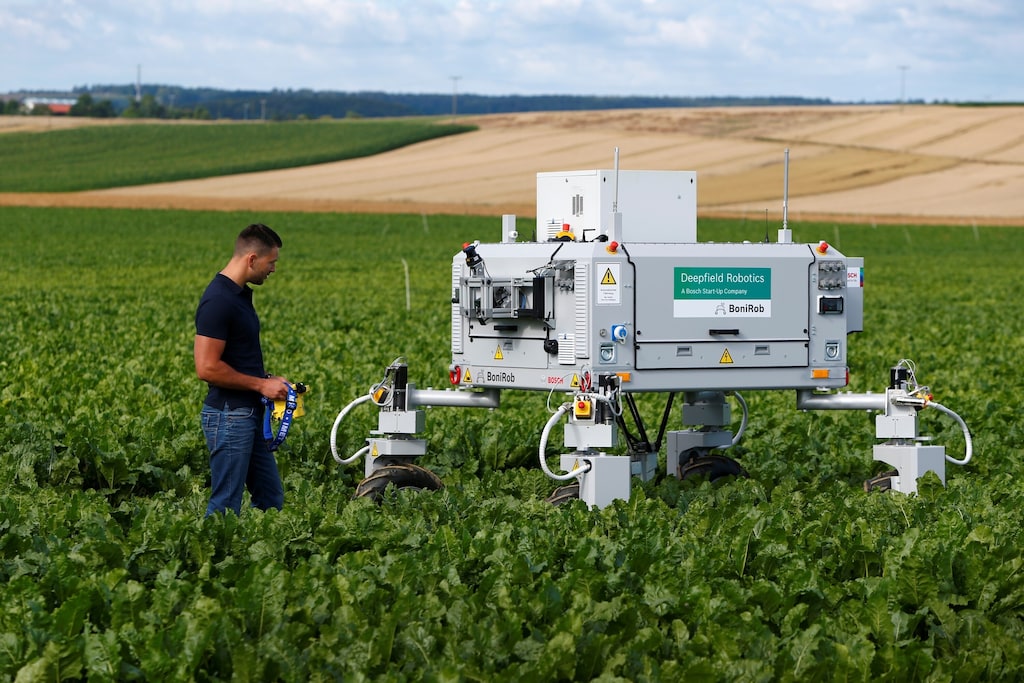
The EU’s new framework opens the door to agricultural innovation that can support a more resilient, sustainable and competitive food system. Tools such as CRISPR, leveraged by Leaps portfolio companies like Pairwise, are enabling the development of crop varieties better able to withstand climate change, resist pests and disease, and use resources more efficiently. Although Europe’s food systems are currently relatively secure, the European Investment Bank and the European Commission estimate that climate change could increase EU agricultural losses by as much as 66% by 2050.
A modernized framework could unlock innovations like CoverCress™, developed by a Leaps portfolio company (now majority-owned by Bayer). This gene-edited crop grows between corn and soybean rotations and serves both as a cover crop and as a source of biofuels for sustainable aviation – a practical example of how innovation can benefit farmers and the environment simultaneously.

The impact of lived experience
Farmers and ag innovators readily understand how NGTs can make food systems more resilient, more nutritious and less wasteful, but making this visible to consumers who are far removed from food production will be a challenge. Ultimately, attitudes towards science are not only shaped by knowledge, but by a lived experience of progress.
In recent travels to China, I have been deeply impressed by the quality, pace and ambition of the scientific research I have seen in labs from Beijing to Shenzhen. Just as striking is the broader societal openness to innovation, driven in part by the clear visibility of its daily benefits. The interviews we conducted in China as part of the 2025 study reflect this. Because scarcity remains a recent memory or even a present concern, it shapes a more optimistic view of technology. As one male baby boomer respondent explained: “Ordinary people just want to have enough to eat and eat well. If they don’t have enough to eat, you cannot talk about anything else. Therefore, people would accept the technology if it helps fill their stomach.”
The responsibility of innovators
Building trust and making progress visible are as critical as building the technology itself. We see it as part of our responsibility at Leaps by Bayer not only to advance transformative science through investments in promising technologies, but also to engage with society and help build the trust required for these ideas to take root.
Collaborating to demonstrate benefits, amplify credible expert voices and ensure transparent governance will be key to building public acceptance. I am hopeful that the recent policy shift in the EU reflects a growing willingness to embrace scientific breakthroughs, an essential factor in global competitiveness. Innovation is not a zero-sum game. A stronger Europe, supported by policies that enable both research and application, will allow breakthrough innovation to deliver exponential impact – both on and beyond the continent.