


Trade and Investment
We must reform trade to build a sustainable, inclusive global recovery
Trade policy needs to evolve to meet global challenges. Here's how world leaders can ensure trade helps grow economies, reduce poverty and empower people.
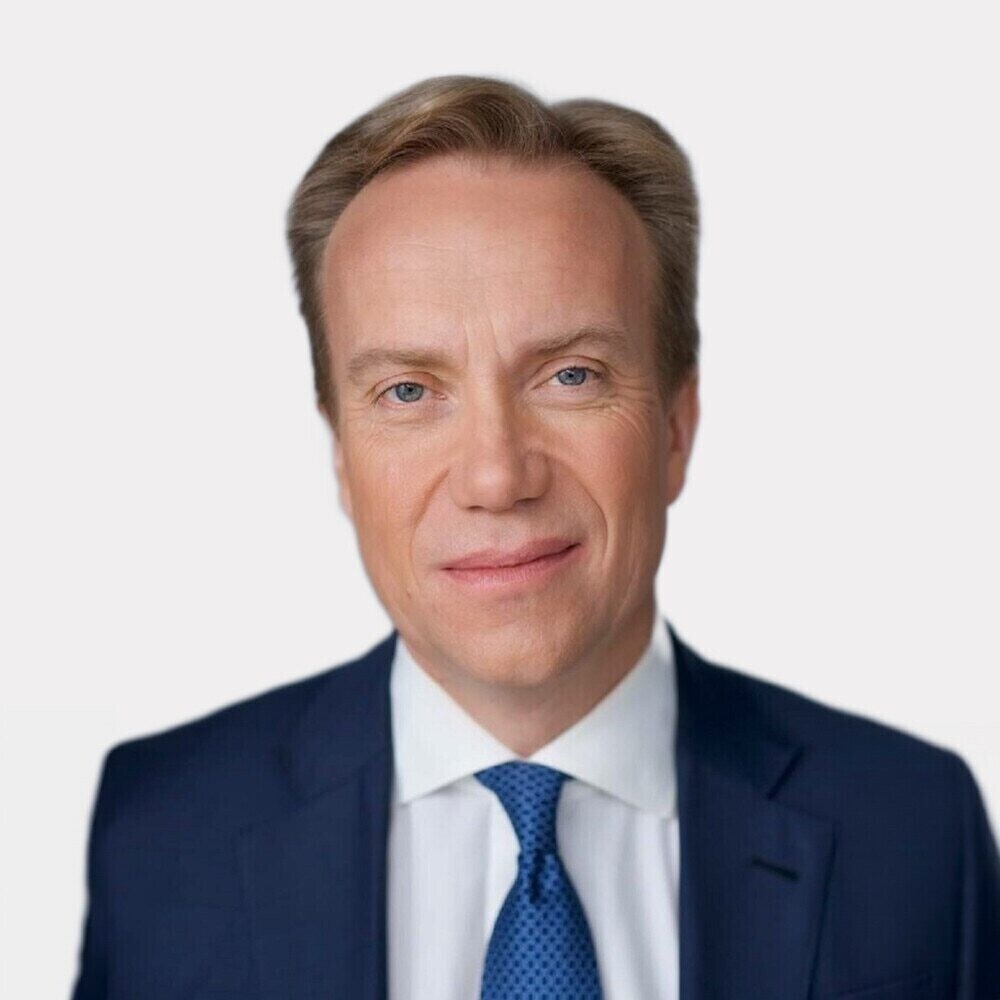
Børge Brende is President and CEO of the World Economic Forum. Previously he was the Norwegian Minister of Foreign Affairs, Minister of Trade and Industry, and Minister of Climate and the Environment. He served as Deputy Chairman of the Norwegian Conservative Party as well as MP. He was also full-time city counsellor in his hometown of Trondheim. He was Chairman of the UN Commission on Sustainable Development and Secretary-General of the Norwegian Red Cross. He was Board Member of Statoil and the Norwegian School of Economics. He was the Chair of Mesta, Norway’s largest contracting group in road and highway maintenance. He was a Director of the Philanthropy Asia Alliance. He is currently a Member of the Advisory Board of the Hoffman Centre for Global Sustainability, a Member of the Advisory Council, Harvard International Negotiation Program, the China Council for International Cooperation on Environment and Development (CCICED), the Strategic Committee of Sciences Po, and is on the Board of the Bilderberg Meetings.
Former: Minister, Norwegian Foreign Affairs, Trade and Industry, Environment; Deputy Chairman, Norwegian Conservative Party; Member, Norwegian Parliament; Member, Standing Committee on Finance and Economic Affairs and Deputy Chairman, Standing Committee on Energy and Environment; Chairman, UN Commission on Sustainable Development; Secretary-General, Norwegian Red Cross; International Vice-Chairman, China Council for Int'l Cooperation on Environment and Development; Board Chairman, Mesta; Board Member, Statoil; Board Member, Norwegian School of Economics and Partnership for Maternal, Newborn & Child Health, WHO; Board Director, Technology for Ocean Foundation, Centre for the Fourth Industrial Revolution, Ocean; Managing Director, World Economic Forum. Political Adviser to Conservative Party Chairman; Chairman, Young Conservatives; CFO, KB Entreprenør; Director, Philanthropy Asia Alliance. Since 2017, President and CEO, World Economic Forum. Member: Board, China Council for International Cooperation on Environment and Development Phase VII; Strategic Committee, Paris School of Int’l Affairs, Sciences Po; UN High-level Advisory Group for Every Woman Every Child; Municipal Executive Board, Trondheim; Advisory Board of the Hoffman Centre for Global Sustainability; Core Advisory Council, Harvard Int’l Negotiation Program; Steering Committee, Bilderberg Meetings; Board of Directors, Partnering for Green Growth and Global Goals 2030. BA, Norwegian Univ. of Science and Tech.
Trade policy needs to evolve to meet global challenges. Here's how world leaders can ensure trade helps grow economies, reduce poverty and empower people.

COVID-19 and climate change crises has accelerated need to transform cities and reconnect with nature. BiodiverCities aims to design sustainable cities.

La voie vers un plus grand dialogue, une meilleure coordination et une action collective.

Las vacunas de COVID-19 ofrecen esperanza, pero siguen existiendo fracturas globales. Nuevos principios rectores piden que se dé prioridad a la paz y la seguridad, la equidad y la sosteni...

COVID-19 vaccines offer hope, yet global fractures remain. New guiding principles call for prioritizing peace and security, equity and sustainability.

As people around the world place their trust in the production and distribution of a COVID-19 vaccine, we must ensure corruption does not get in the way.

Private investment can prevent fragile situations from spiralling into crisis and pave the road towards a sustainable economic recovery.

世界の足並みが大きく乱れています。差し迫った問題に対処するため、従来にも増して協調が重要になっているにもかかわらず、協調の姿勢が後退しています。アントニオ・グテーレス国連事務総長は、6月末、新型コロナウイルス感染拡大がもたらした危機への対応が混乱していることに言及し、「各国間の連携が完全に欠如している」ことに警鐘を鳴らしました。

At a time when global leaders are looking to maximize the benefit of stimulus responses to their own citizens and businesses, they would do well to cooperate with one another.

Las partes interesadas deben tener en cuenta una importante lección de la última crisis financiera de 2008: La recuperación sólo es posible mediante una acción mundial coordinada.

Les parties prenantes devraient tirer une leçon importante de la dernière récession financière de 2008 : La reprise n'est possible que grâce à une action mondiale coordonnée.

Stakeholders should heed an important lesson from the last financial downturn in 2008: Recovery is only possible through coordinated global action.

El riesgo de una pandemia mundial ha aumentado en los últimos años, pero la percepción de ese riesgo no se ha ajustado a la realidad.

Le risque d'une pandémie mondiale a augmenté ces dernières années, mais la perception de ce risque ne correspond pas à la réalité.

The risk of a global pandemic has risen in recent years, but the perception of that risk has not matched reality.


