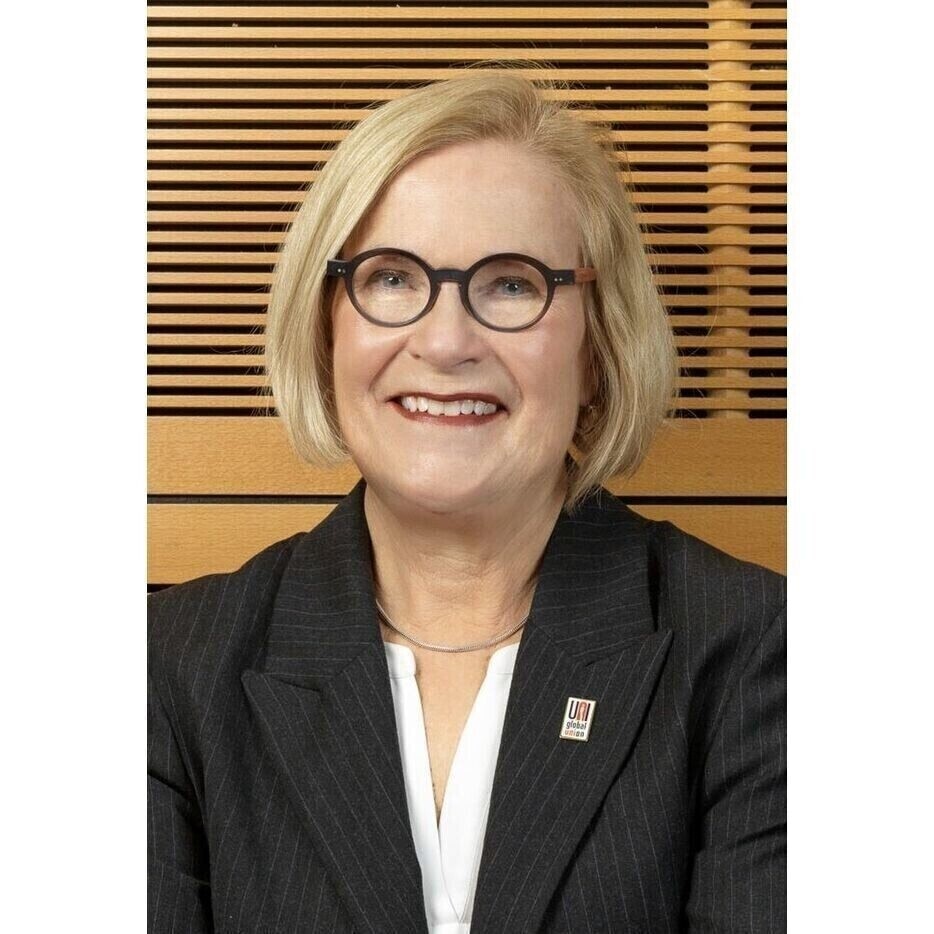
Christy has held a leadership role in UNI Global Union for the past 15 years, first as Deputy and now as General Secretary. She brought over 25 years of US labor experience to the role, having represented workers and their unions in a wide range of economic sectors and at both the local and national level.
She is a seasoned negotiator of national and international agreements, including the Bangladesh Accord. Under Christy’s leadership, UNI’s field capacity grew to include work in 50 countries which aims to improve standards in low wage areas such as logistics, care, data enrichment, call centers, private security and more.
She is a fierce advocate for strategies to address both worker empowerment and corporate responsibility, especially as we navigate the challenges of income inequality and polarization.
In recent years, she has been a frequent speaker and author about the importance of engaging workers and their unions in connection with AI, building on her own experience of negotiating around tech during her time working on a factory floor.
Smith College, BA; New York University School of Law, JD.