Por qué es hora de poner la ciencia en el centro de la política climática
El consenso científico indica que el calentamiento global ha alcanzado los 1,5°C. Esto exige pasar a la eliminación rápida de los combustibles fósiles con base en la ciencia.
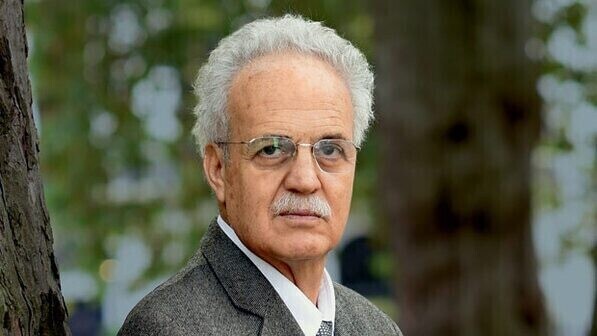
1974, a degree in Electronics Engineering, Aeronautics Institute of Technology-ITA, São José dos Campos, Brazil; 1983, Ph.D. in Meteorology, Massachusetts Institute of Technology; 1988, Visiting Scientist, University of Maryland, USA. 1991-2003, Director, Center for Weather and Climate Forecasting (CPTEC-INPE); 2008-10, Director, Center for Earth System Science (CCST-INPE); 1998-2004, Program Scientist, Large-Scale Biosphere-Atmosphere Experiment in Amazonia-LBA; 2006-11, Chair, International Geosphere-Biosphere Programme (IGBP); 2011-14, National Secretary for R&D Policies, Ministry of Science, Technology and Innovation of Brazil; 2015-16, president of Agency of Post-Graduate Education-CAPES. A scientific career dedicated to the Amazon region; developed pioneer research on the climate impacts of deforestation and climate change; proponent of the initiative Amazonia 4.0, an innovative proposal for a standing forest bioeconomy for the Amazon making use of modern technologies. Member of the Brazilian Academy of Sciences; World Academy of Sciences, and a foreign member of the National Academy of Sciences of the USA and the Royal Society of the UK. Author and co-author of over 250 scientific articles, books, and book chapters.
El consenso científico indica que el calentamiento global ha alcanzado los 1,5°C. Esto exige pasar a la eliminación rápida de los combustibles fósiles con base en la ciencia.
Scientific consensus indicates that global warming has reached the 1.5°C threshold, requiring climate policy to shift from commitments to the rapid, science-aligned phase-out of fossil fu...
The Amazon forest is at risk of "savannization" due to climate change and land use change. We need a paradigm shift away from the predatory economic model.
La selva amazónica corre el riesgo de "sabanización" debido al cambio climático y al cambio de uso del suelo. Necesitamos un cambio de paradigma que nos aleje del modelo económico depreda...
Forest carbon is a critical tool undergoing continual evolution and improvement: here are 5 reasons why this will continue in the year ahead.
Un gran programa de restauración puede apoyar cadenas de producción sostenibles, por ejemplo, a través de la agrosilvicultura o incluyendo proyectos de restauración en la dinámica de los ...
Approximately 2 million km² of the Amazon forest has been deforested or degraded. Forest restoration is urgently needed to reconnect Amazonian ecosystems.
For a long time now, humans have drawn on the Amazon and its tremendous biodiversity – countless living organisms, plants, animals and insects – for raw materials and commodities. We have...