Thanks for joining us for the final day of our meeting here in Tianjin.
We're excited about the lineup, which includes a one-on-one interview with Jack Ma, an in-depth look at smart drugs and a scientist on a mission to light up the world with jellyfish.
00:45 UTC
What If: Smart Drugs Become as Common as Coffee?
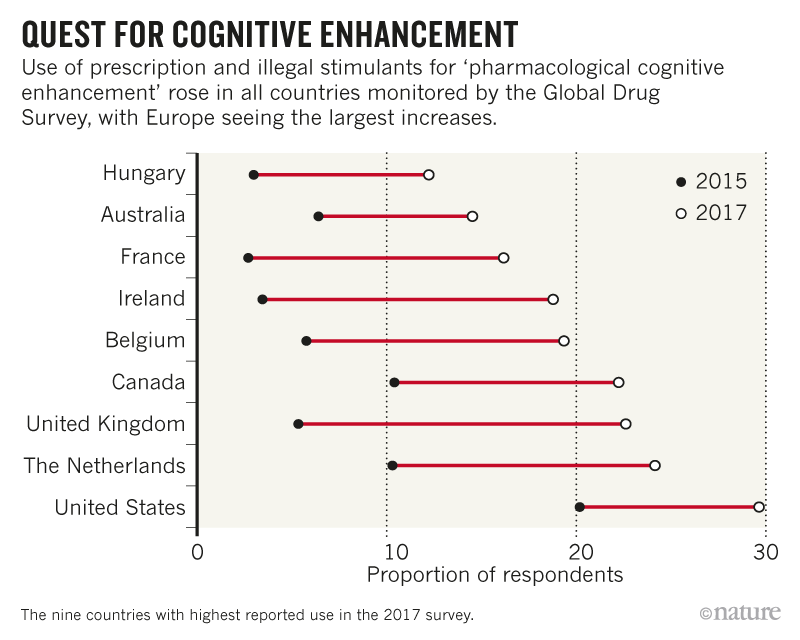
Up to 14% of the world’s population may be experimenting with smart drugs.
These cognition-enhancing drugs, or nootropics, are said to improve performance at school and work. But what if they become the new norm?
To some extent that question comes too late: they already have passed into the mainstream. "From Adderall to something as everyday as caffeine, we've all taken performance-enhancing drugs at some stage, says Nita Farahany, Professor at Duke University.
And we're not just talking about medications."Food is a drug," says Andrew Thompson of Proteus Digital Health. "Carbohydrates affect your serotonin system. You can choose to feed and nurture your brain by using a chemical compound; or you can choose to feed and nurture your brain through making healthy decisions about food and sleep."
Accept our marketing cookies to access this content.
These cookies are currently disabled in your browser.
Nita Farahany believes it should be up to the individual to decide. "If people personally derive benefit from the drugs they take, then those drugs shouldn't be regulated by the government," she says.
"Plastic surgery, tattoos - these all have risks. But we don't let society tell people not to do it."
Thomas Senderovitz of the Danish Medicines Agency is in favour of regulation. "No drugs is safe. Is it really beneficial to give adolescents brain enhancing drugs; how do we know there's no long-term harm?"
Medications such as Ritalin may be prescribed to schoolchildren, he continues, but they should not be available for public consumption.
Accept our marketing cookies to access this content.
These cookies are currently disabled in your browser.
The group consider the policy in China of requiring train drivers to wear smart caps, to monitor their mental state. Is this good transport management or is it ethically dubious? The latter, says Andrew Thompson, explaining that: "Now that trains and planes are self-driving, if we want to improve safety you focus on the vehicle, not the driver."
To policing medication
It's clear people need to be aware of what they're taking, and exercise due caution. Nita Farahany offers the example of Modafinil, a medication commonly prescribed for sleep disorders. "Anecdotally it tends to enable people to have greater conceptual thinking and be more creative. But it's not clear what these drugs are doing, and whether it comes at the cost of other forms of intelligence."
Accept our marketing cookies to access this content.
These cookies are currently disabled in your browser.
Ultimately we're dealing with a wider social problem, says Andrew Thompson: "Fast intelligence is greatly overvalued, slow intelligence is undervalued."
He's talking about people who have deep accumulated knowledge but don't necessarily do well under pressure. "People who are very capable but don't do well in fast test environments - they are discriminated against. And that's a problem in many modern systems."
02:15 UTC
Virtues and Vices of a Digitally Connected Society
Vice and virtue is very hard to define, says Ryu Jung-Hee. It depends on the individual. These things exist in the real and virtual world as well.
All we can do is help people if they do have a problem, he believes.
Commerce, by nature, is designed for users to come back repeatedly, explains Ying Shuling. This has been happening for generations among children and adults.
For many, gaming is just a hobby. This isn't anything to be worried about, he adds. Too often, we look at extreme cases, rather than the norm.
There are many virtues of playing games and being connected online, says Amy Ogan. But technology and sensors is helping us monitor this though, and understand what's going on more clearly.
Every person is a kid when it comes to the internet, believes Lee Xiaodong. Everything is new, so we all have to learn.
Education is vital, to help children in particular navigate a digital world and a digital society.
The human brain is evolving alongside the internet, adds Ryu Jung-Hee. It's a case of 'co-evolution' - we're evolving the internet and its evolving us.
Technology can change the future, says Amy Ogan, if we create experiences that are constructive, interactive and collaborative. These types of online activities will lead to the virtues of a digital world.
We don't need to be scared of a digital world, believes Lee Xiaodong. But, we need to know how to learn. There are so many options available to us.
What's the background?
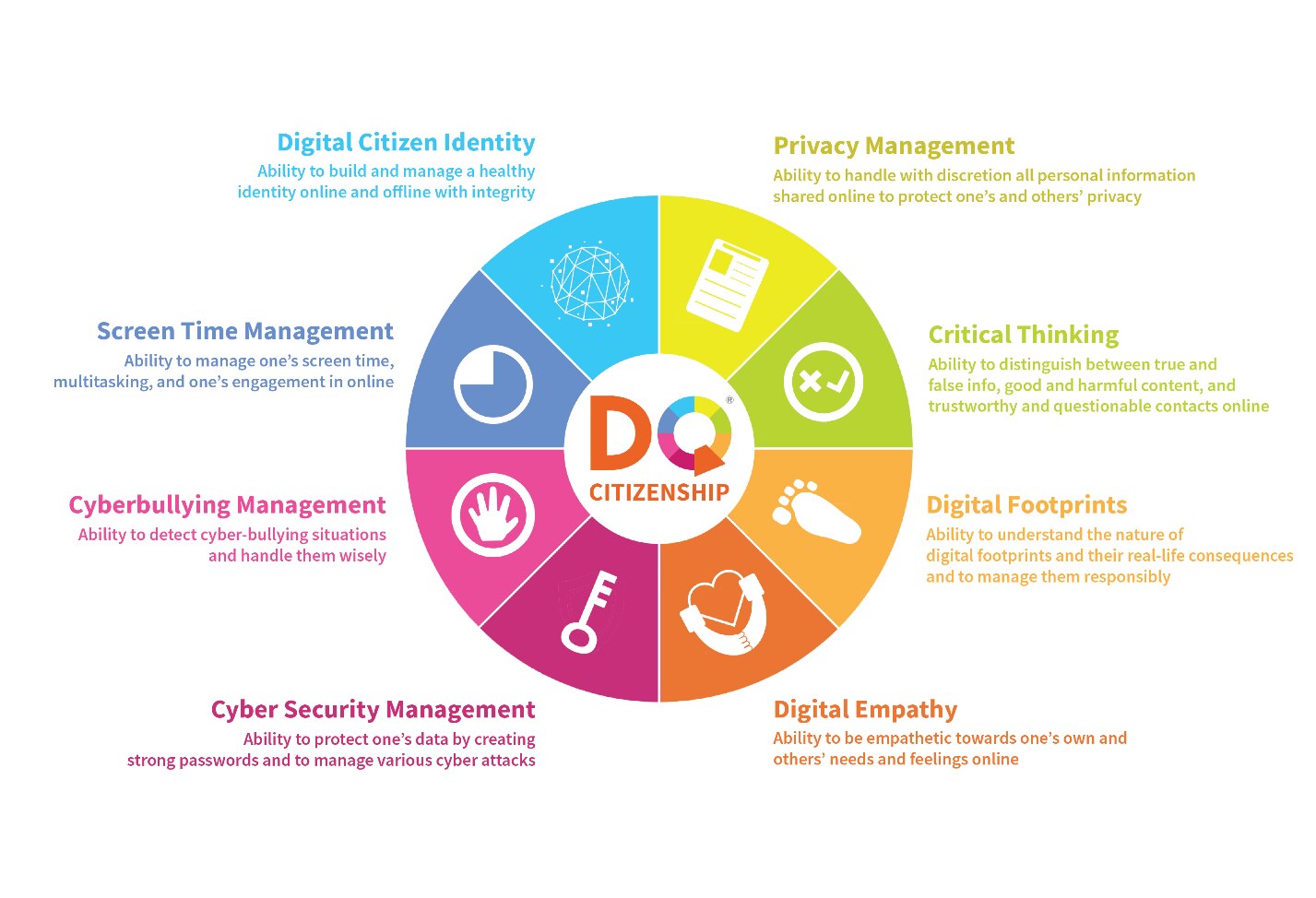
Studies indicate that young people spend an average of nine hours a day consuming media.
This is fueling unprecedented growth in information and gaming platforms.
Maoko Kotani, Chief News Anchor, Nikkei plus 10, will ask what role digital companies should play in supporting a healthy society that remains digitally literate, digitally productive and digitally aware.
Discussing this question will be:
Njideka Harry, President and Chief Executive Officer, Youth for Technology Foundation (YTF) and Ying Shuling, Chief Executive Officer, Hero Entertainment.
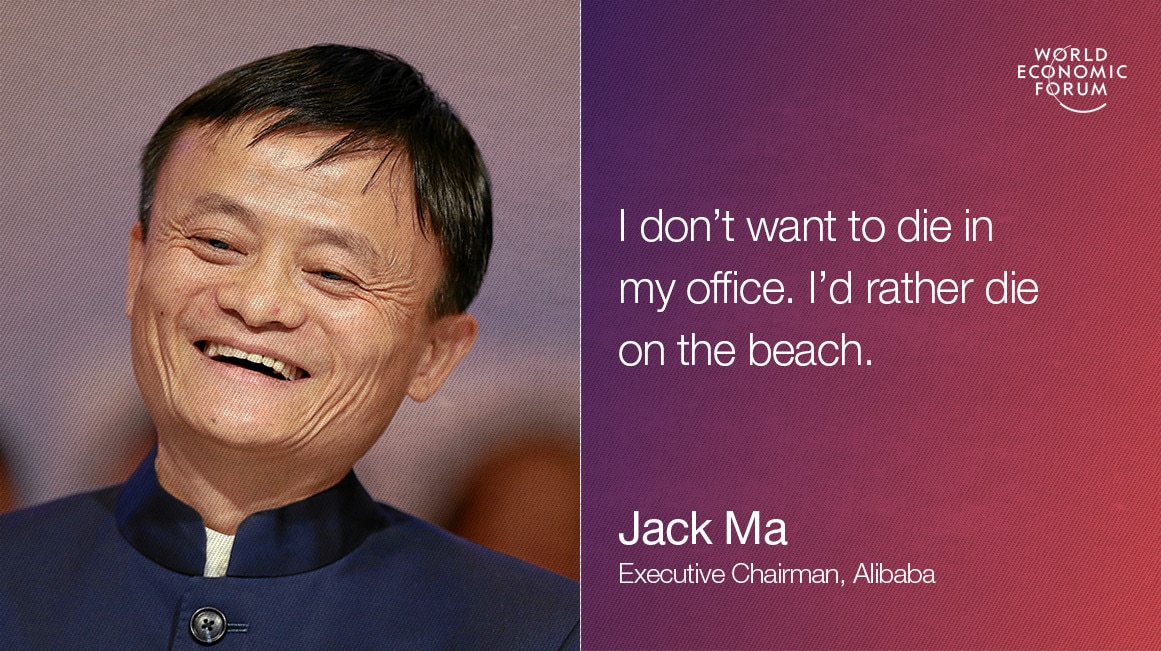
The room erupted with applause as Jack Ma, founder and executive chairman of Alibaba, walked on stage.
Ma, who recently announced plans to retire from the online retail company, is a cult figure in Chinese popular culture and has attracted a big following in business and beyond.
Image: REUTERS/Denis Balibouse
"It's taken me 10 years to decide to retire," Ma began, countering speculation that his decision was a reaction to political pressure or because of intensifying China-US trade tensions.
"You have to know your life beyond 50," he explains. "You must be clear on what you want.
"I'm good about my decision. I don't want to die in my office. I'd rather die on the beach. You are born to experience different things, to enjoy your life."
Accept our marketing cookies to access this content.
These cookies are currently disabled in your browser.
"I received a lot of messages from friends and entrepreneurs. You shifted money to other countries, they say - and now you're running away.
"If you want to cope with it, it makes you very tired. If they are friend of you, you need to explain. If you are not friends, the more you say, the worse the case is.
"I think we need to learn to swim in the ocean of gossips."
Accept our marketing cookies to access this content.
These cookies are currently disabled in your browser.
After praising his team and expressing confidence about the future of Alibaba under their care, he said he would always remain attached to the company.
"I love it deeply, because it is my own kid. Even if I die someday, I still love it deeply. In my 80s or 90s, maybe I'm on the beach and I listen to the radio and the news says that Alibaba does wonderfully, I will be profoundly happy."
Accept our marketing cookies to access this content.
These cookies are currently disabled in your browser.
The economic environment is not perfect and will not be perfect for longer than anyone expects, Ma said, presumably alluding to trade tensions between China and the US. But this is no reason for entrepreneurs to give up.
"If the economic outlook is not perfect, then you will have good competition. So there are two sides of everything. When everything is fine, then you will have a mediocre company, but when you have headwinds and if a company can live, then this is a great company."
Accept our marketing cookies to access this content.
These cookies are currently disabled in your browser.
So what should entrepreneurs do in the face of intensifying tensions between the US and China?
"You don't need to do a lot of things, but do something right and something that makes you happy."
He draws on the story of three kids who are sent out by their father to fetch an item in a storm. One kid wears a coat, the other takes an umbrella, but the third kid, who takes nothing at all, brings the item back. "I found a cave and stayed there till the storm passed, then I brought it back," the boy tells his father
"See?" says Ma. "You can still do good things in hard times."
"Yes we're not happy with US-Chain trade relations, but you need to plan for the next 20 years. Focus on what you can change, on what you plan and choose to do.
And remember: "You may be in difficulty, and have financing problems. But it's the same case for your competitors."
Accept our marketing cookies to access this content.
These cookies are currently disabled in your browser.
Ma had some advice for the millions of Chinese people doing business abroad. "The Chinese kids seldom say thank you and excuse me or sorry or please. We need to pick up our manners. Otherwise, conflict between China and the rest of the world will arise and we will have more conflicts and frictions.
"We need to learn an international language, to talk to the world."
"China emphasizes that harmony gives you fortune. And in Western culture, competition makes you better. But without the communication or respect and appreciation of others, you only have trouble and conflict on your hands."
He had advice for Westerners, too: "China focuses on wisdom, but the Western world focuses on knowledge. And this is knowledge, this is wisdom. So this is the combination of the heart and the mind."
02:37 UTC
Is there a new debt crisis on the horizon?
Are we walking into another financial crisis? This was one of the questions asked during the session, Have We Reached Peak Debt?
"I hope not," said Tsinghua University's Zhu Ning. "We are in uncharted waters in the sense that the non-traditional monetary policy being carried out by central banks is really something unprecedented. If we were living in the traditional world I would be far more confident that we are going into another debt crisis or something like that.
"But given the unprecedented large amount of liquidity that has been injected into the system and also the concerted effort of central banks trying not to walk into the same problem again - that has given me confidence."
"One key nature of bubbles is that bubbles often form when people don't think it's a bubble," he went on to say. Thankfully, it's something central bankers are aware of and they've started taking precautions.
What are the big risks we need to get a grip on? "One is the accumulation of debt", Zhu said, "and the other is that labour productivity is not growing as much as what is warranted by the increasing levels of debt."
Robotics and globalization are both set to shape the future of work, explains Richard Baldwin.
There'll be pains and gains, but people will be allowed to focus on what they're good at. We just have to manage the transition.
The digital transformation - from AI to big data - is likely to change the way economies operate, explains Ian Weightman. From manufacturing to data entry, robotics and AI are set to largely automate roles.
The case of Guatemala
A major challenge is people aren't necessarily clear how to use technology. Take the case of smartphones, says Marisabel Ruiz. There's been rapid penetration, but many people still use smartphones just to call and text.
But technology has massive potential to help economies connect with other economies - whether in the region or globally.
Looking at Bahrain
Infrastructure - both hard and soft - is a key area for Bahrain, explains Simon Galpin. Skill development and a strong education programme are also key - particularly to make sure the average citizen benefits.
The digital divide
Digital integration will allow emerging markets to exploit their competitive advantage. Talented people will be able to share their products with a global market, Richard Baldwin believes. There won't be a digital divide - there'll be a convergence in incomes.
A well-managed transition?
One of the challenges, particularly in Latin American countries, is that we're still thinking about selling bananas and coffee. But we need to be more creative in what we're creating - why don't we sell a banana cream that helps you look younger, asks Marisabel Ruiz.
Innovative and creative thinking will be key to managing the transition, she believes. Payment solutions, particularly internationally, are also vital.
Agriculture
Technology and digitalization has the potential to help all sectors, including agriculture, explain the panel.
Whether e-commerce helping sales, hydroponics reducing water use or the IoT allowing optimisation of fertiliser use, it can boost yields and expand the industry.
Reaching the unbanked
Across the Middle East, a major challenge is the number of people who are unbanked. If fintech companies are allowed to reach these people, it could make a major difference believe Simon Galpin.
The link between language and data
Large data sets are key to translation artificial intelligence, says Richard Baldwin. The only way to learn is through these large data sets. There is therefore a risk of language dominance, simply because of the volume of data.
These biases can then be exaggerated - whether in terms of a language or otherwise - through AI, explains Ian Weightman. This will remain an issue for AI in the short term.
Comprehensive data sets are vital. This wasn't necessarily understood in early AI models, he adds. Sharing these sets is important.
Governance
Regulation and governance is vital, says Richard Baldwin. It's remarkable that there's no treaty on AI he says.
There are also questions about taxation and international labour standards.
The background
The digital economy and e-commerce are powerful contributors to development and growth. But can the next wave of globalization avoid the mistakes of the first.
Our panel will discuss new models for inclusive growth, platform employment, and policies to provide worker protections.
Keith Bradsher, Shanghai Bureau Chief, New York Times will moderate this discussion with Richard Baldwin, Professor of International Economics, Graduate Institute of International and Development Studies, Simon Galpin, Managing Director, Bahrain Economic Development Board, and Marisabel Ruiz, Chief Executive Officer and Founder, SHEVA.
That's it for the Annual Meeting of the New Champions 2018. From trade wars and invisibility cloaks to the future of jobs and Jack Ma's tips for entrepreneurs, here's a look back at some of the key moments of the meeting.