Welcome to the World Economic Forum on Latin America 2017
Welcome to the World Economic Forum on Latin America 2017, live from Argentina’s capital Buenos Aires.
The theme of the meeting, which takes place from 5-7 April, is "Fostering Development and Entrepreneurship in the Fourth Industrial Revolution".
Participants at the World Economic Forum on Latin America will explore the challenges, risks and opportunities for Latin America in this transitional period.
You can join the conversation online at #LA17 and read further insights and in-depth analyses in this series. All of the blogs in our in-depth series on the region can be found on this page.
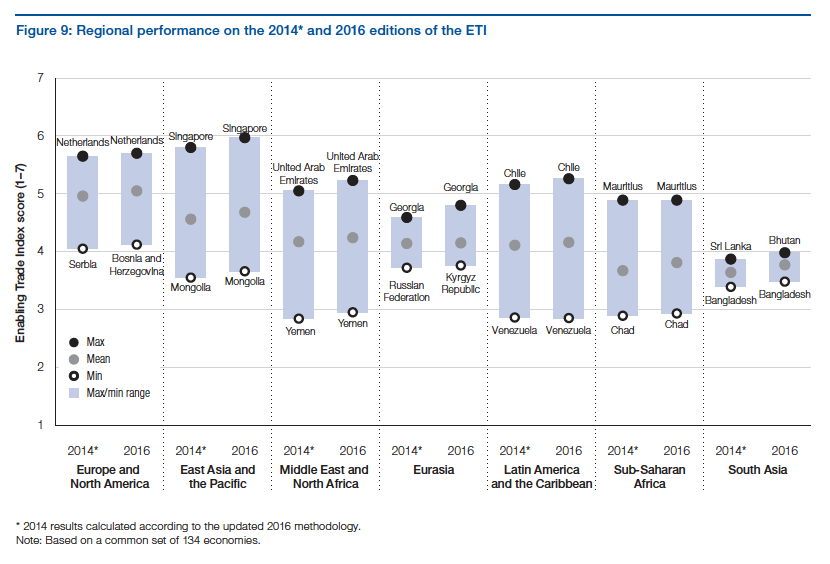
As Western economies look inward, what’s the future for Latin American trade?
After years of protectionism and economic nationalism, Latin American countries are ready to open up again – just as the rest of the world turns inwards.
Our panellists examined the political transformation taking place in the region, and what this means for Latin America’s future.
With political risks named as the biggest in Latin America in the latest Global Risks report, and elections on the horizon in many countries, a key period is coming up.
Accept our marketing cookies to access this content.
These cookies are currently disabled in your browser.
4 trends that will shape Latin America’s economies in 2017
The global economy is looking stronger in 2017. Will Latin America be swept along by this wave of growth? That remains to be seen – but these four trends could hold some clues.
Responsive and Responsible Leadership for Latin America
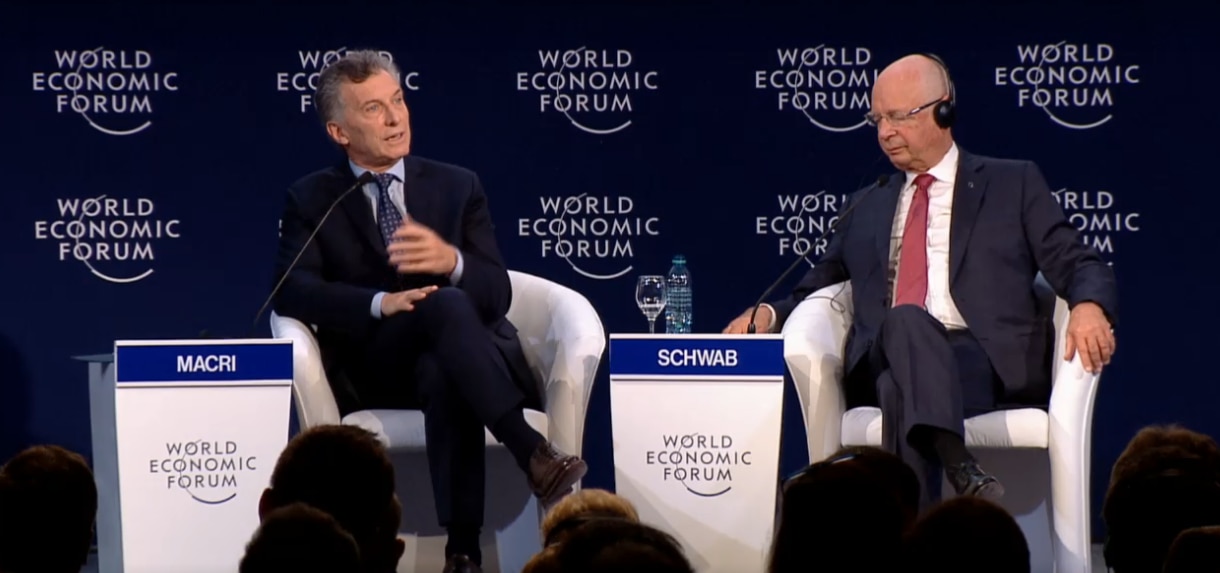
President Mauricio Macri of Argentina discussed how to strengthen Latin America's identity, boost economic integration and build a common agenda for the future.
It’s been a year of change, from Brexit in Europe to Trump in North America. Just like the rest of the world, Latin American countries are left trying to figure out how to navigate this new global context. That’s what participants will be discussing now, in Latin American and the World.
What lies behind all these changes? A backlash against globalization, says one of the panellists, Hans-Paul Bürkner of the Boston Consulting Group. “We need to address the concerns of those people who feel they have been left behind by globalization, even if they are in relative terms better off than before.” That was a topic we tackled in a blog series last summer, which you can read here.
For Susana Malcorra, the Minister of Foreign affairs and worship of Argentina, the causes behind the rise in populism and other global changes are a bit more complicated:
“It’s not just about globalization, it’s also about the disruption caused by technology.”
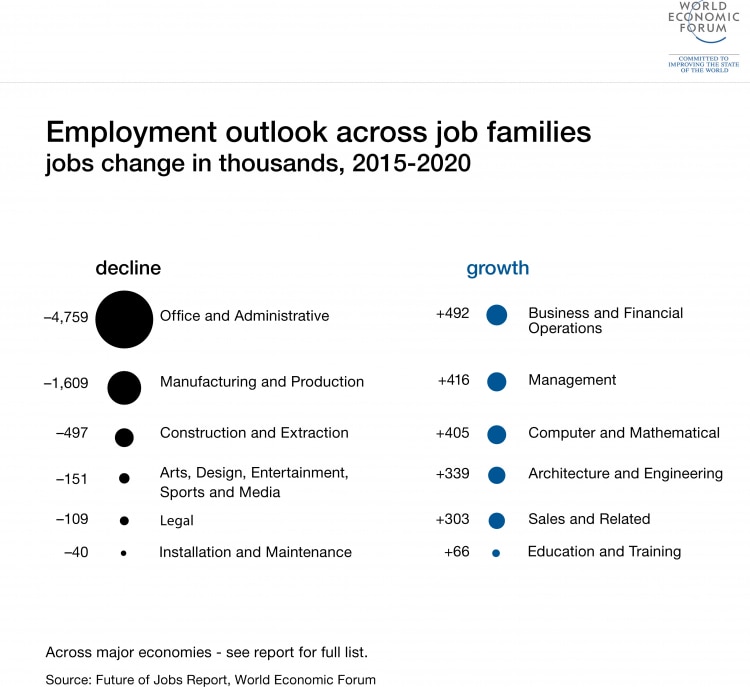
And the most worrying effect of this disruption is what it means for jobs. “Old white collar jobs will be destroyed or they will start to pay less,” Malcorra warned.
James Z. Li of McKay & Co agreed that regardless of the causes, the biggest worry for most people is what it means for the world of work. “Free trade does create value, but for those who have been making cars, for example, do you think they can suddenly become IT professionals? That’s what is behind the US elections – people need jobs.” And as a 2016 Forum report noted, many of the jobs that exist today won’t be around tomorrow.
But what exactly do these changes mean for Latin America, and how can leaders in the region respond? One of the first things countries in the region could do is look to their neighbours, argued Ricardo Luna Mendoza, Minister of Foreign Affairs, Peru.
That was a similar argument made by Arancha González Laya of the International Trade Center in an article on Agenda this week. It’s a trend we’ve been seeing for many years, but Latin America still has a lot of work to do.
Accept our marketing cookies to access this content.
These cookies are currently disabled in your browser.
The region should also look beyond its own borders and focus on solidifying relations with China, panellists agreed. That is in line with made by Angel Melguizo of the OECD argued on Agenda last week, who pointed out that this had already been happening.
“Trade between China and Latin America has multiplied 22 times since 2000, a stark contrast to Latin American trade with the United States and Europe, which merely doubled in the same time period.”
If there was one unifying thread throughout the session, though, it was the idea that while the shifting global environment is creating a lot of fear, it is not without opportunities. “Uncertainty brings fear, so it makes sense that people are afraid. But there are opportunities,” Susana Malcorra concluded.
17:42 UTC
Is Latin America becoming more or less predictable?
Accept our marketing cookies to access this content.
These cookies are currently disabled in your browser.
The panel examined what 2017 holds for the region’s economies. As inflation looks tamer, and commodity prices have stabilized.
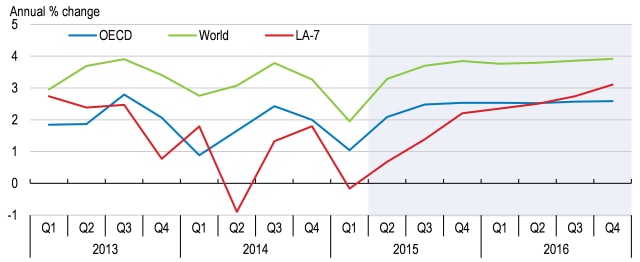
The region had a bad year economically in 2016. But growth in the first quarter of 2017 gives Latin America a chance to make important economic strides.
The uncertainties around the policies of the new US administration remain pertinent for this region. However, Guillermo Ortiz, Chairman, BTG Pactual Latin America, argued that looking ahead relations will most-likely normalise.
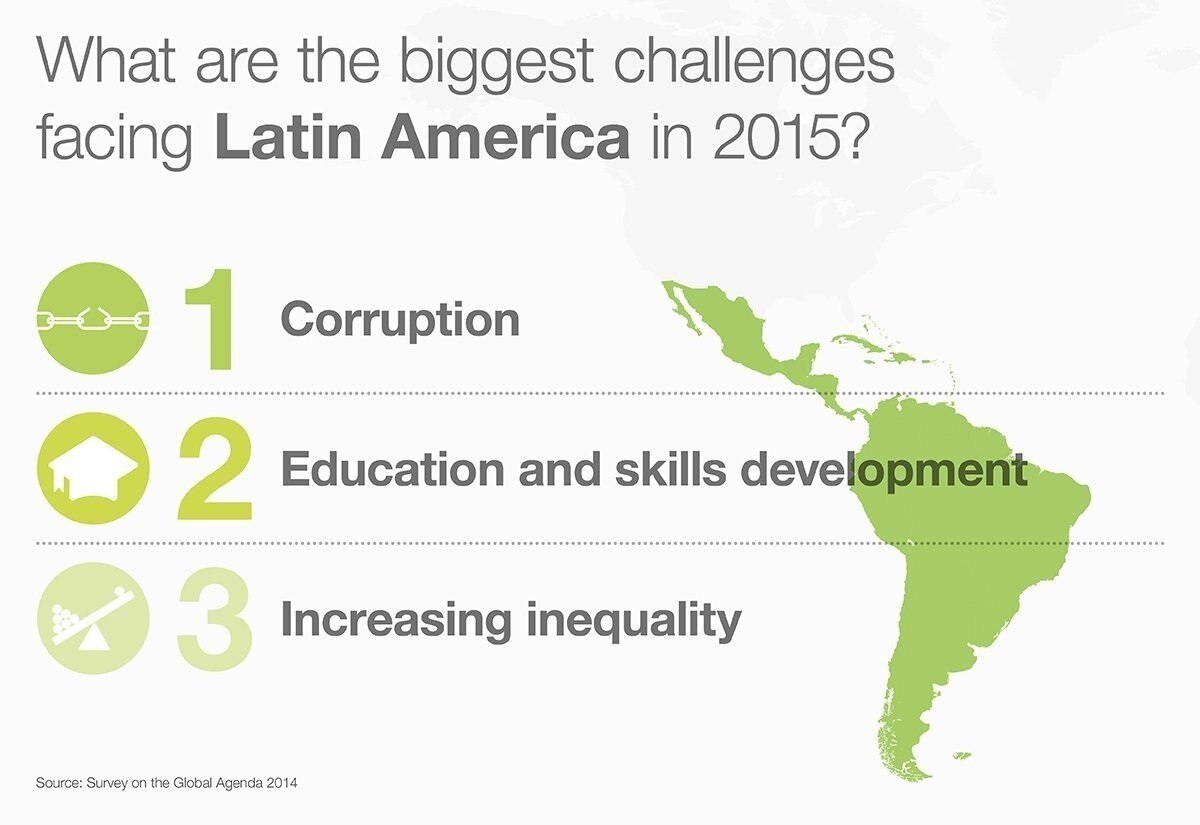
The region is recovering economically but the panellists warned that inequality, corruption and uncertainty are problems still high on the agenda.
Miss it yesterday? Responsive and Responsible Leadership for Latin America
President Mauricio Macri of Argentina discussed how responsive and responsible leadership can strengthen Latin America's identity, advance economic integration and create a common agenda for the future.
Accept our marketing cookies to access this content.
These cookies are currently disabled in your browser.
The Trade Facilitation Agreement has the potential to lift global GDP by 0.5%, but many countries are flirting with protectionism. Is this a crisis or an opportunity for increased trade collaboration?
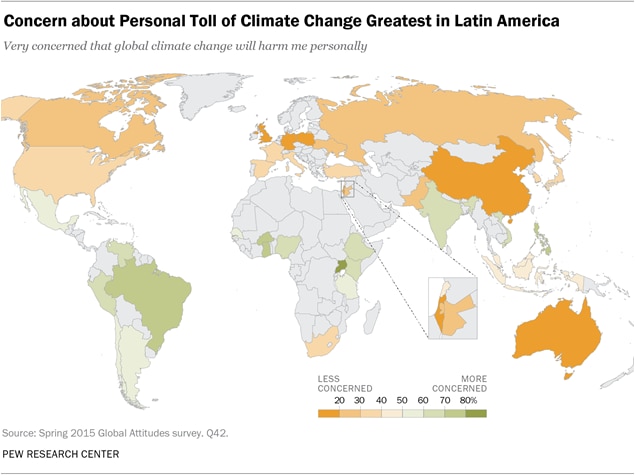
The panel asked how Latin American leaders can deliver an actionable COP21 agenda?
With climate change posing a real threat to Latin America, business and government will have to work together to develop effective policies and solutions.
Accept our marketing cookies to access this content.
These cookies are currently disabled in your browser.
In the last two weeks, the threat climate change poses to Latin America hit home: at the end of March, floods in Peru killed at nearly 80 people and left another 70,000 homeless. A week later, torrential rain in Colombia created landslides that killed more than 250 people and flattened entire villages.
Accept our marketing cookies to access this content.
These cookies are currently disabled in your browser.
This is a fundamental issue that is usually left to the Ministry of the Environment, but the challenge is stark. Governments alone will not be able to meet the goals of sustainable development, says Patricia Espinosa.
Accept our marketing cookies to access this content.
These cookies are currently disabled in your browser.
Green technology and its implementation is costing less and becoming more accessible. Clean energy should be part of the agenda of governments, not only because countries are at risk but also because it is a business opportunity.
Accept our marketing cookies to access this content.
These cookies are currently disabled in your browser.
The panel looked at how corruption can be fought, following recent successes in the region.
The wide coverage of thePetrobras corruption case in Brazil and cases of the government in Chile should be seen as a positive sign, as it means that the region is beginning to recognize the seriousness of the problem.
What are the productive development policies needed to drive economic diversification, sophistication and increased productivity to re-ignite growth? According to Harvard Professor Ricardo Hausmann, one of them is immigration.
Accept our marketing cookies to access this content.
These cookies are currently disabled in your browser.
Infrastructure, storage and co-operation were the main talking points of the session.
Juan Jose Aranguren, Minister of Energy and Mining, Argentina stated: "In Argentina the government is working to establish long-term objectives, the energy equation will be a coexistence of renewables with the current model,"
Accept our marketing cookies to access this content.
These cookies are currently disabled in your browser.
Fostering development and entrepreneurship in the Fourth Industrial Revolution
We concluded this year's World Economic Forum on Latin America with a discussion on the new agenda to foster development and entrepreneurship in the Fourth Industrial Revolution.
All over the world, industry is being disrupted by new technology. What we have today is more than we dared to imagine yesterday: new business models, new ways of communicating and new job disciplines.
The pace of technological change has brought the arrival of the Fourth Industrial Revolution.
The more connected people are, the more opportunity and access they will have to continuous learning, helping them develop the skills needed to be more productive, happier and better off. Being connected is good for people, and it’s good for the economy.
Accept our marketing cookies to access this content.
These cookies are currently disabled in your browser.
4 trends that will shape Latin America’s economies in 2017
The global economy is looking stronger in 2017. Will Latin America be swept along by this wave of growth? That remains to be seen – but these four trends could hold some clues.
That brings us to the end of our 2017 Latin America Meeting. Thanks for following our live blog.
We work on our mission to improve the state of the world all year round. Our next regional meeting is World Economic Forum on Africa on 3-5 May, in Durban, South Africa.