Emerging economies can lead the way on green logistics. Experts explain why
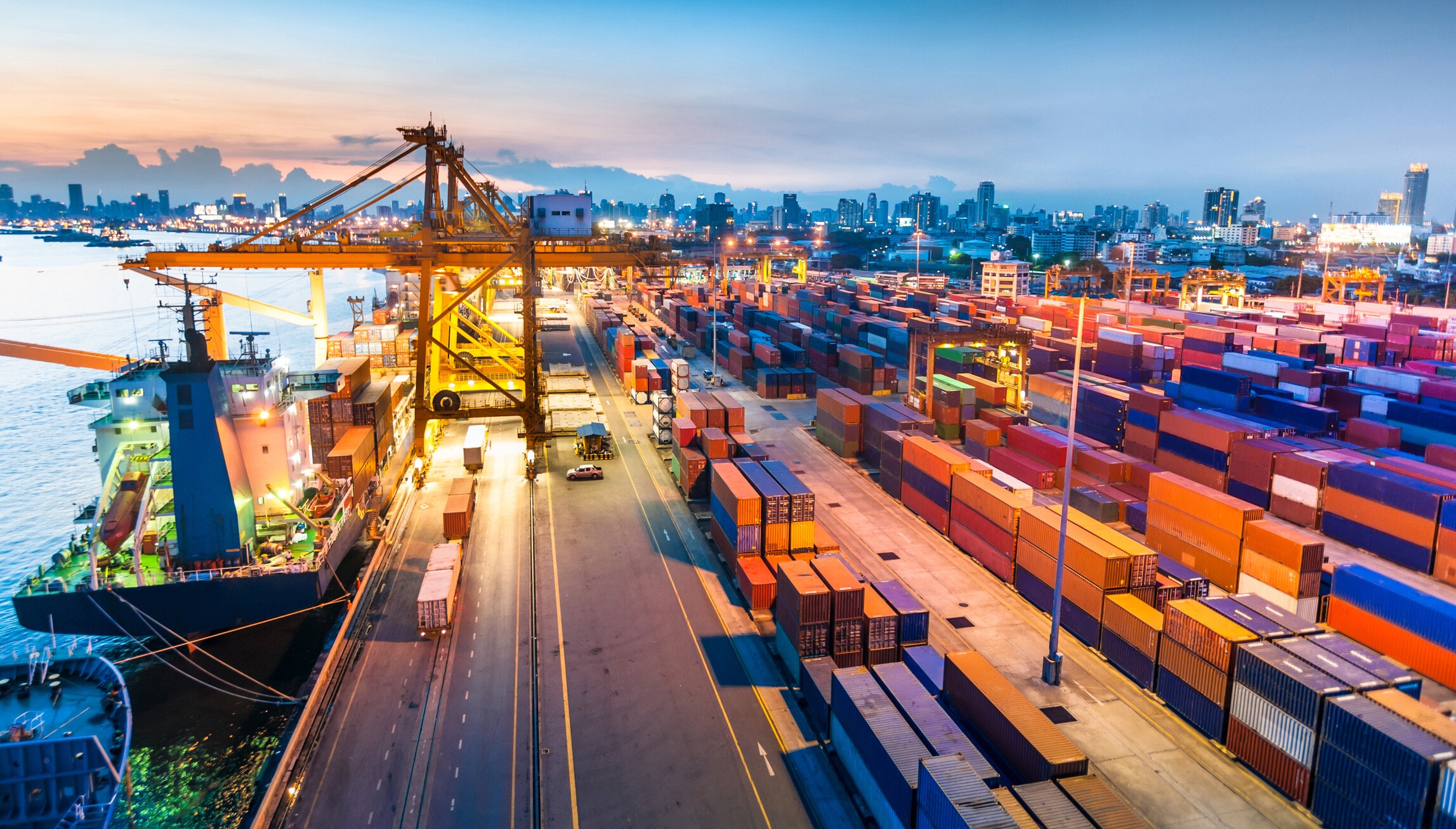
Logistics account for up to 11% of global emissions. Image: Getty Images
Wee Kean Fong
Head of Nature and Climate, Content and Programming, Greater China, World Economic Forum- The logistics sector accounts for up to 11% of global greenhouse gas emissions.
- Emerging markets can leapfrog directly to state-of-the-art green innovations.
- At the Annual Meeting of the New Champions, experts deliberated on how emerging economies can fast-track green logistics development.
Logistics is the backbone of the global economy, but the sector is also a major contributor to climate change, accounting for up to 11% of global greenhouse gas emissions, if warehouses and ports are included alongside freight transportation.
With accelerating digitalization, shifting trade patterns and rising climate urgency, the global logistics sector stands at a critical inflection point. Global freight demand is expected to double between 2019 and 2050. Emerging markets such as China and the Middle East are central to the surge, driven by rapid urbanization, growing trade and infrastructure investment and technological innovation.
China has become the largest e-commerce market globally, generating almost 50% of the world's transactions, with efficient logistics systems underpinning this expansion.
Meanwhile, the Middle East and Africa freight and logistics market is projected at $173.27 billion in 2025, expanding at a 6.36% compound annual growth growth rate (CAGR) through 2030 on the back of major port expansions and cross-border corridors. Saudi Arabia alone plans to elevate the logistics market to a staggering $15.31 billion by 2030, developing 59 logistics zones.
The industry in emerging economies is experiencing unprecedented green transformation, driven by maturity in technologies and increasing climate regulations. For example, battery electric and hydrogen fuel trucks are already surpassing 500km range, and as they mature, the cost ownership will further decrease. China has launched five clusters dedicated to fuel cell vehicle demonstrations, consisting of more than 40 cities; and 36 countries have committed to 100% zero-emission truck sales by 2040.
Emerging markets have a unique opportunity
Emerging markets, in particular, bear a disproportionate burden in the green transition. Their infrastructure often lags behind, and outdated vehicle fleets contribute to higher emissions.
These disparities underscore the urgency of accelerating green logistics to ensure no region is left behind in the global sustainability agenda. Equally importantly, cases have been proven that the transition itself brings the regions robust economic growth and competitive edges.
Moreover, emerging markets can leapfrog directly to state-of-the-art green infrastructure by deploying clean technologies from the outset, instead of much retrofitting of the legacy systems or having high risk locking in carbon-intensive operations for decades.
In the recently wrapped Annual Meeting of the New Champions (AMNC) in Tianjin, China, the Net-zero Opportunities for Value-chain Action (NOVA) initiative convened industry leaders to have deliberated the championing role of the emerging economies in fast-tracking the green logistics development through innovative approaches and modalities.
AMNC participants deliberated through multiple sessions on the championing role of the emerging economies in fast-tracking the green logistics development through innovative approaches and modalities.
“Emerging markets, including China, have strong momentum in green logistics innovations. We are seeing growth in areas such as sustainable aviation fuels (SAF), green fuel for ships, and heavy truck battery change. International cooperation is key to navigating an effective global transition in the sector,” said Liu Peng, Director-General, Global Sustainable Transport Innovation and Knowledge Center, Ministry of Transport of the People's Republic of China.
In China, battery electric heavy trucks made up 20.9% of new sales in December 2024 – more than double January’s share – signalling rapid fleet electrification. In parallel, investors poured $757 billion into electrified transport worldwide in 2024 – part of a record $2.1 trillion in energy-transition capital – marking a clear market tipping point for green logistics.
Technology and ‘soft’ innovations that power the logistics transition
To unlock green transition and market opportunities, disruptive innovation across the logistics ecosystem is essential. As sustainability imperatives and market dynamics evolve, companies must pursue multidimensional advances in both technology and business models to decarbonize operations, enhance efficiency and unlock new value creation opportunities.
Key innovation areas include:
- Fuel switch solutions: Adoption of low- and zero-carbon fuels such as green hydrogen, methanol and biofuels like sustainable aviation fuel.
- Vehicles and propulsion technology: Deploying electric/hydrogen trucks, sustainable aviation fuel-ready aircraft, low-emission ships and locomotives.
- Green logistic infrastructure: Building green fuelling networks, smart transport hubs and sustainable warehouses.
- Digital operation and optimization: Use of artificial intelligence (AI), internet of things (IoT) and digital platforms to improve routing, tracking and system efficiency.
- Modal shifts: Moving freight to rail, inland waterways and coastal shipping to cut carbon intensity and boost efficiency.
- Operating models innovations: Scaling circular logistics, last-mile innovations and workforce upskilling for sustainable performance.
Together, these innovations form the foundation of a greener, more resilient logistics system – one that meets rising demand while enhancing company competitiveness.
“A decarbonized future for the logistics sector will be driven by technology, scale and action. From advancing electric vehicle capabilities to transforming last-mile delivery, we see disruptive innovations becoming the reality across the entire logistics value chain,” said Aditi Rasquinha, Chief Executive Officer, Greater China, DHL Global Forwarding.
Pressing priorities in unleashing the potential of the innovations
However, implementation and scaling of innovative technologies continues to face several significant barriers, such as cost pressures, policy uncertainty and misalignment of resource allocation.
Green fuels, for instance, remain significantly more expensive than conventional alternatives. Sustainable aviation fuel carries roughly a 3.1x price premium over conventional jet fuel, Jet-A, while the total cost of ownership for hydrogen fuel-cell Class 8 trucks is 3-4x that of equivalent diesel rigs, making carriers hesitant to absorb such premiums.
On the policy front, volatility in international regulations poses risks to business stability and supply chain security. Insufficient alignment between upstream supply and downstream demand hampers the scaling of green technologies, underscoring the need for more integrated planning and investment.
“In Guizhou Tyre, we see huge opportunities to work with the value chain partners to jointly decarbonize the sector. But to truly scale these solutions, we need stronger partnerships. De-risking instruments and strong policy signals are still essential to build long-term market confidence,” said Wang Kun, General Manager, Guizhou Tyre.
An ecosystem for sustainable growth
Leading players across both public and private sectors are piloting new collaboration models, scaling blended finance mechanisms and embedding sustainability metrics into decision-making. These frontrunners offer a blueprint for others to follow, demonstrating that when incentives are aligned and ecosystems mobilized, green logistics can move from aspiration to acceleration.
Governments are increasingly adopting integrated policy frameworks that combine regulatory clarity, fiscal incentives and infrastructure planning to drive systemic transformation.
How the Forum helps leaders strengthen manufacturing and supply chain resilience
Meanwhile, financial institutions are developing innovative funding tools, such as green bonds, carbon-linked loans and public-private risk-sharing facilities, to lower the barriers for sustainable investment. On the industry side, companies are forging cross-sector partnerships to share infrastructure, aggregate demand for low-carbon solutions, and standardize emissions data and methodologies.
“Market mechanisms remain a critical driver for green logistics adoption. Demand-side initiatives, such as the First Movers Coalition, continue to help companies along the logistics value chain to future proof operations and maintain competitiveness,” said Noam Boussidan, Programme Head, World Economic Forum's First Movers Coalition.
Together, these efforts are building the foundations of a new logistics paradigm – one that is decarbonized, digitally connected and economically inclusive. Scaling these models across emerging markets will be essential not only to meet climate targets, but also to unlock broader development gains such as job creation, supply chain resilience and economic growth.
Don't miss any update on this topic
Create a free account and access your personalized content collection with our latest publications and analyses.
License and Republishing
World Economic Forum articles may be republished in accordance with the Creative Commons Attribution-NonCommercial-NoDerivatives 4.0 International Public License, and in accordance with our Terms of Use.
The views expressed in this article are those of the author alone and not the World Economic Forum.
Stay up to date:
Mobility


Forum Stories newsletter
Bringing you weekly curated insights and analysis on the global issues that matter.
More on Climate Action and Waste Reduction See all

Lin O’Grady and Alice Charles
April 7, 2026


