Enterprise AI is at a tipping Point, here’s what comes next
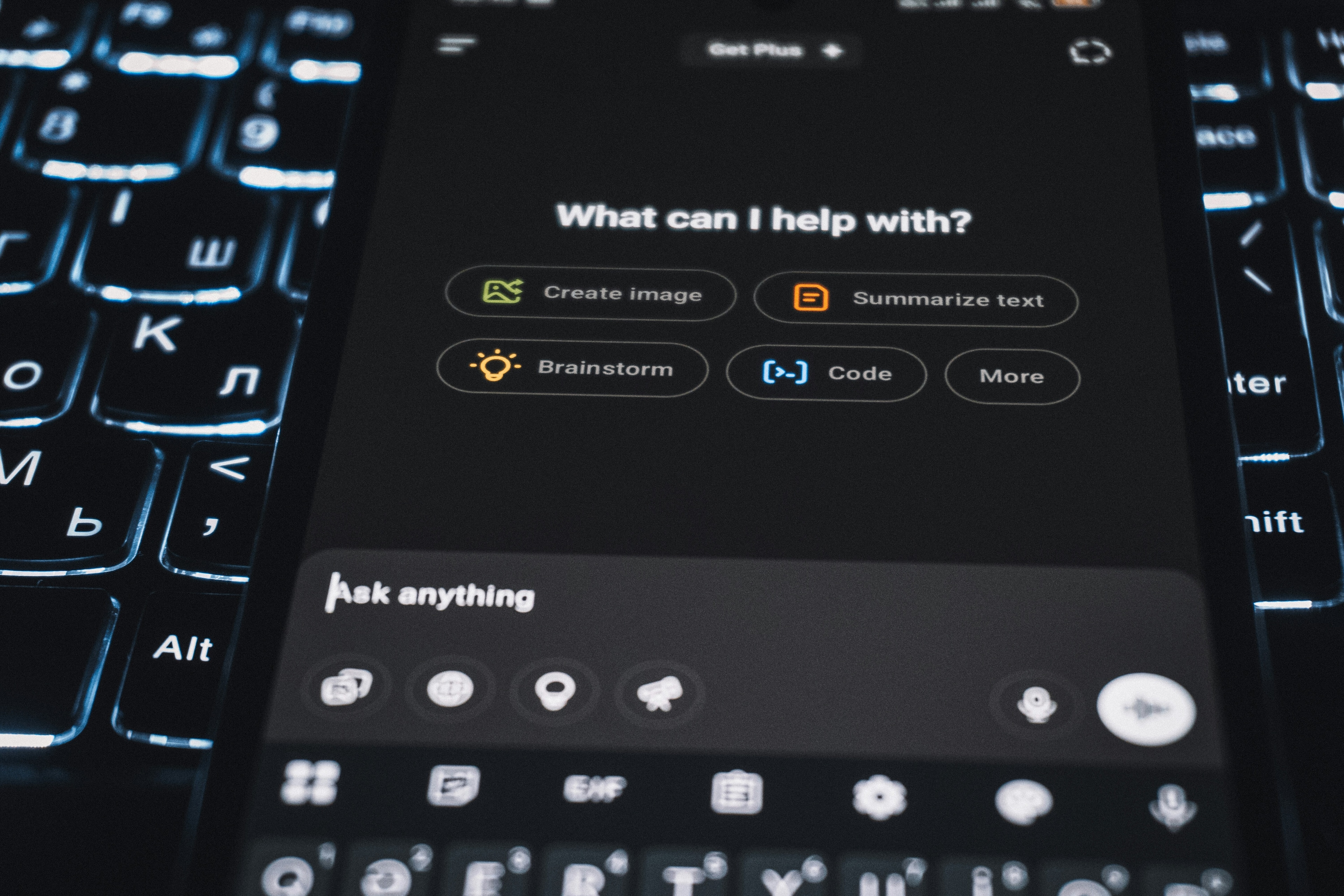
Enterprise AI is shifting from passive tools to agentic systems Image: Unsplash/Zulfugar Karimov
Help us prevent the spread of disinformation
This article has been intentionally misrepresented on other websites that spread false information. Please read the piece yourself before sharing or commenting.
- Consumer AI tools such as ChatGPT have raised user expectations for intuitive, responsive and personalized experiences.
- Enterprise AI is shifting from passive tools to agentic systems that can act autonomously within business processes.
- As AI becomes central to enterprise operations, issues of trust, explainability, data control and regulatory compliance have become top board-level concerns.
Artificial intelligence (AI) has captured the imagination of boardrooms around the globe. However, as organizations rush to harness its promise, many enterprise deployments continue to stall, not for lack of ambition but because current solutions fall short of business realities.
Business leaders are finding themselves caught between highly capable consumer AI and fragmented enterprise tools that require immense customization. The result is a landscape where proof-of-concepts abound but scaled success stories remain rare.
And yet, that is beginning to change.
A new generation of AI for businesses is emerging; one that recognizes the nuanced needs of large organizations: data security, operational integration, regulatory compliance and above all, business context. This is not about building AI for AI’s sake, it’s about embedding intelligence where work happens.
After months of speaking with C-suite leaders at the biggest companies, here are the key trends defining this shift and why they signal an inflection point for enterprise AI.
1. The consumerization of AI is reshaping expectations
Tools such as ChatGPT, Claude and Google Gemini have redefined what people expect from technology: non-technical interfaces, fast responses and personalized outputs. These consumer tools have become ubiquitous, with over 100 million active users for ChatGPT alone, within just months of its launch.
This is pushing enterprise users to ask: Why can’t AI at work be just as intuitive?
As AI becomes integral to operations and decision-making, questions of trust, security and governance have moved from IT to the C-suite.
”This shift is not cosmetic. It reflects a fundamental shift in user expectations. Employees expect AI to help them get real work done: crafting proposals, summarizing meetings and analyzing trends.
However, to meet these expectations, enterprise AI must be purpose-built with business users in mind, offering natural language interfaces, contextual awareness and seamless integration into daily tools such as customer relationship management systems, ticketing systems or collaboration platforms.
2. From generic intelligence to proprietary outputs
While foundational models offer powerful capabilities, enterprises have learned that general-purpose AI struggles without business-specific grounding.
According to Deloitte’s 2024 State of AI in the Enterprise report, 62% of leaders cite data-related challenges, particularly around access and integration, as their top obstacle to AI adoption. Without meaningful access to enterprise data, even the most powerful AI fails to generate relevant or actionable results.
That’s why the ability to access data from across the organization, regardless of where it is located and its the format, is critical.
More organizations are moving toward retrieval-augmented generation, knowledge graphs and fine-tuned small language models that are trained on proprietary information, whether that’s product documentation, customer interactions or regulatory guidelines.
Context-aware AI means more than better answers; it means outputs you can trust.
3. AI agents are moving from idea to impact
The next wave of enterprise AI isn’t just generative, it’s agentic.
Agentic AI systems can perceive context, make decisions and take actions, drafting customer replies, summarizing calls, updating records or scheduling follow-ups. According to McKinsey & Company’s Economic Potential of Generative AI report, generative AI and AI agents could automate activities that account for 60–70% of employees’ time in sectors such as banking and insurance.
However, deploying agents that work across real business environments requires more than just model access. It needs integration with workflows, enterprise-grade security and pre-built logic tailored to industry needs.
That’s why pre-built AI agents are becoming essential. They provide a fast path to outcomes, whether in customer service, sales enablement or IT support, while giving organizations the breathing room to develop their longer-term, bespoke AI roadmaps. In this way, operational impact and strategic innovation are no longer mutually exclusive.
4. Composability is emerging as a strategic imperative
One of the biggest dilemmas facing enterprise leaders today is how to make enduring technology decisions amid a rapidly evolving ecosystem. Large language models are improving monthly, regulations are tightening and new vendors are emerging just as fast as others consolidate.
This volatility is why composability – the ability to integrate and swap models, data layers, agents and infrastructure components – is no longer a technical preference but a strategic necessity.
The next generation of enterprise AI will not be defined by larger models or more impressive demos but by real-world results.
”Composable AI systems protect organizations from lock-in, accelerate experimentation and ensure agility. They allow companies to augment existing tech stacks rather than rebuild them. According to Gartner, by 2026, organizations adopting composable architectures will outpace competitors by 80% in the speed of new feature implementation.
Just as importantly, composability fosters resilience. In a world where AI strategy must remain fluid, modularity is the only way to move forward confidently.
5. Sovereignty and trust are now board-level concerns
As AI becomes integral to operations and decision-making, questions of trust, security and governance have moved from IT to the C-suite.
Executives are asking who owns the models we’re using, where their data is going, and how they can prove their AI is compliant and defendable.
This is the age of AI sovereignty. Enterprises increasingly demand full control over their data, models and deployment environments, especially in regulated industries such as finance, healthcare and the public sector.
A recent Capgemini report found that 73% of organizations want AI systems to be explainable and accountable to support responsible use. From data residency to ethical guardrails, governance must now be embedded throughout the AI lifecycle.
Sovereignty also means architectural flexibility: running models on-premise, in a hybrid cloud or in a sovereign cloud environment when needed. Enterprises must not only deploy AI but also be able to defend, adapt and control it.
Looking ahead: AI that fits the business
The next generation of enterprise AI will not be defined by larger models or more impressive demos but by real-world results. Organizations are now focused on solutions that:
- Deliver value today through pre-built agents tailored to common use cases.
- Empower business users with intuitive, contextual interfaces.
- Enable long-term success through composable, sovereign architectures.
- Foster trusted partnerships that support iterative transformation.
It’s not about chasing hype. It’s about building systems that are sovereign, composable, secure and grounded in business impact.
This is the future of Business AI. It’s a movement toward AI that serves the business, not the other way around.
As leaders, the choices we make today about platforms, partners and principles will determine whether we build not just smart technology but a smarter enterprise.
Don't miss any update on this topic
Create a free account and access your personalized content collection with our latest publications and analyses.
License and Republishing
World Economic Forum articles may be republished in accordance with the Creative Commons Attribution-NonCommercial-NoDerivatives 4.0 International Public License, and in accordance with our Terms of Use.
The views expressed in this article are those of the author alone and not the World Economic Forum.
Stay up to date:
Artificial Intelligence
Related topics:


Forum Stories newsletter
Bringing you weekly curated insights and analysis on the global issues that matter.
More on Technological InnovationSee all

Tom Crowfoot
March 18, 2026


