3 lessons for building solutions for the world's 83 million internally displaced people
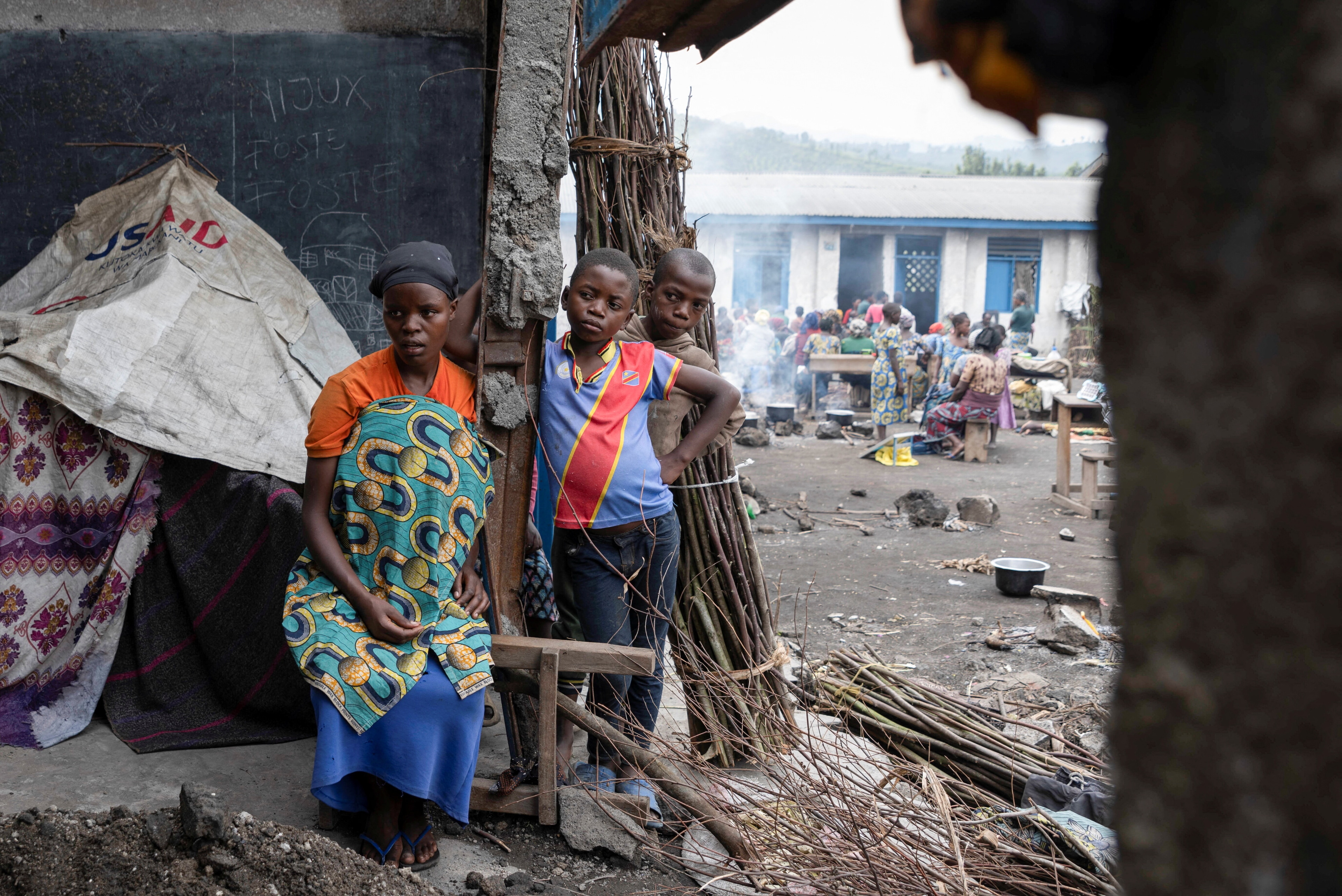
Internally displaced people in North Kivu province, eastern Democratic Republic of Congo. Image: Reuters/Arlette Bashizi
- The number of internally displaced people continues to rise, due to conflict, climate change and criminal violence.
- We need lasting solutions for displaced citizens caught in protracted crises – only governments can provide them.
- While solutions are expensive, the business case for investing in internally displaced people is compelling.
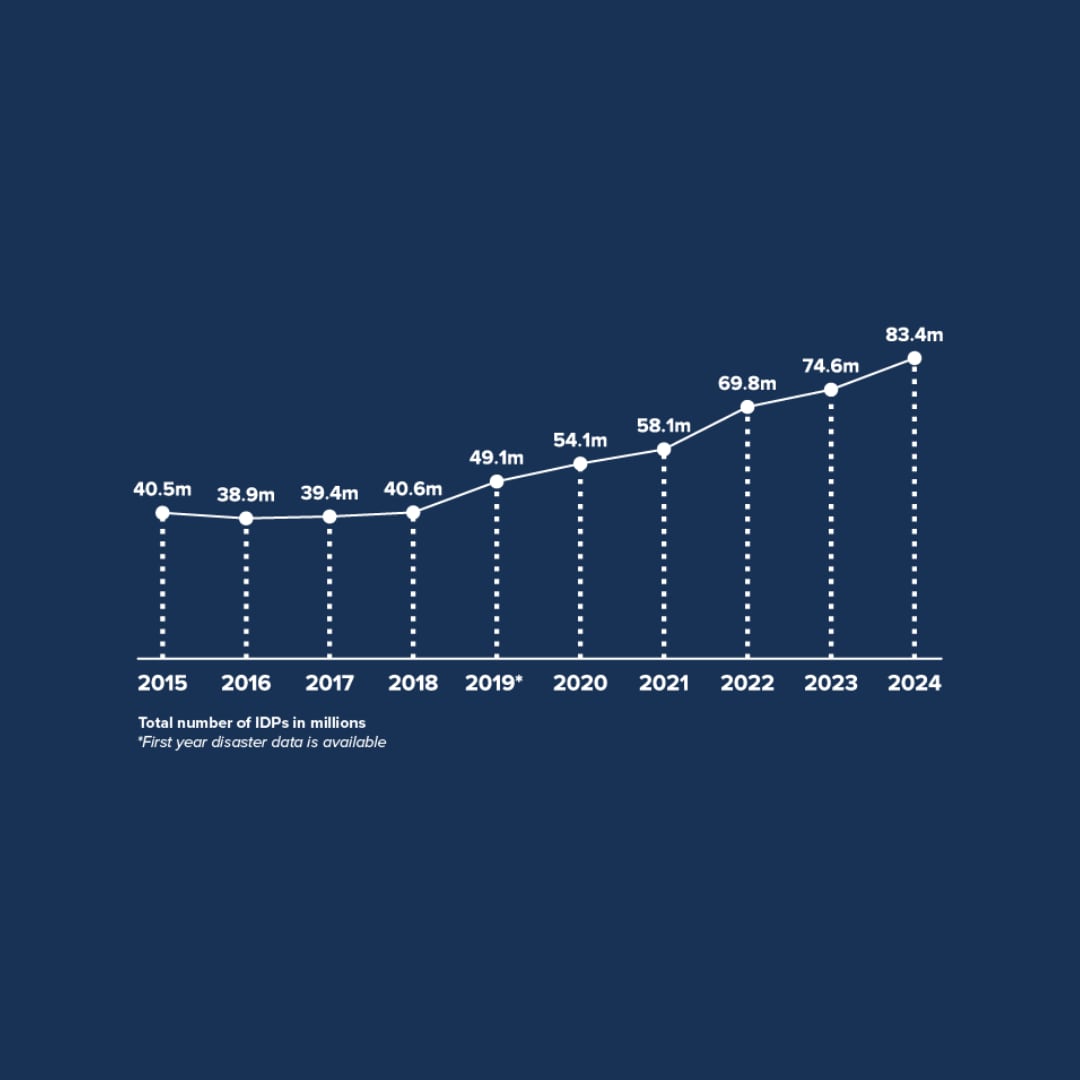
Internally displaced people (IDPs) are persons forced from their homes by factors outside their control who seek safety within their own country (unlike refugees, who have crossed a border). This phenomenon has increased dramatically over recent years, from around 24 million in 1992 to over 83 million persons today. Despite being a much larger number of persons than other groups of people on the move, such as refugees and migrants, the plight of the world’s internally displaced persons is much less well-known.
The causes of internal displacement are many. Conflicts and sudden-onset disasters are the primary drivers, but criminal violence and slow-onset disasters like sea-level rise and desertification also play a part. In a growing number of situations, conflict and climate change intersect, creating complex displacement dynamics. Adding to the growth in numbers is the increasingly protracted nature of displacement; at the same time as the number of new displacements is increasing, more and more existing IDPs are not resolving their situation.
As resources are slashed across the United Nations and wider aid system, there is a high premium on finding lasting solutions for people caught in these kinds of protracted crises. A High Level Panel commissioned by the UN Secretary-General to look at the internal displacement issue was unambiguous on what it will take to reverse the trends: strong government leadership in affected countries, owning the task of finding solutions for their displaced citizens, and the right kind of funding and policies that reinforce that leadership.
There is no substitute on the first of those three points. No one else can make undertakings on behalf of a state. No one else can make the difficult political calls around issues like compensation. No one else can mobilize the longer-term policy and financing engagements necessary.
I spent the last two and a half years leading a small inter-agency UN team to work with select governments and UN teams in displacement-affected countries to translate these sensible ideas into practice. By the time we closed our office at the end of 2024 (it was designed from the outset as a catalyst, not a permanent entity), almost 12 million IDPs had been placed on solutions pathways by their governments in the Central African Republic, Colombia, Ethiopia, Iraq, Libya, Mozambique, Nigeria and Somalia. We learned together why this pivot to a “solutions approach” is difficult – but doable if we set our collective minds to the task.
What were the key takeaways? How do we break this pattern of protracted displacement and better support governments to produce solutions?
First, when it comes to government leadership, local governments proved to be especially attuned and responsive to this issue. Governors in Nigeria, regional presidents in Ethiopia, mayors in Colombia are on the front lines of the displacement crisis. They have real stakes in the issue and a sense of urgency to find solutions. And they are often willing to commit their own funding.
The experience also underlined the intensely political nature of displacement solutions. They typically require policy decisions (and resources) on issues such as compensation, justice, housing, land and property. Mogadishu’s 1 million IDPs, or the 200,000 or so IDPs living in and around Maiduguri, change the demographics of the local electorate. All this can be very political; the choices that need to be made will invariably alienate one constituency or another. Real progress on solutions requires leadership at the local level willing to invest political capital to address these sensitive issues.
Second, it became clear that the initial humanitarian response itself profoundly shapes what does and does not follow. As was concluded in a recent evaluation, a deliberate approach to promote “solutions from the start” needs to be baked into early emergency response from day one; further to that, there should be a commitment to transition as quickly as possible to government solutions strategies accompanied by specific measures that do not come naturally to humanitarian actors. These include working with government systems, engaging sector ministries early, and looking to integrate vulnerable IDPs into national social protection policies.
Third, solutions are expensive. Rebuilding someone’s life when they have lost all their assets is not a cheap undertaking. Housing is often the single highest cost item. Beyond housing, solutions are about restoring access to services, supporting livelihoods and compensation. Somalia’s solutions plan for the first 1 million IDPs will cost around $2 billion. Nigeria’s solutions plan for the three north-east states – covering 4 million IDPs and 5 million people in host communities – will cost around $5 billion.
This underlines the imperative of getting better at preventing displacement in the first place. But where we fail to do so, as we surely will, we need to raise long-term investment that can help governments deliver solutions that last. Homes, not shelters; jobs, not handouts. We saw that governments are willing to help fund this work themselves. We saw potential in tapping into existing investments in locations where there are concentrations of IDPs seeking solutions – if the political will is there. But we also concluded that new funding needs to be found to take this work to scale.
Inspired by the successful UNHCR-World Bank refugee financing mechanisms put in place over recent years, we developed a similar concept for a dedicated concessional financing mechanism for IDP solutions via the international finance institutions (IFIs). The humanitarian rationale is compelling. The business case is also compelling, with humanitarian spending on internal displacement well over $5 billion annually; if donors were to set aside the equivalent of 10% of that emergency spend for development finance for solutions (around $400–500 million annually) and blend that development funding with IFI financing, this would be a game-changer.
Our office closed as planned, but the momentum must not be lost. A surge in conflict and disasters over recent years is pushing displacement numbers inexorably higher, against a backdrop of dramatic cuts in aid. The urgency of shifting to government-led solutions could not be more obvious and compelling.
Read the full-length paper on which this article is based here.
Don't miss any update on this topic
Create a free account and access your personalized content collection with our latest publications and analyses.
License and Republishing
World Economic Forum articles may be republished in accordance with the Creative Commons Attribution-NonCommercial-NoDerivatives 4.0 International Public License, and in accordance with our Terms of Use.
The views expressed in this article are those of the author alone and not the World Economic Forum.
Stay up to date:
Humanitarian Action


Forum Stories newsletter
Bringing you weekly curated insights and analysis on the global issues that matter.
More on Global CooperationSee all

Ralitza Naydenova and Jack Barrie
March 31, 2026