Opinion
From ambition to alignment: Why West Africa must become a global trade powerhouse
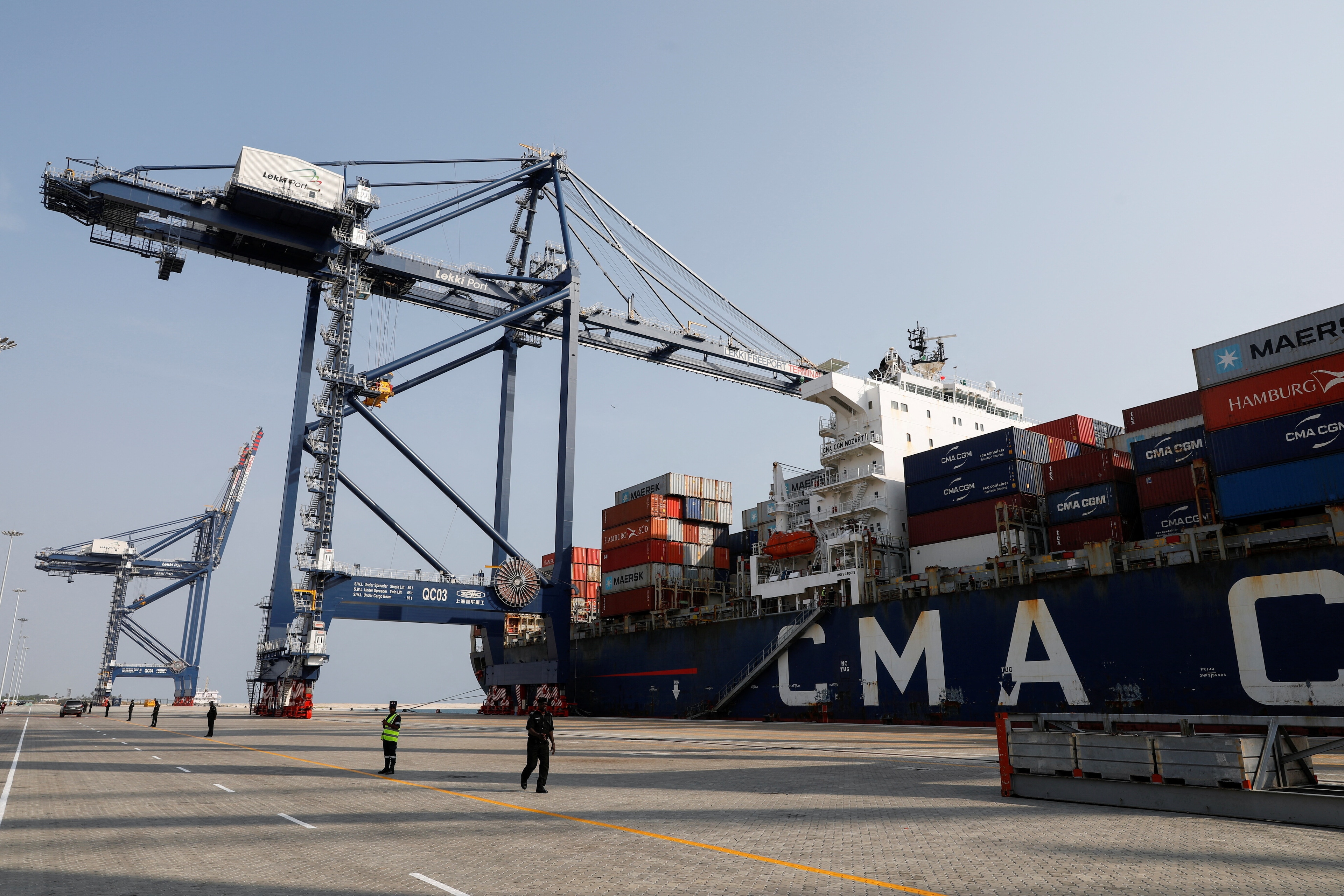
A new era of trade … Lekki Deep Sea Port in Lagos, Nigeria. Image: Reuters/Temilade Adelaja
- West Africa has not yet delivered on its abundant trade potential.
- As global commerce enters a more turbulent phase, the region needs trade policies and implementation to keep pace.
- The goal is not to mimic other trade models, but to allow West Africa to define its own.
For decades, the promise of West Africa has been measured against its untapped potential. Our markets are vast, our population young, our resources abundant – yet the returns, particularly for our own citizens, have lagged behind the rhetoric.
At the inaugural West Africa Economic Summit held in Abuja this June, leaders from across the region came together not to admire the idea of integration, but to insist on its implementation. We gathered not for ceremony, but for course-correction. And what emerged was clear: The costs of inertia now outweigh the frictions of reform.
As Chair of the ECOWAS Council of Ministers, I have seen first hand both the ambition and the architecture of regional policy. Our frameworks for trade liberalization, energy cooperation and free movement are not hypothetical. They exist. But the gap between what is agreed on paper and what is delivered in practice has become too wide to ignore.
Historically, trade among West African communities has flourished, exemplifying a rich legacy of cooperation and exchange that can illuminate the potential for economic collaboration, even amid the complexities of today's global marketplace. Long before colonial borders divided us, West African trade routes stitched together forest, savannah and Sahel. Livestock moved southward; kola nuts moved northward. Markets such as Salaga, Katsina and Kano thrived not because of central planning, but because of mutual interest. That spirit endures in spite of bureaucracy, not because of it.
What has changed, however, is the global context. Today, the world is being re-ordered by supply chain shifts, digital infrastructure, and the geopolitics of energy and rare earths. In this reordering, West Africa cannot afford to be passive. We have scale. We have strategic resources. But we lack the coordination needed to convert those assets into influence.
In Abuja, I called for that coordination. Not as a talking point, but as a mandate. From transport corridors and power pools to customs digitization and data interoperability, the future of our region will depend on how well we can harmonize national ambition with regional strategy. That harmonization cannot be symbolic. It must be institutional.
Indeed, the success of any vision hinges on delivery. As part of our next steps, we are working to operationalize an interministerial review mechanism that will track implementation across trade, energy and infrastructure. The point is not to build new bureaucracy, but to reinforce accountability – quietly and consistently.
Our investors are watching. Integration is not simply a moral or ideological project; it is a signal. When we move goods more easily across borders, when our standards align, when policy does not shift with each administration – we inspire confidence. And confidence is what unlocks capital.
At the summit, we also engaged directly with exporters and factory owners. These are the people navigating border delays and regulatory disconnects in real time. We must continue to ground our policies in proximity to shorten the distance between data and delivery.
Ultimately, our goal is not to mimic other models, but to define our own: one rooted in scale, self-determination and strategic autonomy. Not isolation. Not overdependence. But the kind of economic clarity that allows West Africa to negotiate on its own terms, within the continent and beyond.
If we fail to deliver, our promises become liabilities. The work ahead will be complex. But we no longer have the luxury of deferral. As the saying goes, if you want to go fast, go alone. But if you want to go far – and West Africa must go far – we go together.
Let this summit be remembered not as a moment of agreement, but as the beginning of action.
Don't miss any update on this topic
Create a free account and access your personalized content collection with our latest publications and analyses.
License and Republishing
World Economic Forum articles may be republished in accordance with the Creative Commons Attribution-NonCommercial-NoDerivatives 4.0 International Public License, and in accordance with our Terms of Use.
The views expressed in this article are those of the author alone and not the World Economic Forum.
Stay up to date:
Trade and Investment
Related topics:


Forum Stories newsletter
Bringing you weekly curated insights and analysis on the global issues that matter.
More on Economic GrowthSee all

Marushia Gislén and Emmy Van Enk
July 8, 2026


