4 ways a changing world could transform travel and tourism

Growth in the travel and tourism sector has rebounded since the pandemic, but it must now carve out its future. Image: Photo by Artem Beliaikin on Unsplash
Francisco Betti
Head, Global Industries Team; Member of the Executive Committee, World Economic Forum- Growth in the travel and tourism sector has rebounded since the pandemic, but it must now carve out its future.
- A new white paper from the World Economic Forum and Kearney models four future scenarios for the industry.
- These explore how geopolitical tensions, economic challenges, sustainability efforts and digitalization will shape the travel and tourism sector.
In the late 1950s, Frank Sinatra invited his beloved to “Come fly with me”. It evoked the faraway places burgeoning global air travel could take you to – something we all came to take for granted over the next seven decades. Until 2020, at least.
During the COVID-19 pandemic, travel and tourism became one of the hardest-hit sectors, but it is now back on track, with 7% growth in spending expected over the next decade. In the first quarter of 2025, international tourist arrivals grew by 5% compared to the previous year, led by travel to Asia Pacific and Africa.
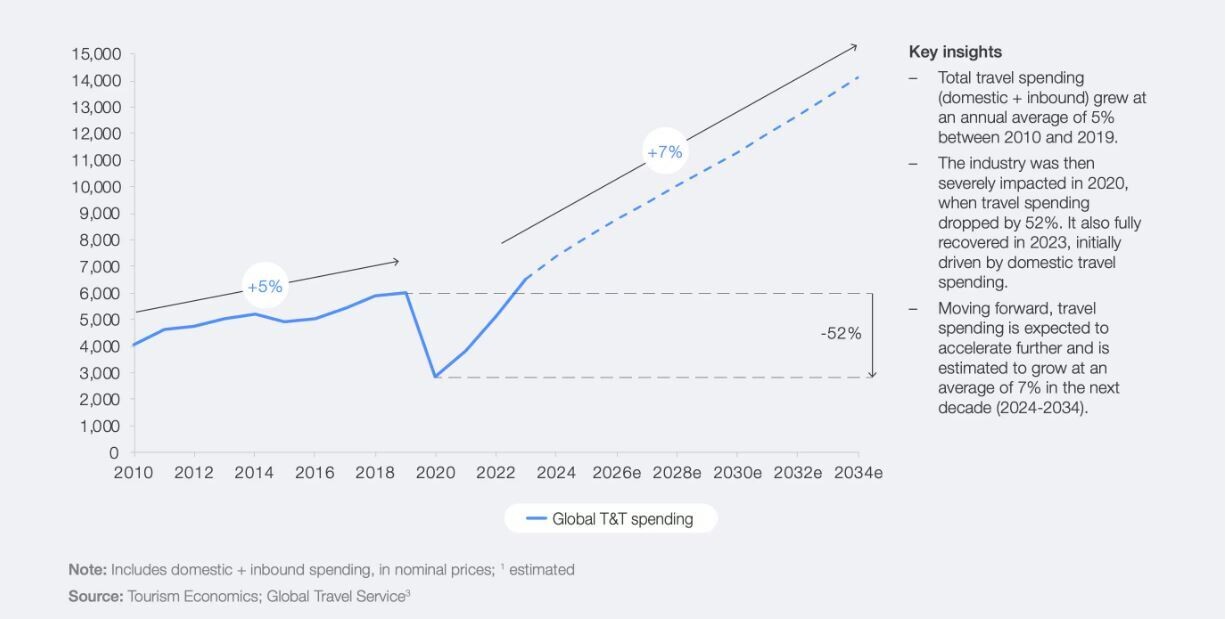
Despite the rebound, the travel and tourism (T&T) industry now exists in a very different, more volatile world, shaped by a mix of geopolitical tensions, economic challenges, the move to more sustainable tourism and digitalization. A new white paper from the World Economic Forum and Kearney has modelled the interplay of these factors in four future scenarios.
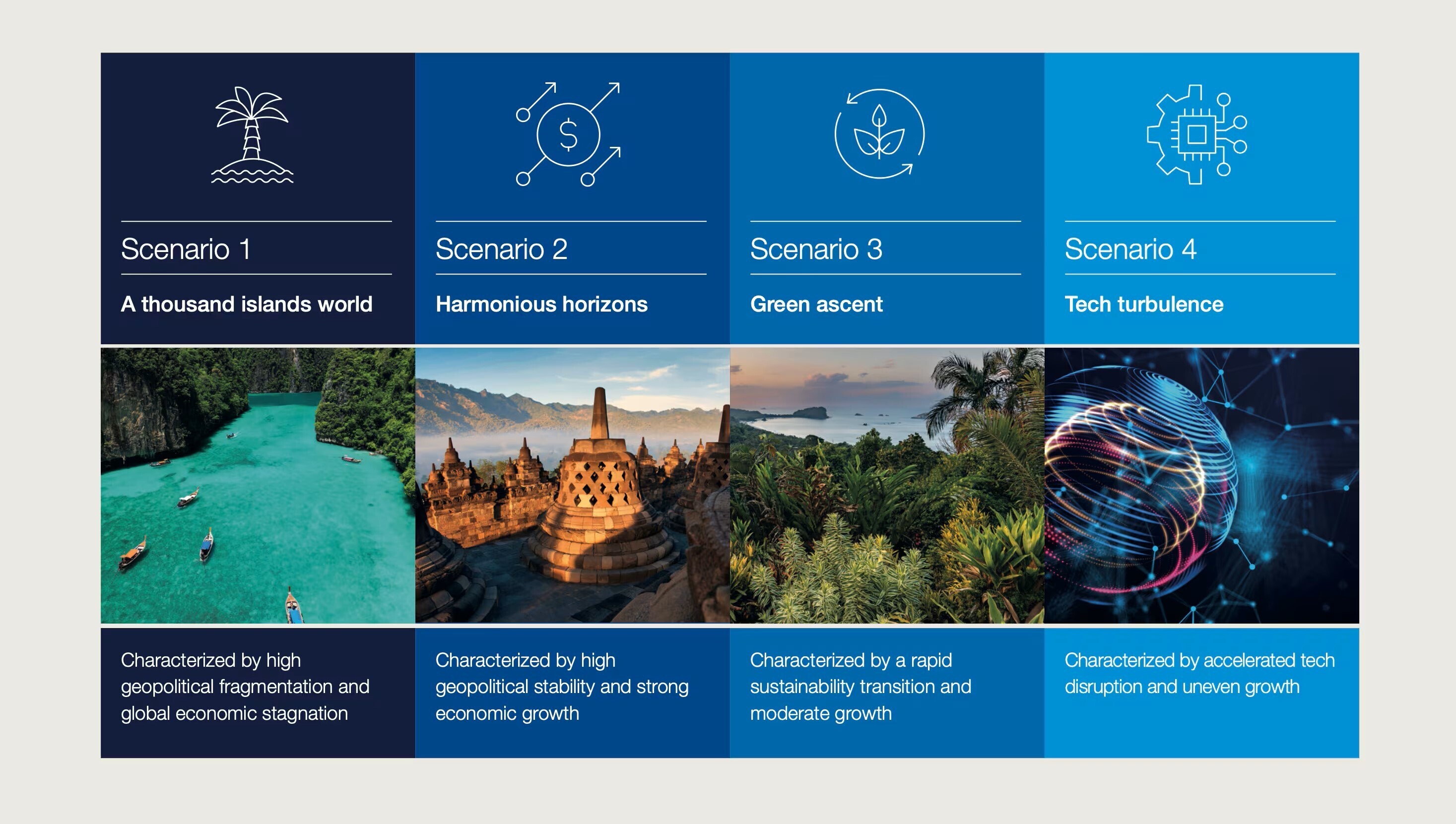
Scenario 1: A thousand islands world
This scenario portrays a world characterized by geopolitical fragmentation and escalating global tensions that split it into “a thousand islands”.
Here, tourism spending will be curtailed by declining global trade, protectionist travel restrictions, stalling economic growth and reduced disposable incomes. Low-income destinations will feel the impact of these trends most acutely.
A drop in global air travel will help reduce aviation emissions. However, a shift to more regionalized travel between countries with harmonized and simplified entry requirements will drive up emissions from regional travel, including road and rail.
With less international travel, employment in areas such as aviation and cross-border services is predicted to drop off, making way for greater automation, while new jobs could emerge in regional travel.
Scenario 2: Harmonious horizons
The diametrical opposite of the “thousand islands” concept. This scenario is characterized by strong multilateral cooperation, trade liberalization and sustained GDP growth.
Visa liberalization and higher disposable incomes are expected to contribute to a nearly one-third (29%) surge in international tourist arrivals by 2030. Highlighting the potential for equitable growth, close to two-thirds of these (58%) will be from Global South economies, with significant contributions from India, Indonesia and Nigeria.
Tourism recruitment is expected to rise by nearly a third (29% compared to 2022), although labour shortages are likely to persist.
However, the surge in tourism will see aviation emissions rising, as adoption rates of sustainable aviation fuel (SAF) remain too low to cover increased fuel demand.
Alongside, the risk of overtourism will increase, and measures like dynamic pricing will be needed to prevent environmental degradation.
Scenario 3: Green ascent
Here, the Forum maps out a world driven by decarbonization, stringent environmental regulation and environmentally-aware travellers looking for low-impact destinations and travel modes.
Substantial investments in low-carbon technologies and increased use of SAF will contribute to the success of this model, as will “high-value, low volume” experiences that reduce overtourism in popular holiday spots.
At the same time, regenerative tourism at eco-certified destinations becomes the preferred choice of more than two-thirds of tourists (68%). This preference also drives a shift to low-emission transport such as high-speed rail.
The scenario forecasts significant economic benefits such as green tourism jobs. However, it also warns of new trade-offs between sustainability and growth, for example the loss of tropical rainforest to the production of SAF.
Scenario 4: Tech turbulence
The final scenario juxtaposes hyper-accelerated technology adoption and fragmented economic recovery with uneven growth.
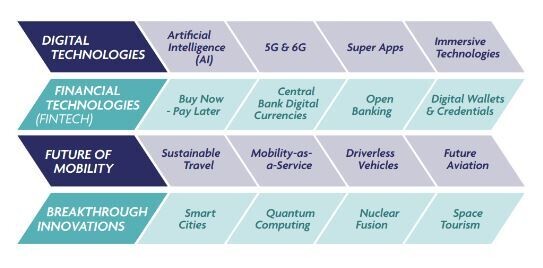
While the adoption of generative AI in T&T is expected to reach 78% by 2030, with advanced mobile networks covering most urban areas, a substantial digital divide will remain between regions.
Hybrid working using augmented and virtual reality (AR/VR) and virtual tourism are expected to grow. While driving down travel emissions, this trend will increase energy consumption from the underlying technology platforms.
Alongside, tourism will become polarized between high-end luxury travellers and mid-market tourists for whom dynamic pricing will increasingly threaten affordability.
Rapid technology adoption will also transform or automate 45% of T&T jobs, mainly routine tasks. However, automation will also create more than two million unfilled vacancies by 2030, making re-skilling in AI and AR/VR a priority across the sector.
Developing tailored strategies for travel and tourism
Each of the four scenarios will require tailored strategies to mitigate the associated risks, from overtourism and labour shortages to environmental degradation.
To navigate these four scenarios and shape a future that works for all, T&T leaders need to prioritize improved governance, workforce upskilling and innovative financing to meet investment needs. Public-private partnerships are crucial for funding, regenerative practices and digital transformation, making T&T resilient and a catalyst for equitable prosperity.
Don't miss any update on this topic
Create a free account and access your personalized content collection with our latest publications and analyses.
License and Republishing
World Economic Forum articles may be republished in accordance with the Creative Commons Attribution-NonCommercial-NoDerivatives 4.0 International Public License, and in accordance with our Terms of Use.
The views expressed in this article are those of the author alone and not the World Economic Forum.
Stay up to date:
Industry: Travel and Tourism


Forum Stories newsletter
Bringing you weekly curated insights and analysis on the global issues that matter.
More on Sustainable DevelopmentSee all

Alastair Green, Ishaan Nangia and Nicola Sandri
March 23, 2026