Opinion
From tariffs to transformation: Why this is the moment for ASEAN to forge strategic autonomy
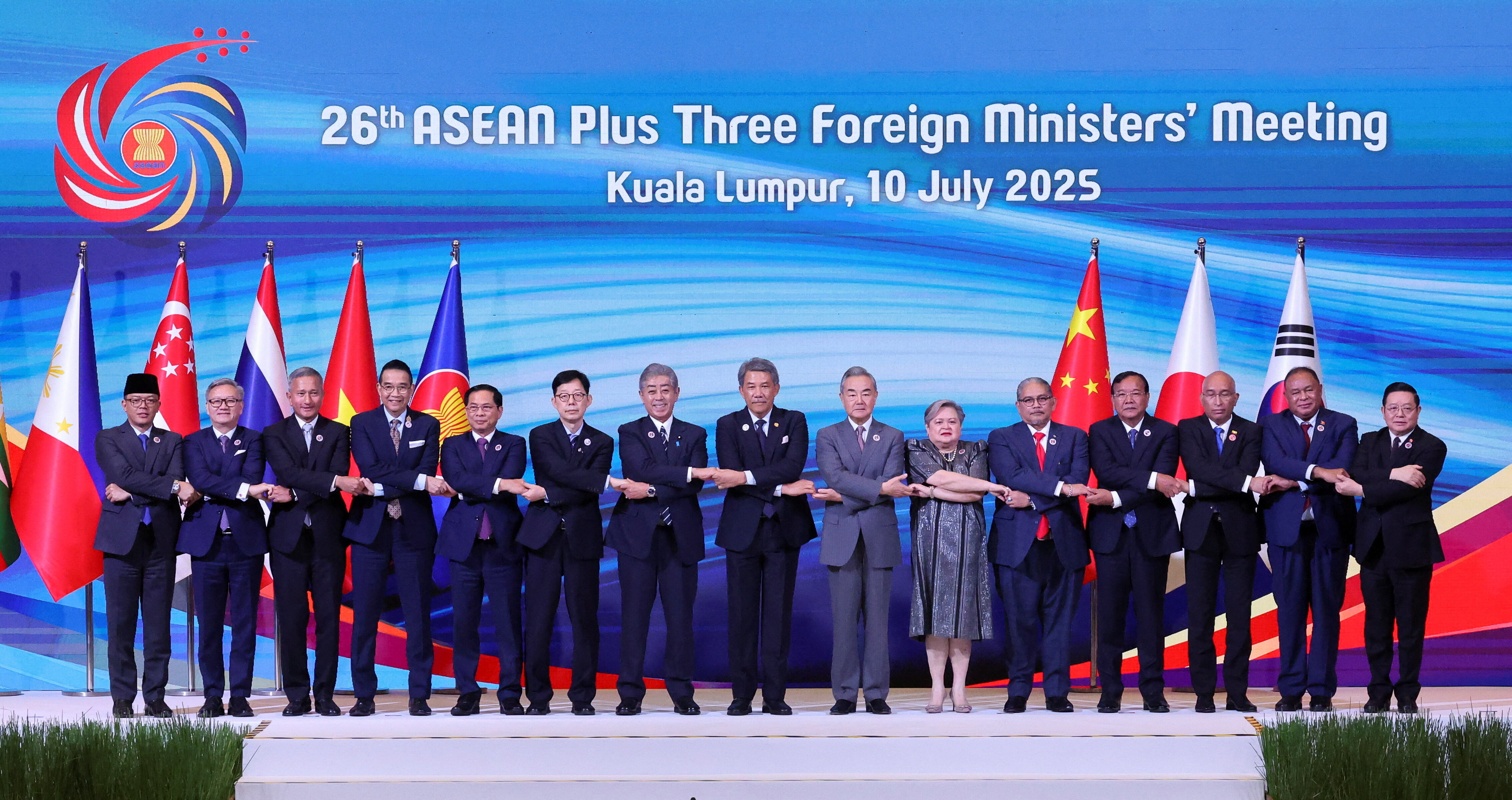
A moment of possibility for ASEAN. Image: Reuters/Hasnoor Hussain
- ASEAN's fragmented reaction to US tariffs shows the need for greater solidarity and shared economic mechanisms.
- Malaysia's Regional Payment Connectivity initiative is a step in the right direction, but more integration is needed.
- ASEAN's efforts can set a precedent for how other regional blocs preserve autonomy in a multipolar era.
The tariff shockwaves of 2025 have presented ASEAN with its most significant test of unity since the 1997 financial crisis – and also its greatest opportunity for transformation. The sudden escalation in trade restrictions has underscored the fragility of regional solidarity, as member states responded with divergent strategies to safeguard their national economies.
Yet within this disruption lies a moment of possibility: the chance for ASEAN to accelerate economic integration and strengthen its strategic autonomy. Under Malaysia’s current chairmanship, ASEAN is navigating this pivotal moment with both urgency and vision. From advancing regional payment connectivity to championing digital economy frameworks, Malaysia is positioning the bloc not only to respond to immediate challenges, but also to set a course for long-term resilience in an increasingly multipolar world.
The US tariffs announced on 2 April were effective precisely because they exploited ASEAN’s structural weaknesses. Unlike the European Union’s supranational authority, ASEAN operates on consensus and non-interference, principles that slow decision-making and prioritize national over regional interests. The 90-day tariff pause announced on 9 April triggered a scramble, with 75 countries reportedly seeking bilateral deals with Washington.
Vietnam’s decision to strike its own agreement highlighted the fragility of trust within ASEAN, making collective action impossible. The lesson is clear. Without institutional mechanisms to reinforce cooperation, unity will remain fragile in moments of external pressure.
Building what works: payment connectivity
Malaysia has advanced one of the most practical de-dollarization initiatives in decades with Regional Payment Connectivity (RPC). While BRICS continues to debate symbolic currencies, ASEAN has already operationalized cross-border payments in local currencies through standardized QR codes across eight member states.
The Malaysia-Cambodia QR payment linkage, launched in April, exemplifies this pragmatic approach. Travelers from Malaysia can now pay instantly in Cambodia using the MAE app, with automatic conversion – bypassing the dollar entirely. Similar systems now connect Thailand’s PromptPay, Singapore’s PayNow, Indonesia’s QRIS and Vietnam’s VietQR, creating an interoperable ecosystem that excludes US financial infrastructure. This isn’t theoretical de-dollarization; it is already affecting millions of transactions across the region.
A reality check for BRICS
While ASEAN has prioritized functionality, BRICS’ de-dollarization efforts remain largely aspirational. Despite headlines about replacing the dollar, its progress has been limited to “practical experimentation” rather than systemic change. The symbolic BRICS notes distributed earlier this year were explicitly framed as political signals, not legal tender.
Even where progress exists – such as the 95% of Russia-Iran trade now conducted in rubles and rials – it reflects crisis-driven necessity rather than a sustainable architecture. The renminbi accounts for just 2-3% of global foreign exchange reserves despite China’s economic weight, while the US dollar still commands 57-58% as of late 2024.
This contrast also highlights a deeper structural difference. BRICS was born out of political necessity, while ASEAN has evolved as an economic framework driven by trade and practical need. This makes economic union in the region a functional necessity, even when political consensus remains elusive.
In this sense, ASEAN shares common ground with APEC – a grouping that has endured precisely because it prioritizes economic cooperation over political alignment. In today’s polarized world, that pragmatism makes ASEAN’s model more resilient and effective. ASEAN’s advantage lies in building interoperable systems that steadily reduce dollar dependence while maintaining global connectivity.
Strategic autonomy through integration
Malaysia’s 15 Priority Economic Deliverables for 2025 provide a roadmap for turning crisis into opportunity. The ASEAN Trade in Goods Agreement (ATIGA) upgrade and Digital Economy Framework Agreement (DEFA) negotiations have been central to that effort.
Earlier this year, Malaysia requested a special ASEAN-US summit, while also hosting the inaugural ASEAN-Gulf Cooperation Council summit with China’s participation in May. This was not about choosing sides. It was about demonstrating ASEAN’s ability to engage multiple powers while maintaining strategic autonomy.
The bloc’s decision to pursue “frank and constructive dialogue” rather than retaliation against US tariffs reflects an understanding that economic warfare demands economic alternatives, not just diplomatic protest.
ASEAN’s fragmentation has offered harsh lessons. Member states found that bilateral negotiations with Washington yielded minimal concessions, while eroding collective leverage. Malaysia’s 24% tariff, Indonesia’s 32%, and Vietnam’s 46% could have been far lower had the bloc negotiated together as a $3.6 trillion economy representing 680 million people.
The challenge now is to embed mechanisms that make unity more beneficial than defection. Malaysia’s chairmanship must continue moving from rhetoric toward concrete integration that makes bilateral deal-making economically irrational.
Toward functional multipolarity
China’s diplomatic tour in April this year through Malaysia, Cambodia and Vietnam, timed during the height of the tariff crisis, demonstrated how quickly strategic competitors exploit ASEAN’s divisions. But it also validated ASEAN’s central premise: The region’s economic dynamism makes it indispensable to all major powers.
ASEAN’s opportunity lies not in being pulled into competing camps but in building what might be called “functional multipolarity” – APEC-style practical economic integration that safeguards regional interests while keeping doors open globally.
Payment connectivity shows how this works. Reducing dollar dependence doesn’t require confronting the US financial system directly. It requires creating parallel infrastructure that is more efficient and more aligned with regional needs.
The path forward
Malaysia’s leadership must acknowledge that ASEAN’s traditional consensus-building approach has reached its limits. Strategic autonomy cannot be achieved through declarations alone; it requires operational integration that makes fragmentation costly and unity profitable.
This means:
- Finalizing the ATIGA upgrade.
- Accelerating the operationalization of ASEAN’s $1 trillion digital economy framework.
- Expanding payment connectivity to cover trade finance.
Above all, it means creating institutions that reward cooperation and penalize unilateral defection.
Crisis as catalyst
The tariff crisis has revealed both ASEAN’s vulnerabilities and its possibilities. Under Malaysia’s chairmanship, ASEAN stands at a crossroads: Remain a loose association vulnerable to external shocks, or transform into an integrated bloc capable of shaping its own destiny.
The lesson extends beyond South-East Asia. Regional blocs from the African Union to Mercosur face similar dilemmas. By embedding digital trade frameworks, interoperable financial systems and collective mechanisms, ASEAN can set a precedent for how regions preserve autonomy in a multipolar era.
The window for transformation remains narrow, and the stakes could not be higher. But for the first time in decades, ASEAN has both the economic foundation and the external pressure necessary to forge genuine unity. Its ability to turn crisis into catalyst will determine whether this moment becomes a turning point – not just for South-East Asia, but for regional cooperation worldwide.
Don't miss any update on this topic
Create a free account and access your personalized content collection with our latest publications and analyses.
License and Republishing
World Economic Forum articles may be republished in accordance with the Creative Commons Attribution-NonCommercial-NoDerivatives 4.0 International Public License, and in accordance with our Terms of Use.
The views expressed in this article are those of the author alone and not the World Economic Forum.
Stay up to date:
ASEAN
Related topics:


Forum Stories newsletter
Bringing you weekly curated insights and analysis on the global issues that matter.
More on Global CooperationSee all

Cecilia Cannon and Marie McAuliffe
April 8, 2026