Opinion
The future of the built environment is the circular economy
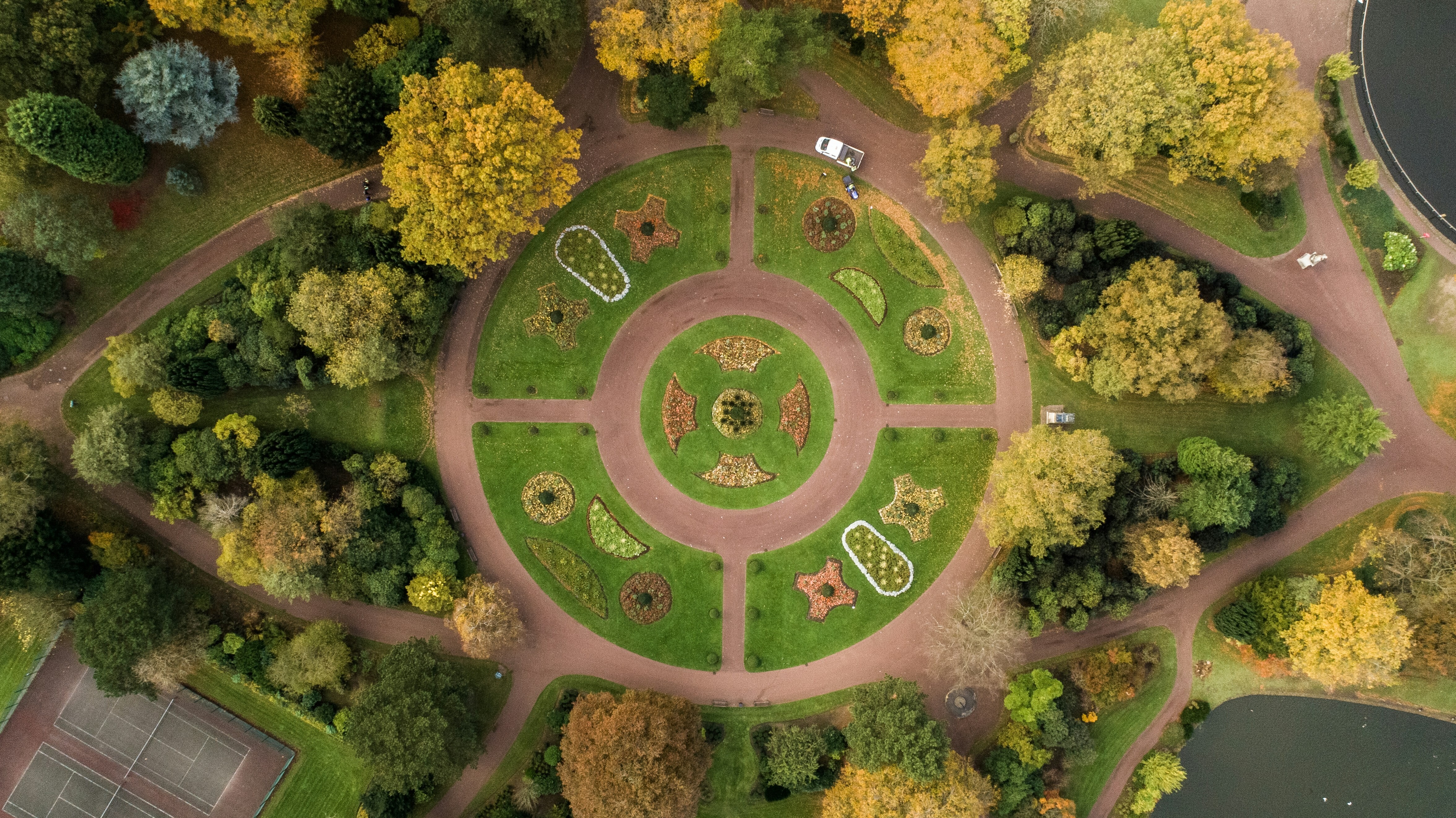
Embracing the circular economy is a major opportunity for cost-saving. Image: Josh Power/Unsplash
- In the built environment, adopting circular practices could reduce sector emissions by up to 75% by 2050 compared to constructing new buildings.
- Businesses currently spend more than twice as much on materials as they do on labour or energy, highlighting the cost-saving potential of circularity.
- By driving efficiency, reducing waste and improving competitiveness, circular business models can lead to long-term growth.
Our current, linear business and societal model is no longer fit for purpose. In a world beset by climate challenges, resource insufficiency and geopolitical uncertainty, it is high time we move towards a truly circular economy.
The potential is remarkable. EU figures show that businesses spend more than twice as much on materials as they do on labour or energy. Circularity can thus unlock significant cost reductions which in turn can help companies to stay competitive.
In the built environment, the adoption of circular practices will reduce the sector’s carbon emissions by up to 75% by 2050 compared to constructing new buildings, according to the World Economic Forum. This is an excellent example of the climate benefits to circularity.
At its core, circularity transforms our “take-make-dispose” approach to a closed loop of “make-use-return”. In doing so, it lowers planet-warming emissions, improves strategic resource independence and makes products more competitive on the global marketplace.
Its time for the circular economy
The shift to circularity won’t occur overnight, but as with many momentous transformations, the adoption of circularity will happen, as Hemingway wrote, “gradually, then suddenly”.
It is obvious that more needs to be done to make circularity mainstream. In the built environment, according to the Ellen MacArthur Foundation, only 20% to 30% of construction waste is recycled, while data from McKinsey & Co. reveals that a mere 1% of building demolition materials are reused. For flat glass, the mostly linear value chain has resulted in “low recycling rates of 0-1%”, a 2023 World Economic Forum report found.
Once circular manufacturing processes and business models are in place, however, circularity will see new business models entirely.
Creating the right policy landscape
A positive regulatory landscape that incentivises businesses to invest in circularity and helps create demand for recycled and reclaimed materials, is key for the shift and here, policymakers have an important role to play.
Thankfully, many are doing so: the European Union, for example, is preparing the ground for the Circular Economy Act, a major piece of legislation which aims to double the share of recycled material in the EU's economy.
The act will lower manufacturing costs and make supply chains more secure by reducing dependence on imported materials - a necessary step to safeguard Europe’s future global competitiveness.
Lawmakers must also ensure that current legislation is adapted to the realities of a circular economy, preventing potential roadblocks.
Today, businesses face too many regulatory hurdles on the path to circularity. The current European Commission has the ambition to remove these hurdles and to also ensure a level playing field, with clear definitions of circularity and end-of-waste criteria. Regulation to ensure that reclaimed materials meet safety and quality standards will also help circular businesses flourish.
What is the World Economic Forum doing to promote sustainable urban development?
A profitable investment
The shift to circularity will also require a significant upfront investment, with an estimated €230 billion needed to adapt physical and infrastructure assets. The long-term payoff, however, is substantial: the circular economy is projected to generate €1.5 trillion in economic value by 2040 through new markets, cost savings and CO2 reductions.
Governments can economically incentivise companies, for instance through subsidies for products and materials that enable reuse, recycling and durability, allowing these products to become competitive in the marketplace before economies of scale reduce prices.
In addition to large-scale investments supported by the EU, smaller initiatives can also have a meaningful impact in encouraging circularity, including a ban on landfills and modest incentives to boost recycling rates. In Denmark, for example, 93% of bottles and cans are recycled, thanks partly to a 15-50 cent refund per item.
From talking point to reality
Companies are increasingly taking the circular economy and running with it.
At VELUX, for example, we are investing in circular innovation across all aspects of our operations, in addition to developing new business models.
In the Netherlands, we’re expanding our service to collect and disassemble used VELUX roof windows, ensuring quality materials can return to the supply chain. In Denmark, we’re examining how decades-old windows can be serviced to extend their usability, while in Germany we’re exploring how consistent maintenance of our installations can ensure optimal performance for longer.
Leveraging the World Economic Forum network for change
The pivot to circularity is not only an environmental decision, but also a strategic business decision; a path to competitiveness.
The Forum's Global Lighthouse Network highlights and supports the companies making strides toward more circular, productive and competitive supply chains across the globe. Its success if fuel for the idea that the transformation to circularity is not a question of “if”, it is a question of “when”.
Moving to circularity will ultimately be good for business, good for the climate and good for consumers. And while, we do undoubtedly need upfront investments, perhaps more important is to challenge conventional thinking.
Ultimately, weighing up whether to stick with the status quo or to invest in circularity is not a difficult decision to make - a circular economy represents a truly win-win scenario, which allows us to increase prosperity whilst meeting our climate goals.
Circularity will be high on VELUX's agenda at the World Economic Forum’s Annual Urban Transformation Summit in San Francisco.
Don't miss any update on this topic
Create a free account and access your personalized content collection with our latest publications and analyses.
License and Republishing
World Economic Forum articles may be republished in accordance with the Creative Commons Attribution-NonCommercial-NoDerivatives 4.0 International Public License, and in accordance with our Terms of Use.
The views expressed in this article are those of the author alone and not the World Economic Forum.
Stay up to date:
Circular Economy


Forum Stories newsletter
Bringing you weekly curated insights and analysis on the global issues that matter.
More on Circular EconomySee all

Pedro Gomez, Hernan J.F. Saenz and III
March 12, 2026


