Why climate health will cost companies billions – and what businesses can do
Research highlights that today less than 5% of global climate adaptation funding is driven towards health protection Image: Unsplash/Markus Spiske
- The impacts of climate-related health conditions will have significant effects on businesses worldwide.
- The most exposed sectors will face billions of dollars in lost output due to climate-health illnesses among workers, according to the Building Economic Resilience to the Health Impacts of Climate Change report from the World Economic Forum.
- Here are eight steps that companies can take to combat the issue.
The health effects of the climate crisis carry profound economic impacts for businesses worldwide, according to a new report.
Climate risks including water scarcity and extreme weather events, combined with existing health vulnerabilities, will lead to worse health outcomes for populations – and they will be felt disproportionately by the most vulnerable or disadvantaged.
Without adaptation, climate-driven health risks could cost the global economy at least $1.5 trillion in lost productivity by 2050 across food and agriculture, built environment, and health and healthcare, notes the World Economic Forum report Building Economic Resilience to the Health Impacts of Climate Change.
The research examines the complex interconnection between climate risks, health and economic impacts and presents a framework for action to help businesses respond. And while addressing climate-health risks is an urgent challenge, it finds there are significant opportunities for organizations that act.
A ‘dangerous gap’
The report highlights that today less than 5% of global climate adaptation funding is driven towards health protection – a “dangerous gap” that it says also presents opportunity for action from the private sector.
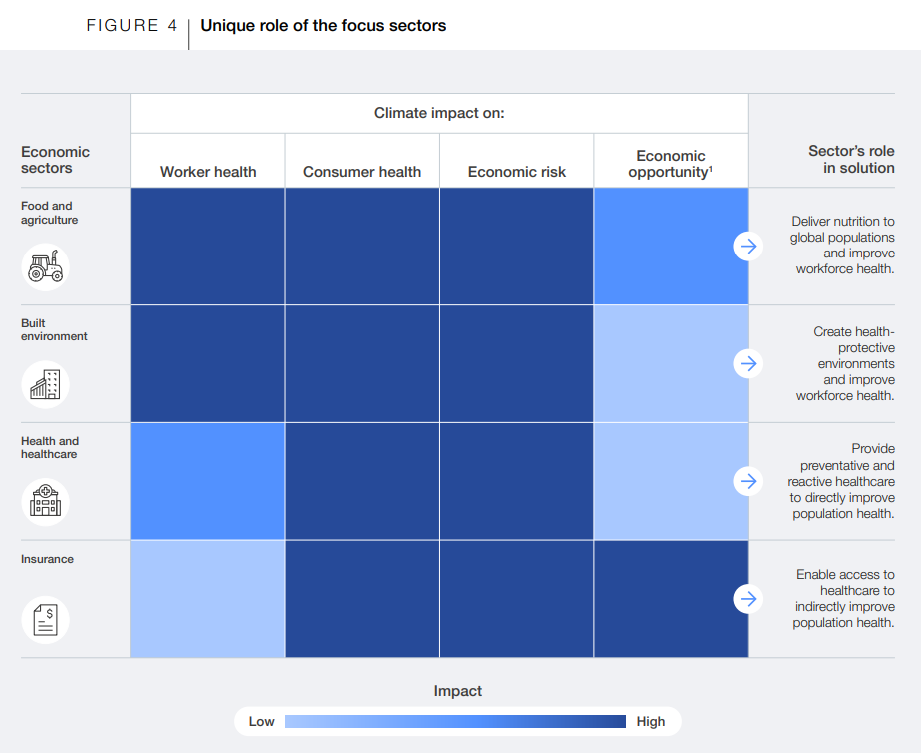
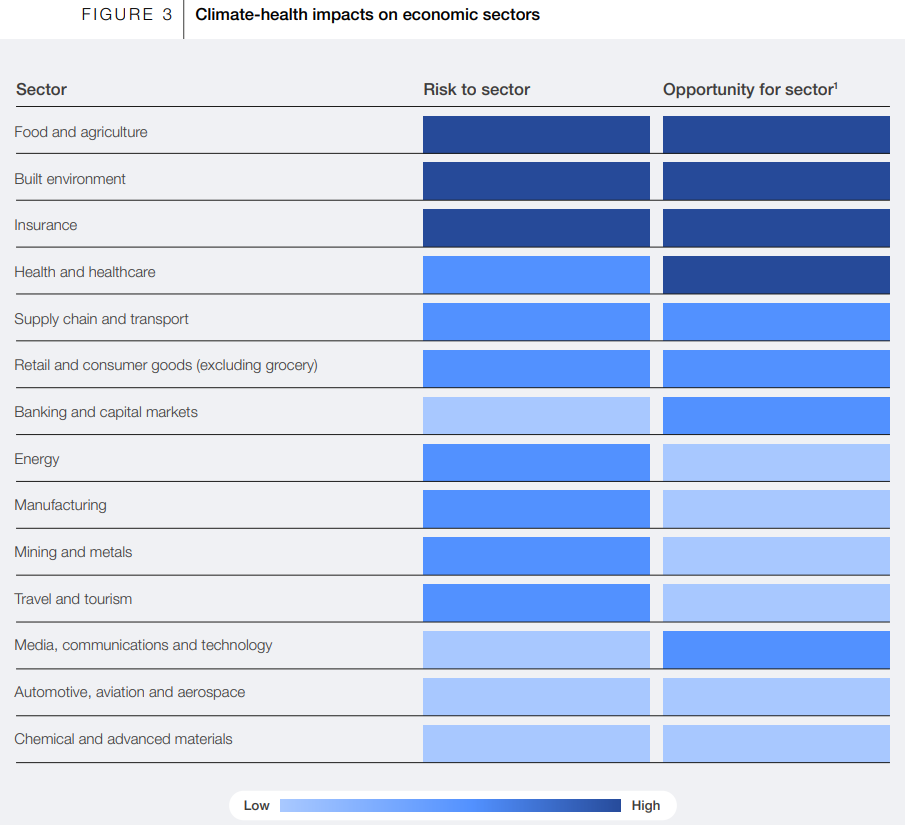
It focuses on economic sectors that will be highly exposed to worker illness and death due to climate-health risks between 2025 and 2050. They include food and agriculture, the built environment, and health and healthcare, with some of the economic costs to businesses estimated below:
- Food and agriculture – $740 billion in worker availability losses between 2025 and 2050
- Built environment – at least $570 billion lost due to worker availability between 2025 and 2050
- Health and healthcare – at least $200 billion in lost output due to climate-health illnesses among workers and an additional $1.1 trillion treatment burden due to the climate crisis by 2050.
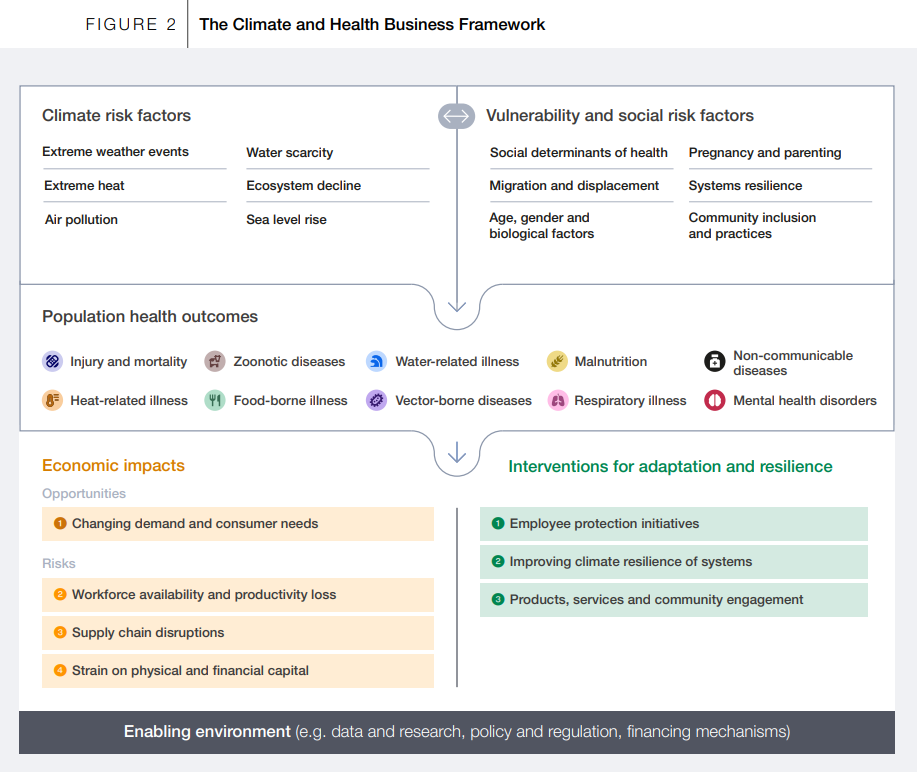
These economic costs will be driven by worsening health outcomes due to factors including increased injury, a rise in heat- and water-related illness and vector-borne diseases such as malaria, higher rates of malnutrition and increased rates of non-communicable conditions including asthma, diabetes and cardiovascular disease.
In turn, these health outcomes will have significant impacts on productivity, supply chains and the cost of doing business.
Addressing climate-health risks
So how should businesses respond? The report offers a series of interventions, which it says apply not only to the sectors analyzed but all areas of the economy. It suggests:
1. Expanding employee health benefits to cover climate-driven conditions, ensuring a healthier and more productive workforce
2. Implementing occupational health safeguards, such as cooling solutions or modified work practices, in regions vulnerable to climate impacts
3. Carrying out a climate-risk assessment and continuously monitoring climate-health risks
4. Investing in climate-health research to build data sources that identify the root causes of climate-related illnesses
5. Protecting critical systems, including both built and ecological infrastructure
6. Establishing plans to prepare for and respond to climate-related health emergencies
7. Educating workers and community on climate-related health hazards
8. Scaling health-protective products and services that reduce long-term health burdens throughout the value chain.
Businesses that adapt rapidly to meet increased demand for goods and services that protect people’s health can gain a competitive advantage, while improving health outcomes for customers and communities, the report adds. Examples include climate-resilient buildings, artificial intelligence-powered climate monitoring systems, and healthier foods.
The case for proactive adaptation
While institutions in each sector can act to mitigate the impacts of climate-health risks, no industry can address the challenge alone, the report says.
Long-term resilience will call for coordinated action through supportive policies, sophisticated climate health data systems, and innovative financing models to mobilize capital.
The business case for this, the report concludes, is clear: proactive adaptation is more cost-effective then spontaneous response to escalating disruptions – and organizations should work to embed climate-health resilience into core business strategy today.
Don't miss any update on this topic
Create a free account and access your personalized content collection with our latest publications and analyses.
License and Republishing
World Economic Forum articles may be republished in accordance with the Creative Commons Attribution-NonCommercial-NoDerivatives 4.0 International Public License, and in accordance with our Terms of Use.
The views expressed in this article are those of the author alone and not the World Economic Forum.
Stay up to date:
Climate and Health
Related topics:


Forum Stories newsletter
Bringing you weekly curated insights and analysis on the global issues that matter.
More on Climate Action and Waste Reduction See all

Moattar Samim
February 21, 2026


