COP30 special envoys: Here's how to address emissions in trade
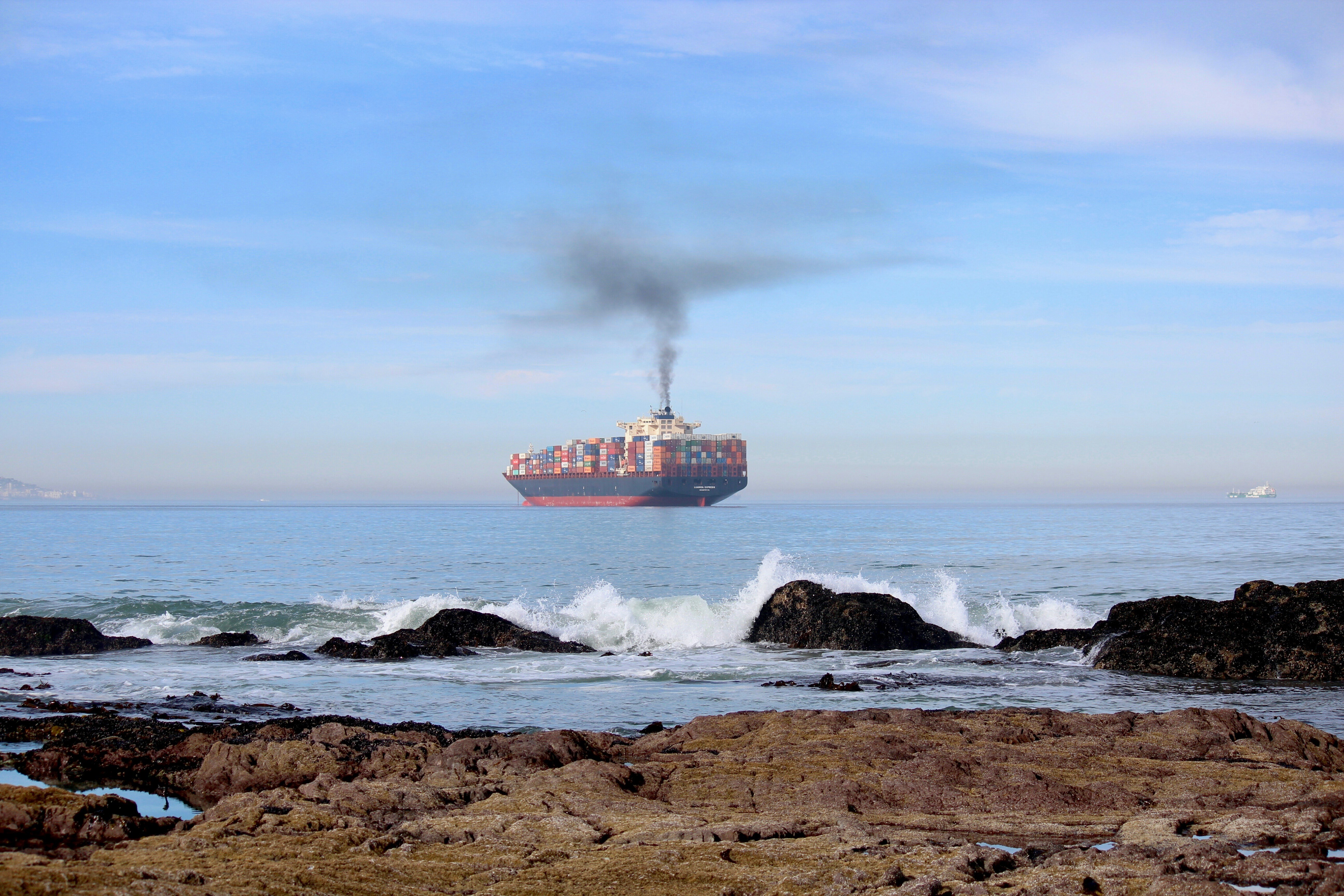
"Dialogue is key to strike a balance." Image: Unsplash
Kimberley Botwright
Deputy Head of CRTG, Head of Responsible Trade & Governance, World Economic Forum- Around a quarter of global greenhouse gas emissions are embedded in international trade.
- Trade-related emissions, however, are currently outside global climate reporting frameworks.
- Two COP30 special envoys, Dr Arunabha Ghosh and Professor Laurence Tubiana, discuss how the issues of emission in trade can be addressed.
With nearly 200 signatories, the Paris Agreement remains the most comprehensive multilateral effort to mitigate the causes and address the effects of climate change. In November, at COP30, signatories will review their climate plans for the third time and discuss what remains a key issue: emission in trade.
Around 25% of global greenhouse gas (GHG) emissions are embedded in international trade, yet such emissions are currently outside global climate reporting frameworks. Global dialogue on the topic is crucial since trade-related emissions by nature cross borders and could be a lever for more finance for net-zero production.
To better understand how the issue of emissions in trade can be addressed, we spoke with two COP30 special envoys: Dr Arunabha Ghosh, CEO of the Council on Energy, Environment and Water, and Professor Laurence Tubiana, President and CEO of the European Climate Foundation.
Here’s what they had to say.
Why is mitigating trade emissions an important issue?
Professor Tubiana: Territorial emissions remain the core of countries’ commitments under the United Nations Framework Convention on Climate Change (UNFCCC). Countries decided that in the 1992 Rio Convention based on jurisdiction over activities in their territory. It was also considered a good way to approach mitigation commitments. However, today the approach has a blind spot, which is the significant share of global emissions embedded in international trade. G20 economies account for about 80% of these emissions.
For Europe, the issue is particularly acute – the emissions imported by the EU are almost 40% of its overall GHG footprint, a conservative estimate that does not include emissions from deforestation. We need these emissions to be integrated in policymakers’ dashboards when it comes to mitigation goals, because through their market access rules, countries have the possibility to induce lower carbon production practices abroad, and lower carbon consumption at home.
That said, it’s also important to recognise risks of undue market protection within this policy area. Dialogue is key to strike a balance. Building policies based on embedded GHG emissions across international supply chains can be the start of a more cooperative trade, investment and climate agenda in a moment of significant global instability.
How can addressing trade emission in the UNFCCC COP agenda be advanced?
Dr Ghosh: Emissions embedded in international trade represent 20-30% of global CO₂ emissions, underscoring the critical need to align trade and climate policy. That this issue has only recently entered the UNFCCC COP discussions reflects both its complexity and its growing significance in the context of global decarbonisation. Moving this discussion forward constructively will require establishing clear definitions, ensuring transparency, adhering to principles of differentiation and fostering international cooperation.
As mechanisms such as the Carbon Border Adjustment Mechanism (CBAM) gain prominence, there remain concerns about their unilateral origins, as well as around traceability, emissions classification and trade fairness. For developing countries, where carbon accounting infrastructure is still evolving, companies may struggle to meet complex CBAM reporting requirements—especially within upstream and multi-tiered supply chains. These risks must be addressed through international support, capacity-building, and interoperable data frameworks.
At the same time, trade-related climate measures can play a positive role if designed well: supporting diversification of supply chains, enabling tariff reductions for mitigation technologies and unlocking investments through linkages between carbon markets. In practice these opportunities remain limited. Ensuring procedural equity is equally important. Response measure assessments, notification systems to foster multilateral transparency and differentiated obligations—such as exemptions or phased timelines for low-middle and low-income countries—can prevent unintended harms and support a just transition.
Moving forward, the global community must embed equity, flexibility and development priorities at the core of trade-related climate action. Institutional coordination will be needed at a time when multilateral institutions are also being challenged. There is a real risk that emissions in trade will add another source of multilateral tension, unless there is a deliberate effort to design pathways toward a fairer, inclusive and more sustainable global economy. A just and development-friendly climate-trade agenda requires multilateral cooperation that embeds equity at its core, empowering smaller actors and poorer economies to actively shape and share the benefits of the global green transition.
What framing could help countries find pathways for collaboration?
Professor Tubiana: A handful of UNFCCC members have begun acknowledging the importance of embedded GHG emissions in trade. Illustrating this momentum, the last US nationally determined contributions (NDCs) even committed to “develop a new trade framework, built on accurate data on the emissions intensity of traded goods, that incentivizes reductions in industrial emissions across borders and supports the competitiveness of clean manufacturing.” The debate has become largely tied to the concept of carbon leakage, usually for emission-intensive, trade-exposed and politically sensitive industries, and to so-called unilateral measures to address this.
I think this is an irritant to many countries in the COP context and adding a conversation on embedded emissions will not be productive at this stage. But Parties need to take a closer look at emissions embedded in trade, and realise that their imports are driving their trade partners’ emissions.
This can be the start of bilateral conversations on dedicated support, regulatory or financial, to reduce embedded emissions. Maybe this is too soon for the UNFCCC. But I see a lot of advantages for countries to generate and look at this data collectively. I hope they can recognise this co-dependency (“my imports are your emissions”) and reflect on ways to address it.
How can countries address trade emissions through NDCs?
Dr Ghosh: While embedded emissions—those associated with the production of traded goods—are not explicitly required under NDCs, I think countries can take several relevant steps.
First, setting clear peaking or net-zero timelines within NDCs signals the expected emissions trajectory of a country, including those associated with its industrial base and traded goods. These announcements help trading partners and investors align expectations on the carbon intensity of supply chains.
Second, including economy-wide and sectoral targets allows countries to focus action where embedded emissions are most significant, such as heavy industry or energy-intensive supply chains. Sectoral targets offer policy clarity for industries, encourage early adopters of cleaner manufacturing processes, reduce the risk of greenwashing, and enable early decarbonisation and realignment of investment strategies in line with global climate goals.
Third, addressing the emissions intensity of traded products within NDCs can help reduce embedded emissions. Countries can include targets or strategies to lower the emissions associated with key imports and exports. This would mean setting standards for low-carbon production, promoting green exports, or incentivising cleaner supply chains. These must be tailored to diverse national contexts because pathways will vary.
Fourth, targeting sequestration alongside mitigation can balance embedded emissions. By strengthening commitments to natural carbon sinks—through reforestation, soil carbon, or blue carbon initiatives—countries can offset the footprint of embedded emissions, especially in traded commodities where residual emissions are likely to remain despite aggressive mitigation efforts.
Finally, countries can include support measures for carbon accounting and traceability systems in their NDC implementation plans. Building such infrastructure helps industries track and reduce embedded emissions while enabling compliance with evolving global standards.
Are there opportunities in trade talks, such as those between India and the EU?
Professor Tubiana: India is the fourth largest source of the EU’s imported emissions footprint, with 70 MtCO2eq in 2021. This is nearly the quantity of emissions that the EU imports from the US, yet the US is overall the EU’s largest trading partner and India is its ninth largest.
Much of these emissions are concentrated in a handful of sectors: chemicals, metals, machinery and petroleum products. The EU and India already engage in several strategic partnerships, including a Climate, Energy, Trade and Innovation Support dialogue launched in 2022. A Trade and Technology Council launched in 2023 commits to developing new and interoperable low-carbon standards and could facilitate the quantification of embedded GHG emissions in bilateral trade. India and the EU are both net importers of GHGs, meaning that their consumption from trade drives a larger share of emissions than their production for trade.
The extensive government-to-government cooperation between the EU and India that already exists today, and the shared challenge of emissions triggered abroad by imports, set the stage to cooperate on the issue of embedded emissions in trade, without needing to reach a preferential trade agreement. On the latter, we continue to worry about the lack of procedural transparency – including no public mandate and limited access to information for civil society – and the focus on lowering tariffs without prejudice to their GHG intensity. It remains a major marker of how misaligned our trade policies can be with our global climate ambition.
What policy measures could channel investments towards addressing trade emissions?
Dr Ghosh: We see that a combination of investor demand and regulation (in some jurisdictions) is driving corporations towards greater disclosure and management of their emissions. Most jurisdictions have sustainability disclosure regulations in place (e.g., BRSR in India, CSRD and CSDDD in the EU), though only the EU currently requires corporates to undertake net-zero transitions under its Corporate Sustainability Due Diligence Directive. A total of 1,203 companies globally, including 30 companies in India, have declared net-zero targets (as of 30 May 2025).
Whether a company is disclosing its emissions or undertaking a net-zero transition, it has an incentive to invest in decarbonising its supply chain to demonstrate superior environmental performance. Similarly, supply chain partners of large corporations have an incentive to decarbonise their own operations to better position themselves within supply chains where standards are likely to change. In fact, large corporations in some jurisdictions (Tata and Hindalco in India) voluntarily undertake capacity building of their supply chain partners for emissions reporting.
Further, emerging border carbon tax regimes could require the accounting of embedded emissions in determining applicable taxes (European Commission, 2023). For example, the EU CBAM requires the reporting of the embedded emissions of relevant precursors for certain types of goods (so-called complex goods). Such measures could incentivise the reduction of embedded supply chain emissions.


License and Republishing
World Economic Forum articles may be republished in accordance with the Creative Commons Attribution-NonCommercial-NoDerivatives 4.0 International Public License, and in accordance with our Terms of Use.
The views expressed in this article are those of the author alone and not the World Economic Forum.
Related topics:
Contents
Why is mitigating trade emissions an important issue?How can addressing trade emission in the UNFCCC COP agenda be advanced?What framing could help countries find pathways for collaboration?How can countries address trade emissions through NDCs? Are there opportunities in trade talks, such as those between India and the EU?What policy measures could channel investments towards addressing trade emissions?
Forum Stories newsletter
Bringing you weekly curated insights and analysis on the global issues that matter.
More on Trade and InvestmentSee all

Ali Mammadov and Kanan Mammadov
February 6, 2026


