Why investing in women’s health is an investment in innovation, growth and resilience
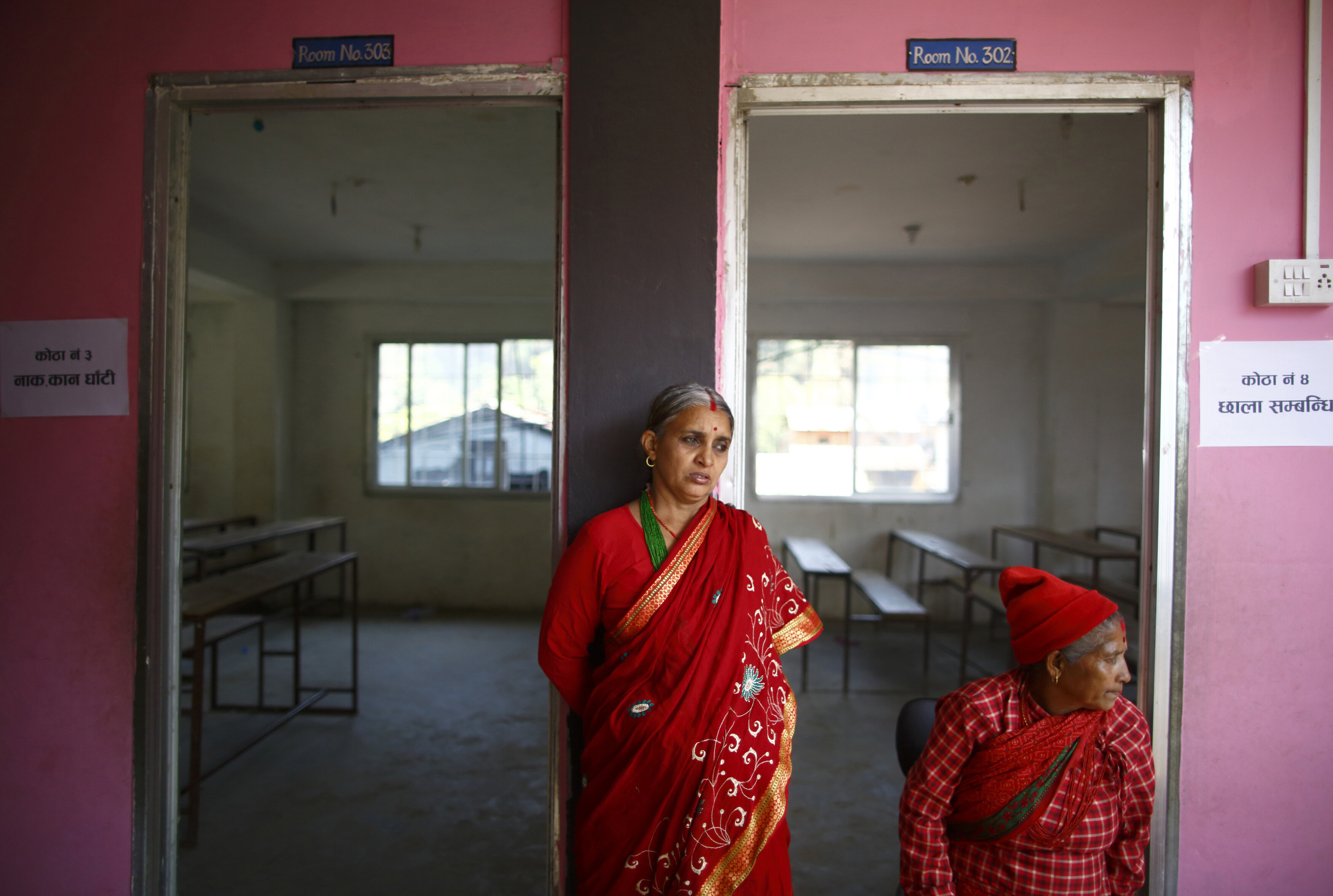
Investing in women’s health leads to societal and economic improvements Image: REUTERS/Navesh Chitrakar (NEPAL - Tags: HEALTH SOCIETY)
- Investing in women’s health leads to widespread improvements, including across scientific research and increased workforce productivity, resulting in long-term societal and economic benefits.
- Global momentum and investment in women’s health are growing, with stakeholders recognizing the value created by prioritizing women’s health.
- The Global Alliance for Women’s Health is working to shift from advocacy to measurable outcomes by mobilizing action toward women-centred solutions.
Investing in women’s health delivers durable returns. Research improves, economies become more productive and societies weather shocks more effectively. When women’s health is viewed as capital rather than cost, results appear in laboratories, workplaces and households over time.
Momentum is building around this view as policy-makers, innovators and investors recognize that better health for half the population accelerates value creation for everyone. With the recent announcement from the Gates Foundation committing $2.5 billion to women’s health research and innovation, the signal is clear: this is where the future lies.
The task now is to sustain that momentum and translate it into action that moves budgets, policy and delivery toward clear outcomes. The Global Alliance for Women’s Health, hosted by the World Economic Forum, is organized to convert this investment logic into action.
Champions for women’s health
The Champions Community, hosted within the Global Alliance for Women’s Health, is a network of influential leaders driving action for women’s health. Champions for Women’s Health help shape policy, engage key decision-makers and champion innovations that address women-specific needs.
Through strategic collaboration, the community can reframe discussions, accelerate solutions and ensure women’s health stays at the forefront of global priorities.
One key mandate for the Champions Community is to build an innovative discourse for women’s health. In this role, champions help equip senior leaders to engage decision-makers and highlight the untapped opportunities in women’s health. As these efforts expand, a new cohort of champions will carry forward the momentum across sectors and help guide a Consensus Builders Playbook for Women’s Health.
This playbook synthesizes the most robust evidence and priority messages for finance, industry and government, supporting senior leaders in engaging decision-makers who may not yet fully recognize the significant, unrealized opportunities in women’s health.
- Alaa Murabit, Chairperson, Girls not Brides
- Amira Ghouaibi, Head, Global Alliance for Women’s Health
- Catharina Boehme, Officer-in-Charge, WHO Southeast Asia
- Claus Runge, Chief Health Equity Officer, Bayer
- Cuilin Zhang, Founding Director, Global Centre for Asian Women’s Health
- Diana Han, Chief Health Officer, Unilever
- Diene Keita, Executive Director, UNFPA
- Fiona Marshall, President of Biomedical Research, Novartis
- Helen Clark, Board Chair, PMNCH and Former Prime Minister of New Zealand
- Jacquelyn Caglia, Head, MSD for Mothers
- Kathleen Sherwin, Chief of Strategy and Engagement, Plan International
- Karlee Silver, CEO, Grand Challenges Canada
- Lucy Pérez, Senior Partner, McKinsey
- Marie Lynn Miranda, Chancellor, University of Illinois Chicago
- Marisol Touraine, Chair of Board, Unitaid, and former Minister of Social Affairs and Health, France
- Michelle Longmire, CEO, Medable
- Monica Geingos, Former First Lady of Namibia
- Nandini Selvam, Vice-President and General Manager, IQVIA
- Natasha Poonawalla, Executive Director, Serum Institute of India
- Nawal Nour, Chair, Mass General Brigham Ob/GynNg Boon Heong, CEO, Temasek Foundation
- Paula Bellostas Muguerza, Senior Partner, Kearney
- Peter Anevski, CEO, Progyny
- Priya Agarwal Hebbar, Director Vendanta, and Chairperson, Hindustan Zinc
- Regina Dugan, CEO, Wellcome Leap
- Roberta Annan, Founder and Executive Chairperson, Annan Capital Partners
- Sahil Tesfu, Chief Strategy Officer, Essity
- Sania Nishtar, CEO, Gavi
- Toyin Saraki, Founder-President, The Wellbeing Foundation
- Trish Stroman, Senior Partner and Managing Director, Boston Consulting Group
- Winnie Byanyima, Executive Director, UNAIDS
- Yap-Seng Chong, Dean, Yong Loo Lin School of Medicine, National University of Singapore
- Zainab Shinkafi-Bagudu, CEO, Medicaid Cancer Foundation
Our Champions for Women’s Health are shaping a new narrative and elevating women’s health on the global agenda by driving thought leadership and global advocacy centred on the wide-ranging benefits of investing in women’s health and wellbeing.
Our new cohort of champions brings diverse sectoral, industrial and regional perspectives that help complement our community’s efforts to close the women’s health gap holistically.
Enabling innovation, growth and resilience
Sex-based differences in pharmacokinetics (how the body processes a drug) and pharmacodynamics (how a drug acts on the body) can influence treatment outcomes and reduce efficacy.
For example, variations in body composition, hormone levels and metabolism may affect drug exposure and response, as seen with certain cardiovascular medicines and some antidepressants.
When clinical guidelines are derived from aggregated data, these differences can be obscured, potentially limiting efficacy or increasing adverse effects. Ensuring women’s adequate participation in trials and reporting data disaggregated by sex can strengthen clinical evidence and ultimately improve health outcomes for all.
Integrating women’s biology and lived experience into research strengthens safety, sharpens discoveries and produces products that fit women’s lives.
These health gains ripple outward, boosting education, workforce participation and productivity, while reducing maternal and chronic health risks and enhancing societal resilience. By connecting a healthier female workforce, efficient health systems and women-centred research, societies can drive intergenerational prosperity, reinforce social stability and strengthen national competitiveness.
Moving to outcomes
The priorities are clear: turn acknowledgement into measurable action, embedding women’s health in budgets, research, policies and products. As leaders embrace these shifts, investments grow, science improves and solutions scale, driving inclusive economies and resilient societies.
Institutions that treat women’s health as an investment should expect higher-quality science, a more productive economy and stronger resilience when future shocks arrive.
The alliance and its champions will continue to convene the right actors, align incentives and support practical steps that embed women’s health as a core driver of innovation, growth and resilience in the years ahead.
Don't miss any update on this topic
Create a free account and access your personalized content collection with our latest publications and analyses.
License and Republishing
World Economic Forum articles may be republished in accordance with the Creative Commons Attribution-NonCommercial-NoDerivatives 4.0 International Public License, and in accordance with our Terms of Use.
The views expressed in this article are those of the author alone and not the World Economic Forum.
Stay up to date:
Women's Health


Forum Stories newsletter
Bringing you weekly curated insights and analysis on the global issues that matter.
More on Health and Healthcare SystemsSee all

Shyam Bishen
April 9, 2026


