The top 5 energy technology trends of 2025
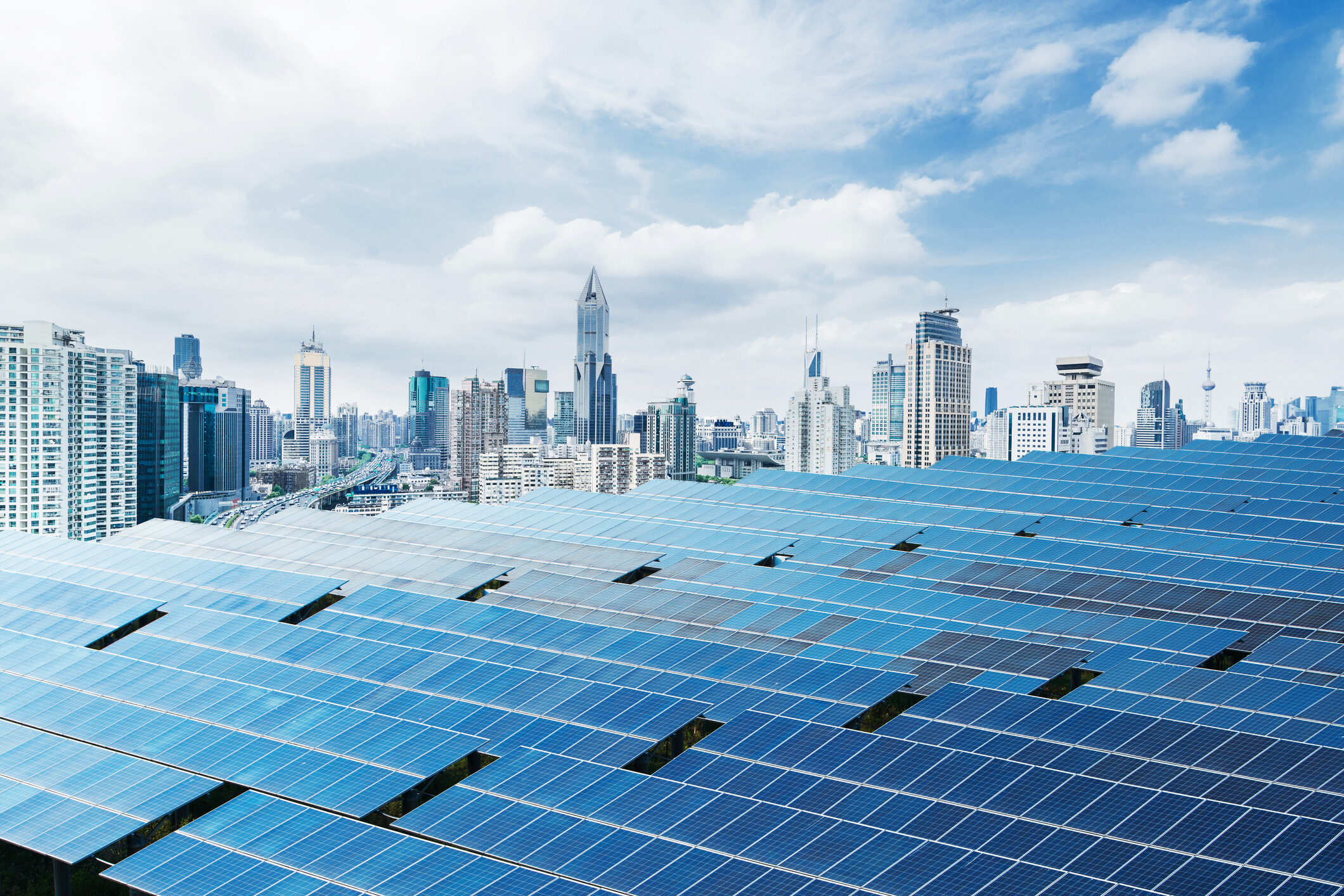
A solar panel farm in China, an example of energy technology Image: Getty Images/iStockphoto
- There are several key energy technology trends dominating 2025.
- Security, costs and jobs; decarbonization; China; India; and AI all need to be carefully monitored.
- The World Economic Forum’s Advanced Energy Solutions community helps the energy technology community cooperate and accelerate the deployment of new energy technologies.
Geopolitical tensions, shifting policies and economic uncertainty are reshaping the landscape of energy investment. The recently dismantled US Inflation Reduction Act is one example of how rapidly things can change at a country level, abolishing incentives and policy environments for entire technologies.
Despite US policy pivots, globally things are moving fast and there is a race between countries to establish a technology and manufacturing edge. Global energy investment in renewables, nuclear, grids, storage, low-emissions fuels, efficiency and electrification is set to increase in 2025 to $2.2 trillion according to World Energy Investment 2025.

Here are the key trends shaping energy technology investment in 2025:
1. Security, cost and jobs
Energy security, affordability and industrial policy drive various energy technology choices and investments, particularly among energy-importing countries. Led by these factors, and despite a lower priority placed on decarbonization, clean energy investments continue to grow rapidly globally.
China's investments in renewables, energy storage and batteries, electric vehicles and nuclear, for example, aim to primarily reduce its reliance on oil and gas imports and to exert leadership in new technologies. Europe, meanwhile, made great efforts to decrease its dependence on oil and gas from Russia by investing in renewables and efficiency. Similarly, in the US, new policies are being introduced to reshore supply chains to the country.
2. Decarbonization
The importance of energy security, cost and broader industrial policies increased substantially; however, at the same time, decarbonization and emissions reductions remain top priorities for policymakers and companies.
Business plans and goals are often more practical now and timelines are sometimes extended, but a high level of commitment to decarbonization remains, including among the incumbent energy industry.
Attention is also now laser-focused on how local pollution from energy production and use can be minimized through technology to secure a social licence to operate. It is about here and now, rather than 2050.
3. China's domination
China is the dominant force in next-generation energy technologies. It is by far the largest energy investor globally, spending almost as much as the EU and US combined, pouring hundreds of billions of dollars into the manufacturing and deployment of renewables, energy storage, nuclear power and more.
China's industrial and energy policies are often considered to be very effective in driving domestic demand and building manufacturing and supply chains. The country dominates clean energy technology supply chains, from wind turbines and solar panels to batteries and electrolysers. This investment has been transformational for the country’s economy and has contributed to establishing China as a major player in global politics.
4. India ascends
India has set bold ambitions and demonstrated remarkable progress on its energy transition investment. It surpassed its 2030 goal of achieving 40% of installed capacity from renewable energy sources nine years ahead of time.
To replicate this success and complement it with 'made in India' goals, the central and state governments have implemented numerous tools, including incentives for domestic manufacturing and mandates for clean energy deployment. These are helping the country to emerge as a major player on the global stage when it comes to energy storage, clean hydrogen and solar panels.
Indian business champions pursue these ambitions at speed and scale. The Dhirubhai Ambani Giga Energy Complex, for example, scheduled to start up in 2026, will house a gigawatt-scale manufacturing ecosystem of solar panels (10GW), battery storage (100 GWh) and electrolyzers for hydrogen (3 GW). It will be the world's largest such complex, with a built-up area equivalent to four times the size of the Tesla Gigafactory.
How the Forum helps leaders navigate the transition of energy and materials systems
5. AI hunger
Data centre electricity consumption is set to more than double to around 945 TWh by 2030, according to the International Energy Agency, slightly exceeding Japan’s total electricity consumption today. AI is the most important driver of this growth.
However, grid connection queues are long and complex as building new transmission lines can take four to eight years. Generation equipment is also in tight supply, with turbine deliveries for new gas-fired power plants facing lead times of several years, often with deliveries scheduled in the next decade. As electricity grids are already under strain in many places, 20% of planned data centre projects could be at risk of delays.
In fact, power availability has decisively emerged as the leading factor for data centre site selection according to the 2025 Data Center Power Report by Bloom Energy, even ahead of things like proximity to fibre optic networks. In effect, almost a third of data centres are expected to run entirely on onsite power by 2030, bypassing the entire existing grid network. Interestingly, reducing carbon emissions is a lower, but lasting, priority: 95% of those surveyed for the report affirmed that sustainability and carbon reduction targets remain.
The Advanced Energy Solutions community
The World Economic Forum supports an integrated approach to energy solutions, including energy storage, advanced nuclear, clean fuels, hydrogen and carbon removal. No single technology will solve the energy transition alone; a mix of solutions will be needed.
Different regions, industries and companies will have their strategies, but they must work together.
Platforms, such as the Forum’s Advanced Energy Solutions community, can help speed up this cooperation and accelerate the deployment of new technologies, such as energy storage, clean fuels, hydrogen, advanced nuclear and carbon removal, from decades to years.
The community engages industry leaders who drive frontier segments of the energy system to shape the advanced energy solutions industry vision and narrative. It supports partnerships among innovators, large energy companies, energy users and investors and informs policy-making.
Don't miss any update on this topic
Create a free account and access your personalized content collection with our latest publications and analyses.
License and Republishing
World Economic Forum articles may be republished in accordance with the Creative Commons Attribution-NonCommercial-NoDerivatives 4.0 International Public License, and in accordance with our Terms of Use.
The views expressed in this article are those of the author alone and not the World Economic Forum.
Stay up to date:
Energy Transition
Related topics:


Forum Stories newsletter
Bringing you weekly curated insights and analysis on the global issues that matter.
More on Energy TransitionSee all

Renée van Heusden
April 6, 2026


