Climate change could cost businesses $1.5 trillion in productivity losses by 2050, and other health stories

Good health is vital to economic growth and equality, making climate change a real threat to worker productivity and poverty levels. Image: REUTERS/Stephane Mahe
Shyam Bishen
Head, Centre for Health and Healthcare; Member of the Executive Committee, World Economic Forum- This global round-up brings you health stories from the past fortnight.
- Top health news: Climate change could cost businesses trillions in productivity losses; WHO urges cost-effective solutions on NCDs; Generative AI tool can predict a person's risk of more than 1,000 diseases.
Last week, the World Economic Forum's Centre for Health and Healthcare once again brought health to the global stage during the Forum's Sustainable Development Impact Meetings in New York, from 22 to 26 September.
We curated a dynamic mix of sessions and partner-led events that cut across today’s most pressing health priorities, including women's health, resilient health systems, climate and health, the brain economy and mental wellbeing, nutrition, health equity, and digital health.
I joined Tedros Adhanom Ghebreyesus, ministers, and health leaders for the Sixth Annual Ministerial Meeting of the Group of Friends of Universal Health Coverage & Global Health.
Our discussion highlighted the importance of investing in prevention, primary care, and digital innovation to develop resilient systems and achieve universal healthcare. I shared our perspective on how partnerships and private sector engagement can drive sustainable financing and resilience in health.
You can watch all of the sessions from our meetings in New York on-demand here.
1. Climate change could cost businesses $1.5 trillion in productivity losses by 2050
Beyond the evident human impact of climate change on public health, the economic case for action is clear.
A new report from the World Economic Forum and Boston Consulting Group finds that worker availability losses from climate-induced injuries and illnesses across four critical sectors alone will account for a loss of more than $1.5 trillion.
Building Economic Resilience to the Health Impacts of Climate Change, examines climate-driven health risks across four sectors – food and agriculture, the built environment, and health and healthcare. It examines how each industry can safeguard workers' health, build operational resilience and scale up innovation to address the impacts of climate change.
If businesses and governments don't adapt to a warming climate, climate stressors could result in 14.5 million excess deaths and $12.5 trillion in economic losses by 2050, the report states.
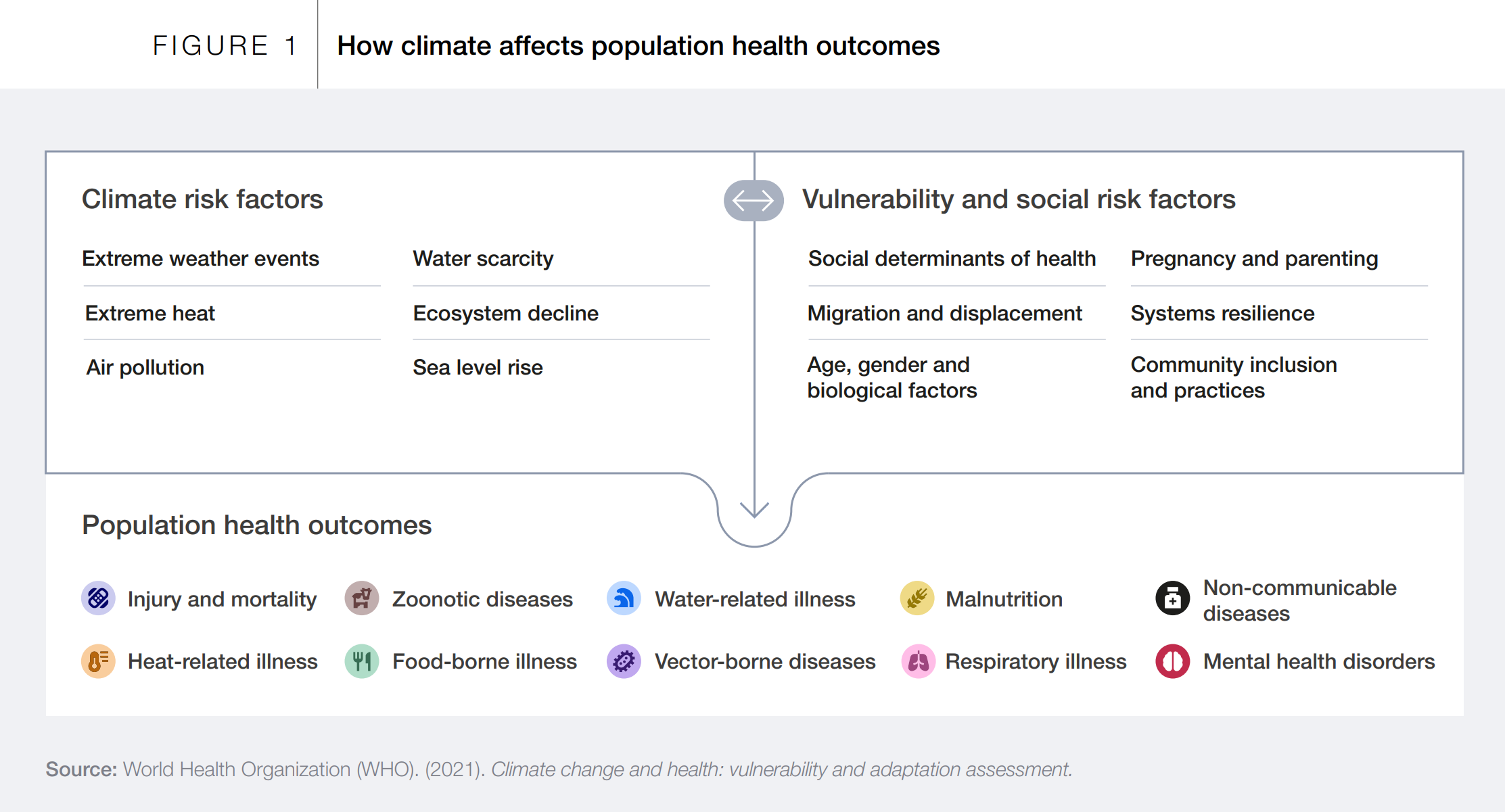
The world’s most disadvantaged regions and persons are disproportionately affected by climate-driven health risks, including women, children and migrant communities. For example, between 30 May and 4 September 2022, Europe saw 56% more heat-related deaths among women than men.
Good health is vital to economic growth and equality, making climate change a real threat to worker productivity and poverty levels. The report proposes eight steps that companies can take to shore up the health of their staff, as the video below explores.
Read the full report below to explore the need for greater cross-sector collaboration and investment across healthcare and other critical systems to prevent climate-related health risks.


2. WHO urges cost-effective solutions on NCDs
World leaders gathered at the UN General Assembly for the Fourth High-level Meeting on noncommunicable diseases (NCDs) on 25 September.
To aid these discussions, the World Health Organization (WHO) released a report revealing that an additional investment of just $3 per person annually in tackling NCDs could yield economic benefits of up to $1 trillion by 2030.
The graphic below outlines some of the positive outcomes by 2030 if that investment is secured.
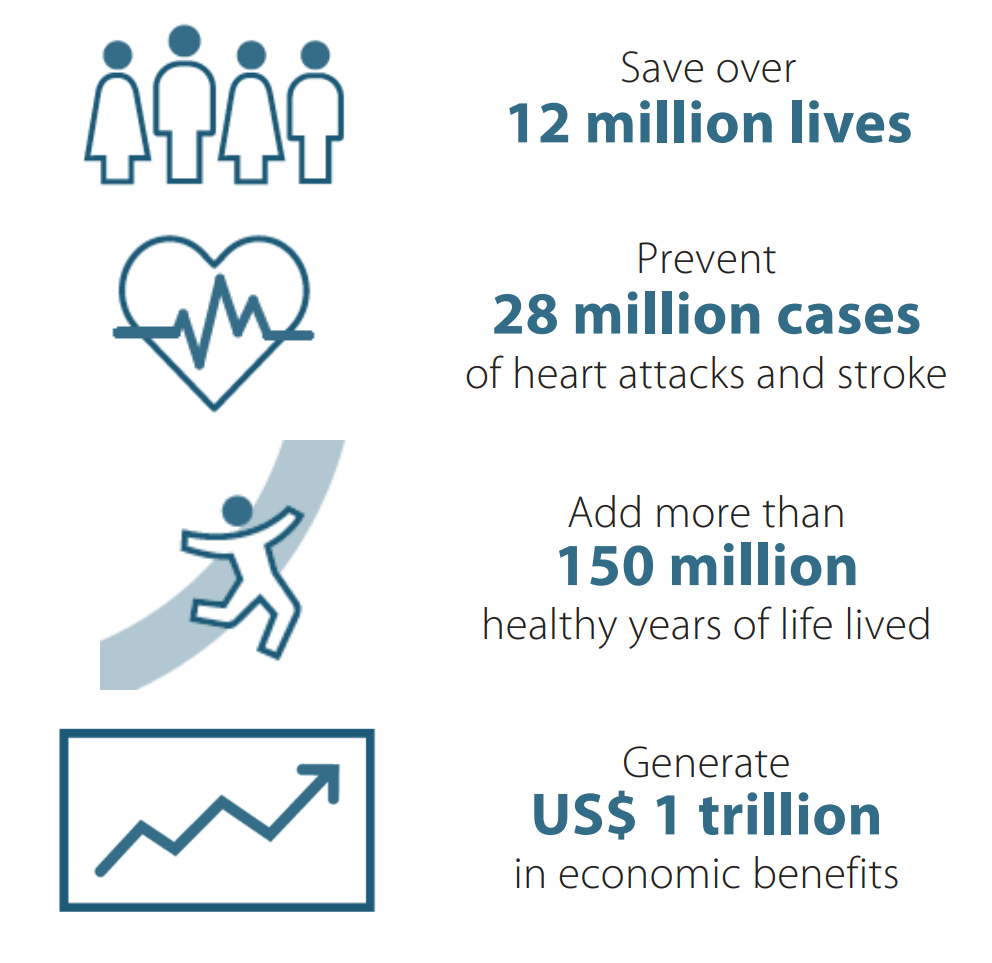
In the report, the WHO identified 29 highly effective and affordable measures called 'best buys' that countries can use to prevent and manage major NCDs. The graphic below outlines the compounding returns that countries can expect on their investment.
NCDs are responsible for the majority of deaths around the world, with nearly 75% of these deaths related to NCDs and mental health conditions occurring in low- and middle-income countries.
At this High-level Meeting on NCDs world leaders expressed overwhelming support for the text of the first United Nations global political declaration on responding to NCDs and mental health.
Investing in the fight against NCDs isn't just smart economics - it's an urgent necessity for thriving societies.
—Dr Tedros Adhanom Ghebreyesus, WHO Director-General
”
3. News in brief: Health stories from around the world
Scientists have developed a new generative AI tool that can predict a person's risk of more than 1,000 diseases, as published in Nature. 'Delphi-2M' combines data on 'medical events' (previous diagnoses) with lifestyle factors to forecast your health a decade in advance.
A daily weight-loss pill can help people cut their body weight by a fifth, a trial of 3,127 adults, published in the New England Journal of Medicine has shown. During the trial, one in five people who took the tablet daily for 72 weeks lost 20% or more of their body weight. Manufactured by Eli Lilly, the drug, called Orforglipron, is a GLP-1 agonist, a type of medication that helps lower blood sugar levels, slows the digestion of food and reduces appetite.
The Gates Foundation has pledged $912 million to the Global Fund to Fight AIDS, Tuberculosis and Malaria, Bill Gates announced on 22 September. With governments around the world cutting back health budgets, Gates said that "the choices they [governments] make now will determine what kind of future we leave the next generation".
WHO spokesperson Tarik Jašarević told a Geneva press briefing that evidence of a link between autism and paracetamol use in pregnancy is inconsistent and that any such claims are not backed by scientific evidence, as reported by Reuters. The European Medicines Agency has also stated that "available evidence has found no link between the use of paracetamol during pregnancy and autism".
How the Forum helps leaders strengthen health systems through collaboration
4. More on health from Forum Stories
Investing in women's health leads to measurable and significant returns, writes Amira Ghouaibi, Head of the Global Alliance for Women's Health at the Forum. Scientific research improves, workforce productivity rises and societies weather shocks more effectively. The Champions Community, hosted within the Global Alliance for Women’s Health, is a network of influential leaders driving action for women’s health. You can read more about them and their mission here.
Many of us automatically associate the question 'how many steps should we take a day' with the number 10,000. But a new study has put the spotlight on this figure, suggesting that for many people, fewer steps might be more achievable and effective. The graphic below outlines some of the benefits you might see from taking 7,000 steps a day.
You can find out more about step counts and the importance of exercise here.
License and Republishing
World Economic Forum articles may be republished in accordance with the Creative Commons Attribution-NonCommercial-NoDerivatives 4.0 International Public License, and in accordance with our Terms of Use.
The views expressed in this article are those of the author alone and not the World Economic Forum.

Forum Stories newsletter
Bringing you weekly curated insights and analysis on the global issues that matter.
More on Health and Healthcare SystemsSee all

Priya Abani
February 18, 2026


