Colombia’s model of tourism with purpose provides lessons to the rest of the world
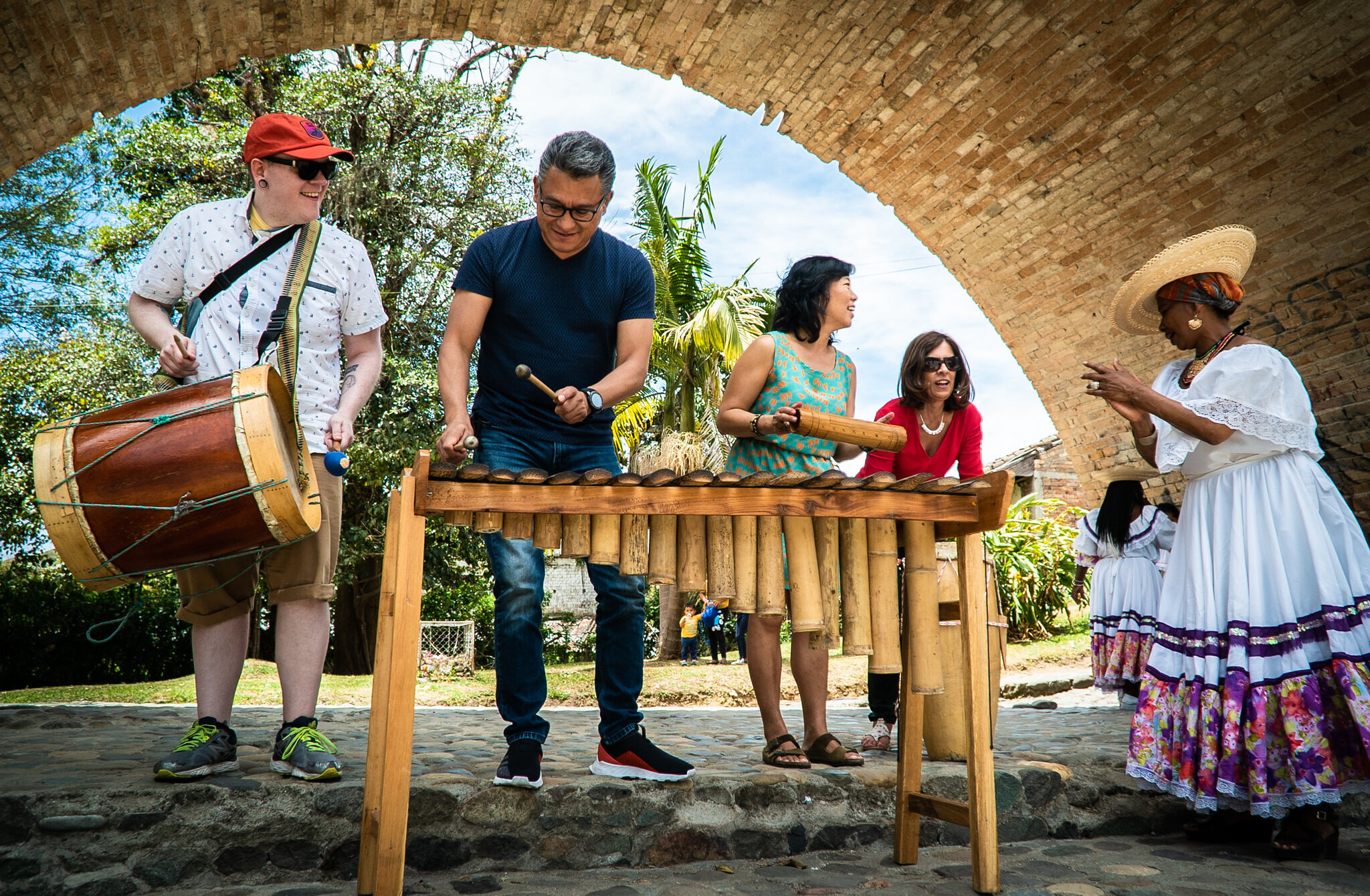
Colombia's experience provides a replicable model for other destinations to promote travel and tourism with purpose Image: ProColombia
- Travel and tourism is seeing positive momentum but it is still dogged by challenges.
- Colombia’s experience provides a roadmap for other destinations wanting to build a model of tourism with purpose.
- Colombia has turned its challenges into competitive advantages, its biodiversity into a narrative and its cooperation into an engine for innovation.
Global tourism stands at a decisive crossroads. According to the World Economic Forum’s Travel & Tourism Development Index 2024 (TTDI), the sector is recovering from the pandemic but still grappling with major challenges – from climate change and community inclusion to infrastructure gaps, talent shortages and the need to harness digitalization for competitiveness.
In this new context, countries must rethink tourism strategies beyond promotion and growth. Sustainability is no longer a trend; it is the foundation of long-term competitiveness. In this global landscape, Colombia offers a compelling example of how to turn the sector’s challenges into opportunities for local development.
Far from an isolated case, Colombia’s experience provides a roadmap for destinations seeking to build tourism with purpose. By linking biodiversity to global narratives and fostering community innovation labs, Colombia shows that the challenges of modern tourism can be met through creative, technological and human-centred solutions.
Have you read?
Tourism could be a $16 trillion industry by 2034. This is how destinations can create sustainable growth
7 tourism and travel myths busted: and why they mask the sector's sustainable development potential
It’s been a record-setting year for global travel – here’s how we make tourism inclusive and sustainable
How Colombia turned limitations into advantages
Colombia’s strategy pivots on reinterpreting apparent disadvantages as opportunities. The country is among the most biodiverse on the planet but it ranks 50th in international tourist arrivals.
This gap thus sowed the seeds of a powerful idea: if millions of animals migrate to Colombia every year, what do they know that humans have yet to discover?
Humanimal Tourism was born – a campaign combining science, creativity and technology to connect biodiversity and tourism.
Using real-time data from more than 530 migratory species, the initiative launched targeted promotions on travel platforms such as Expedia and Despegar whenever turtles, birds or whales arrived on the country’s coasts and rainforests.
It resulted in over 60,000 bookings, 370 million global impressions and a reputational impact equivalent of $42 million in earned media. This proves that a nature-based narrative can translate into action and trust with the campaign sparking curiosity while inspiring a commitment to conservation.
Beyond the numbers, Humanimal Tourism offers a replicable lesson: destinations can transform their particularities – even their limitations – into unique market differentiators.
A gap between natural potential and visitor numbers was bridged through a new narrative that converges emotion, science and purpose. Tourism communication, therefore, becomes a value strategy that turns perception into action, rather than just promotional communication.
Building competitiveness from the community up
Colombia’s approach to inclusion provides another key lesson. During the pandemic, when tourism halted, the Tourism Product and Innovation Club emerged – a collaborative lab to strengthen communities and local businesses’ capabilities.
This initiative began so sustainable tourism could be built on meaningful experiences designed by those living in the territories.
Entrepreneurs, operators, lodges and guides work together to develop tourism products that meet international standards without losing their cultural and environmental authenticity.
In these co-creation spaces, participants learn how to tell their stories, structure prices, integrate digital tools and apply regenerative tourism methodologies. In this way, the club creates tourism products while building human and business capacities.
Dozens of these experiences appear in international catalogues covering culture, wellness, nature and community-based tourism.
Highlights include Chachita, a small lodge in Nuquí on Colombia’s Pacific coast that evolved into a resilient tourism enterprise; Rojitama, a birdwatching sanctuary founded by a family in Boyacá in the central Andes; and La Huerta, located in Valle del Cauca in the southwest, where sustainable agriculture merges with wellness experiences in a regenerative tourism model.
The lesson is that tourism competitiveness is built through cooperation and inclusion. Destinations that integrate local communities as key actors in the value chain diversify their offerings and create tourism that redistributes benefits and strengthens a sense of belonging.
The tourism competitiveness of the future will depend on sustainability understood as a collective purpose.
”Tourism with purpose
The third lesson from Colombia’s model is that tourism success cannot be measured solely by arrival figures or revenues but by its capacity to balance conservation, innovation and well-being.
In 2024, Colombia welcomed over 7 million non-resident visitors, surpassing pre-pandemic levels. By the first half of 2025, there were 3.3 million travellers with the country generating more than $5.2 billion in foreign-exchange earnings.
Behind these numbers, however, tourism has evolved from being an economic goal to becoming a tool for sustainable development and social cohesion.
Humanimal Tourism transforms biodiversity into a global narrative that inspires pride and conservation, while the Tourism Product and Innovation Club sustains that narrative through tangible actions.
Both demonstrate that sustainability can drive competitiveness and that tourism can create impact without compromising natural or cultural resources.
At a time when the global industry seeks to balance growth with consciousness, the model shows that public-private cooperation, digital innovation and narrative creativity can work together to redefine tourism’s purpose.
An exportable model
Colombia’s strategies are ultimately adaptable principles for other contexts across three pillars:
- Identify and leverage intrinsic assets – natural, cultural or symbolic – as the foundation for differentiation.
- Promote innovation from inside territories, recognizing communities as strategic partners rather than passive beneficiaries.
- Integrate sustainability as a cross-cutting axis, not a marketing attribute.
These three pillars form a replicable proposal, showing others countries how they can turn challenge into competitive advantages, biodiversity into a narrative and cooperation into an engine for innovation.
The underlying message is universal: the tourism competitiveness of the future will depend on sustainability understood as a collective purpose. Those who manage to balance technology, inclusion and nature will be best prepared to meet the global challenges of the 21st century.
Don't miss any update on this topic
Create a free account and access your personalized content collection with our latest publications and analyses.
License and Republishing
World Economic Forum articles may be republished in accordance with the Creative Commons Attribution-NonCommercial-NoDerivatives 4.0 International Public License, and in accordance with our Terms of Use.
The views expressed in this article are those of the author alone and not the World Economic Forum.
Stay up to date:
Sustainable Development


Forum Stories newsletter
Bringing you weekly curated insights and analysis on the global issues that matter.
More on Nature and BiodiversitySee all

Andrea Willige
September 10, 2026