Place-based mobility: How better transport can create better places
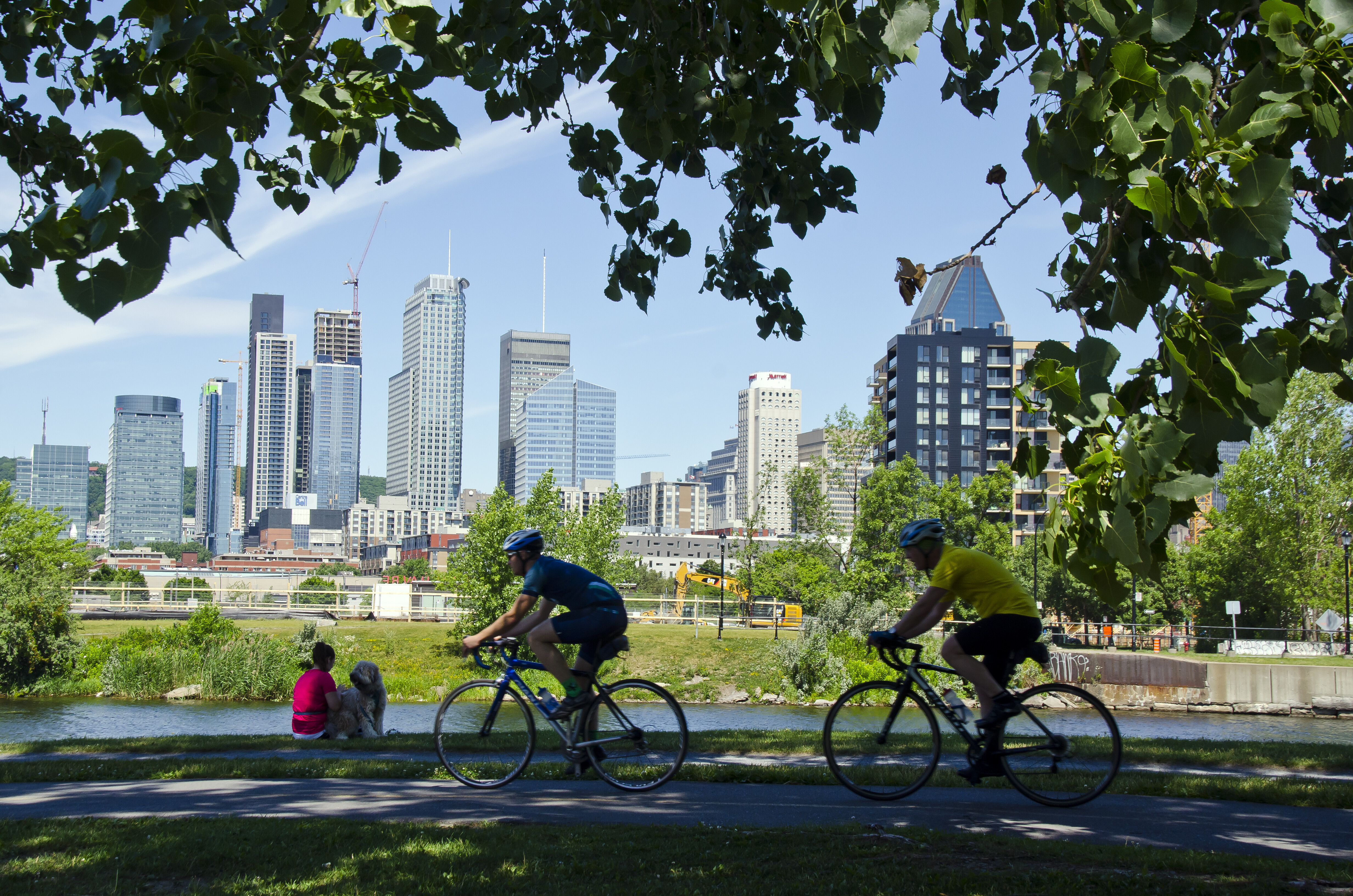
Place-based mobility can transform highways and canals into civic assets. Image: Parks Canada
- How cities design mobility defines how people connect and communities evolve, yet decades of car-centred planning have favoured speed over liveability, leaving many places divided and polluted.
- Mobility investment is projected to hit $1.1 trillion by 2035, creating an opportunity to move beyond efficiency and embrace broader value, capturing social, cultural, economic and environmental returns.
- The cities of Medellín and Montréal show how place-based mobility, grounded in community trust, broad benefits and creative financing can transform public ambition into enduring change.
Mobility is the conduit of urban life. The way cities design transport shapes not only how we move from place to place but also how neighbourhoods interact and what happens in the spaces between them.
Yet, for decades, transportation design has prioritized speed and capacity over place-based multifaceted benefits. In the pursuit of wider roads and faster flows, many cities have been left fragmented and polluted.
With global mobility investment set to triple to $1.1 trillion by 2035, cities face a systems-level choice. They can intensify current practices or they can build transport systems that serve people and foster vibrant communities.
Place-based mobility offers a compelling answer. Instead of treating transportation as separate from community life, this approach embeds transportation planning into the social, economic and physical makeup of neighbourhoods.
This begins by asking a new set of questions. Who is this mobility for? What character of place does it define? And what future outcomes does it set in motion?
As a result, we can begin to design systems that serve the places they are in. For instance, boulevards that double as public spaces, transit stations that become community hubs or pedestrian corridors that link neighbourhoods and provide green space.
Two pioneering cities – Medellín in Colombia and Montréal in Canada – are showing how this can work in practice.
Reclaiming highways in Medellín
Over the last few years, Medellín has taken significant approaches to reconsider its car-focused mobility infrastructure. For decades, the seven-lane Autopista Sur cut through Medellín, creating a concrete barrier that divided the city’s eastern and western neighbourhoods along the Medellín River.
In response, Medellín launched an ambitious urban reclamation project: Parque del Río. Between 2016 and 2019, nearly 400 metres of the Autopista Sur were buried underground, replaced with a linear park lined with almost 2,000 native trees.
Designed to be more than just a thoroughfare, the park integrates playgrounds, sports zones, cultural spaces, skateparks and water features, inviting people to linger, not just pass through.
The city is now scaling this vision by expanding more parts of the riverfront into a continuous public landscape. The next step is being developed further up north of the river; Parque Primavera Norte, which is now under construction and due for completion in 2027.
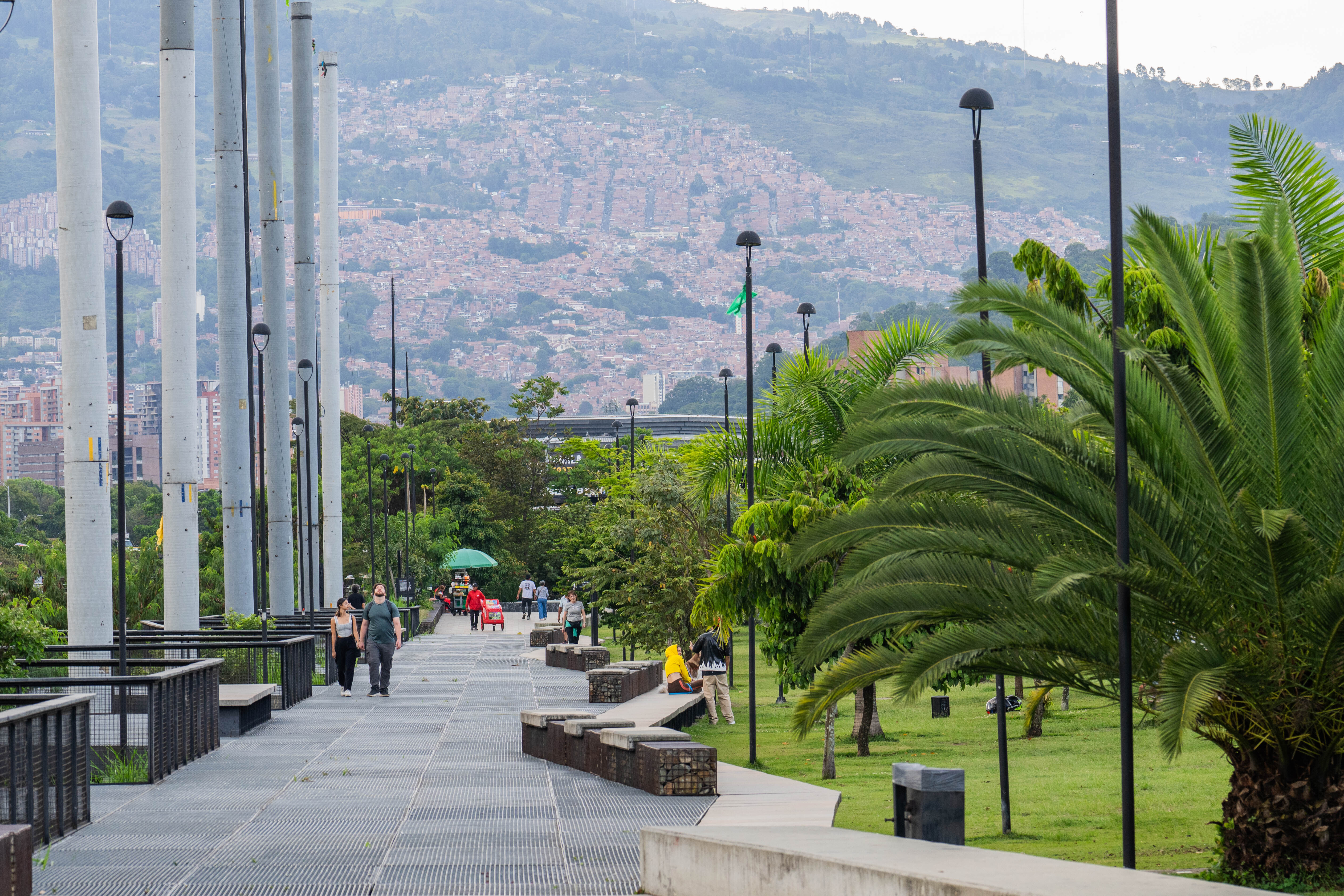
Mayor Federico Gutiérrez remarked, “Primavera Norte isn’t just a construction project – it’s a way to reconnect our city, especially in the northern area, where most of our most vulnerable communities live. ”
For the mayor, the project captures a wider philosophy: “This is the Medellín we believe in. A city that grows from its neighbourhoods, reconnects with its river and rediscovers itself in its parks.”
Reviving waterfronts in Montréal
Place-based mobility is also about activating existing natural features that cities have overlooked as transportation infrastructure.
The Lachine Canal in Montréal, a designated national historic site, had fallen into disuse by the late 20th century, leaving the surrounding industrial area in search of a new identity.
Reopened to recreational navigation in 2002, it has since been reimagined as a 14-kilometre heritage site. Now in its 200th year, the canal draws cyclists, pedestrians and boats, supported by facilities for kayaking and cultural programming under the care of Parks Canada.
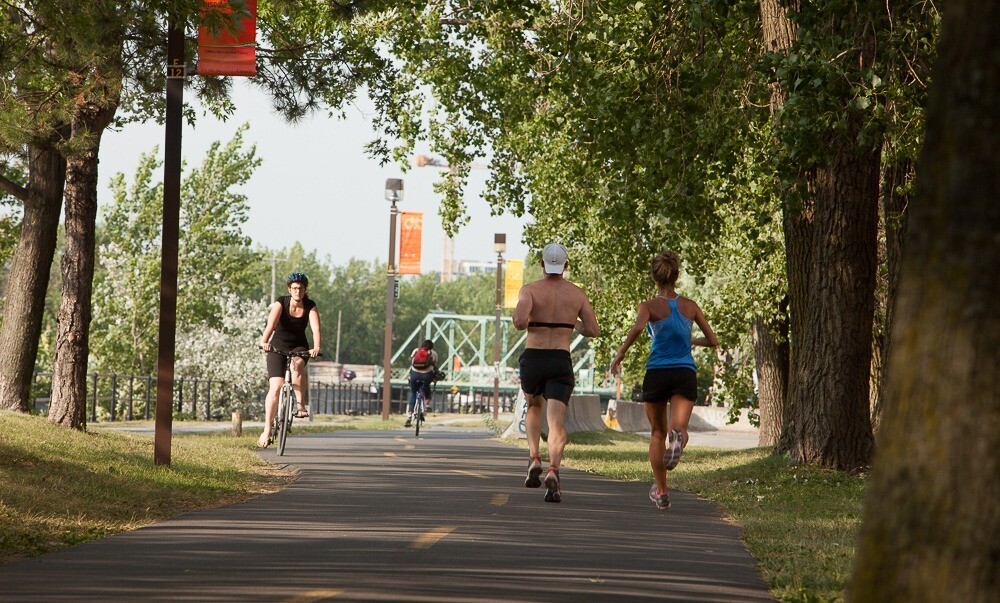
Lisa Curtis, acting superintendent of Quebec Waterways, explains: “The canal is a place where history, nature and community meet. Its future depends on our ability to make it evolve, while respecting the heritage that makes it so precious.”
The canal’s return as a space for movement and community has laid the groundwork for its next chapter: Lachine Canal 4.0. This Montréal programme was launched in 2023 to transform the five neighbouring boroughs into a Metropolitan Innovation Zone, guided by a development framework that links land use, design quality and co-creation.
The conditions for change
In both cities, success stems from three vital elements working together.
First, genuine community engagement. Traditional transport projects often offer minimal consultation but Medellín built on its tradition of social urbanism, bringing communities into the planning process through design competitions and workshops.
Montréal embedded visioning exercises, consultation kiosks and now co-design methods such as workshops for Lachine 4.0.
Second, they redefined what counts as value. Transport projects have typically focused on increasing vehicle capacity and reducing travel time. Medellín, however, applies an international framework which captures environmental, social and economic returns.
From this, it is evident that Parque del Río generates $1.67 for every dollar invested over 30 years, equivalent to approximately $475 million, from benefits that range from flood protection to higher property values and stronger social cohesion.
Beyond financial metrics, Medellín measures success through community transformation. Describing the Primavera Norte expansion, Gutiérrez emphasised: “Adding 70,000 square metres of urban and environmental transformation, benefitting over 900,000 people, generating local jobs and significantly increasing public space per resident.”
Montréal’s Lachine 4.0 similarly tracks progress through a framework of six pillars, spanning resilience, equity and health.
These values give investors confidence that public and private money create returns aligned with their objectives, while helping residents see concrete neighbourhood benefits.
This is the Medellín we believe in. A city that grows from its neighbourhoods, reconnects with its river and rediscovers itself in its parks.
”Third, they incorporate a financing structure that reduces risk for investors. Medellín draws on its municipal budget, contracting private builders but keeping public control to protect community priorities.
For Montréal, the canal reopening drew CAD 100 million from various levels of government, catalyzing over CAD 250 million in private investment. It illustrates how well-placed public spending opened the door to far greater reciprocal private investment.
Lachine Canal 4.0 builds on this foundation through collaborative governance to mobilize diverse investors for continued co-financing.
The path forward
These cases demonstrate how place-based mobility creates better places not by moving people faster but by producing places that shape tempo and capture your attention, time and care.
In Medellín and Montréal, community participation to foster ownership of the transformation, complemented by redefining value and creative investment, was key.
To carry this momentum forward in cities, the World Economic Forum’s Davos Baukultur Alliance has launched the Pioneering Places Programme, starting with six cities: Medellín, Colombia; Montréal, Canada; Nairobi, Kenya; Kuala Lumpur, Malaysia; Utrecht, the Netherlands; and San Francisco, the United States.
The programme will collaborate with cities through collaboration, knowledge exchange and shared action to place quality at the core of urban development, ensuring that what is built and designed responds to present needs while also generating lasting community value. This work is supported by public, private and civic leaders from across the Alliance’s global network to unlock systemic change and turn urban ambitions into reality.
What’s needed now is scale – procurement that embeds place-based quality, public funding that de-risks early stages and private finance that blends short-term returns with long-term value.
Don't miss any update on this topic
Create a free account and access your personalized content collection with our latest publications and analyses.
License and Republishing
World Economic Forum articles may be republished in accordance with the Creative Commons Attribution-NonCommercial-NoDerivatives 4.0 International Public License, and in accordance with our Terms of Use.
The views expressed in this article are those of the author alone and not the World Economic Forum.
Stay up to date:
SDG 11: Sustainable Cities and Communities


Forum Stories newsletter
Bringing you weekly curated insights and analysis on the global issues that matter.
More on Social InnovationSee all

Lissi Qian and Enkhuun Byambadorj
August 12, 2026


