How Kenya is reimagining cancer prevention and care for women
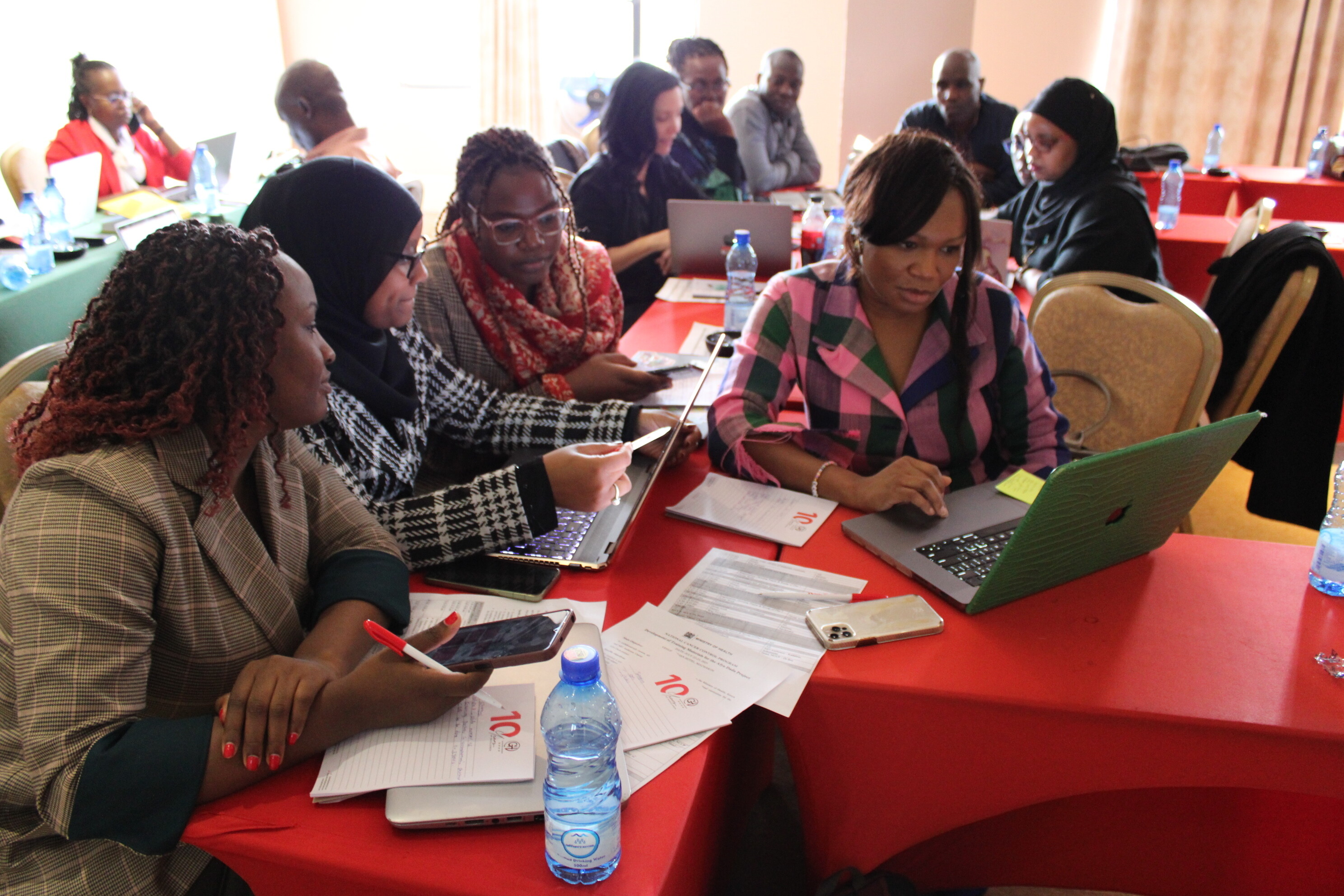
The Afya Dada Project included revising Kenya's national training curricula for breast and cervical cancer screening and detection. Image: Queenter Owuonda
Kathleen Schmeler
Associate Vice President of Global Oncology, The University of Texas MD Anderson Cancer Center- Cancer care is at a crossroads in Kenya, where it has become an urgent health challenge, particularly for women.
- The Afya Dada Project shows the power of purpose-driven partnerships when it comes to improving cancer care.
- This new model for Kenya aims to empower those at every level of care to detect cancer earlier and save more lives.
Cancer is rapidly becoming one of the most pressing public health challenges in Kenya, impacting lives across across the country every day. The country's health systems are evolving from focusing on infectious diseases to addressing non-communicable diseases, especially breast, cervical, prostate and lung cancers. But this is placing a growing strain on Kenya’s healthcare infrastructure.
Breast and cervical cancer, in particular, are taking a heavy toll on women, accounting for nearly a third of all new cancer cases in the country in 2022. But these aren’t just numbers, they’re names, faces and families, all affected by cancer – and far too many of these stories end too soon.
This is why the Ministry of Health of Kenya has made women’s cancers a national priority. Its National Cancer Control Strategy sets an ambitious goal to reduce breast and cervical cancer mortality by one-third by 2028. The Afya Dada Project will be a key driver in meeting this goal. Afya Dada is Swahili for "health for sisters" and this project is on a mission to flip the script on cancer prevention and care for women across Kenya.
Building stronger cancer care systems
Adopting a systems approach, the Afya Dada Project seeks to decentralize cancer services. It has established a sustainable, scalable model beginning in Kenya’s Machakos and Uasin Gishu counties with a plan to scale and replicate the project in other high-burden regions.
The project focuses on four transformative areas:
- Strengthening the healthcare workforce through modern training and mentorship
- Improving screening and diagnosis to catch cancer early
- Increasing community awareness and demand for services
- Improving referral pathways so no woman is left behind.
Training community health promoters (CHPs) is a cornerstone of the project. There are currently more than 100,000 CHPs nationwide, each responsible for 100 households. These frontline workers are essential links between communities and health facilities. CHPs are uniquely positioned to deliver culturally appropriate health education, mobilize communities for screening and HPV vaccination and support early detection and timely referrals. Equipping CHPs with these tools and training will dramatically expand access to prevention and care, especially in underserved areas.
In July 2025, a team of experts from The University of Texas MD Anderson Cancer Center traveled to Kenya as part of the initial implementation phase to work with more than 20 local specialists, including gynecologic oncologists, radiologists, pathologists, breast surgeons, nurses and master trainers. Together, they reviewed and updated Kenya’s national training curricula for breast and cervical cancer screening and early detection. Materials were structured into fit-for-purpose, evidence-based and locally relevant resources for trainers, healthcare workers and community health promoters.
This initiative is now being rolled out through a cascade model of training workshops that began in July 2025 and will continue for the next 12 months. The updated and harmonized curricula will empower those at every level of care to detect cancer earlier and save more lives. This will help to build lasting, equitable systems, not just quick fixes.
Collaborating on cancer care
The Afya Dada Project is the result of a partnership between Kenya’s Ministry of Health and the World Economic Forum’s Global Alliance for Women’s Health, alongside The University of Texas MD Anderson Cancer Center, Siemens Healthineers, Xenco Medical and AstraZeneca.
The goal is to create a cancer care system for Kenya that’s stronger, smarter and built to last. These collaborators will contribute funding, as well as a blend of technical expertise, innovation and capacity-building support to strengthen Kenya’s cancer prevention and care ecosystem.
“This is a true example of a shared-value approach,” Kevin Massoudi, VP & Head of Public Sector Engagement, MEA at Siemens Healthineers, says of the Afya Dada Project. “Everyone brings something to the table to solve a collective interest and challenge.”
“We are committed to closing gaps across the care pathway by building local capacity and capabilities, enhancing access to screening and diagnostics, empowering patients and developing innovative access models for cancer treatments,” adds Deepak Arora, Country President, AstraZeneca, African Cluster.
A dedicated taskforce ensures this work remains grounded in local leadership, global knowledge and grassroots realities. This balance is what makes Afya Dada unique and effective. And while it’s designed to outlast any single partnership, this collective effort is about creating a health system that truly works for the people of Kenya, today and in the future.
Mobilizing action on women’s health
The Global Alliance for Women’s Health is driving impact through its Global Activator Network on Cervical and Breast Cancer, which supports ministries of health across low- and middle-income countries. The network connects these ministries with resources, fosters cross-sector collaboration and unlocks essential tools to scale impact.
“We know that closing Kenya’s cancer care gap requires more than good intentions, it requires advocacy and commitments from partners,” says Emily Fitzgerald, Initiatives Lead, Global Alliance for Women’s Health.
One such partner organization is Xenco Medical, whose Founder and CEO Jason Haider says the project is using “the boundless potential of science” to transform the lives of cancer patients, helping to address one of the most pressing public health challenges of our time.
Real transformation doesn’t come from one sector, one expert or one solution. Through this collaborative, country-led and community-powered model, Kenya is building a resilient, people-first system for cancer care that can stand the test of time and serve as a blueprint for other countries in Africa and beyond.
Because every woman deserves a chance and every sister deserves health.
Don't miss any update on this topic
Create a free account and access your personalized content collection with our latest publications and analyses.
License and Republishing
World Economic Forum articles may be republished in accordance with the Creative Commons Attribution-NonCommercial-NoDerivatives 4.0 International Public License, and in accordance with our Terms of Use.
The views expressed in this article are those of the author alone and not the World Economic Forum.
Stay up to date:
Women's Health
Related topics:


Forum Stories newsletter
Bringing you weekly curated insights and analysis on the global issues that matter.
More on Health and Healthcare SystemsSee all

Shyam Bishen
April 9, 2026


