Top knowledge network and cybersecurity experts set to gather in Dubai. Here's what to expect
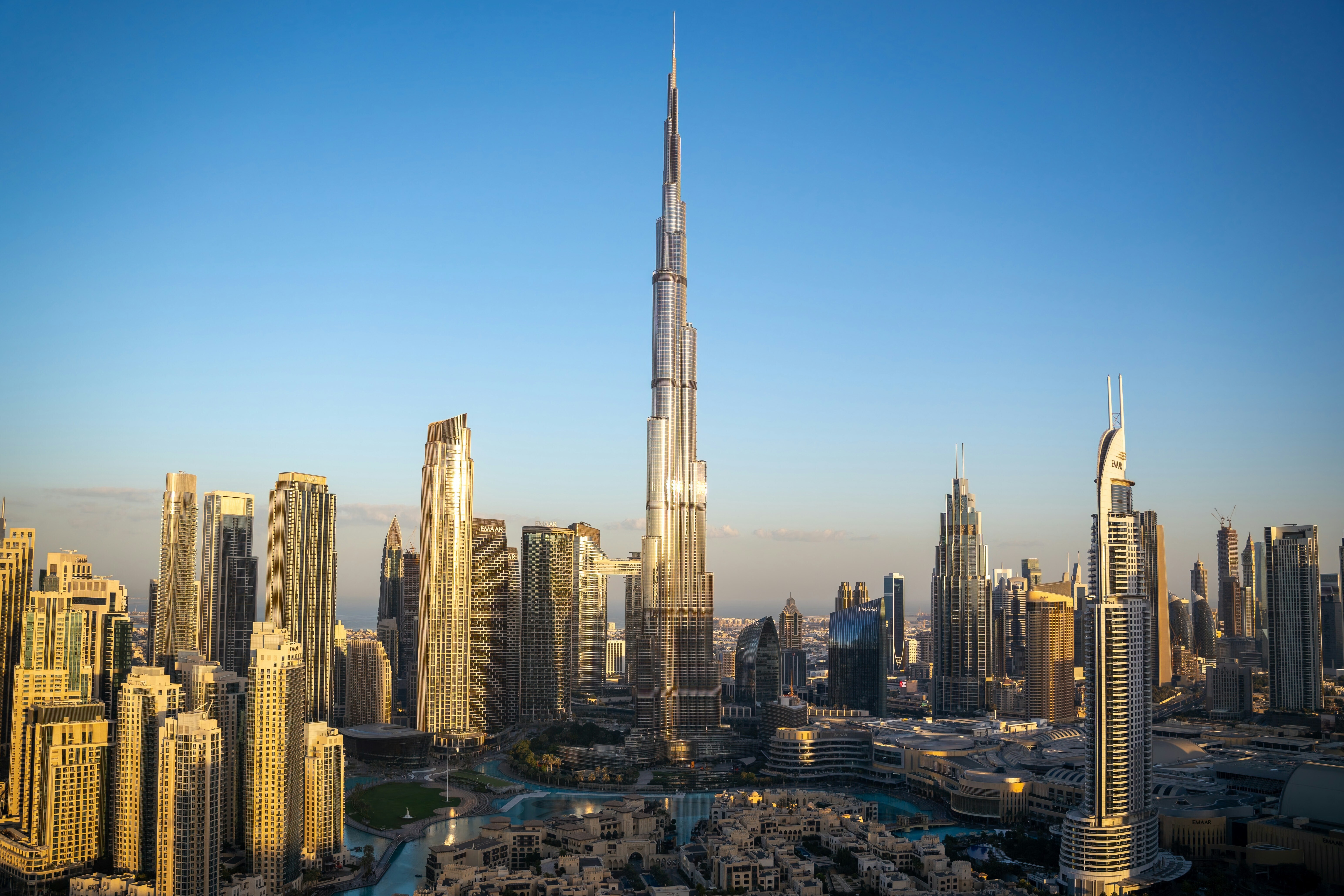
Use the hashtag #AMGFCC25 to join the conversations on social media. Image: Unsplash
Akshay Joshi
Head of the Centre for Cybersecurity, Member of the Executive Committee, World Economic Forum- In a special joint meeting, the World Economic Forum's Annual Meeting of the Global Future Councils and Annual Meeting on Cybersecurity will take place together in Dubai this month.
- The meetings will bring together experts on cybersecurity, artificial intelligence, geopolitics, climate and economic growth, among other topics.
- Here's what to know about the event.
This month, hundreds of experts from a wide array of disciplines will gather in Dubai, United Arab Emirates, for the World Economic Forum's Annual Meetings of the Global Future Councils and Cybersecurity 2025 (AMGFCC).
The event, taking place 14-16 October, is a joint gathering between the Annual Meeting of the Global Future Councils (AMGFC) and the Annual Meeting on Cybersecurity (AMC).
The meetings come as the world continues to face major geo-economic and geopolitical shifts, compounded by rapid advancements in technologies like artificial intelligence. Moreover, the developments are exposing critical vulnerabilities ranging from cyber threats to disinformation and amplifying global interdependencies.
In Dubai, AMGFC and AMC participants will gather to share insights, explore emerging trends, showcase progress and fast-track action aimed at creating a more resilient, inclusive and sustainable societies.
Here's what to know about the gatherings as well as what to expect at the AMGFCC.
What are the Global Future Councils?
The Network of Global Future Councils (GFCs) is the World Economic Forum’s foremost global multistakeholder and interdisciplinary knowledge network. Its purpose is to generate insights into both cutting-edge issues and established systems, exploring how these topics impact global, regional and industry-specific challenges.
Convening thought leaders and specialists, the current term of GFCs operates as a think-tank made up of 37 thematic councils that identify and disseminate transformative ideas with the potential for positive global impact. The councils' issue areas include cybersecurity, digital public infrastructure, artificial general intelligence, information integrity, jobs and frontier technologies, and next generation computing, to name a few.
Composed of experts from 93 different nationalities, GFC members span diverse backgrounds: one-third come from business, another third from academia and think tanks, while the remaining third represent public figures, international organizations and civil society. The councils are embedded in the Forum's 11 centres.
What is the Centre for Cybersecurity?
The Centre for Cybersecurity is one of the World Economic Forum's 11 centres.
The centre provides an independent and impartial platform to reinforce the importance of cybersecurity as a strategic priority and drive global public-private action to address systemic cybersecurity challenges.
The centre also engages more than 120 business partners with 50+ public sector partners in key initiatives and produces the Global Cybersecurity Outlook, an annual report that examine the cybersecurity trends that will impact our economies and societies in the year to come.
AMGFCC: A unique collaboration for 2025
More than 600 experts and leaders will convene at AMGFCC to explore how emerging technologies such as AI and quantum computing are redefining the global risk landscapes.
AMGFCC will be co-chaired by six leaders from across disciplines and regions: Omar Al Olama, Minister of State of AI, Digital Economy and Remote Work Applications of the UAE; Dario Leandro Genua, Secretary of Innovation, Science and Technology of Argentina; Victoria Nuland, Professor in the Practice of International Diplomacy at Columbia University, USA; David Bach, President of IMD Business School, Switzerland; Sylvia Earle, Creator of Mission Blue Foundation, USA; and Robert M. Lee, Chief Executive Officer and Co-Founder of Dragos, USA.
The gathering will also be attended by a select number of business, government, civil society and media stakeholders to explore emerging trends and co-develop actionable ideas to inform decision-making at all levels. Roughly 47% of all participants are women.
AMGFCC participants include over 150 global cyber leaders from business, government, international organizations, civil society and academia. These cyber experts will seek to build a shared understanding of the evolving cybersecurity landscape and foster collaboration to identify key actions to promote resilience.
Meanwhile, other GFC members will be invited to attend and contribute to curated sessions on cybersecurity, offering valuable insights into one of the world’s most critical cross-cutting challenges. A central focus of this year’s meeting will be exploring how councils are adapting their work in response to the technologies of the Intelligent Age, and how these innovations intersect with Council mandates, which range from governance and security to sustainability and the future of growth.
AMGFCC, which will be the first in-person meeting of all 37 councils of the 2025-2026 GFC Network term, will also be used to conduct survey research that will inform the World Economic Forum’s Global Risks Report 2026, Global Cooperation Barometer 2026 and Global Cybersecurity Outlook 2026.
Furthermore, AMGFCC will feature 19 public sessions that will be livestreamed across the Forum's website and social media channels. To follow along on social media, use the hashtag #AMGFCC25.
License and Republishing
World Economic Forum articles may be republished in accordance with the Creative Commons Attribution-NonCommercial-NoDerivatives 4.0 International Public License, and in accordance with our Terms of Use.
The views expressed in this article are those of the author alone and not the World Economic Forum.
Related topics:

Forum Stories newsletter
Bringing you weekly curated insights and analysis on the global issues that matter.
More on Global CooperationSee all

Yasmine Fouad, Astrid Schomaker and Simon Stiell
August 24, 2026


