Uncertainty is impacting the global economy. But how is it measured?
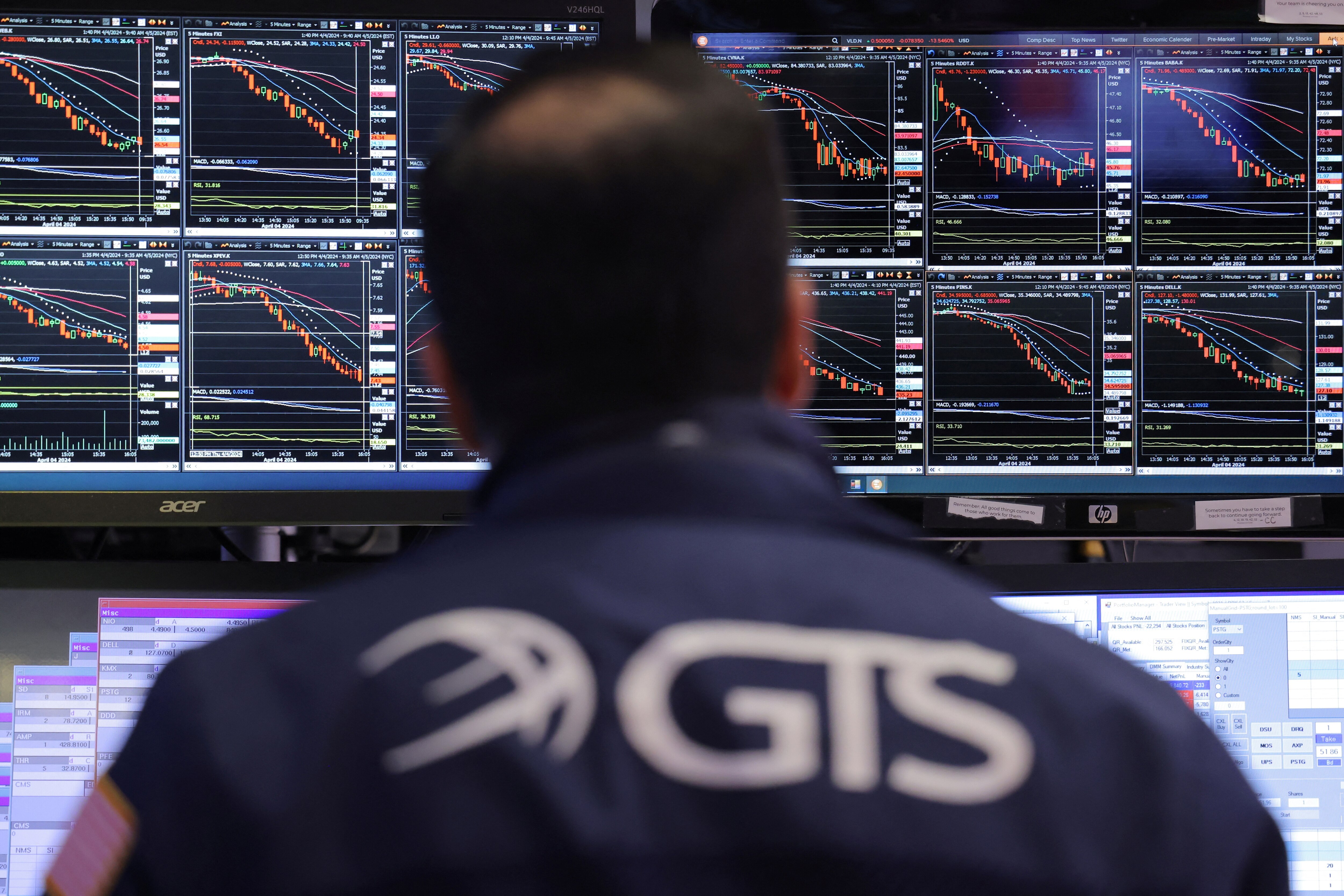
Economists often measure uncertainty indirectly though proxy data. Image: REUTERS/Andrew Kelly
- Uncertainty is having major impacts on the global economy.
- "Uncertainty has become its own economic actor," one expert said at a World Economic Forum event.
- But how exactly is a concept like uncertainty measured in economic data and analyses?
Uncertainty has become a defining characteristic of the global economy as geo-economic shifts and geopolitical tensions upend long-held economic assumptions.
“The biggest driver that we're looking at now is uncertainty,” Marion Laboure, Managing Director and Macro Strategist at Deutsche Bank, said this month at a World Economic Forum gathering of top interdisciplinary experts in Dubai, United Arab Emirates.
But unlike more tangible economic indicators like inflation rates and gross domestic product (GDP) growth, uncertainty is inherently abstract. So how is uncertainty measured in economic data and analyses?
‘Era of heightened uncertainty’
Economists often measure uncertainty indirectly though proxy data such as surveys and sentiment analyses.
The World Economic Forum’s Chief Economists’ Outlook, for instance, routinely surveys chief economists from across sectors to gauge the perceived level of uncertainty in the global economy. In the May 2025 edition of the report, 82% of chief economists said the current level of uncertainty was very high. That, the economists noted, would likely have adverse impacts on trade volumes, GDP growth and levels of foreign direct investment.
The survey for that edition of the Outlook coincided with "a time of extraordinary volatility and uncertainty," as US President Donald Trump announced that the United States would impose sweeping and significant tariff hikes.
The subsequent edition of the Chief Economists’ Outlook in September 2025 followed with an observation that the global economy had entered a "new era of heightened uncertainty."
Many other institutions conduct survey research to gauge the level of uncertainty in the global economy.
The US Federal Reserve, for example, routinely publishes a report known as the Beige Book. The report compiles anecdotal information from the central bank's 12 districts on various economic conditions, such as uncertainty. Last month, the Beige Book report found that “historically high uncertainty” threatened to weaken consumer spending and continued to impact business investment decision-making.
Other examples of surveys that gauge uncertainty include the European Commission’s business and consumer surveys and the Bank of England’s Decision Maker Panel.
“Uncertainty has become its own economic actor and it's influencing all kinds of decisions,” Nela Richardson, the Chief Economist of ADP, said at another World Economic Forum event last month in New York, United States.
Uncertainty shocks
Economists have also developed various indices to measure uncertainty.
The Economic Policy Uncertainty Index, for instance, was developed by economists who quantified news-media mentions across countries of keywords related to economic uncertainty, regulation, taxes and government debt. For the United States-specific index, the expiration of tax code provisions and disagreement among economic forecasters are also factored in.
The uncertainty index soared in April 2025, corresponding to the Forum’s Chief Economists' Outlook survey results.
Other historic periods of high economic uncertainty include the September 11th terrorist attacks in the United States, the 2008 global financial crisis and the outbreak of the COVID-19 pandemic, to name a few.
“Our findings are broadly consistent with theories that highlight negative economic effects of uncertainty shocks,” the economists who developed the index noted in a research paper. “The results suggest that elevated policy uncertainty in the United States and Europe in recent years may have harmed macroeconomic performance.”
Another example of a global uncertainty index is the World Uncertainty Index. The index, developed by International Monetary Fund economists, is based on an analysis of uncertainty trends documented in over 140 country reports from the Economist Intelligence Unit, the research division of the Economist Group.
Unpredictability and business
Approaches for measuring uncertainty may differ, but experts agree on its negative impacts on the global economy.
“The main issue for the businesses is the unpredictability,” UAE Minister of Foreign Trade Thani Ahmed Al Zeyoudi said at the Forum’s event in Dubai. “No one can stick to a business plan, no one can have a long term plan.”
Sarah Thorn, Vice-President of Global Government Affairs and International Sourcing at Walmart, added at the event that “A rules-based system creates certainty for businesses, creates opportunity for small businesses.”
The sentiment was echoed this month in the latest International Monetary Fund economic outlook, which downgraded global growth projections and stated that “resolving policy uncertainty would provide a significant lift to the global economy.”
Don't miss any update on this topic
Create a free account and access your personalized content collection with our latest publications and analyses.
License and Republishing
World Economic Forum articles may be republished in accordance with the Creative Commons Attribution-NonCommercial-NoDerivatives 4.0 International Public License, and in accordance with our Terms of Use.
The views expressed in this article are those of the author alone and not the World Economic Forum.
Stay up to date:
Global Risks
Related topics:


Forum Stories newsletter
Bringing you weekly curated insights and analysis on the global issues that matter.
More on Economic GrowthSee all

Larry Fitzgerald Jr and Kelvin Beachum Jr
April 6, 2026