Global action on lung health has never been more important
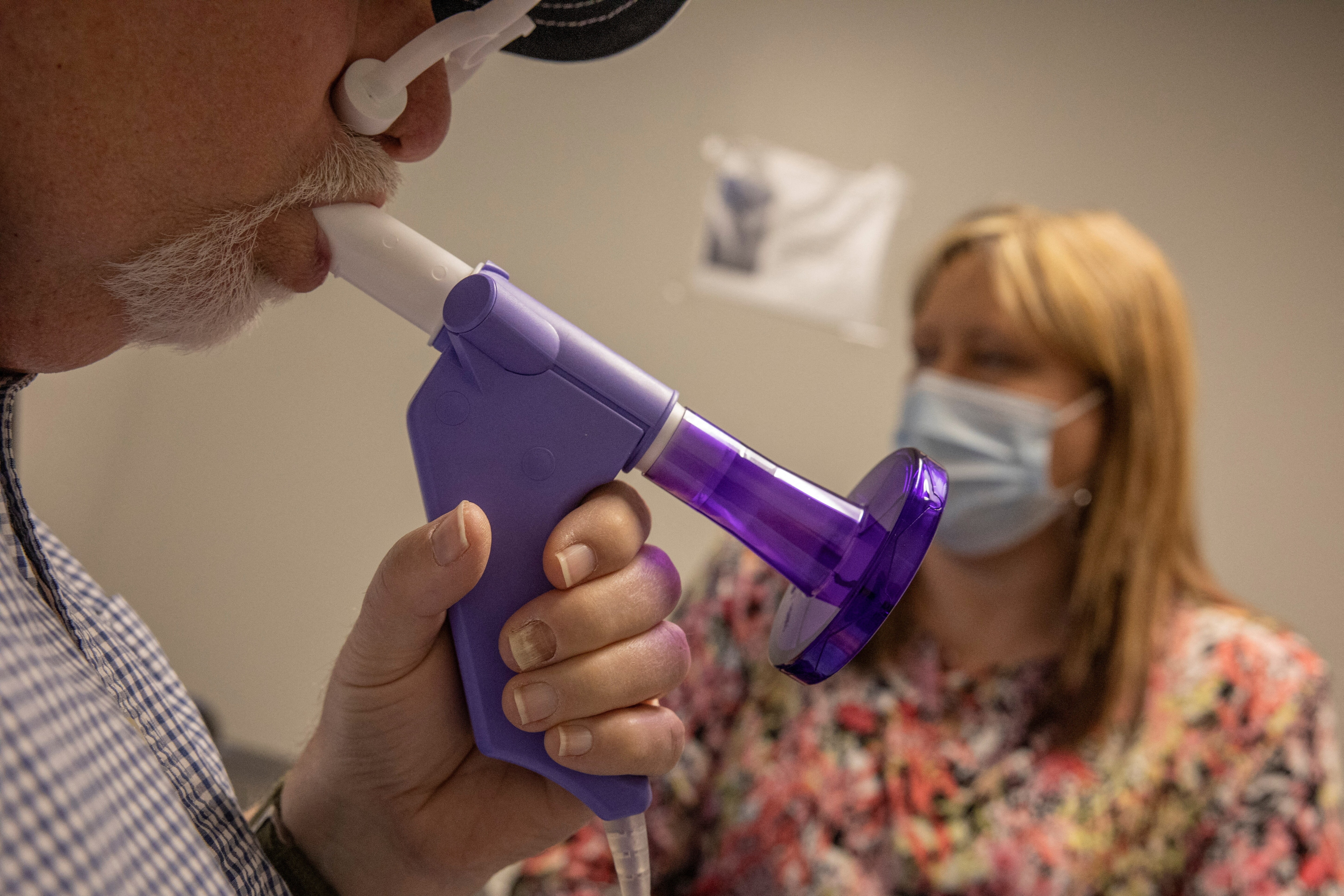
Inactivity on lung health could cost the global economy trillions over the next two and a half decades. Image: REUTERS/Adrees Latif
- In 2017, over half a billion people had a chronic respiratory disease – and the number of people with lung health challenges is only growing.
- Most of those with serious lung conditions are in lower-income countries, compounding the problem.
- Breathing life into the WHO's Lung Heath Resolution is a good place to start in addressing this challenge.
Lung diseases, including chronic obstructive pulmonary disease (COPD), asthma and lung cancer, have long been a silent crisis, overlooked despite being among the leading causes of death and disability worldwide.
In 2017, just short of 545 million people worldwide had a chronic respiratory disease, representing an increase of nearly 40% compared with 1990. And that burden is increasing.
Factors such as air pollution, poor living conditions and occupational hazards are driving up the rates of respiratory diseases, particularly COPD and asthma. Early action – ensuring lung health is prioritized in primary care, expanding access to screening, diagnostics and guideline‑directed care, and investing in public education to reduce stigma – is essential to improve health, build health system resilience and strengthen economies.
We know from a recent global survey that policy-makers overwhelmingly agree COPD should be a higher public health priority given its heavy socioeconomic burden, especially its impact on health systems and hospital budgets. However, competing health demands, low public awareness and delayed diagnosis remain significant barriers.
The economic burden of poor lung health
The human and financial costs of respiratory diseases are immense. COPD, responsible for over 3.5 million deaths in 2021, is projected to impose $4.3 trillion in global economic costs between 2020 and 2050, straining health systems and national budgets.
There is a clear opportunity: many respiratory deaths are preventable. Due to often being caused by smoking, up to 90% of COPD cases could be avoided, and the interventions to achieve this are well-established. When they’re prioritized and implemented, steps to achieve cleaner air, tobacco control, earlier detection and access to effective treatment can significantly reduce the burden.
If COPD remains unprioritized, cases are expected to rise by 23% globally between 2020 and 2050, with lower- and middle-income countries (LMICs) disproportionately affected. Currently, nearly 90% of COPD deaths occur in LMICs.
The WHO Lung Health Resolution: the clear path ahead
Earlier this year, the World Health Assembly adopted a landmark resolution: Promoting and prioritizing an integrated lung health approach. The resolution, a long-awaited recognition that lung health is fundamental to global wellbeing, economic stability and even climate action, is a global call for countries to take immediate action on lung diseases through a comprehensive, integrated approach. It urges nations to: develop and fund national lung health plans; integrate lung health into primary care; and address risk factors such as air pollution, smoking, and workplace hazards
To support this, the resolution also calls on the World Health Organization (WHO) itself to assess current strategies, develop a progress monitoring framework and provide technical support and resources to help countries implement actions effectively.
Putting the resolution into practice: urgent steps needed to address COPD
Delivering on the resolution will require joint action from governments, healthcare professionals, patient groups and industry alike. Together, we can make real progress by focusing on key areas:
1. Prioritize primary care
Integrate lung health: Embed lung health services within essential primary care packages, backed by national plans and dedicated funding, so prevention, diagnosis and management are routine rather than exceptional.
Strengthen systems: Ensure primary care has simple tools to spot lung disease early (such as breathing tests and lung screening), clear referral pathways, access to pulmonary rehabilitation and effective medicines to reduce flare-ups and hospitalizations.
Train healthcare workers: Equip frontline teams to recognize, treat and follow up lung diseases. For COPD, this is especially important after flare-ups when patients are 10 times more likely to suffer a serious cardiac event. A follow-up can help reduce the risk of patients deteriorating or even dying soon after hospitalisation.
2. Combat stigma and boost lung health awareness
Challenge misconceptions: Build public understanding to dismantle stigma and improve access to care. While smoking is a major risk factor, COPD can also be caused by household and air pollution, poor nutrition and infections, yet awareness of these risks remains low.
Public health campaigns: Run national and community-based campaigns across digital and local channels to make COPD visible and encourage earlier care-seeking.
Address root causes: Improve not just air quality monitoring but also enforcement to cut exposure to harmful pollutants – a major driver of COPD. This is fundamental because right now, almost the entire global population (99%) breathes air that exceeds WHO air quality limits, putting their lung health at great risk.
A broader impact and call to action
Improving lung health is a significant piece in the larger puzzle of reducing the overall non-communicable disease (NCD) crisis. Efforts won't just positively impact those living with lung conditions, but also others who are increasingly at high risk for developing NCDs with common risk factors such as tobacco use, air pollution and occupational exposures.
For the first time, the WHO resolution encourages countries to address the entire spectrum of lung disease – both by reducing risk factors and by effectively treating those affected. This integrated approach can ease the growing burden on health systems and significantly reduce the economic toll of preventable respiratory illness.
Awareness and commitment among policy-makers are higher than ever. This growing awareness must now be matched with urgent, achievable action from government leaders, policymakers, civil society, and industry partners. It's time to translate high-level commitments into tangible, local-level change, helping ensure that every person, in every country, can breathe freely.
Don't miss any update on this topic
Create a free account and access your personalized content collection with our latest publications and analyses.
License and Republishing
World Economic Forum articles may be republished in accordance with the Creative Commons Attribution-NonCommercial-NoDerivatives 4.0 International Public License, and in accordance with our Terms of Use.
The views expressed in this article are those of the author alone and not the World Economic Forum.
Stay up to date:
Air Pollution


Forum Stories newsletter
Bringing you weekly curated insights and analysis on the global issues that matter.
More on Health and Healthcare SystemsSee all

Matthew Oliver
March 24, 2026


