From rare earths to antimony: A strategic approach to critical mineral supply
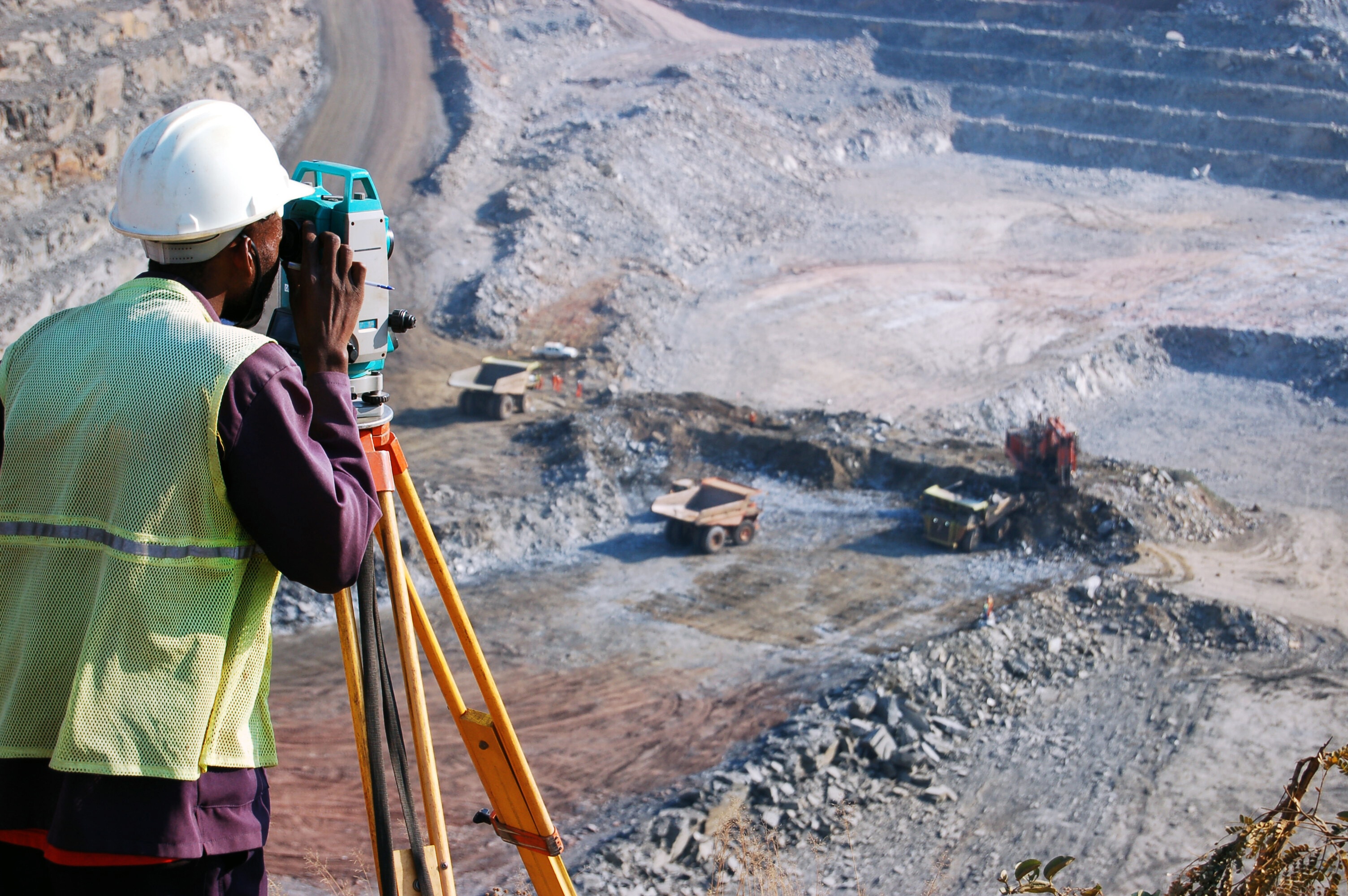
Constraints on critical minerals are encouraging many countries to look for new supply sources. Image: iStock/mabus13
- Critical minerals have become a leverage point in a broader worldwide struggle over industrial resilience and global influence.
- Recent supply constraints for antimony, a critical mineral used in semiconductors, has seen it become more strategically important.
- Ongoing supply chain fragility is a serious global problem, but it also presents an opportunity for nations to collaborate on rethinking industrial policy.
The most significant outcome of the Trump - Xi meeting at the Association of Southeast Asian Nations (ASEAN) Summit on 30 October 2025 was the agreement to continue licensing the export of rare earth elements from China. This is testament to the geopolitical preeminence of minerals policy.
Critical minerals, once a niche concern, have become a leverage point in a much broader struggle over industrial resilience and global influence. Among these minerals is a cluster of metals that are in high demand but have been overlooked by supply chains in the US and Europe.
In particular, the story of antimony – a mineral used for over 5,000 years in pigments, alloys and weaponry – should serve as a warning to US and European markets to work together to ensure access to strategically valuable resources.
Mapping new supply chain choke points
In 2010, critical mineral supply chain vulnerabilities were laid bare when China abruptly halted exports of rare earth elements to Japan amid a territorial dispute. That disruption exposed how industrial dependence could be wielded as geopolitical leverage. Tokyo responded with speed and coordination, overhauling its mineral strategy and launching a state-backed agency to diversify supply.
Antimony is now emerging as the next test case in the geopolitics of critical minerals. In August 2024, China began restricting exports of various forms of the metal. In December, it tightened those restrictions further, targeting only exports bound for the US. As a result, antimony prices surged to nearly $50,000 per ton, around 10 times the five-year average.
Long treated as a minor input, antimony became the subject of national security discussions, intense market tracking and corporate procurement reviews. This year, the US Defense Department contracted for $245 million in antimony offtake with US Antimony Corporation and awarded an $80 million grant to antimony producer Perpetua Resources.
Antimony’s strategic value is not new, but China, Russia and Tajikistan dominate global supply, together accounting for over 90% of global mine production. The US imports roughly 20,000 to 25,000 tonnes of antimony each year, mostly sourced from China. Within Europe, the Netherlands is among the most import-dependent nations, serving as a key entry point for Chinese antimony into the EU market.
For years, this dependence was tolerated, but it has now become a serious liability. Antimony is essential to semiconductors, flame retardants and advanced defence systems. Without it, fire suppression systems fail, paint degrades, jets can’t land on carriers and electronics are exposed to heat and interference.
Countering critical mineral market distortions
Overreliance on a single dominant supplier has long obscured structural weaknesses in global mineral markets. Distortions can depress prices, deter capital, suppress innovation and leave producers stranded.
So, today’s supply chain fragility is serious, but it also presents an important opportunity. It offers a chance for the US and its allies in Europe, Japan, South Korea, Canada and Australia to foster innovation, deepen trusted alliances and create space for new mineral markets to emerge. In response, governments are rethinking industrial policy.
A recent US executive order on mineral security has catalysed investment and prioritized domestic permitting and stockpiling, for example. The EU has advanced the Critical Raw Materials Act and the UK is preparing its own strategy. Some nations are also outlining roadmaps of cooperation such as the recent US-Australia Framework for Securing of Supply in the Mining and Processing of Critical Minerals and Rare Earths. The private sector is adjusting as well, with investors increasingly pricing in geopolitical risk and long-term supply security.
One emerging tool in critical mineral markets is the long-term offtake agreement. These deals provide pricing floors or stability clauses that shield producers from market manipulation. While such terms may limit a buyer’s ability to capitalize on short-term price dips, they enable predictability, scale and endurance. Governments can play a role here too, not just through procurement or stockpiling, but by creating incentives that make such offtake agreements commercially viable.
Rethinking critical mineral supply chains
Like many critical minerals, antimony’s supply chain vulnerabilities are the product of years of opaque trading arrangements, hidden subsidies and overlooked externalities. A small number of market participants – ultimately those aligned with a single country – consolidated control as long as materials kept flowing and prices stayed low. That apparent stability masked growing exposure, while environmental and social costs remained out of sight.
Policy ideas on critical minerals are now cropping up like low-grade ore – plenty to sift through, but little worth extracting. Many focus on significant government interventions and massive taxpayer liabilities. Aside from being unlikely to gain political support because of their staggering costs, they fail to address underlying market forces.
One promising response is a shift toward mineral-specific strategies, rather than generic critical minerals frameworks. The Critical Minerals Forum – a non-profit supported by the US Defense Advanced Research Projects Agency (DARPA) – is mapping supply chains by mineral, combining commercial data with policy analysis to identify where the real bottlenecks lie and organizing industry partnerships for production and offtake.
Finding new sources of antimony
For antimony, two key insights have emerged. First, short-term availability is tighter than previously assumed, even without Chinese export controls. Global demand has risen steadily, but production has not kept pace.
Second, the primary constraint is not processing, but mining. Refining capacity outside China now exceeds 60,000 tons per year, yet much of it remains underused due to upstream supply shortages. Meanwhile, China’s own domestic production has declined by nearly 30% since 2018. It now imports over 65% of its antimony ore concentrate, more than a third of which comes from Tajikistan.
This shift has reframed the conversation. Many analysts have focused their policy recommendations on expanding global minerals refining capacity. But with processing capacity underused and raw materials increasingly scarce, the key question is not just who can refine antimony, but who can secure reliable and aligned mine supply.
For antimony, this means that mining projects once considered too small, remote or complex are now attracting serious attention. This shift is opening new markets and strengthening cooperation among allied countries. In regions like the Tethyan Belt of Central and Eastern Europe (North Macedonia and Slovakia) and Central Asia, countries are working to restart dormant antimony mines.
Coordinating critical mineral supply strategies
These findings reposition antimony not as an isolated case, but as a strategic inflection point for how the West approaches critical minerals. It’s a chance to move from reactive policy to proactive coordination, where upstream supply, aligned investment and long-term offtake agreements are deployed in tandem, not in crisis.
If governments and industry can get this right, antimony could become the model for building resilience before the next critical minerals supply chain choke point emerges.
Rare earth elements supply constraints should not be taken as a one-off crisis, and the response should not be treated as a template that’s now complete. That mindset risks leaving the next supply disruption – whether in antimony, graphite or gallium – to catch the world unprepared. Instead, applying tailored strategies to the market realities of each mineral, starting with antimony, can help to secure lasting resilience.
Don't miss any update on this topic
Create a free account and access your personalized content collection with our latest publications and analyses.
License and Republishing
World Economic Forum articles may be republished in accordance with the Creative Commons Attribution-NonCommercial-NoDerivatives 4.0 International Public License, and in accordance with our Terms of Use.
The views expressed in this article are those of the author alone and not the World Economic Forum.
Stay up to date:
Semiconductors

Forum Stories newsletter
Bringing you weekly curated insights and analysis on the global issues that matter.
More on Supply Chains and TransportationSee all

Jack Barrie and Janez Potocnik
April 2, 2026