How cities are turning water challenges into innovation opportunities
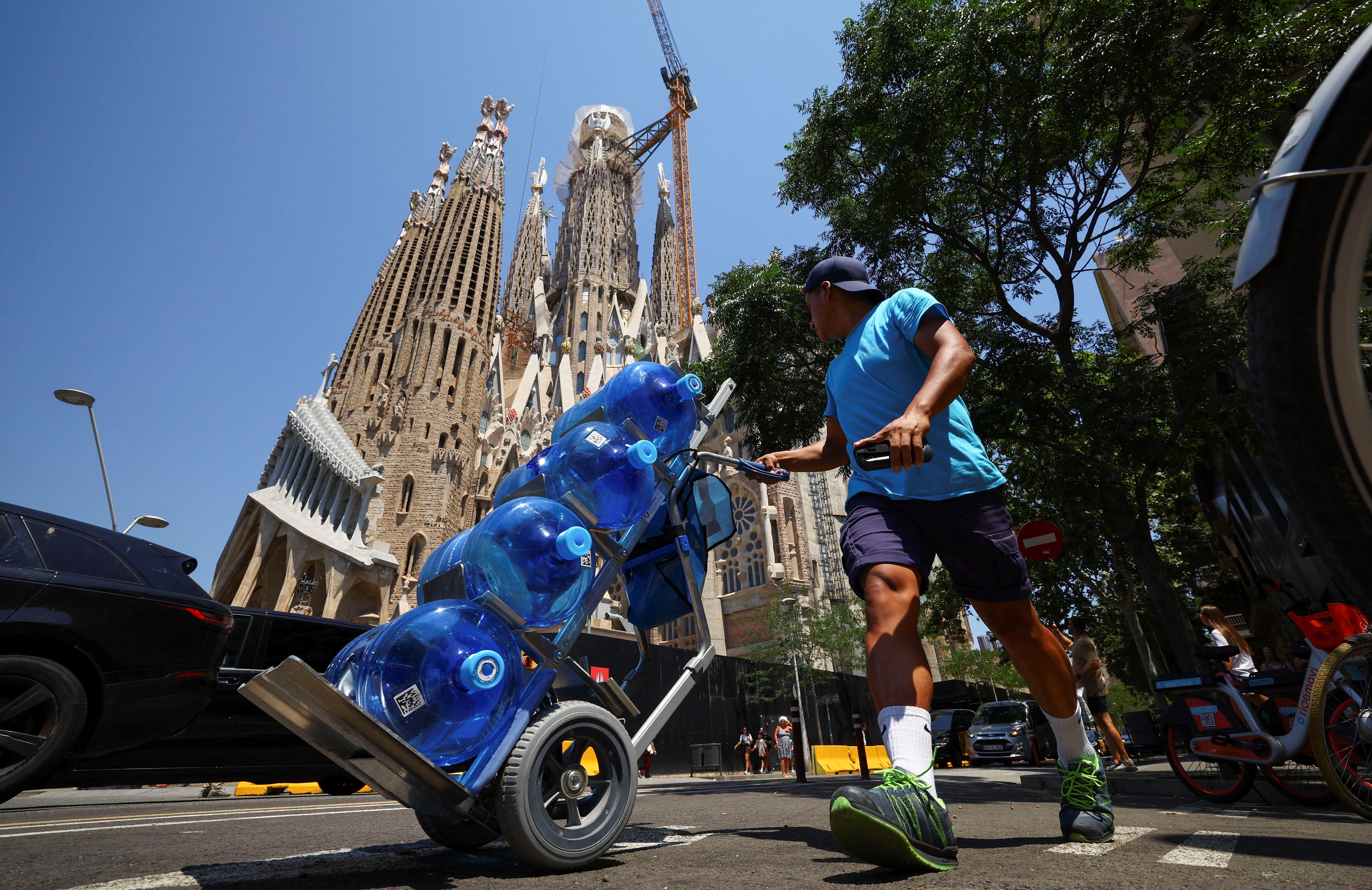
Hundreds of millions of people live in urban areas where water demand regularly exceeds supply. Image: REUTERS/ Albert Gea
- Six cities, from Accra to San Francisco, demonstrate how governance, investment and collaboration create ecosystems where water innovation can scale.
- From Valencia’s digital transformation to Barcelona’s multi-stakeholder platforms, each city offers distinct pathways to water innovation.
- The World Economic Forum’s Water-BOOST framework helps cities map their innovation ecosystems, identify gaps and adapt successful mechanisms to local contexts.
The world is facing an intensifying water crisis – and urban areas are emerging as the front line of the crisis.
Today, hundreds of millions of people live in urban areas where water demand regularly exceeds supply. By 2050, as the number of people living in cities soars, urban water demand is expected to increase by 80%.
Yet, as pressures including droughts, ageing infrastructure and rapid urbanization increase, a growing number of urban centres are turning these challenges into opportunities with the right combination of governance, investment and collaboration.
The World Economic Forum, through its multistakeholder community on water – Water Futures – launched a white paper in 2025 to help translate the GCEW’s vision into action by the private sector and public–private collaborations. Among its proposed pathways for action, the policy-innovation nexus is identified as a critical lever, which has also been explored through Uplink’s Aquapreneur Innovation Initiative. This research responds directly to that call – aiming to strengthen the enabling environments that allow innovation ecosystems to emerge, connect and scale across sectors.
A World Economic Forum Insight Report introduces Water-BOOST (Bridging Opportunities and Optimising Support Toolkit), a systems framework designed to help cities understand and strengthen the enabling environments for water innovation needed to turn pilot projects into scalable innovation systems. The question that originated from this report is: what conditions allow urban water innovation to thrive – and how do key actors and institutions need to interact for that to happen?
A systems-based approach to water challenges
Addressing these water challenges calls for more than novel technologies and one-off policies, the report says. To scale water innovation, cities need systems-based approaches and coordinated action across sectors and stakeholder ecosystems.
Findings from stakeholder engagement and field research showed that successful water innovation depends on the strength of relationships across the ecosystem and on the enabling mechanisms — permitting frameworks, investment structures, cross-sector platforms — that support them. The report argues that scaling water innovation requires a systems-based approach and coordinated action across sectors and stakeholder groups.
It highlights three key lessons that emerged from the Water-BOOST initiative:
- Innovation requires the right mix of stakeholders and enabling mechanisms
- Collaboration is as critical as participation
- Cities should learn from one another through structured comparison to adapt successful mechanisms to their own local contexts.
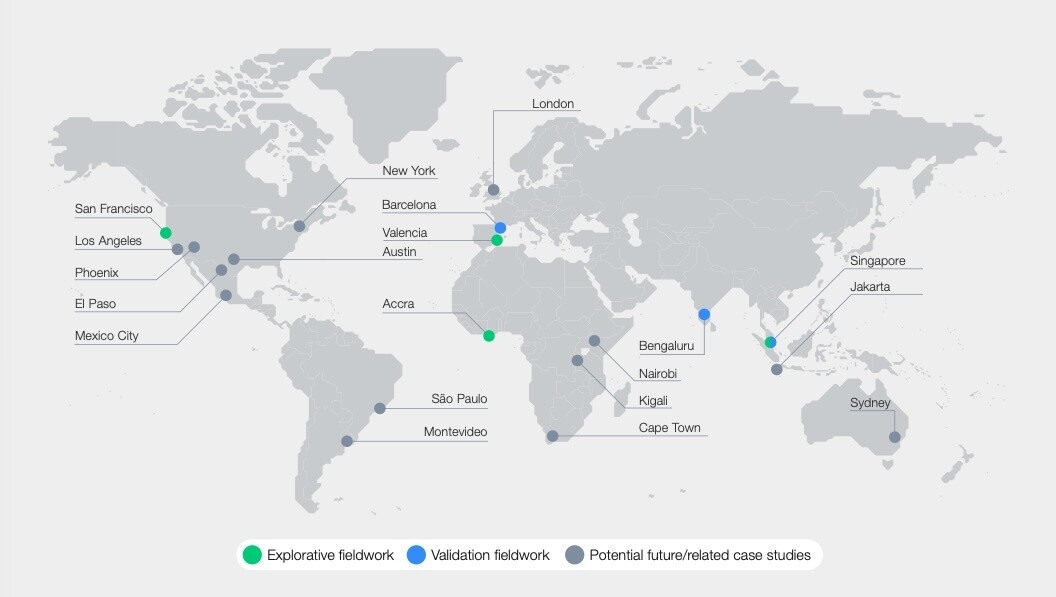
Together, these lessons shaped the design of Water-BOOST. Building on stakeholder engagement and field research across six cities, the framework is organised around three core principles that help cities understand, compare and strengthen their enabling environments for water innovation.

San Francisco
San Francisco, like the rest of California, faces a recurring and increasing risk of drought. It is responding to the challenge with a regulatory framework at both state and city level that actively facilitates innovation.
In 2015, it became the first US city to mandate onsite water reuse for new buildings. The rules state that all new buildings over 100,000 square feet must install systems to collect and treat greywater, rainwater or foundation drainage for non-potable uses including toilet flushing and irrigation.
This transformed on-site reuse of water from a voluntary initiative into a binding regulatory standard. It also helped underpin the city’s transition towards circular, decentralized water systems and drive sustained demand for reuse technologies.
One example of this in practice is at Epic Cleantec – a recognized Top Innovator from the Forum’s UpLink Aquapreneur Initiative – which now operates the nation’s largest in-building water recycling system at the 61-storey Salesforce Tower, exemplifying how policy backed by permitting frameworks and grants de-risks market entry for innovators.
Valencia
The Spanish city of Valencia has a history of bold decisions in large infrastructure – after devastating flooding in 1957, it diverted the Turia River away from the city. But recent events, such as severe flooding in late 2024, have highlighted the need for continued water innovation.
The city’s private sector offers a blueprint for how water innovation can be adopted and scaled, with water company Global Omnium leading the way. Over 15 years, it has digitalized its operations with more than 1 million sensors and adopted advanced data analytics to optimize service delivery.
This gave rise to Idrica, a digital spin-off that developed what is now the Xylem Vue platform — an AI-enabled system for real-time water network management. To further boost innovation, Global Omnium launched GoHub Ventures in 2019, investing over $100 million in start-ups.
This created a reinforcing loop: start-ups develop solutions that Global Omnium integrates into operations, with operational insights then informing future investments. Results include a 30% reduction in non-revenue water, a 15% decrease in energy use and a 20% reduction in operating costs.
Singapore
Singapore is addressing its limited water resources with an innovation ecosystem that is recognized across the world for its integrated, state-led approach.
Its transformation into a water innovation hub has been shaped by the leadership of the Public Utilities Board (PUB), which uniquely serves as both national water utility and regulator.
A cornerstone of this approach is its Living Lab initiative, which provides real-world testbeds for emerging technologies across water treatment plants and urban infrastructure.
By offering controlled environments and streamlined regulatory pathways, the Living Lab reduces adoption barriers and accelerates transition from prototype to deployment.
This enabled start-up Wateroam – a recognized Top Innovator from the Forum’s UpLink Aquapreneur Initiative – to test and refine its portable filtration technologies, which are now used in more than 40 countries for clean drinking water in humanitarian contexts. This success illustrates how public-sector de-risking and technical validation mechanisms can empower start-ups to scale beyond national borders.
Accra
Accra’s water innovation is shaped by grassroots solutions and NGO involvement. It's a response to ongoing water-supply challenges compounded by issues including high amounts of water lost before reaching paying consumers, infrastructure gaps and threats from climate change and pollution.
While inconsistent regulation and enforcement challenges constrain innovation at scale, public utilities are piloting change including smart metering and digital billing. And the pressures the city faces have stimulated decentralized responses and new forms of collaboration between the public and private sectors and communities.
Pure Home Water, a Ghanaian social enterprise, for example, produces ceramic filters from local clay and rice husks to remove bacteria and reduce waterborne diseases. Originally developed in collaboration with the Massachusetts Institute of Technology, these filters offer affordable, locally appropriate household water treatment and to date have reached more than 800,000 people across Ghana.
Organizations including WaterAid Ghana and UNICEF act as key enablers, filling gaps in financing and technical capability to support solar-powered boreholes, prepaid water systems and professionalized rural delivery.
By anchoring water solutions in public health, international collaboration and local ownership, these stakeholders are creating a distinct and impactful pathway for scaling water innovation in low-resource contexts.
Barcelona
With increasing pressure from climate change, population growth and tourism, drought resilience has become a central policy priority across Catalonia.
Barcelona’s ecosystem also benefits from strong public-sector leadership, with institutions such as the Government of Catalonia and the Barcelona City Council investing in large-scale reuse and aquifer recharge. However, limited early-stage investment and few scaling pathways continue to constrain the city’s water start-up landscape.
Barcelona’s Catalan Water Partnership, founded in 2008, brings together over 170 members spanning public, private and academic sectors.
Operating as a neutral enabler, it promotes collaboration throughout the water value chain from large utilities to SMEs, universities and government agencies.
Activities range from collaborative research projects to strategic matchmaking, funding support and knowledge-sharing events, and each year the partnership drives over 20 projects, positioning Catalonia as a global water technology hub.
Bengaluru
India's 'Silicon Valley' is well-placed to tackle the city's water challenges with innovation and entrepreneurialism. Yet weaknesses in government and investment often hinder progress.
Decades of rapid, often unplanned urban expansion have pushed the city’s resources to the brink. But even as environmental degradation deepens, a wave of local innovation is reshaping how the city approaches its most fundamental resource.
Across Bengaluru, neighbourhood collectives are taking water resilience into their own hands, reviving neglected lakes, building community rainwater harvesting systems and experimenting with decentralized sanitation. Paani Earth Foundation provides communities with river data and open-source tools to assess water quality, while WELL Labs analyzes the urban water system to inform policy action.
Initiatives such as these reveal a bottom-up drive for change, filling gaps left by fragmented governance. To realize their full potential, these grassroots solutions must next be embedded into formal planning frameworks.
These six cities demonstrate that water innovation ecosystems thrive when diverse stakeholders align around common goals.
The imperative for action is clear. By 2050, nearly 31% of global GDP will be exposed to high water stress. The World Economic Forum’s Water Futures Community says multistakeholder collaboration is vital to address water challenges and scale solutions.
By turning complex systems into clear pathways for action, Water-BOOST supports cities in designing the enabling environments needed to meet future water challenges with confidence and scale.
License and Republishing
World Economic Forum articles may be republished in accordance with the Creative Commons Attribution-NonCommercial-NoDerivatives 4.0 International Public License, and in accordance with our Terms of Use.
The views expressed in this article are those of the author alone and not the World Economic Forum.

Forum Stories newsletter
Bringing you weekly curated insights and analysis on the global issues that matter.
More on Food, Water and Clean AirSee all

Michael Colarossi
April 7, 2026


