This mountaineer survived a fall on one of the world's deadliest mountains. Now he's fighting to protect it
Deep dive
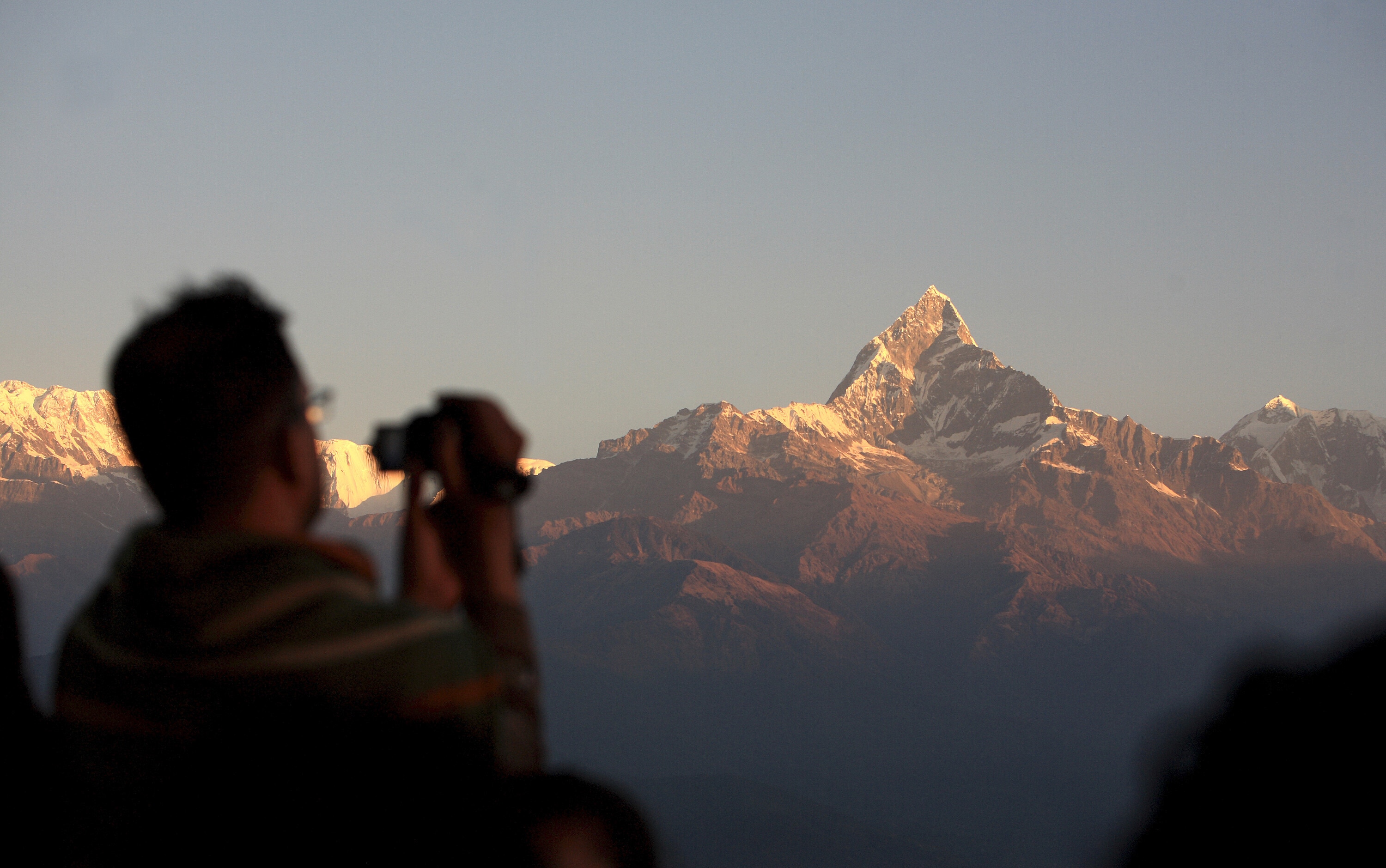
His extraordinary experience inspired Maloo to raise awareness about glaciers and how the climate crisis is impacting them. Image: REUTERS/Gopal Chitrakar (NEPAL)
- Mountaineer Anurag Maloo survived the seemingly impossible – a 300-metre fall into a glacier's crevasse and 72 hours stuck in its icy grip.
- His extraordinary experience inspired Maloo to raise awareness about glaciers and how the climate crisis is impacting them.
- Environmental degradation is negatively affecting a range of outdoor sports, including mountaineering, according to a new World Economic Forum insight report, Sports for People and Planet.
“I’ve seen the mountain, and the mountain has seen me.”
This is how Anurag Maloo, a mountaineer, entrepreneur and climate action leader, describes his miraculous survival after a 300-metre fall into an icy crevasse on the Nepalese mountain of Annapurna, where he remained stuck for three days and three nights.
Annapurna is the 10th-highest mountain in the world, but considered by many to be the most dangerous, with one in three climbers perishing on its harsh terrain. It makes Maloo’s survival – and his determination to champion the glacier that almost killed him – all the more extraordinary.
Survival against the odds
Anurag Maloo has been dubbed ‘The Miracle Man’ – and with good reason. In 2023, as part of his mission to raise awareness of the UN’s Sustainable Development Goals, Maloo was abseiling down Annapurna when he grabbed the wrong rope, went tumbling down to the surface of a glacier “and entered the mouth of a bottomless icy crevasse”, as he describes it in his 2024 TEDx Talk.
Trapped for almost 72 hours, without food, water, sufficient oxygen or any means of communication, and in temperatures of -40°C, Maloo was eventually pulled out by an intrepid rescue team in a near-lifeless, unconscious state. After one of the longest successful CPR recoveries in medical history – nearly four hours of continuous resuscitation – he was brought back to life against all the odds.
What followed were months of intensive treatment, multiple plastic and reconstructive surgeries, and a long rehabilitation journey, during which he lost the fingertips on his right hand as well as a big toe. Maloo had to relearn even the most basic tasks – including how to stand and walk.
Fighting for the glaciers
As he started to recover, Maloo found he had a new vocation – to protect the mountains and glaciers:
I was fortunate to have those 72 hours, but probably the Earth, these glaciers, may not even have 72 years, the direction that we are all heading towards. It is important for me to be the voice of these glaciers. And that survival, that experience being cradled inside Annapurna, led me to take that second chance to do something, be grateful and build a gratitude movement.
—Anurag Maloo, mountaineer
”Maloo founded The Voice of Glaciers Foundation to raise awareness of glaciers' essential role in our water systems, as well as the urgent threat they face from the climate crisis. Himalayan glaciers have lost over 40% of their ice volume since 2000, destabilizing regional water systems and causing increasingly destructive floods.
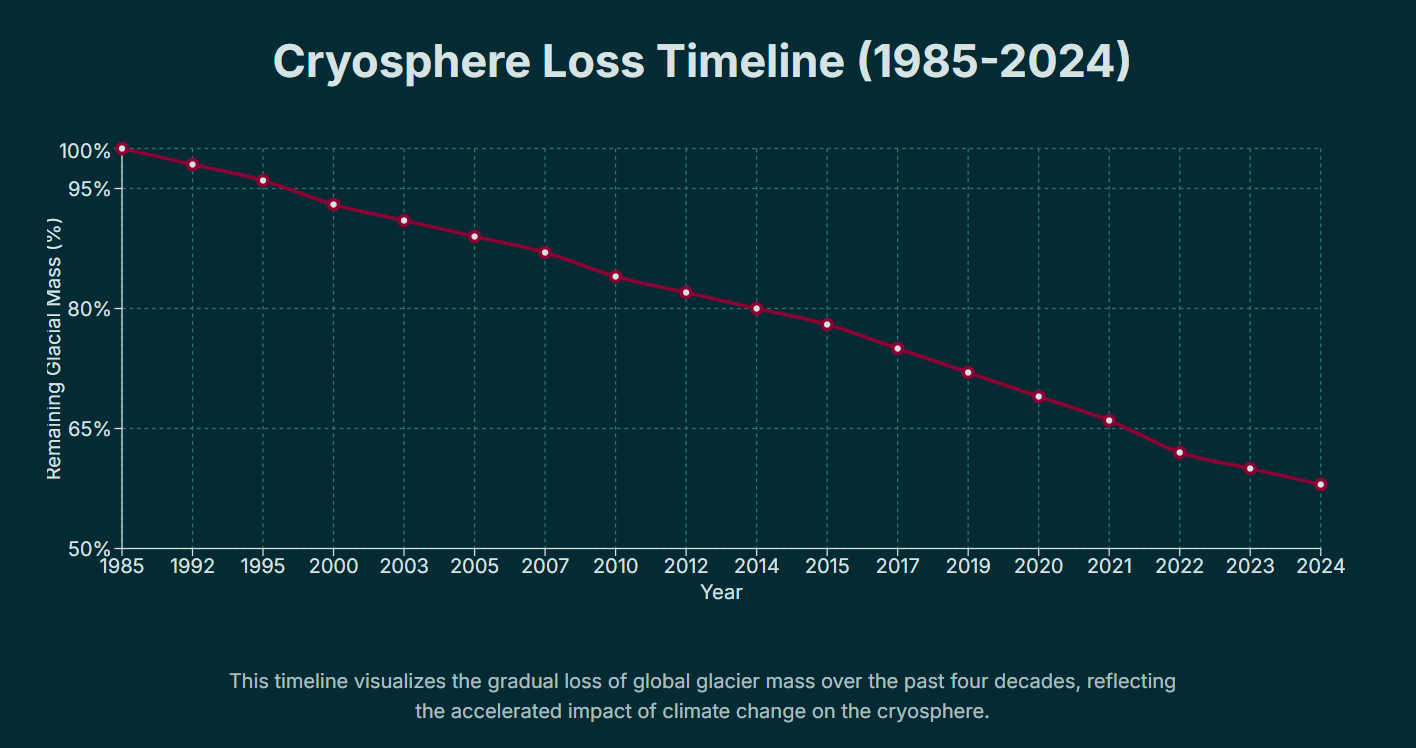
The cryosphere – which encompasses all snow, ice and frozen ground, including sea ice, glaciers, ice sheets, icebergs and permafrost – is warming three times faster than the global average, with half of the world’s glaciers on course to melt by 2100. It’s one of the reasons ‘Critical change to Earth systems’ is considered the third-biggest threat to the planet over the next 10 years in the Forum's Global Risks Report 2025.
As part of his mission, Maloo’s Foundation has laid out five concrete steps for governments and countries to follow to avert the worst outcomes of this global melt:
Sport for change
Maloo, a World Economic Forum Young Global Leader (2025), has also continued with his initiative, Climbing4SDGs, which uses mountaineering to highlight the UN’s Sustainable Development Goals and advocate for climate action.
While Maloo sees mountaineering as a metaphor for the challenges humanity faces right now, it’s also true that the peaks he scales tell their own story. As glaciers have retreated and melted, and the climate crisis makes weather more unpredictable, professionals scaling these mountains face greater risks.
And it’s not just mountains and climbers being impacted. The climate crisis is disrupting sport more generally – with extreme weather events, air and water pollution affecting both professional and participatory sporting endeavours. This all has a knock-on effect on people’s wellbeing, as well as the sports economy, which accounts for 1.7% of global GDP, according to a Forum insight report, Sports for People and Planet.
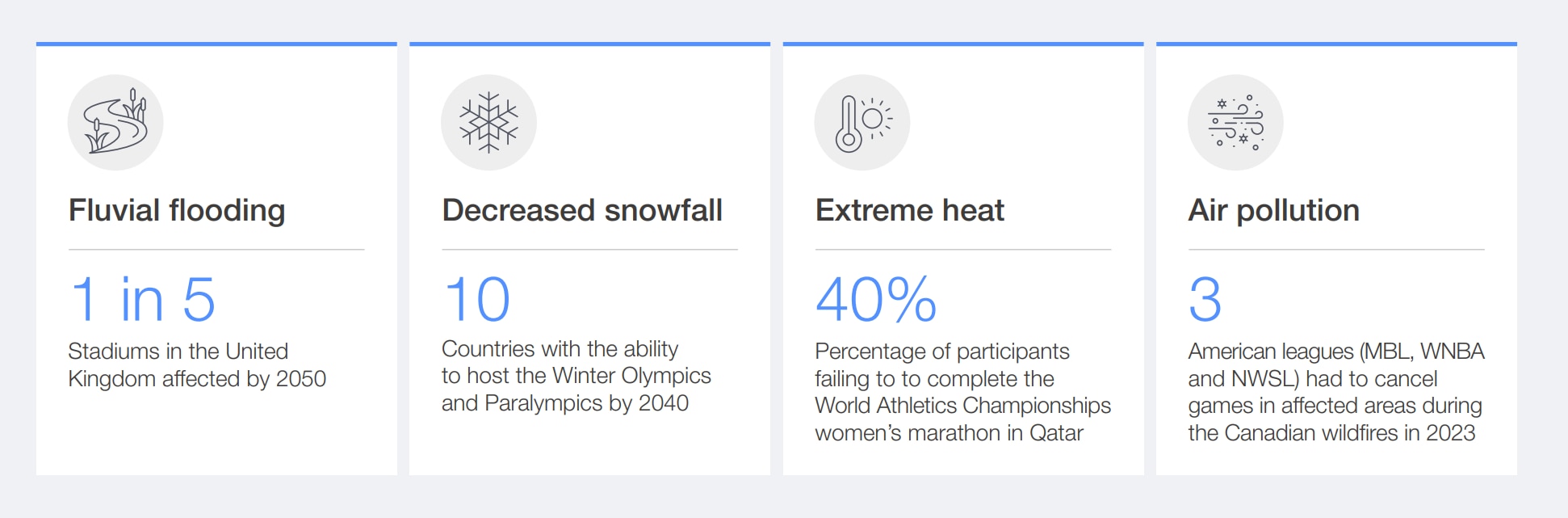
The report suggests three pathways for the sports economy to follow if it is to create environmental, economic and health prosperity:
- Embed sports in city life: By joining forces with local governments and employers, sports leaders can co-design urban environments that prioritize health and climate resilience.
- Evolve the sports sponsorship market: This $40 billion market could enable more values-aligned, impact-driven partnerships that advance societal and environmental wellbeing.
- Develop sustainable sports products: Sports goods companies will need to develop systems and partnerships to scale bio-based products, reduce waste and enable a circular economy.
When it comes to the climate crisis, there are many mountains to climb. But for Maloo, there is no question that he will continue on his mission.
"I was held, not buried, by a Himalayan glacier on Annapurna. That glacier gave me a second chance. I survived. But glaciers won't. I owe my life to these glaciers. This work is my return offering."
License and Republishing
World Economic Forum articles may be republished in accordance with the Creative Commons Attribution-NonCommercial-NoDerivatives 4.0 International Public License, and in accordance with our Terms of Use.
The views expressed in this article are those of the author alone and not the World Economic Forum.
Related topics:

Forum Stories newsletter
Bringing you weekly curated insights and analysis on the global issues that matter.
More on Climate Action and Waste Reduction See all

Yufang Jia
June 23, 2026


