Africa’s 2.18 million social enterprises are rewriting the continent’s growth story
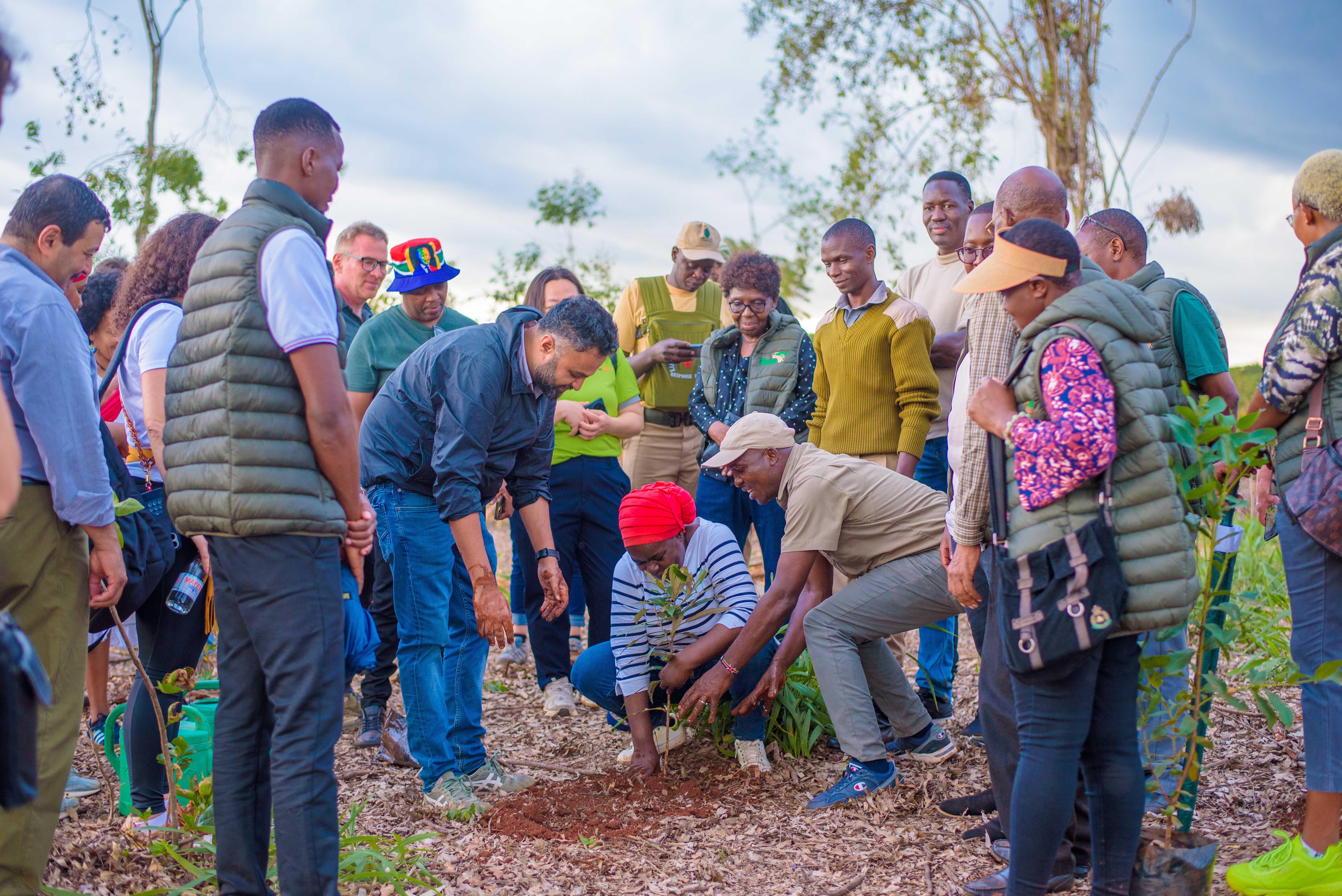
Social enterprises are proving that it is possible to grow in ways that are more inclusive, more sustainable and more rooted in communities. Image: Schwab Foundation for Social Entrepreneurship
Francois Bonnici
Director, Schwab Foundation for Social Entrepreneurship; Head of Foundations, World Economic Forum- An estimated 2.18 million social enterprises in Africa generate around $96 billion in annual revenue and create at least 12 million jobs. More than half of these enterprises are led by women, and one in three by youth.
- They expand access to essential services, create dignified jobs and strengthen community resilience, showing how purpose-led enterprises can accelerate inclusive and sustainable growth.
- A new landmark report clarifies the roles that governments, companies, investors, philanthropies and networks can play in advancing this fast-growing sector.
When the world talks about Africa’s economic future, attention often turns to megaprojects, minerals or mobile tech.
Yet across the continent, another force is reshaping the growth story: social enterprises – mission-driven businesses that place purpose at the centre of their models. They are expanding access to essential services, creating dignified jobs and building climate resilience in communities that markets and governments struggle to reach.
This shift is arriving at a crucial moment. Aid flows are tightening, Africa’s youth population is surging and climate shocks are intensifying. Recognizing the centrality of new economic actors, African Union Heads of State adopted the continent’s first 10-Year Strategy on the Social and Solidarity Economy in early 2025, which acknowledges social enterprises, cooperatives, and other actors in the social and solidarity economy as part of Africa’s pathway to more inclusive and resilient economies.
A clearer picture of a continental sector
A clearer picture of the scale and significance of this sector comes from a new landmark report, The State of Social Enterprise: Unlocking Inclusive Growth, Jobs and Development in Africa. Developed by the Schwab Foundation for Social Entrepreneurship in partnership with the World Economic Forum, Africa Forward, the African Union Commission, the Motsepe Foundation, SAP and Genesis Analytics, the research brings together a survey of 1,980 social enterprises in Cameroon, Ethiopia, Ghana, Kenya and South Africa, combined with data from across the continent.
The headline numbers are striking:
- Africa is home to an estimated 2.18 million social enterprises.
- They generate $96 billion in annual revenue, equivalent to 3.2% of Africa’s GDP.
- They create at least 12 million jobs.
- More than half (55%) are led by women, compared to just one in five conventional businesses in sub-Saharan Africa.
- One in three are led by young people under the age of 35.
The report’s findings were unveiled during the week of the G20 Leaders’ Summit in South Africa last month, where world leaders gathered to sign the 2025 Leaders’s Declaration. Insights from the research were presented in multiple high-level sessions, including the G20 Social Summit, alongside engagement groups such as Youth20 (Y20), Women20 (W20) and Startup20. As the World Economic Forum is a knowledge and network partner of the Business20 (B20) engagement group, the report findings were also launched during the B20 Leaders’ Summit. Their inclusion across these cross-cutting engagement groups reflected a growing global recognition of the role social enterprises play in delivering inclusive and community-rooted growth – an emphasis that strongly aligned with South Africa’s G20 2025 theme of “Solidarity, Equality, and Sustainability.”
What this transformation looks like in practice
Behind the numbers are diverse models tackling very similar challenges.
Babban Gona strengthens rural livelihoods in northern Nigeria by providing smallholder farmers with bundled credit, quality inputs, agronomy coaching and guaranteed offtake. This support enables members to earn more than twice the national average income, while the enterprise’s franchise-style model has created 744,000 indirect jobs and improved the livelihoods of over 937,000 people. In a high-risk region with limited economic opportunities, Babban Gona demonstrates how farmer-aligned enterprises can deliver income stability and opportunities at scale.
ShonaquipSE is a hybrid social enterprise that combines manufacturing, clinical services, capacity-building and policy engagement to advance disability inclusion. It designs and produces modular, rural-appropriate wheelchairs, while reinvesting revenue to deliver training and support for users, caregivers and frontline health workers. The enterprise provides assistive devices to over 21,000 clients each year and reaches more than 347,000 secondary beneficiaries through its community training and advocacy programmes. As a technical adviser to WHO, USAID and CHAI, ShonaquipSE strengthens disability inclusion systems from the community level to national policy.
Sanergy Collaborative delivers affordable, safe sanitation in Nairobi’s informal settlements and converts collected waste into high-value agricultural inputs. Its integrated model now provides daily sanitation access to more than 300,000 residents, is operated through 8,000+ Fresh Life entrepreneurs, and supplies regenerative products to over 10,000 farmers. With an independently assessed 19x social return on investment, Sanergy shows how circular solutions can drive health, livelihood and environmental gains at scale.
What’s holding social enterprises back?
Despite their contribution to inclusive growth and sustainable development, most social enterprises report persistent barriers to growth or deepening their impact.
Three challenges stand out:
- Finance: A majority cite a lack of access to finance as their single biggest barrier, well above the average for firms across sub-Saharan Africa. Many fall into the “missing middle”: too large for microfinance, too hybrid or early-stage for mainstream investors and often seen as too commercial for traditional grants.
- Support and skills: Access to tailored support services – from mentoring and financial management to digitalization and market access – is limited, especially outside capital cities. Many founders operate without the networks and capacity-building that conventional start-ups might take for granted.
- Visibility and fit within existing frameworks: With no dedicated legal form in most countries, social enterprises are often squeezed into for-profit or non-profit categories that do not always reflect their hybrid mission. This, combined with low public awareness, makes it harder for them to access procurement opportunities, policy support and investment.
In short, social enterprises are doing critical work – yet they remain constrained by systems not designed for their needs, at a time when their models matter most.
Five cross-cutting priorities for action
The report highlights five cross-cutting priorities that demand coordinated action from governments, businesses, investors, philanthropies, development partners, networks and academia alike:
1. Build enabling ecosystems – by strengthening policies, legal recognition and the physical and digital infrastructure social enterprises rely on.
2. Unlock capital at scale – by closing persistent funding gaps through better-aligned, blended and impact-linked finance.
3. Invest in people and skills – by expanding entrepreneurship development, staff training and digital inclusion.
4. Foster partnerships for scale – by using public–private–social partnerships and regional cooperation to extend reach and impact.
5. Strengthen data and evidence – by supporting harmonized mapping, monitoring and public dashboards to inform more innovative policies and investment.
From evidence to action
Africa’s social enterprises are already proving that it is possible to grow in ways that are more inclusive, more sustainable and more rooted in communities.
The headline numbers are striking: 2.18 million enterprises, $96 billion in annual revenue, 12 million jobs – with women and youth in the lead. But it is the shifts behind those numbers – farmers with stable markets, artisans with secure contracts, young people building digital futures, patients accessing life-saving care – that show what is really at stake.
The evidence is now in place and the priorities are clear. What happens next depends on whether ecosystem actors – from ministries and municipalities to boardrooms, investment committees and philanthropic foundations – choose to treat social enterprises as marginal projects, or as central partners in Africa’s next chapter of inclusive growth and sustainable development.
The following people also contributed to this work: Adeyemi Adelekan, Mara Airoldi, Jennifer Beason, Hemang Desai, Heather Dixon, Jonas Yawovi Dzinekou, Lia-Marie Fillies, Adam Gavin, Sunil Geness, Bonga Khoza, Sabelo Mbokazi, Mary Aisha Mentah, Adenew Mesfin, Yogavelli Nambiar, Doreen Ngalaka, Daniel Nowack, Vincent Odhiambo, Femi Ogunjemilusi, Luvuyo Rani, Dagmawi Sahlu, Shawn Theunissen, Pearl Uzokwe, Gisèle Yitamben and Edwin Zu-Cudjoe, and a broader advisory group of regional and global experts.
Don't miss any update on this topic
Create a free account and access your personalized content collection with our latest publications and analyses.
License and Republishing
World Economic Forum articles may be republished in accordance with the Creative Commons Attribution-NonCommercial-NoDerivatives 4.0 International Public License, and in accordance with our Terms of Use.
The views expressed in this article are those of the author alone and not the World Economic Forum.
Stay up to date:
Africa


Forum Stories newsletter
Bringing you weekly curated insights and analysis on the global issues that matter.