How do we train and upskill the new industrial workforce? Some insights from the production line
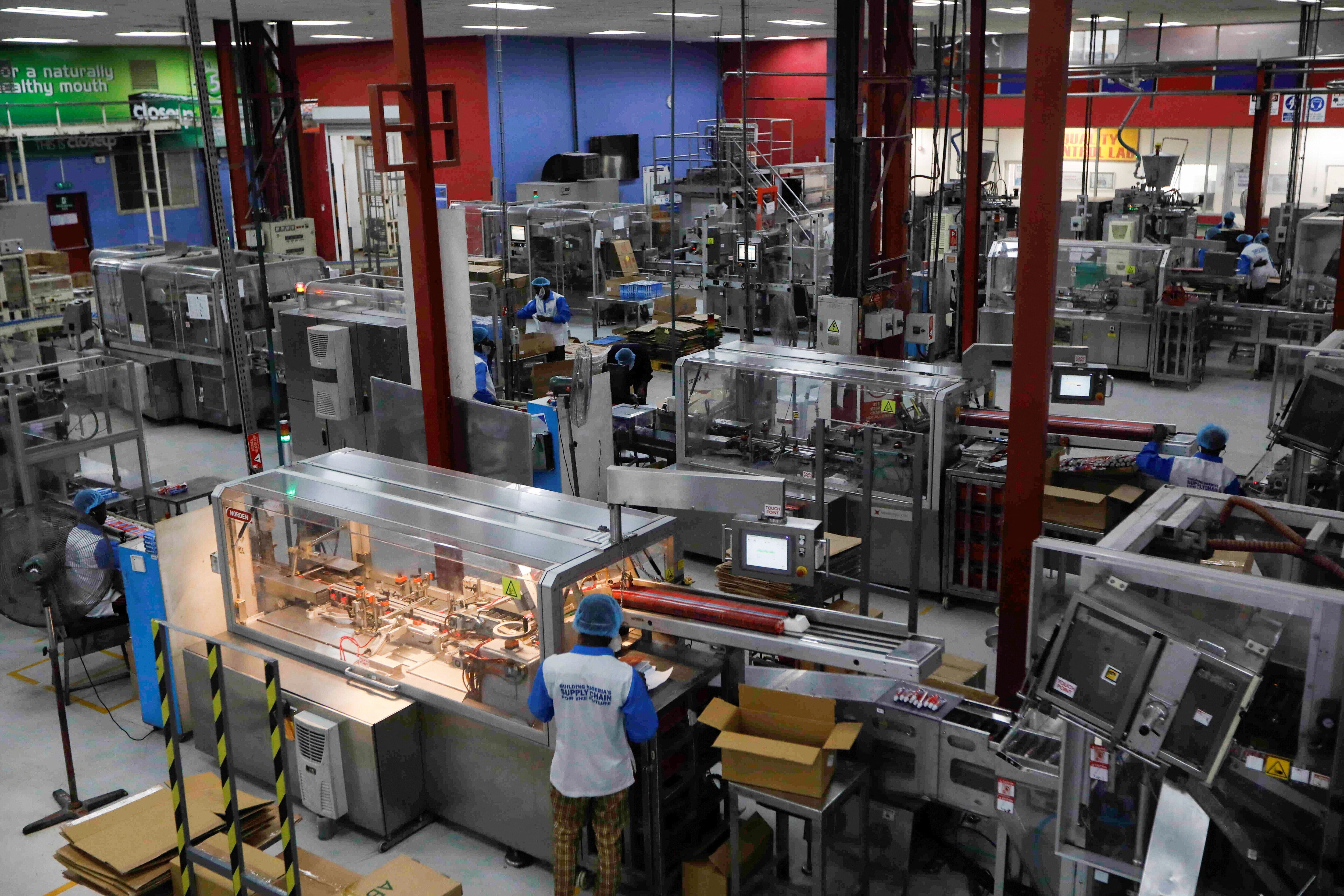
The industrial workforce needs new skills for accelerated human-machine environments. Image: REUTERS/Temilade Adelaja
Aarushi Singhania
Initiatives Lead, People Centric Pillar, Advanced Manufacturing, World Economic Forum- A need for digital skills, such as using generative artificial intelligence or robotics routing, is becoming evident on production floors.
- Comprehensive digital upskilling programmes can equip the new industrial workforce with advanced skills to thrive in accelerated human-machine environments.
- Digital learning hubs and training dojos are being set up next to production lines, where workers practice skills in safe, simulation-first environments.
Across global manufacturing, executives are confronting a dual reality.
While advanced technologies such as generative artificial intelligence (GenAI), robotics routing and working with low-code/no-code tools are revolutionizing production and supply chains, there is a need for new training and skills development for the human workforce to keep up with the pace of change.
More than 70% of manufacturers identify these technologies as the key drivers of transformation, according to the World Economic Forum's Future of Jobs report, yet nearly the same proportion points to a widening skills gap as their biggest barrier to success.
The challenge is stark. In the next five years, an estimated 40% of the core skills in manufacturing will change, leaving companies to urgently rethink how they train, upskill and retain their people.
Have you read?
From tech to sustainability: Why the industrial sector is calling on Gen Z and Gen Alpha to join its workforce
How governments can attract innovative manufacturing industries and promote 4IR technologies like AI
Physical AI is changing manufacturing – here's what the era of intelligent robotics looks like
The factories of the future, therefore, won’t just be powered by machines but will depend on workers equipped with new, constantly evolving capabilities.
A paper recently published by the World Economic Forum, Empowering Frontlines: Retaining, Training, and Upskilling the Industrial Workforce, showcases the critical importance of outcome-focused skills development and the proven strategies and approaches for training and upskilling.
It features case studies from site visits conducted as part of the Global Lighthouse Network and the Frontline Talent of the Future community, detailing what effective training and upskilling of the industrial workforce look like and how they are delivered.
Businesses can now measure their return on investment from training and upskilling using metrics including:
- Reduction in mean-time-to-repair (MTTR): The average time to fix a machine or system. Workers repairing equipment faster, minimizing downtime and restoring operations more quickly will reduce MTTR.
- Reduced error rate: Fewer mistakes being made in production, maintenance or operations, which can mean less defective products and quality issues and safer processes.
- Reduction in skill qualification time: The time it takes for a worker to become certified or proficient in a new skill or task. Improved training methods, such as simulations or digital learning, helps employees reach competency faster.
- Increase in multi-skilled labour: More workers trained to handle multiple roles, such as an operator performing quality checks or basic maintenance.
- Accelerated paths to promotion: Employees being able to progress to higher roles or leadership positions more quickly, often due to skills-based training, mentoring, or clear career pathways.
- Reduced attrition: Fewer employees leaving the company due to higher job satisfaction, better working conditions or skills-focused career development.
- Overall improvement in operational efficiency: Doing more with less – producing faster, using fewer resources, generating less waste and improving quality as a result of the combined improvements above.
Promising upskilling and reskilling initiatives in action
Technical upskilling
Unilever’s site in Pouso Alegre, Brazil, initially developed the role of “technical operator” to fill a substantial gap in its maintenance organization.
To enable operators to serve as first responders on maintenance issues, the company’s mechanics and mechatronics upskilling programmes integrate technical training with problem-solving and critical thinking skills.
As a result, the mean-time to repair has decreased by 27% from 3.1 hours to 2.3 hours. Meanwhile, breakdown losses have dropped by half, underscoring the effectiveness of the programmes in minimizing operational disruptions.
Advanced learning
A similar initiative is the Digital Leadership Essential Programme, offered by the digital storage solution provider Western Digital at its site in Prachinburi, Thailand. This programme has been a game-changer for the company, as it trains frontline workers to engage with new product-related complexities.
The programme offers multidisciplinary training courses that allow participants to earn credits towards a degree while learning about a variety of topics, from the basics of the fourth industrial revolution to advanced machine learning.
The impact has been substantial: the percentage of frontline full-time employees receiving such skill training has surged by 49% and employee engagement scores have risen by 21%.
This comprehensive digital upskilling programme alleviates automation-related anxieties while equipping the workforce with advanced skills.
Digital empowerment
A Digital Learning Hub has been operating in the same room as one of the four major production lines at Mettler Toledo – a supplier of precision instruments and services in Changzhou, China – since 2022.
While not a core part of the operator training programme, over 50% of frontline employees take after-hours courses and engage in collaborative digital projects, gaining skills such as coding, digital simulation and computer-aided design (CAD).
By participating in the Digital Learning Hub, operators feel a greater sense of ownership, resulting in an 80% reduction in voluntary turnover and accelerated paths to promotion. The hub itself is also run by previous operators who, through upskilling, were promoted to digital coordinators.
It reinforces digital culture and provides a safe, stimulating environment for frontline employees to learn, collaborate and continuously upgrade their skills.
Innovative training delivery
Hyper-personalized learning platform
When faced with rapid growth and the need to onboard 2,400 new hires during peak seasons, Chinese home appliance manufacturer Midea, in Si Racha, Thailand, introduced “Meike,” a virtual reality (VR) and generative AI (GenAI) powered system that enables at-scale upskilling of employees from different cultural backgrounds.
This in-house platform simplifies training by converting documents into online courses – over 28,000 so far – with just one click, while supporting four languages and offering voice-to-text functionality to engage a diverse workforce.
By combining AI teaching, VR training and automated certification, Midea has cut core skill qualification time by 63% (from eight days to three), increased multi-skilled labour in the supply chain by 6% and reduced employee turnover by 40% (from 16.5% to 9.9%).
Training dojo
In another instance, technology company Hisensehitachi in China has a highly automated shop floor. Employees play an essential role in complex welding operations, machine monitoring and maintenance of a safe production environment.
Workers can perform these tasks from day one in the “training dojo” located on the shop floor. The “dojo” is split into four core areas: skills dojo, automation dojo, safety dojo and lean dojo. Employees are trained on life-saving tasks, such as using a fire extinguisher, in the safety dojo, where they utilize dummies and gamified simulations.
Day-to-day skills such as welding are honed in the skills dojo, which integrates VR with AI-enabled on-screen feedback and support. The training dojo has helped to increase job matching to 98% while reducing the standard training cycle by 32%.
Learning in the flow of work
Another promising example includes Lenovo in Monterrey, Mexico, which deployed the GenAI-enabled “manufacturing control tower” to support operations across the shop floor.
However, the most meaningful results have come in the form of an AI co-pilot coach that assists users in root-cause problem solving. This advanced system integrates real-time production data on an hourly basis, along with over 30,000 historical issues from a comprehensive knowledge base.
The control tower performs real-time key performance indicator analysis, conducts voice-enabled interactive root-cause analysis in 99 languages and instantly recommends corrective actions through an AI engine.
The system facilitates continuous on-the-job training, as workers can interact with the tower in real time and solve problems on the shop floor. It helps them understand what to do next, rather than ask a manager or wait to learn in a classroom.
The results have been transformative: average units per hour have surged by 42% and the mean-time-to-repair has dramatically decreased by 95%.
How the Forum helps leaders connect frontier technologies to real-world challenges
Equipped for Intelligence Age
So what’s actually working, when it comes to preparing frontline talent for the future? The most promising initiatives make learning practical, personal and integrated into daily work.
AI-powered virtual coaches guide operators through real-time problem-solving. Meanwhile, VR training dojos on the shop floor and digital hubs run by operators themselves blend cutting-edge tools with skills such as problem-solving, collaboration and adaptability.
By investing in personalized learning, multilingual in-house courses and human–machine teamwork, manufacturers are building a workforce equipped for future factories and supply chains.
Don't miss any update on this topic
Create a free account and access your personalized content collection with our latest publications and analyses.
License and Republishing
World Economic Forum articles may be republished in accordance with the Creative Commons Attribution-NonCommercial-NoDerivatives 4.0 International Public License, and in accordance with our Terms of Use.
The views expressed in this article are those of the author alone and not the World Economic Forum.
Stay up to date:
Generative Artificial Intelligence


Forum Stories newsletter
Bringing you weekly curated insights and analysis on the global issues that matter.
More on Manufacturing and Value ChainsSee all

Samaila Zubairu
March 3, 2026


