Materials: Is this the new frontier for international collaboration?
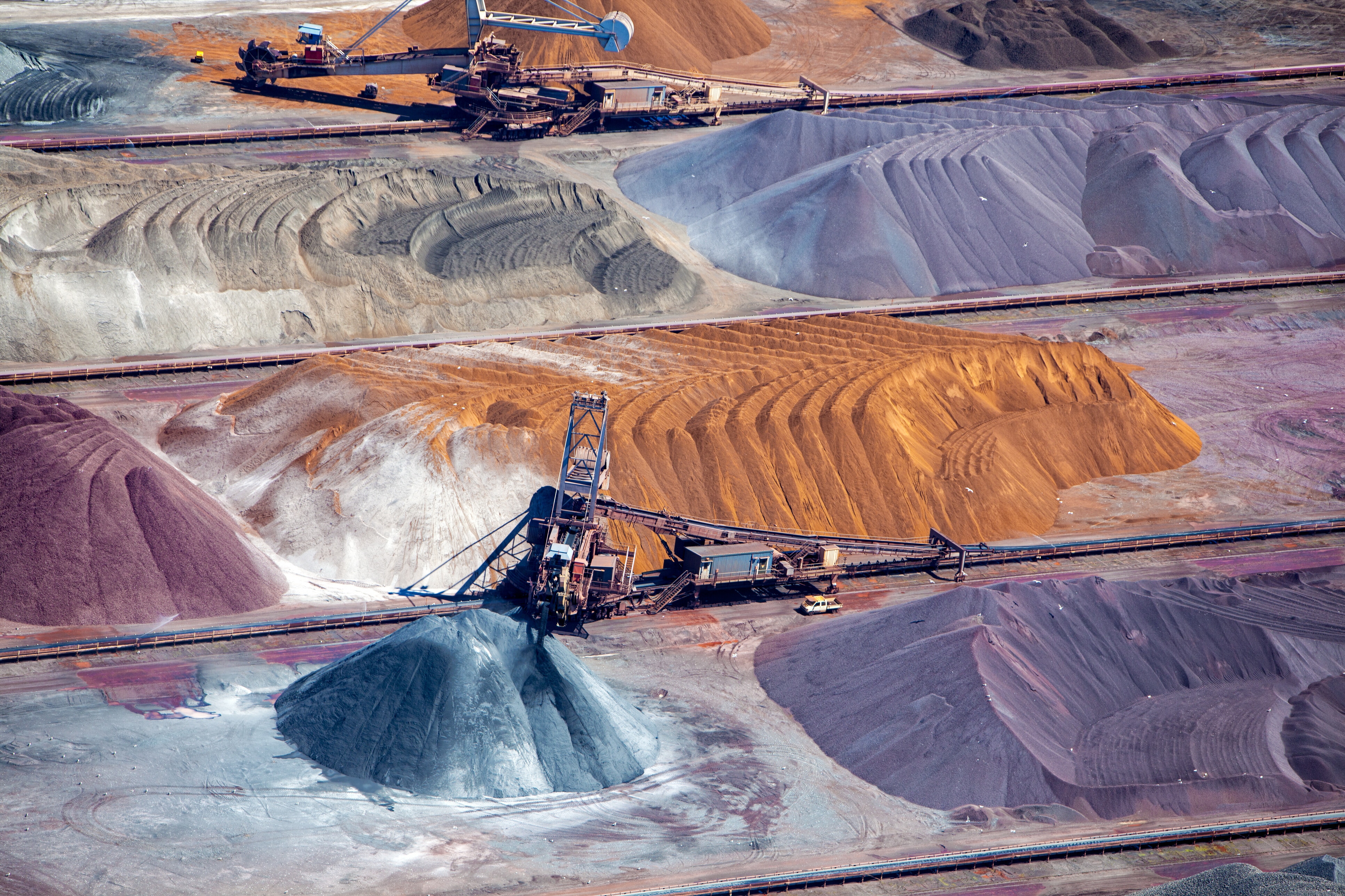
Is it time to make the supply chain for raw materials more accessible? Image: Getty Images/Vetta
- Material systems can be made more resilient and sustainable through international collaboration initiatives.
- The challenge now is scaling and connecting them.
- Ahead of the Annual Meeting in Davos, six experts consider how international cooperation can help address the challenge of balancing material accessibility, productivity and sustainability in the material systems that underpin the global economy.
Material systems can be made more resilient and sustainable through international collaboration. At a time of heightened geoeconomic competition, including intensified competition for materials, new intergovernmental coalitions and public-private initiatives are emerging to chart pathways for cooperation. The challenge now is scaling and connecting them.
Managing materials in uncertain times
Materials form the backbone of today’s societal and technological transitions. Production of every solar panel, wind turbine, electric vehicle, data centre and robot depends upon reliable and affordable access to hundreds of materials flowing through complex global value chains.
Yet, actors in these transitions are increasingly facing the challenge of securing material access and increasing productivity, whilst delivering on sustainability ambitions. Securing stable and equitable access to transition materials, for example, is becoming harder amid surging demand, constrained supply and growing geo-economic fragmentation. In 2025 alone, a record 220 import and export restrictions on critical minerals were enacted worldwide, up from 82 in 2024, highlighting rising uncertainty for businesses. Meanwhile, material productivity has declined since 2000 and stagnated since 2018.
Accessibility and productivity issues must also be reconciled with planetary limits. Resource extraction and use account for over half of global emissions, 40% of particulate-matter health impacts and more than 90% of biodiversity loss.
A variety of solution proposals are emerging to address the materials trilemma, reflecting diverse perspectives on what effective collaboration could look like.
Against this backdrop, and ahead of the 2026 Annual Meeting in Davos, six experts share their insights on new approaches, spanning regulatory interoperability, stronger data transparency and more strengthened trade and materials marketplaces.
Regional collaboration as a focus for action
Sho NAKAMURA (Dr. Sci.), Director for promotion of Circular Society, Environmental Regeneration and Material Cycles Bureau at the Ministry of the Environment, Japan, writes:
"Many of the world’s material flows, trade relationships and innovation ecosystems naturally operate at a regional scale, linking neighbours that share supply chains, markets and environmental challenges. Focusing collaboration at this level can enable countries to align standards more quickly, pilot solutions more effectively and build trust before scaling up globally.
"Regional cooperation can help countries create the enabling conditions, through policies, investment and shared approaches that support innovation and cross-border collaboration. Circular KPIs and clear governance were identified by 52% of 491 top executives as being the most instrumental activity in enabling their organization to scale circular initiatives. As such, voluntary tools, such as the Global Circularity Protocol, can help businesses measure and improve circularity, accelerating the shift from fragmented efforts to coordinated regional progress.
"In the Asia-Pacific, this approach is gaining momentum. The Framework for Circular Economy for the ASEAN Economic Community is helping member states coordinate policies on trade, green innovation and the financial market, while the Jaipur Declaration, launched under India’s G20 Presidency, calls for shared data on material flows and joint action on resource efficiency. Japan’s Ministry of the Environment is also advancing this agenda through the Regional 3R and Circular Economy Forum, which convenes governments, businesses and researchers to exchange practical solutions."
Building trust through traceability
Inga Petersen, Executive Director of the Global Battery Alliance, writes:
"Batteries are a leading use case for traceability and digital product passports. Their complex, material-intensive supply chains depend on critical minerals, such as lithium, nickel, cobalt and graphite, and retain high end-of-life value. The Global Battery Alliance’s Battery Passport pilots show that consistent, verifiable product-level data on provenance, ESG performance and circularity, improves design, material recovery and recycled content integration. Greater transparency and independent certification also strengthen value-chain resilience and trust among stakeholders.
"Developing a product-level certification framework has demonstrated that shared data requirements and verification processes can be applied across diverse global actors. Common metrics, interoperable reporting and clear data assurance guidelines reduce duplication and improve comparability. These insights extend beyond batteries, offering lessons for other material-intensive sectors exploring how digital product passports and traceability systems can support circularity, performance assurance and risk management."
Building international alignment through interoperable metrics and targets
Dr. Mathias Schluep, Managing Director of World Resources Forum Association, writes:
"Stronger international collaboration is urgently needed to establish coherent global governance of resource use across the lifecycle, from extraction to trade, use and recovery. Material-flow data remains fragmented and differing methodologies and reporting obligations weaken transparency, obscure risks and undermine accountability. A shared measurement framework is essential to monitor and compare extraction volumes, environmental and social impacts, trade flows and material stocks. Without coherent metrics, efforts to strengthen resilience and deliver sustainability and supply security will remain limited. Interoperable indicators at extraction would enable due diligence and responsible sourcing, while shared targets at use and post-use stages would build trust in circular products and recycled materials.
"One key idea discussed at the latest World Resources Forum (WRF25) relates to the recent International Resource Panel Co-Chairs’ Call to Action towards science-based targets for resource use. Presented as the 'net-zero equivalent for materials', such targets would provide a common compass for government, industry and financial actors, enabling the alignment of resource agendas with planetary boundaries. Achieving this vision requires harmonized data systems, shared indicators for extraction, trade, circularity and impacts and global reporting frameworks that generate trust, comparability and accountability across borders. Such targets would provide the political mandate and strategic direction required for interoperable metrics to scale, thereby ensuring that material systems become more transparent and resilient, while operating within planetary boundaries."
A planetary trust for green transition minerals
Saleem Ali, Distinguished Professor of Energy and the Environment at the University of Delaware, states:
"Resource endowments may be accidents of geography, but the materials themselves are a shared planetary asset vital to tackling climate change. The clean energy transition depends on minerals that must remain accessible through transparent, reliable markets — free from nationalism and protectionism. Extraction should occur where it is ecologically and economically efficient, with access grounded in cooperation and sustainability, not rivalry.
"A planetary trust for green transition minerals could help realize this vision by preventing economic coercion. Modelled on an asset protection trust, producing nations and technology developers would serve as both trustees and beneficiaries, ensuring fair, transparent flows for green technologies, while integrating recycled materials and circular principles.
"Creating such a trust requires coordinated international action. Leadership transitions in the G7 and G20 — from Canada to France and South Africa to the United States — offer timely openings, alongside initiatives, like the Paris Peace Forum and evolving U.S.–China relations, to advance this cooperative framework."
Unlocking the circular economy: overcoming barriers to secondary raw materials
Burcu Tuncer, Circular Economy Program Manager at HP Inc, adds:
"Transitioning to secondary raw materials remains both costly and complex. Limited high-quality recycled content and expensive processing often lead to downcycling; for example, plastics recovered from e-waste are rarely suitable for new electronics. Tightened e-waste rules and inconsistent interpretations under the Basel Convention further restrict secondary raw materials flows and discourage investment.
"To overcome these barriers, expanding multi-stakeholder take-back schemes, such as HP’s Planet Partners and IT Asset Disposition services, can help build resilience in secondary raw materials supply. Regional circular materials hubs near manufacturing centres could streamline collection, sorting and recycling, while fostering innovation and local job creation. Regulatory reforms that create 'green lanes' for low-risk materials would cut administrative burdens, making recycling more economically attractive. Coordinated leadership is needed to align material classifications, clarify standards and provide targeted incentives for circular infrastructure and partnerships. Demand for circular business models, such as product-as-a-service, which integrate take-back programmes and material life-extension initiatives, can significantly drive collaborative efforts."
Coordinated support for scaling novel sustainable materials
Henrique Pacini, SMEP Programme lead at UNCTAD, writes:
"Synthetic plastics made materials cheap and accessible, but at a significant environmental cost. The plastic crisis has revealed the consequences of durability without degradability. Nature offers alternatives: land-based fibres, like paper, jute, banana and pineapple, and marine materials, such as seaweed and crustacean shells. Seaweed, in particular, requires no land use, grows quickly and is emerging as a strategic frontier for sustainable materials.
"The UN Global Seaweed Initiative, launched in 2025, highlights growing global interest in marine-based solutions. Countries like Ghana are developing plastic substitution blueprints that build productive capacities around natural materials, while creating new jobs. Scaling these innovations will require investment in technology, traceability and safer processing, particularly in the Global South, where manufacturing capacity already exists but needs upgrading. International collaboration on standards, finance and chemical safety can unlock these capacities, helping to build a materials economy that regenerates nature, rather than depletes it."
International cooperation is essential to improve accessibility, productivity and sustainability in the material systems that support the global economy.
As the experts highlight above, emerging solutions include regional alignment, traceability, shared metrics and circular innovation. The coming years will be instrumental in shaping their scaling.
License and Republishing
World Economic Forum articles may be republished in accordance with the Creative Commons Attribution-NonCommercial-NoDerivatives 4.0 International Public License, and in accordance with our Terms of Use.
The views expressed in this article are those of the author alone and not the World Economic Forum.
Related topics:

Forum Stories newsletter
Bringing you weekly curated insights and analysis on the global issues that matter.
More on Circular EconomySee all

Pedro Gomez, Hernan J.F. Saenz and III
March 12, 2026