Why it’s more important than ever to have a strong brand

A strong brand can be the antidote to information overload. Image: Maxim Hopman/Unsplash
Nicki Allitt
Head of Strategic Communications & Coordination; Member, Executive Committee, World Economic Forum- With disinformation now costing the global economy ~$78 billion annually, the "erosion of truth" has become a financial risk that organizations can no longer ignore.
- In an era of ‘AI slop’ (Macquarie Dictionary’s Word of the Year for 2025) leaders must distinguish between reputation and brand to navigate the chaos.
- As data shows 70% of people believe they are being misled, a values-led brand is the only way to cut through the ‘infobesity’ and become a signal in the noise.
We are drowning in noise. ‘Infoglut’, ‘infoxication’, ‘infobesity’ and other buzzwords describing information overload have been floating around the internet for some years. And this year, they’re joined by ‘AI slop’.
Whatever you call it, the feeling it gives us is the same: overwhelmed, stressed and confused.
It’s hardly surprising, given that every single day we are generating an estimated 400 million terabytes of data. That is an unimaginable quantity of noise for the human brain to process.
And that’s before we have factored in the deliberate deception.
Mis- and disinformation were ranked as the second biggest risk in terms of severity facing the world in the next two years, according to the World Economic Forum’s 2026 Global Risks Report.
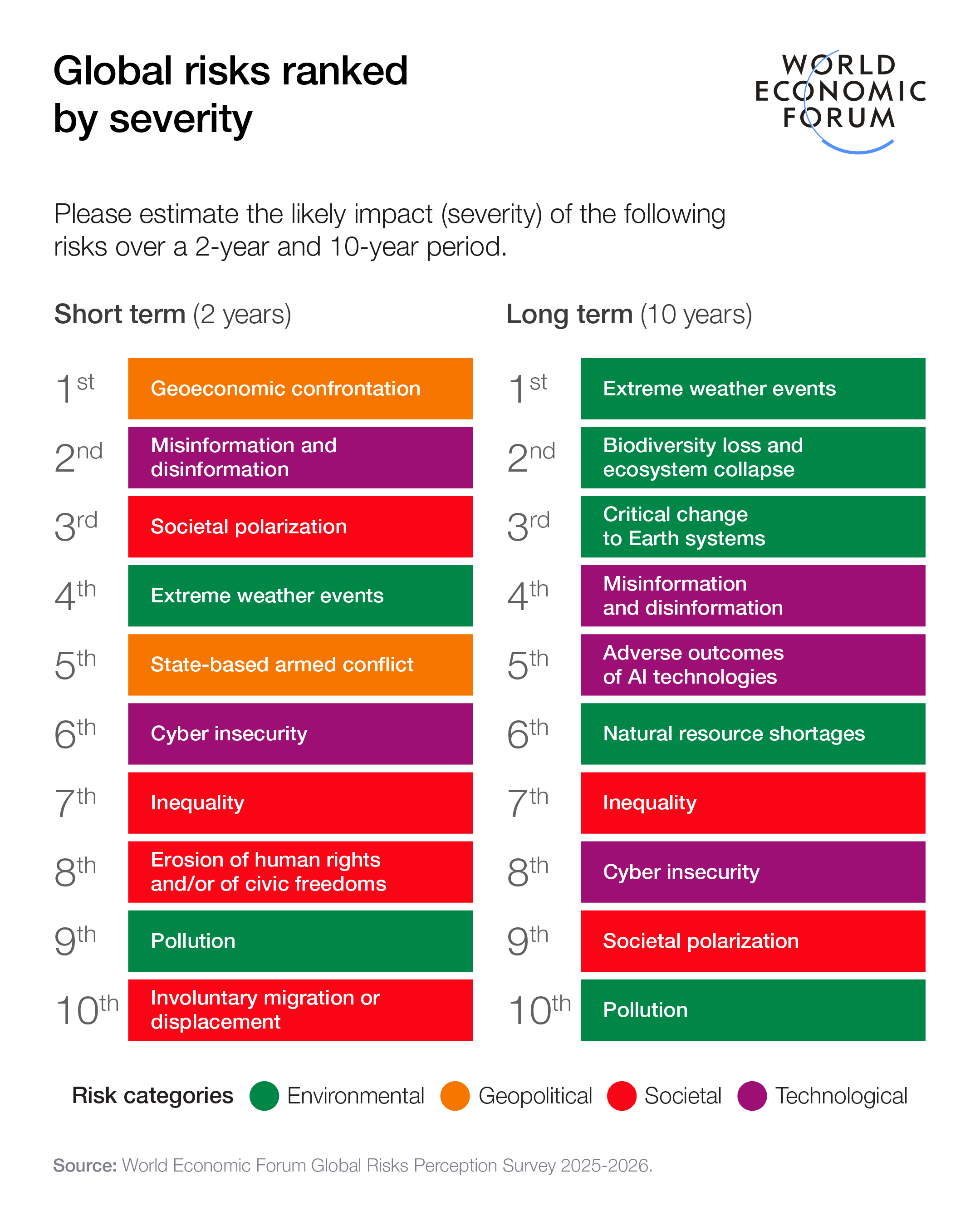
Supercharged by AI, this erosion of truth costs the global economy ~$78 billion each year.
More than 90% of people in the UK alone have seen misinformation (spread unintentionally) on social media channels.

And here’s what keeps me up at night: 70% of people believe leaders from business, government and media are deliberately misleading them.
So, we face a paradox as leaders: we have more information than ever before and more channels through which to communicate it, but our audiences have less trust in what they see.
In an increasingly polarized, uncertain world, trust has become our most critical (and overlooked) currency.
But here's the good news: organizations already hold the antidote.
It's not a new tactic. It's not a new channel. It's something much more fundamental: a clear, consistent brand.
Brand vs. reputation – the first line of defence
We often use these words interchangeably – but we shouldn’t.
In an era where mis- and disinformation can distort reality at speed, a brand becomes a critical protective asset that creates recognition and builds familiarity.
Understanding the difference between brand and reputation is your first line of defence:
- Reputation is the terrain.
It’s the story others tell about you. It is earned over time, influenced by algorithms, public perception and lived experience. You can guide it, but you don’t get to author it.
- Brand is your compass.
It is the story you tell about yourself. It is the intentional expression of who you are, what you value and the impact you aspire to make.
Why does this matter right now?
When the world is full of disorientating white noise, people don’t look for more information. They look for a signal.
”When people know exactly who you are – because you’ve articulated it clearly and demonstrated it consistently – they are far more inoculated against false narratives.
A strong, values-led brand does two things:
1. It anchors truth. It gives the public a clear reference point when misinformation strikes.
2. It simplifies choice. It cuts through the cognitive load of ‘infobesity’.
If reputation is the ground you are defending, brand is how you defend it.
By investing in a strong, values-led brand, organizations can proactively shape public expectations and protect audiences against harmful or misleading narratives.
Don't just add to the noise. Be the signal.
Minding the trust gap
Once you have your compass set, you must navigate the hardest terrain of all: the modern trust gap.
In 2025, business is still the most trusted institution, according to the Edelman Trust Barometer, and only business is viewed as both competent and ethical.
But trust in all news sources – from traditional media to social media, search engines and even owned media – has fallen.
Added to this is a growing belief that leaders from business and government, as well as journalists, are deliberately misleading people.
There’s a strong business case for closing the trust gap. Financial Times research found trust is now the “second most powerful metric (after product or service quality) for driving key business outcomes such as profit, market share, and acquisition”.
So, how do we close the gap?
Three foundations matter:
- Clarity. A clearly articulated brand creates alignment – one mission and one brand essence, repeated consistently.
- Consistency. Communication theory suggests you need seven exposures before a message sticks. But that message must be clear, simple and concise.
- Credibility. Brand must be anchored in your organization's values, strategy and mission. Without alignment, words and actions diverge – and trust collapses.
At the World Economic Forum, our mission for over 50 years has remained constant: we are committed to improving the state of the world.
But the world has changed. Global challenges are more interconnected. Trust is declining. Technology is accelerating.
So we've sharpened how we express ourselves – our brand essence – to ensure it cuts through: connecting leaders to make sense of global challenges and move the world forward together.
That one statement – that clarity – guides our decisions, unites our teams and speaks to who we are.
The hidden power of employees
Brand implementation happens in three movements:
1. Clarify: Define your brand narrative in a clear, single statement everyone can use. Build messaging and proof points around it.
2. Embed: This is where the magic happens. Your employees are your brand ambassadors. Embedding brand into recruitment, onboarding, leadership training and conversations means everyone is speaking the same language from day one.
Brand awareness – and understanding – must start within.
3. Amplify: Once your brand is clear and embedded, amplification is natural. Your content, campaigns, events, and collaborations all carry consistent intent. Geographic nuances and cultural sensitivities are respected, but the core message holds.
But it doesn’t stop there.
Brand is not static; it’s a living ecosystem. It evolves as your organization evolves and as stakeholders’ needs shift.
”At the Forum, we've created a brand advisory group – a cross-section of voices from across the organization – to help us evolve thoughtfully. We're also building a brand health dashboard to measure awareness, understanding and alignment both internally and externally.
Not to police the brand, but to listen to it.
Ultimately, success isn't just about everyone using the right language or telling the same story – it's about everyone understanding why that story matters.
In a world drowning in noise, a strong brand is not a nice-to-have.
It's the signal in the chaos. It's the compass in the confusion. It's the anchor that holds when trust fractures.
The question isn't whether you can afford to build a strong brand. The question is: can you afford not to?
Watch our new ‘Who is the World Economic Forum’ animated explainer video:
License and Republishing
World Economic Forum articles may be republished in accordance with the Creative Commons Attribution-NonCommercial-NoDerivatives 4.0 International Public License, and in accordance with our Terms of Use.
The views expressed in this article are those of the author alone and not the World Economic Forum.

Forum Stories newsletter
Bringing you weekly curated insights and analysis on the global issues that matter.
More on Forum in FocusSee all

Emily Poyser and Kate Whiting
January 29, 2026


