Sinking cities, the world's best cities – and other urban transformation stories to read
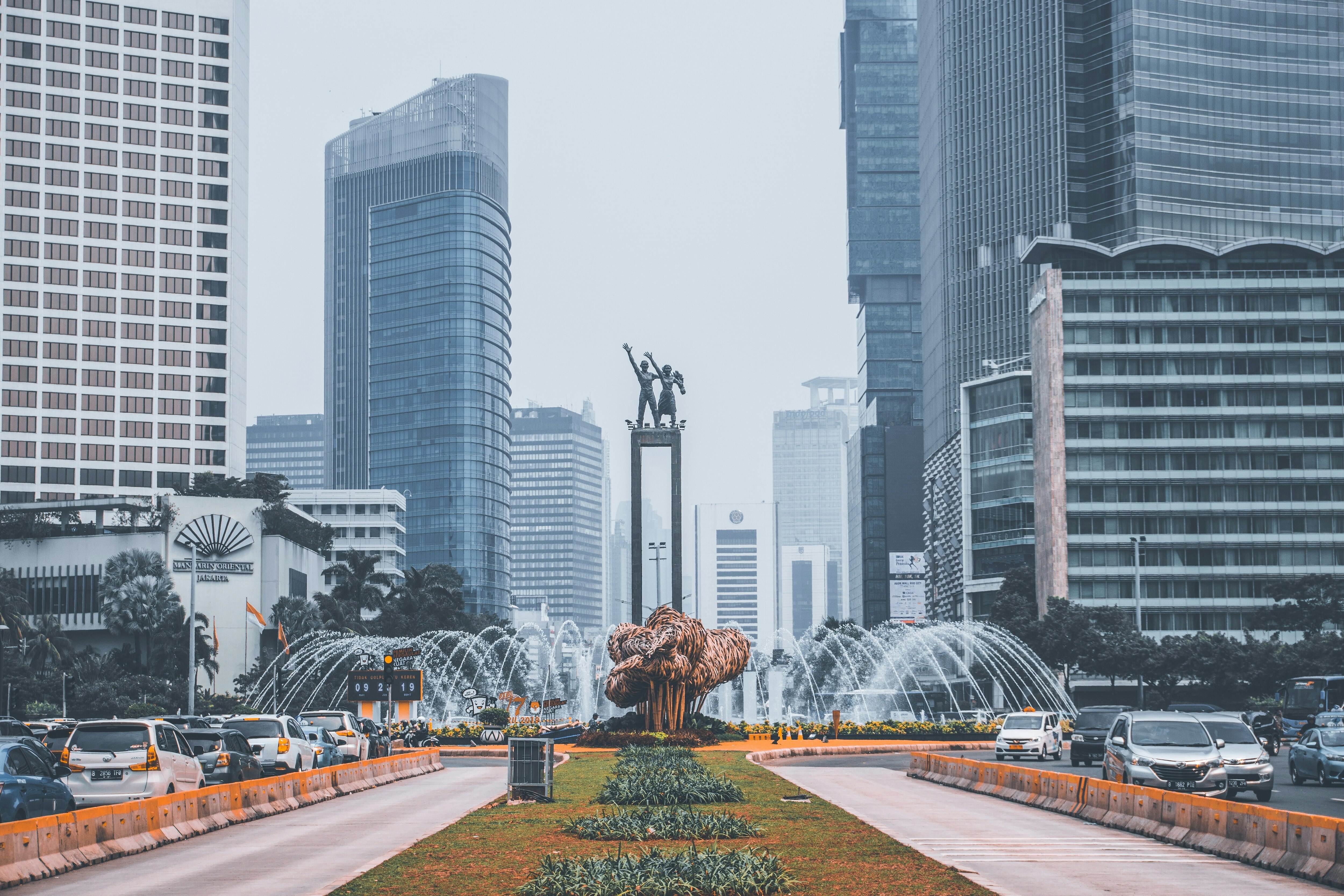
Parts of the Indonesian capital Jakarta are sinking by up to 200 millimetres per year. Image: Eko Herwantoro/Unsplash
Jeff Merritt
Head of Centre for Urban Transformation; Member of the Executive Committee, World Economic Forum- This monthly round-up brings you some of the latest news on local economies and experiences.
- Top stories: Urgent action needed on sinking cities; London tops the World's Best Cities list; Spain's high-speed train to speed up link between cities.
- For more on the World Economic Forum’s city-focused work, visit the Centre for Urban Transformation.
1. Sinking cities face trillions in losses without urgent action
Coastal and inland cities risk trillions of dollars in economic losses, from damaged infrastructure and displaced business and communities, unless governments and investors rapidly scale up resilience measures against flooding and land subsidence.
The World Economic Forum's new report, Resilient Economies: Strategies for Sinking Cities and Flood Risks, warns that the economic exposure to potential land subsidence is estimated at $8.17 trillion – or 12% of global GDP.
Parts of the Indonesian capital Jakarta are sinking by up to 200mm per year. Land loss and flooding have partly prompted the government’s decision to relocate the capital to Nusantara, Borneo Island.
In California, US, land subsidence relative to sea-level rise is projected to impact 4.3-8.7 million people across coastal communities, according to the report.
More than 1 billion people live in informal settlements that are often in low-lying areas, and bear the brunt of urban disasters.
The report identifies several foundational drivers of change for public and private stakeholders, including valuing land and water as strategic assets, strengthening governance and leadership, and investing in infrastructure resilience.
2. London tops list of World's Best Cities
The UK capital has topped a list of the 100 Global Cities Shaping Tomorrow, with European cities dominating the top 10.
Resonance's 2026 World’s Best Cities Report ranks urban areas with a population of more than a million people against metrics that come under three core areas: liveability (from public transport to climate risk), lovability (based on social media posts and trends) and prosperity (including economic output, educational attainment and unemployment rate).
"Cities that lead our 2026 rankings are not merely adapting, but pioneering new models of urban excellence," says Chris Fair, President & CEO Resonance Consultancy.
"From London’s climate-resilient skyscraper boom ... to Singapore’s Great Southern Waterfront transformation and Dubai’s ambitious carbon-neutral initiatives, these metros are integrating sustainability, technology, and liveability in ways that attract global talent and investment while serving residents’ evolving needs."
Explore the top 10 cities in our interactive graphic below:
3. News in brief: More top city stories
The city of Manchester, in the UK's north-west, has launched a £1 billion "Good Growth Fund" to attract private investment into the region's housing, transport and clean energy infrastructure, marking one of the country's largest regional development initiatives outside London. The fund aims to accelerate the delivery of affordable homes, low-carbon projects and improved connectivity.
Spain plans to slash high-speed rail journey times between Madrid and Barcelona to under two hours, down from almost three, as part of a major infrastructure upgrade announced by the country's transport minister.
Waymo has secured regulatory approval to expand autonomous vehicle operations across vast new territories in California, US, reports TechCrunch. The robotaxi company is now authorized to deploy across the East Bay, North Bay, Sacramento, and a stretch of Southern California from Santa Clarita to San Diego. The company plans to welcome paying riders in San Diego by mid-2026 as part of an ambitious nationwide expansion that includes launches in 12 additional US cities.
China's new home prices fell at their fastest pace in a year in October, underscoring the persistent weakness in the country's property sector despite Beijing's recent stimulus efforts to revive demand.
4. More on urban transformation on Forum Stories
The tourism sector is at a crossroads: it represents a huge driver of the economy, but faces many challenges. A new Forum report shows how taking an "ecosystem approach" can reimagine tourism as a force for shared prosperity. Professor Marina Novelli, Director of the Sustainable Travel and Tourism Advanced Research Centre at Nottingham Business School, shares her insights with the Forum on the trends affecting the industry and how to make tourism more inclusive.
Japan's ageing society faces growing pressures. As the population ages and shrinks, there's a pressing need to ensure continuity of essential public services. To combat isolation and labour shortages, government and industry are deploying digital tools to redesign mobility for resilience and inclusion. Innovations include the creation of the Transport Desert Resolution Headquarters, AI simulations and Toyota's 'Woven City', an experimental urban testbed designed as a living lab that enables real-word testing of mobility innovations.
Cultural heritage and local knowledge are powerful yet underutilized levers for enhancing resilience, strengthening both local communities and national climate strategies. Embedding culture into planning and stewardship fosters social cohesion, ecological restoration and climate-ready cities, write Sarah Franklin, World Economic Forum Lead, Urban Sustainability and Resilience, and Lori Ferriss, Co-founder and Executive Director, Built Buildings Lab; Senior Fellow, Architecture 2030. Translating cultural knowledge into action relies on participatory governance, multi-sector collaboration and locally adapted implementation.
License and Republishing
World Economic Forum articles may be republished in accordance with the Creative Commons Attribution-NonCommercial-NoDerivatives 4.0 International Public License, and in accordance with our Terms of Use.
The views expressed in this article are those of the author alone and not the World Economic Forum.

Forum Stories newsletter
Bringing you weekly curated insights and analysis on the global issues that matter.
More on Built Environment and InfrastructureSee all

Marcela Guerrero Casas, Mikhail Manuel and Shabari Shaily-Gerber
March 3, 2026


