Smallholders at the centre: Why innovation and diversification are pivotal for Africa’s food future
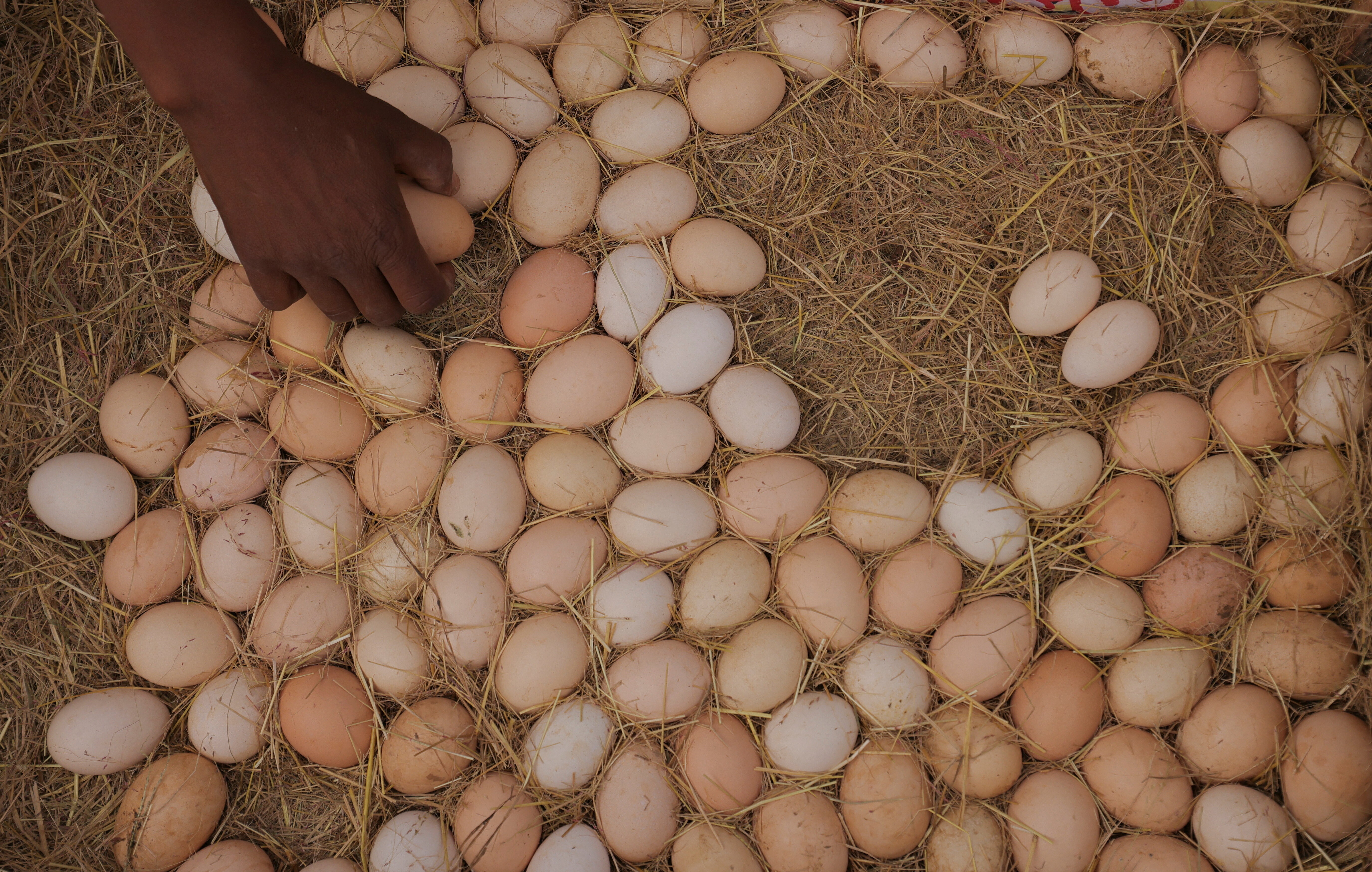
Reducing the protein gap is the quickest lever to strengthen Africa’s food economy Image: REUTERS/Tiksa Negeri
Tania Strauss
Head of Sustainable Growth and People Agenda, Member of the Executive Committee, World Economic Forum- Poultry is one of the fastest growing job creators in Africa, increasing youth market access to the food economy.
- A focus on diversifying and reducing the protein gap will depend on lowering costs and innovating in feed solutions to act on the quickest lever to strengthen Africa’s food economy.
- Africa’s next 20 years will be shaped by how well the continent connects food system innovation, technology adoption and the energy of its young population.
Across Africa, smallholder farmers remain the backbone of food production and the key to meeting rising demand for affordable, nutritious protein. Nowhere is this more evident than in the poultry sector, where many farmers, especially women and young people, depend on predictable markets, quality inputs and supportive policies to grow their enterprises.
Poultry is one of the fastest-growing job creators in rural Africa and offers young people real opportunities to build profitable enterprises, enter value added services and participate in a modern, tech-enabled food economy.
The next two decades in Africa will be shaped by how well the continent connects food system innovation, technology adoption and the energy of its young population. Poultry is one of the clearest examples of where these forces come together to drive real prosperity.
In the coming decade, innovations in feed technologies, digital advisory tools, climate-smart sourcing and regional market integration will shape how competitive African agriculture becomes and how many opportunities it creates for young agripreneurs.
”Africa’s long-term prosperity will come from food systems that are modern, tech-enabled, youth-powered and designed around smallholders who drive our continent’s growth.
Yet one constraint continues to define the pace and competitiveness of the poultry sector.
Feed costs, which make up nearly 70% of production expenses, determine whether smallholders can produce profitably, whether micro-, small- and medium-sized enterprises (MSMEs) can scale and whether countries can build stable poultry markets capable of meeting domestic and regional demand.
Addressing systemic barriers
Lowering feed costs and improving its availability, as well as diversifying feed solutions, are the quickest levers Africa can pull to strengthen its poultry economy and unlock wider impact.
Through the Southern Africa Poultry Initiative, Alliance for Green Revolution in Africa (AGRA) is working with governments in Malawi, Tanzania, Mozambique, Zambia and others to address these system-level barriers in a coordinated way.
National Poultry Delivery Labs are helping governments align policies, strengthen grain and feed supply chains and create predictable environments that encourage private investment.
Malawi’s Delivery Lab is reducing bottlenecks in local feed manufacturing. Tanzania and Mozambique are refining their national poultry strategies to better align with regional priorities.
In Zambia, reforms and infrastructure upgrades are improving grain supply and the efficiency of the feed sector. These efforts show what becomes possible when countries shift from fragmented approaches to shared action.
These actions are not technical fixes in isolation. They represent a broader shift toward a more productive and technology-enabled food economy that can support millions of new jobs for a rapidly growing youth population.
Technology for Africa’s food economy
In the coming decade, innovations in feed technologies, digital advisory tools, climate-smart sourcing and regional market integration will shape how competitive African agriculture becomes and how many opportunities it creates for young agripreneurs.
To build on this momentum, a Poultry Feed Accelerator Challenge was launched by AGRA, building on the experience and network of the Food Innovation Hubs global initiative. This targeted effort aims to support MSMEs with practical solutions to lower feed costs and expand access for farmers.
From improved formulation technologies to climate-smart ingredient sourcing, the challenge focuses on innovations that can scale quickly and directly improve farmer profitability. More affordable feed means more resilient smallholders, stronger youth-led enterprises and a more stable supply of affordable protein for African consumers.
Africa’s prosperity over the next 20 years will come from sectors that combine innovation, technology and youth-powered enterprise.
”The Poultry Futures Forum, held in November 2025, brought together governments, development partners, investors and industry leaders to accelerate national reforms, strengthen regional coordination and spotlight innovations that make poultry production more competitive for smallholders.
The momentum on poultry is growing and provides an opportunity to co-design the next phase of transformation.
While poultry is our focus here, similar lessons are emerging in aquaculture as well. Through the efforts of the World Economic Forum’s Food Innovators Network, we are seeing how improvements in feed systems, value chain coordination and policy alignment can catalyze growth for small-scale fish producers.
Initial efforts are emerging in Ghana through the development of a Blue Food Innovation Hub, focused on driving innovative solutions across feed, production and final products.
Building resilience in protein systems
Initial efforts are emerging in Ghana, focusing on driving innovative solutions across feed, production and product. The links between poultry and aquaculture, especially around feed costs and quality, highlight the broader opportunity to innovate and diversify Africa’s protein systems to build long-term resilience.
Meaningful change requires solutions that reflect the realities of farmers and raise the opportunities for youth agripreneurs, complemented by predictable policies and investment climates that reward innovation.
Leaders must prioritize innovations that reduce costs, support MSMEs that already serve extensive farmer networks and scale systems that protect production in a changing environment.
Africa’s prosperity over the next 20 years will come from sectors that combine innovation, technology and youth-powered enterprise. Poultry and blue foods are two of these sectors.
With farmer-centric, innovation and market-focused collaboration models, Africa’s food economy can become more competitive, inclusive and sustainable, lifting farmers, energizing rural economies and strengthening the continent’s future.
Don't miss any update on this topic
Create a free account and access your personalized content collection with our latest publications and analyses.
License and Republishing
World Economic Forum articles may be republished in accordance with the Creative Commons Attribution-NonCommercial-NoDerivatives 4.0 International Public License, and in accordance with our Terms of Use.
The views expressed in this article are those of the author alone and not the World Economic Forum.
Stay up to date:
Food Security


Forum Stories newsletter
Bringing you weekly curated insights and analysis on the global issues that matter.
More on Food, Water and Clean AirSee all

Moattar Samim
February 21, 2026


